The Confederate Robert E. Lee Planned for 1863
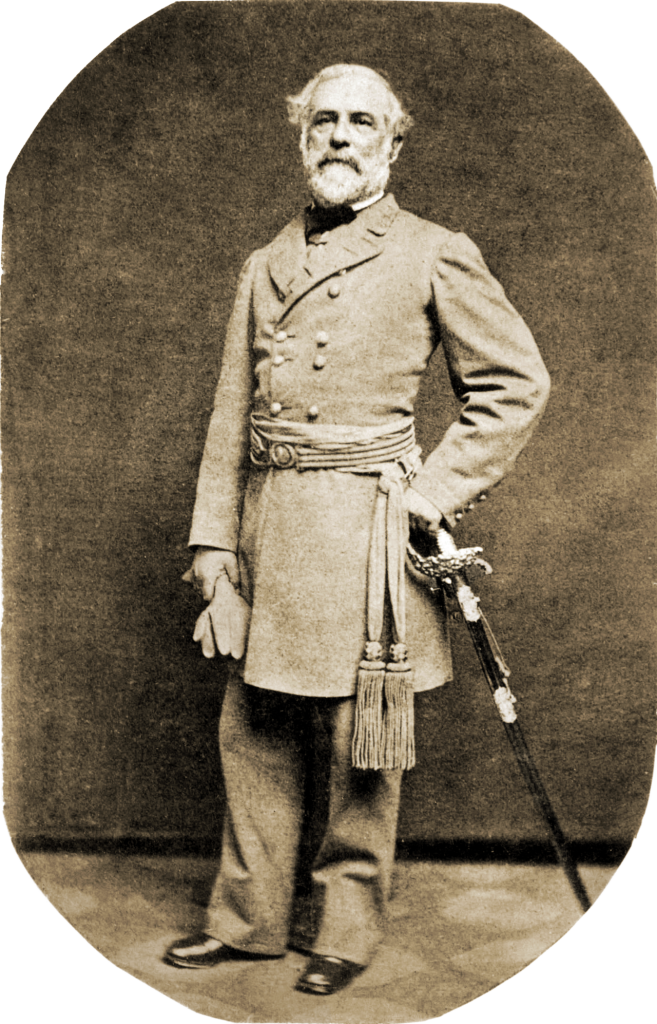
Lee in Confederate States Army uniform in 1863
(Wiki Image By unattributed – Heritage Auction Archives, Public Domain, https://commons.wikimedia.org/w/index.php?curid=11923752)
By May 1863, following his stunning victory at Chancellorsville, General Robert E. Lee held the initiative, but the Confederacy faced a desperate strategic dilemma. His plan for 1863 was born out of a debate on how to save the crumbling Western front while capitalizing on success in the East.
Here is the breakdown of Lee’s actual strategic plan for the summer of 1863, which led to the Gettysburg Campaign.
1. The Strategic Debate: East vs. West
The Confederacy was being strangled. In the West, Union General Ulysses S. Grant had Vicksburg under siege, threatening to split the South in two.
-
The “Western” Option: Confederate leaders (like James Longstreet and Jefferson Davis) considered detaching troops from Lee’s army to reinforce the West and break the siege of Vicksburg.
-
Lee’s Counter-Argument: Lee argued that sending troops West would take too long and weaken his army in Virginia without guaranteeing success. He proposed a bold alternative: Invade Pennsylvania.
2. The Objectives of the Pennsylvania Campaign
Lee convinced the Confederate Cabinet to approve an invasion of the North. His plan had four distinct goals:
-
Logistical Relief (The “Great Raid”): Virginia had been stripped bare by two years of war. Lee needed to feed his army. He planned to take the war into the rich farmlands of Pennsylvania to subsist on enemy crops and livestock, giving Virginia a summer to recover and harvest its own food.
-
Disrupting the Union Plan: By threatening Northern cities, Lee hoped to force the Union Army of the Potomac to withdraw from Virginia and pursue him. This would pull pressure off Richmond and disrupt any Union offensive plans for the summer.
-
Political Warfare: Lee knew anti-war sentiment was growing in the North. He believed that a successful invasion—perhaps capturing a state capital like Harrisburg—would embolden the “Copperheads” (Peace Democrats) and damage Abraham Lincoln’s political standing ahead of the 1864 election.
-
Foreign Recognition: A major victory on Northern soil might finally convince Britain or France to intervene or mediate a peace treaty, recognizing Confederate independence.
3. The Operational Plan
Lee reorganized his army into three corps (under Longstreet, Ewell, and A.P. Hill) for a rapid march.
-
The Screen: He used the Blue Ridge Mountains to screen his movement, slipping away from the Union army near Fredericksburg.
-
The Targets: His orders were discretionary, but the primary target was Harrisburg, Pennsylvania (a major rail hub).
-
The Philadelphia Threat: As discussed in your previous hypothetical scenarios, Philadelphia was a secondary target of opportunity. If Harrisburg fell, the road to Philadelphia would be open, threatening the Union’s industrial heart.
-
-
The Engagement: Lee did not plan to attack a fortified position (as he did at Gettysburg). His plan was to maneuver the Union army into a disadvantageous position and then crush it in open battle.
4. The Result
Lee successfully moved his army into Pennsylvania, seizing massive amounts of supplies. However, the plan unraveled due to a lack of intelligence (Jeb Stuart’s cavalry was absent) and an accidental collision with Union cavalry at a crossroads town he had no intention of fighting over: Gettysburg.
In short, Lee’s plan for 1863 was a high-stakes gamble to win independence not by conquering the North, but by making the war too painful and politically costly for the Union to continue.
Hypothetically, Lee bypasses Gettysburg, seizing Philadelphia to cripple Union industry. While arsenals and shipyards burn, a cautious Meade hesitates, allowing Lee’s army to loot massive supplies and retreat intact to Virginia, leaving the North devastated and demoralized.
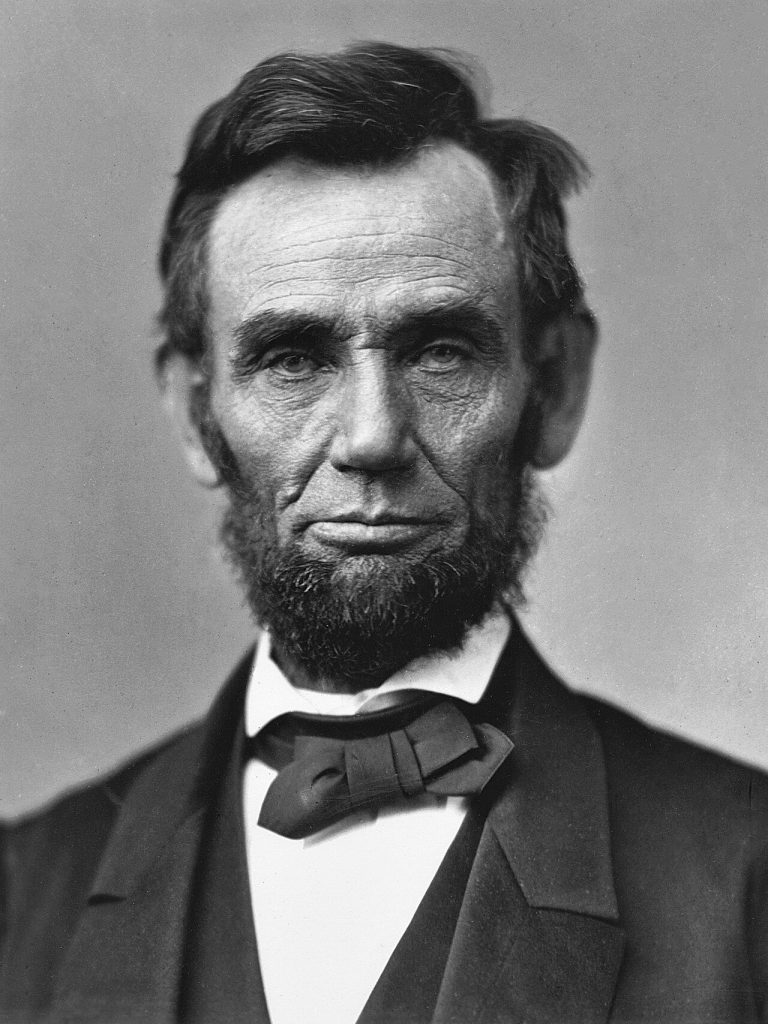
Lincoln in 1863
(Wiki Image By Alexander Gardner – museums.fivecolleges.edu, Public Domain, https://commons.wikimedia.org/w/index.php?curid=159209291)
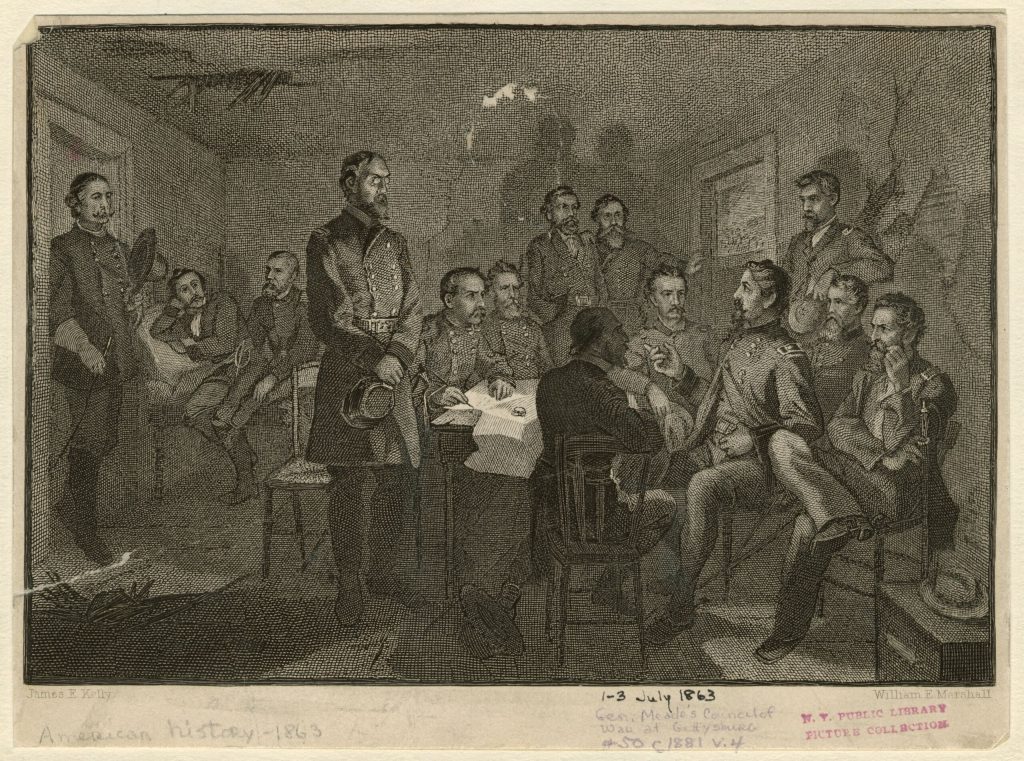
Engraving by James E. Kelly of Meade and the Council of War – July 2, 1863
(Wiki Image By James Edward Kelly, Engraver – https://npsgnmp.wordpress.com/2015/11/21/such-then-is-the-decision-general-meade-and-the-july-2nd-council-of-war/, Public Domain, https://commons.wikimedia.org/w/index.php?curid=5575619)
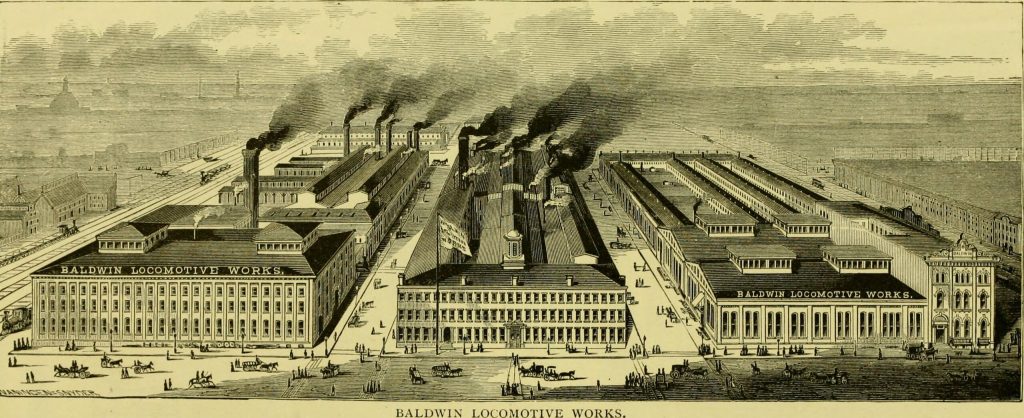
Baldwin Locomotive Works in 1875 in Philadelphia
(Wiki Image By J.B. Lippincott & Co – https://www.flickr.com/photos/internetarchivebookimages/14572150369/Source book page: https://archive.org/stream/philadelphiaitse00jb/philadelphiaitse00jb#page/n81/mode/1up, No restrictions, https://commons.wikimedia.org/w/index.php?curid=44302451)
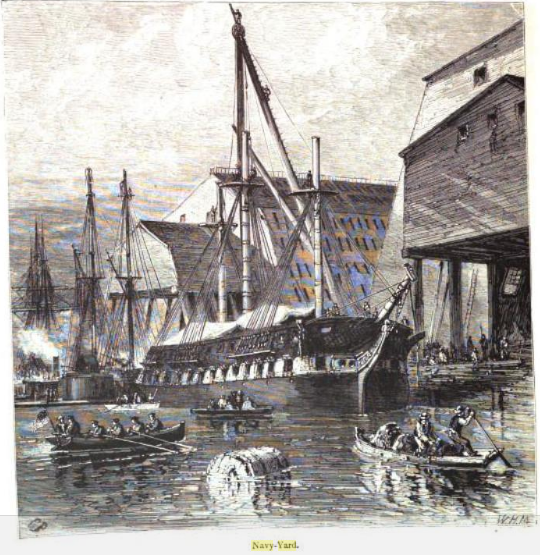
An illustration of the Philadelphia Naval Shipyard in 1874
(Wiki Image By W.H. Morse – Picturesque America; or, The Land We Live In, A Delineation by Pen and Pencil of the Mountains, Rivers, Lakes…with Illustrations on Steel and Wood by Eminent American Artists” Vol. II, p. 30, edited by William Cullen Bryant. [D. Appleton and Company, New York, 1874]. Artist W.H. Morse. Public Domain, https://commons.wikimedia.org/w/index.php?curid=114790269)
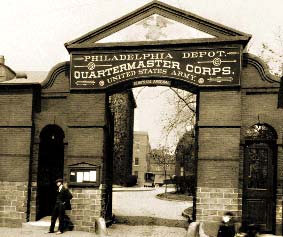
Philadelphia Quartermaster Depot, also known as the Schuylkill Arsenal
(Wiki Image By Unknown author – Defense Supply Center Philadelphia, Public Domain, https://commons.wikimedia.org/w/index.php?curid=2206333)
Google Gemini
In this hypothetical “Grand Raid” scenario, General Lee treats the Army of Northern Virginia not as an occupying force, but as a massive sabotage unit. He executes a lightning strike on Philadelphia, torches the “Arsenal of the North,” and slips away before the cautious General Meade can force a decisive battle.
This shifts the Civil War from a war of attrition to one of economic devastation. Here is the breakdown of the “Philadelphia Raid of 1863.”
1. The Target: The Industrial Heart Attack
Philadelphia was arguably the most critical manufacturing city for the Union war effort. By burning it and retreating, Lee inflicts damage that money cannot quickly replace.
- The Schuylkill Arsenal (The Uniform Crisis): This facility was the primary source of uniforms for the Union Army. By burning it, Lee destroys the sewing patterns, raw wool, and stockpiles meant for the coming winter.
- Result: The Union Army freezes in the winter of 1863–64. Shortages of coats and blankets cause morale to plummet and non-combat sickness/desertion to spike.
- The Baldwin Locomotive Works: Located on Broad Street, this was the premier train manufacturer in the North. Burning this facility cripples the North’s ability to replace worn-out engines, slowing the movement of troops and supplies across the entire theater.
- The Philadelphia Navy Yard: By setting the dry docks and shipyards on fire, Lee destroys ironclads under construction (like the monitor USS Tonawanda).
- Result: The Union Blockade of the South weakens significantly for 6–12 months, allowing Confederate blockade runners to bring in vital European supplies.
- Financial Panic: As the home of the First Bank of the United States and a center of war bonds, the fall of Philadelphia would likely have collapsed the Union’s credit, making it nearly impossible to pay soldiers or fund further campaigns.
2. Meade’s Conservative Failure
General George Meade’s caution—the same trait that led Lincoln to criticize him for not pursuing Lee after the actual Battle of Gettysburg—plays directly into Lee’s hands here.
- The “Turtle” Defense: Terrified that Lee might pivot south to take Washington D.C., Meade likely digs in along the Pipe Creek Line (his preferred defensive ground in Maryland) or positions himself to cover Baltimore.
- The Missed Opportunity: While Philadelphia burns, Meade hesitates to counter-attack, fearing a trap. He assumes Lee has more men than he does (a persistent Union intelligence failure). This hesitation gives Lee the 48-hour window he needs to sack the city and withdraw safely back toward the Susquehanna River.
3. The Retreat: The “Loaded” Withdrawal
Lee retreats to Virginia not as a beaten general (as he did historically), but as a victorious raider.
- The Supply Train: Lee returns to Virginia with a massive wagon train of looted food, horses, and medical supplies from the rich Pennsylvania Dutch countryside, sustaining his army through 1864.
- The Army Intact: Because Meade was too conservative to force a major battle (like Gettysburg), Lee’s army remains at full strength. He does not lose the 28,000 men (including key leaders like Pickett’s division) that he lost in the historical timeline.
4. The Strategic Fallout: The Election of 1864
The physical damage to Philadelphia is severe, but the psychological damage is fatal to Abraham Lincoln’s presidency.
- The Narrative Shift: In reality, Gettysburg was the “High Water Mark” of the invasion, where the invasion was stopped. In this scenario, the invasion succeeded in humiliating the North. The narrative becomes: “The Union Army cannot even protect its own cities.”
- The Rise of McClellan: The immense unpopularity of the war, compounded by the burning of a major Northern city, likely hands the 1864 election to the Peace Democrat, George McClellan.
- Negotiated Peace: McClellan runs on a platform of ending the war. With the Union industry crippled and morale shattered, the U.S. likely signs an armistice in 1865, recognizing the Confederate States of America.
Summary: The Cost of Caution
| Asset | Historical Outcome (Gettysburg) | Hypothetical Outcome (The Raid) |
| Army of Northern Virginia | Devastated (28k casualties) | Intact & Resupplied |
| Union Industry | Unharmed | Crippled (Arsenals/Rail burned) |
| General Meade | “Hero of Gettysburg” | The General who lost Philadelphia |
| Lincoln’s Status | Re-elected (1864) | Defeated (1864) |
| War Outcome | Union Victory (1865) | Confederate Independence (1865) |
Export to Sheets
ChatGPT
🔥 Hypothetical 1863: Lee’s Philadelphia Raid, Total War, and a Safe Retreat 🇺🇸
“A blow struck, a city burned, and an army gone before the enemy can close.”
This version is much more dangerous—and more plausible—than a prolonged occupation, because it limits Confederate exposure while maximizing political shock.
🧭 1. The Scenario Clarified
Key assumptions:
- Lee bypasses Gettysburg entirely
- Executes a surprise raid on Philadelphia
- Selective industrial destruction (arsenals, rail yards, shipyards)
- Avoids civilian massacre but accepts urban fire
- Meade remains cautious, slow to concentrate
- Lee withdraws rapidly to Virginia once the damage is done
This is not a conquest.
This is strategic terror + economic sabotage.
⚔️ 2. Could Lee Actually Do This?
Operational Feasibility: Barely—but yes
What makes it possible
- Union expected Lee to head toward Harrisburg or Baltimore
- Pennsylvania’s defenses were weak
- Philadelphia had militia, not field armies
- Lee’s army was highly mobile and experienced
What makes it risky
- Long, exposed supply lines
- Dense population hostile to Confederates
- Union rail network could mobilize quickly
The key is speed. Lee cannot linger.
🔥 3. The Burning of Philadelphia: What Gets Destroyed?
Lee focuses on war infrastructure, not neighborhoods.
Primary targets:
- 🏭 Frankford Arsenal
- 🚂 Rail hubs and depots
- ⚓ Navy Yard
- 🧵 Uniform and textile factories
- 📦 Army supply warehouses
Result:
- Temporary paralysis of Union logistics in the East
- Shockwave across Northern industry
- Panic in New York and Washington
This is Sherman in reverse—a psychological strike.
🧠 4. Meade’s Conservatism: The Escape Window
George G. Meade historically:
- Avoided aggressive pursuit after Gettysburg
- Feared ambush and overextension
- Deferred to Washington repeatedly
In this scenario:
- He hesitates to attack a retreating Lee
- Worries about:
- Baltimore
- Washington
- Rail security
- Misses the moment to trap Lee north of the Potomac
Lee slips away intact.
🏃 5. The Retreat: Can Lee Get Home?
Yes—with damage, but not disaster.
- Confederates abandon heavy loot
- Rapid movement through South-Central Pennsylvania
- Skirmishes, not decisive battles
- Potomac crossings were strained but successful
Lee returns to Virginia bloodied but alive.
🇺🇸 6. Northern Political Consequences
This is where history bends hardest.
Immediate Effects:
- 🔥 Northern civilians experience war firsthand
- 🗞️ Press explodes in fury
- 🗳️ Lincoln faces outrage—but also unity
Key shift:
- Peace Democrats are discredited overnight
- Any talk of compromise collapses
- War becomes existential
“They burned our city. Finish them.”
⚖️ 7. Lincoln’s Strategic Counterstroke
Lincoln reacts with authorization, not hesitation:
- Sherman-style warfare becomes official doctrine
- Grant was given expanded authority sooner
- Southern infrastructure becomes an explicit target
- Emancipation is framed as both moral and punitive
Atlanta, Columbia, and Richmond face earlier devastation.
🌍 8. International Reaction
- Britain and France recoil
- Confederacy is now framed as urban arsonists
- Diplomatic recognition becomes impossible
Lee wins a battle of shock—but loses the world.
⏳ 9. Does This Change the War’s Outcome?
Bottom line: No Confederate victory—but a transformed war
| Aspect | Effect |
| War Length | Slightly shorter |
| Union Resolve | Hardened permanently |
| Southern Damage | Much worse, earlier |
| Reconstruction | Harsher, longer resentment |
| Civilian Warfare | Normalized earlier |
🧩 10. Historical Irony
By escaping successfully, Lee:
- Proves Confederate operational brilliance
- Gains a short-lived morale victory
- Triggers the very doctrine that destroys the South
Philadelphia burns, but Atlanta burns sooner.
🏛️ Final Judgment
This is Lee’s most effective possible northern strike, but also:
- A strategic accelerant, not a war-winner
- A raid that saves Lee’s army but dooms his cause
- The moment the Civil War becomes unmistakably modern
If you like, next we can:
- 🗺️ Map the exact raid and retreat routes
- ⚔️ Compare Meade vs. Grant responses
- 🧠 Examine how Sherman would cite this raid as precedent
- 🔥 Explore what happens if New York panics next
Just say the word.