🌊 Tyre (332 BC), 🔧 Syracuse (213–212 BC), 🌀 Alesia (52 BC), ⛰️ Masada (73 AD), and ⚔️ Acre (1189–1191): Ancient Sieges
Here is a breakdown of five of history’s most technically complex and dramatic sieges, ranging from the campaigns of Alexander the Great to the Crusades.
1. 🌊 The Siege of Tyre (332 BC)
“The Impossible Island”
Alexander the Great faced a unique problem: Tyre was an island fortress 1 km off the coast of modern-day Lebanon, with walls reaching 150 feet high that extended into the sea. He had no navy to challenge them.
- Belligerents: Macedonians (Alexander the Great) vs. Phoenicians (Tyre).
- The Engineering Feat: Since he couldn’t sail to the walls, Alexander decided to bring the mainland to the island. He ordered his engineers to build a massive causeway (mole) 200 feet wide across the ocean channel.
- The Counter-Tactics: The Tyrians were ingenious defenders. They sent divers to cut the anchor cables of Alexander’s siege ships. They floated a “fireship” (a cauldron of burning sulfur and bitumen) into the Macedonian siege towers, which then burned down.
- The Outcome: Alexander eventually gathered a fleet from conquered allies, blockaded the harbor, and smashed the walls. The city was sacked brutally; 2,000 military-age men were crucified along the beach.
- Legacy: The mole Alexander built remains; over centuries, silt accumulated around it, permanently transforming Tyre from an island into a peninsula.
2. 🔧 The Siege of Syracuse (213–212 BC)
“The Duel of Minds”
This siege pitted the might of the Roman legions against the genius of a single mathematician: Archimedes.
- Belligerents: The Roman Republic (Marcus Claudius Marcellus) vs. The City of Syracuse (Greek colony in Sicily).
- The “Math” Defense: Archimedes designed terrifying defensive engines.
- The Claw: A giant crane with a grappling hook that could lift Roman ships out of the water and drop them, capsizing them.
- The Mirrors (Legend): Stories claim he used bronze mirrors to focus sunlight and set Roman sails on fire (though physicists debate this).
- Steam Cannon: Some texts suggest a steam-powered device that fired clay projectiles.
- The Outcome: The Romans were initially humiliated and forced to switch to a starvation blockade. They finally breached the city during a festival when guards were drunk. Despite Marcellus’s orders to capture Archimedes alive, a Roman soldier killed the 75-year-old mathematician while he was drawing circles in the sand.
3. 🌀 The Siege of Alesia (52 BC)
” The Doughnut Fortification”
Julius Caesar’s masterpiece of field engineering. He trapped Vercingetorix, but was then trapped himself.
- Belligerents: Roman Republic (Julius Caesar) vs. Gallic Confederation (Vercingetorix).
- The Double Wall: Caesar built two lines of fortifications:
- Circumvallation (Inner Ring): 10 miles long, facing inward to keep Vercingetorix in.
- Contravallation (Outer Ring): 13 miles long, facing outward to keep the massive Gallic relief army out.
- The “Garden of Death”: Between the walls, Caesar dug pits filled with sharpened stakes (“lilies”), flooded trenches, and hidden iron hooks to maim attackers.
- The Outcome: Caesar’s starving troops held off 80,000 men from the inside and supposedly 250,000 from the outside. Vercingetorix surrendered his armor at Caesar’s feet, marking the end of Gallic independence.
4. ⛰️ The Siege of Masada (73 AD)
“The Symbol of Resistance”
The final act of the First Jewish-Roman War took place on top of a lonely rock plateau in the Judean Desert.
- Belligerents: Roman Empire (Legion X Fretensis) vs. Jewish Sicarii (Eleazar ben Ya’ir).
- The Geography: The fortress sat on a mesa 1,300 feet high with sheer cliffs on all sides.
- The Ramp: The Romans, unable to use standard towers, spent months building a massive earthen ramp up the side of the mountain. They used Jewish prisoners to make it so the defenders wouldn’t shoot at the workers.
- The Outcome: When the Romans finally rolled their battering ram up the completed ramp and breached the wall, they found silence. The 960 defenders had chosen mass suicide rather than enslavement. Only two women and five children survived to tell the story.
5. ⚔️ The Siege of Acre (1189–1191)
“The Deadliest Stalemate”
A grueling, two-year grinder that served as the focal point of the Third Crusade.
- Belligerents: Crusaders (Guy of Lusignan, Richard the Lionheart, Philip II) vs. Ayyubid Dynasty (Saladin).
- The Situation: A “siege within a siege.” The Crusaders besieged the Muslim garrison in the city, while Saladin’s army surrounded the Crusaders from the outside.
- The Tech:
- Greek Fire: The Muslim defenders used pots of flammable liquid to destroy Crusader siege towers (including three massive towers built by the kings).
- Bad Neighbor: The name of a massive stone-throwing trebuchet used by the Crusaders to pound the “Accursed Tower.”
- The Outcome: The arrival of Richard the Lionheart and Philip II tipped the balance. The city surrendered. The victory allowed the Crusaders to secure the coast, but Richard later executed roughly 2,700 Muslim prisoners when ransom negotiations stalled, a massacre that marred the victory.
Summary Comparison
| Siege | Date | Victor | Key Feature |
| Tyre | 332 BC | Alexander | Building a land bridge (mole) across the ocean. |
| Syracuse | 212 BC | Rome | Defeated by the inventions of Archimedes (The Claw). |
| Alesia | 52 BC | Caesar | The double wall (fighting simultaneously inside and outside). |
| Masada | 73 AD | Rome | The massive earthen ramp up a cliff face. |
| Acre | 1191 | Crusaders | The “siege within a siege” and use of Greek Fire. |
🌊 The Siege of Tyre (332 BC)

Alexander’s siege of Tyre
https://www.thecollector.com/siege-of-tyre-alexander-the-great/
🌊 The Siege of Tyre Quotes
The Siege of Tyre was such a monumental event that it was recorded by several major ancient historians, primarily Arrian, Curtius Rufus, Diodorus Siculus, and Plutarch. Their accounts provide a vivid window into the psychological warfare, the engineering desperation, and Alexander’s relentless willpower.
Here are the most significant quotes regarding the siege, categorized by its different phases.
🏛️ The Prelude: The “Sacrifice” Ultimatum
Alexander’s pretext for the war was his desire to sacrifice to Melqart (Heracles). The Tyrians’ refusal set the stage for the conflict.
“Alexander sent envoys to say that he wished to sacrifice to Heracles in his temple on the island. The Tyrians replied that there was a temple of Heracles in the old city on the mainland… but that they would not admit any Macedonian or Persian into their city.” — Arrian, The Anabasis of Alexander
“Alexander, losing his temper, as was his nature, at this refusal, sent the envoys away with threats, and immediately began to prepare for the siege.” — Curtius Rufus, History of Alexander
🏗️ The Engineering: Building the Mole
The historians were stunned by the sheer scale of the labor required to bridge the sea.
“The work was not easy; for the sea was deep at that point, and the mud was of such a nature that the stones were swallowed up as fast as they were thrown in.” — Curtius Rufus
“Alexander himself was the first to take up a basket and carry earth; and when the Macedonians saw their king working with his own hands, they followed his example with enthusiasm.” — Arrian
🔥 The Tyrian Resistance: Mechanical Ingenuity
The Tyrians were famous for their inventiveness in defense, frustrating the Macedonians at every turn.
“They [the Tyrians] heated sand in large bronze shields until it was red-hot, and then by means of a machine threw it over those who were fighting… it got under their breastplates and burnt their flesh.” — Diodorus Siculus, Library of History
“The Tyrians also made use of ‘crows’ and ‘iron hands’ to snatch the men from the towers and drag them over the walls into the city.” — Curtius Rufus
🌊 The Naval Turning Point
Alexander’s realization that he needed ships changed the course of the war.
“Alexander saw that he would never take the city as long as the Tyrians were masters of the sea.” — Arrian
“When the Tyrians saw the vast number of ships approaching from Sidon, they were struck with terror; for they had not expected that Alexander would be able to collect such a fleet so quickly.” — Arrian
⚔️ The Final Assault: The King’s Fury
The breach of the walls and the subsequent massacre were described with brutal clarity.
“Alexander himself was seen on the top of the wall, fighting with the greatest bravery… he was the first to leap into the city, followed by the Hypaspists.” — Arrian
“The king gave orders to kill all the inhabitants except those who had fled to the temples… the number of those slain was six thousand.” — Curtius Rufus
⚖️ The Legacy: A City Changed Forever
Perhaps the most famous “quote” is the geographical reality that remains today.
“Tyre, which was an island, was now made a peninsula by the mound of Alexander.” — Pliny the Elder, Natural History
Would you like me to…
- Contextualize a specific quote from one of these historians to explain the military tactic it refers to?
- Compare the Tyrian defense machines to the “Claw” of Archimedes at Syracuse?
- Explore the speech Alexander gave to his troops to convince them not to give up on the mole.
🌊 The Siege of Tyre (332 BC) Prehistory
The “prehistory” of the Siege of Tyre (332 BC) is a study in the collision between an unstoppable land power—Alexander the Great’s Macedonian army—and an impregnable maritime fortress. It examines the strategic landscape of the Levant following Alexander’s victory at Issus and the unique historical-geographic identity of Tyre, which made it a formidable obstacle.
- The Strategic Vacuum: Post-Issus (333 BC)
After Alexander defeated the Persian King Darius III at the Battle of Issus, the Persian Empire did not immediately collapse. However, the Mediterranean coastline (Phoenicia) became the critical strategic theater.
- Neutralizing the Persian Navy: The Persian fleet, manned mainly by Phoenician sailors, dominated the sea. Alexander lacked a significant navy; his only means of defeating the Persian fleet was to “capture it from the land” by seizing every port city that supplied its ships and crews.
- The Submission of Phoenicia: Most Phoenician cities, such as Byblos and Sidon, surrendered to Alexander without a fight, seeking to preserve their trade interests. Tyre, however, pursued a middle-ground diplomatic approach that Alexander found unacceptable.
- The Island Fortress: Geography as Armor
Tyre was not a single city but two. There was “Old Tyre” on the mainland, and “New Tyre,” located on an island roughly 800 meters (half a mile) offshore.
- The Walls: The island city was encircled by massive stone walls that reportedly reached 45 meters (150 feet) in height on the landward side.
- The Harbors: It possessed two deep-water harbors—the “Sidonian” harbor to the north and the “Egyptian” harbor to the south—allowing it to be resupplied by sea indefinitely.
- The Fleet: Unlike the cities that had already surrendered, the Tyrian navy remained intact and loyal to the island, making any ship-borne assault by Alexander impossible at the start of the campaign.
- The Diplomatic Insult
Alexander initially sent envoys to Tyre, stating he wished to enter the island city to offer a sacrifice to Melqart (whom the Greeks identified with Heracles).
- The Tyrian Refusal: The Tyrians, savvy diplomats who had survived previous sieges by the Assyrians and Babylonians, saw through the ruse. They told Alexander he could sacrifice at the temple in Old Tyre on the mainland, but no Macedonian would be permitted on the island.
- The Breaking Point: Alexander saw this “neutrality” as a direct threat to his rear as he moved toward Egypt. When he sent a second group of envoys, the Tyrians executed them and threw their bodies from the walls into the sea. This act shifted the mission from strategic necessity to a personal quest for destruction.
- The Engineering Gamble
Alexander’s plan to conquer Tyre was unprecedented in the history of warfare. Since he had no navy to bridge the gap to the island, he decided to change the geography of the world.
- The Mole: He ordered the construction of a massive stone causeway (a “mole”) that would stretch from the mainland all the way to the island walls.
- Materials: To build this, Alexander literally dismantled “Old Tyre,” using the rubble of the mainland city and timber from the forests of Lebanon to fill the sea.
- Summary Table: The Setup for Siege
| Factor | Macedonian Status | Tyrian Status |
| Command of the Sea | None; zero naval assets in the region. | Total; protected by the Phoenician fleet. |
| Logistics | Dependent on captured land routes. | Indefinite; sea lanes open for food and water. |
| Defense Strategy | Aggressive engineering (The Mole). | Passive-aggressive defense (The Walls). |
| Historical Precedent | Never faced a fortress of this scale. | Survived a 13-year siege by Nebuchadnezzar II. |
- The Psychological Landscape
The Tyrians relied on the historical fact that no one had ever successfully taken their island by force. They believed Alexander was a “land-bound” conqueror who would eventually grow frustrated and march on toward Egypt or Babylon. They did not anticipate Alexander’s willingness to expend seven months and thousands of lives to turn an island into a peninsula—a geographic change that remains visible to this day.
🌊 The Siege of Tyre Chronological Table
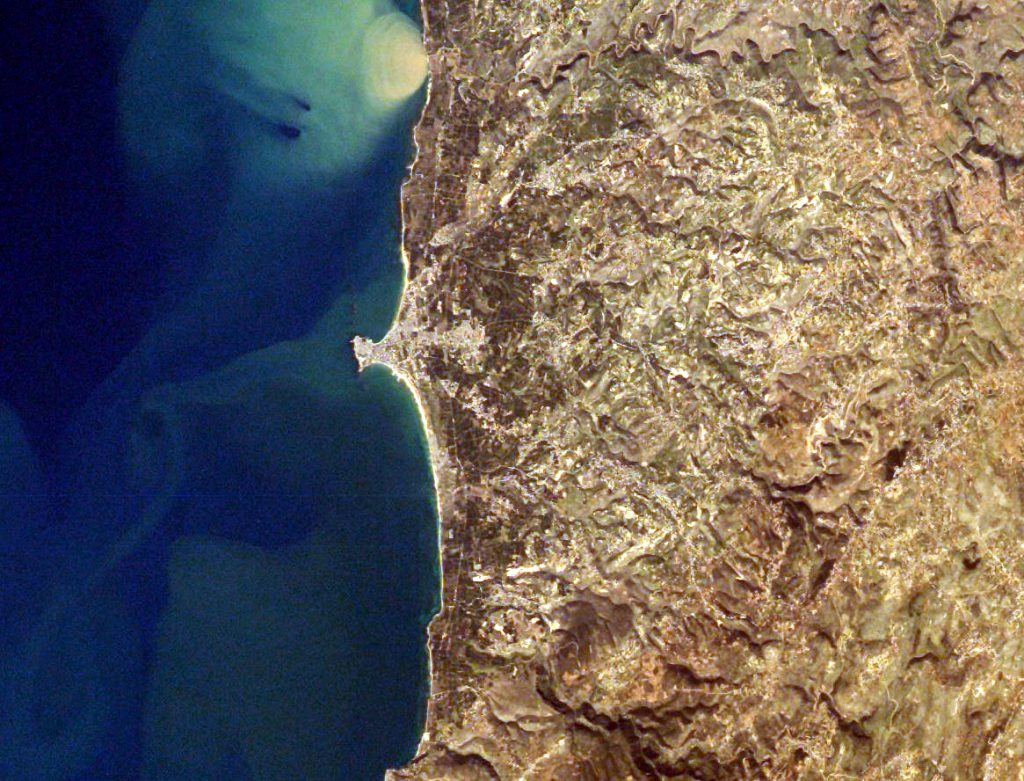
The city of Tyre/Sour in Southern Lebanon photographed from the International Space Station (ISS). Image courtesy of the Earth Science and Remote Sensing Unit, NASA Johnson Space Center: https://eol.jsc.nasa.gov/
(Wiki Image By Image courtesy of the Earth Science and Remote Sensing Unit, NASA Johnson Space Center – https://eol.jsc.nasa.gov/SearchPhotos/photo.pl?mission=ISS006&roll=E&frame=31938, Public Domain, https://commons.wikimedia.org/w/index.php?curid=97774377)
🌊 The Siege of Tyre (332 BC): Chronological Table
Below is a clear, step-by-step timeline of Alexander the Great’s most audacious siege, showing how an “impossible” island fortress was taken through engineering, persistence, and brutality.
| Phase | Date (332 BC) | Event | Significance |
| 1. Strategic Decision | Spring | Alexander marches south after Issus and demands Tyre’s surrender | Tyre refuses, confident in its island defenses and navy |
| 2. Initial Assessment | Spring | Alexander realizes Tyre sits ~1 km offshore with walls rising directly from the sea | Traditional siege towers and rams are useless |
| 3. Construction of the Mole Begins | Spring–Early Summer | Macedonians begin building a massive stone causeway from the mainland | A revolutionary solution: “bring the land to the island.” |
| 4. Tyrian Naval Harassment | Early Summer | Tyrian ships attack workers and siege equipment | Shows Tyre’s naval superiority |
| 5. Fire Ship Attack | Early Summer | Tyrians send a fire ship loaded with sulfur and pitch into the siege towers | Macedonian siege towers are destroyed |
| 6. Alexander Regroups | Mid-Summer | Alexander gathers fleets from Phoenician cities (Sidon, Byblos, Cyprus) | Naval balance shifts decisively |
| 7. Naval Blockade Established | Mid-Summer | Macedonian fleet blockades both Tyrian harbors | Cuts off supplies and reinforcements |
| 8. Mole Completed | Late Summer | Causeway reaches Tyre’s walls | Allows direct assault on fortifications |
| 9. Artillery Bombardment | Late Summer | Catapults and ballistae batter the southern wall | Walls begin to crumble |
| 10. Breach of the Walls | July | Macedonian forces create a breach | Turning point of the siege |
| 11. Final Assault | July | Simultaneous land and sea attack | Overwhelms Tyrian defenders |
| 12. Sack of Tyre | July | City falls after ~7 months | 8,000 killed; ~30,000 enslaved |
| 13. Aftermath | Post-Siege | 2,000 Tyrian men crucified along the shore | Psychological warfare for future cities |
| 14. Geological Legacy | Long-term | Sediment accumulates around the mole | Tyre permanently becomes a peninsula |
🧱 Why Tyre Matters
- Engineering First: The mole remains one of history’s most extraordinary military engineering feats.
- Naval Warfare: Demonstrates Alexander’s adaptability beyond land battles.
- Psychological Impact: The brutality ensured that future coastal cities surrendered without resistance.
- Permanent Geography Change: Few sieges literally reshape the map.
If you’d like, I can also:
- Compare Tyre directly with Alesia or Masada
- Break this into engineering vs. naval vs. artillery phases
- Create a visual ASCII siege diagram
- Or write a “day-by-day” siege narrative
Just say the word ⚔️
🌊 The Siege of Tyre History
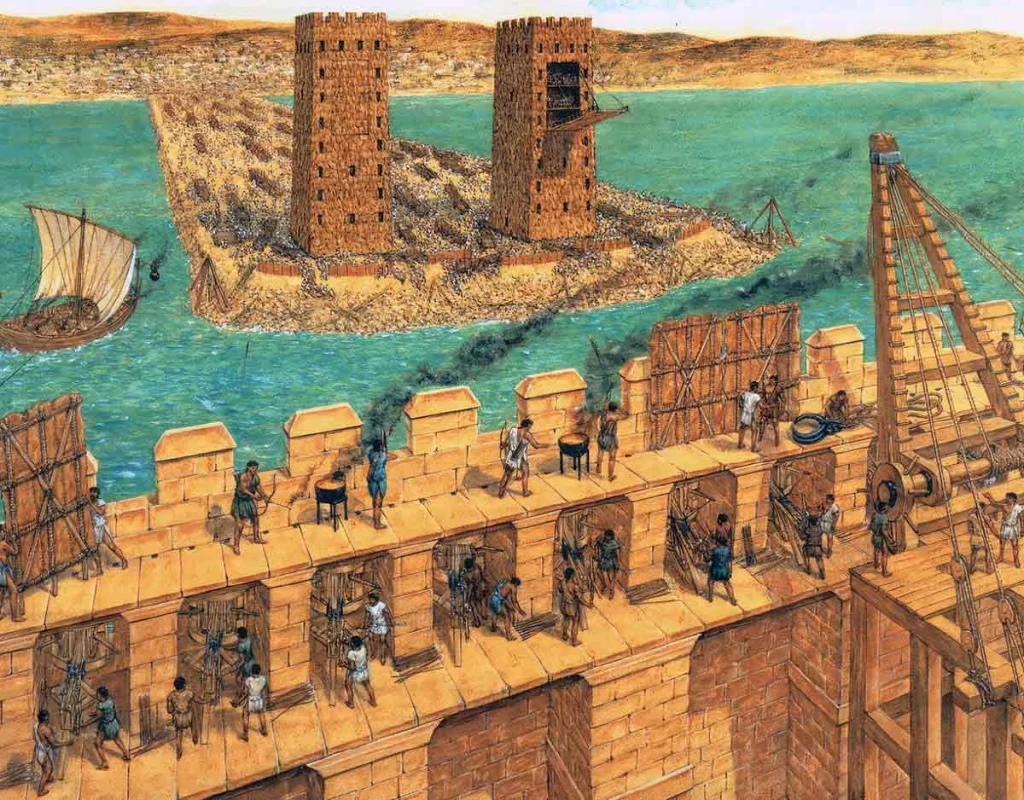
The Phoenician city of Tyre was one of the best-fortified cities in history. It was also crucial to Alexander the Great’s plans to conquer the Persian Empire.
https://www.thecollector.com/siege-of-tyre-alexander-the-great/
The Siege of Tyre in 332 BC is regarded as the most challenging and brilliant military operation of Alexander the Great’s career. For seven months, the Macedonian king was forced to transform from a cavalry commander into a master of naval warfare and civil engineering to conquer a city that many believed was physically unreachable.
🏛️ The Strategic Necessity
After defeating the Persian King Darius III at the Battle of Issus, Alexander moved south along the Mediterranean coast. Most Phoenician cities surrendered, but the island of Tyre—the primary naval base for the Persian Empire—refused.
- The Ultimatum: Alexander wished to offer a sacrifice at the Temple of Melqart (whom the Greeks identified as Heracles). The Tyrians, trusting their island’s 800-meter distance from the shore and its 150-foot-high walls, suggested he use the temple on the mainland instead.
- The Risk: Alexander could not march toward Egypt while leaving a hostile Persian naval power behind him. He needed to “conquer the sea from the land” by capturing the Tyrian fleet’s home port.
🏗️ Phase I: The Great Mole (Land Bridge)
Because Alexander lacked a navy, his engineers, led by Diades of Pella, began one of the most ambitious construction projects of antiquity: building a land bridge (a mole) from the mainland to the island.
- The Construction: Macedonians dismantled the buildings of “Old Tyre” on the mainland to use as stone. They harvested cedar from Mount Lebanon for piles to drive into the sea floor.
- The Setback: As the mole reached deeper water, it became vulnerable. The Tyrians launched a specialized fire ship—a vessel packed with sulfur, pitch, and dry wood—and crashed it into the Macedonian siege towers at the end of the mole, burning months of work in a single day.
⚓ Phase II: The Naval Turning Point
Realizing the mole would never be finished under constant naval harassment, Alexander traveled to Sidon and Byblos to assemble a fleet of his own.
- The Armada: He gathered 223 ships, including fleets from Cyprus and Rhodes. This shifted “Command of the Sea” to the Macedonians.
- The Blockade: Alexander split his fleet to blockade Tyre’s two harbors: the Sidonian Harbor to the north and the Egyptian Harbor to the south.
- Underwater Warfare: The Tyrians dropped massive boulders into the sea to prevent Alexander’s ships from approaching the walls. Alexander used specialized crane ships to winch these rocks out of the water and dump them into the deep sea.
☄️ Phase III: Innovation in Artillery
With the sea under his control, Alexander pioneered the use of naval artillery.
- Floating Batteries: He lashed pairs of triremes together to create stable catamaran platforms.
- Torsion Engines: On these platforms, he mounted heavy torsion catapults and battering rams. This allowed him to probe the 2-mile circumference of the city walls, searching for a weak point that was not as heavily fortified as the landward side.
⚔️ The Final Breach and Fall
In July 332 BC, Alexander identified a “soft spot” on the southern sea wall.
- The Barrage: Ship-mounted catapults pounded the wall until a section collapsed.
- The Bridges: Specialized ships equipped with boarding bridges (wide gangplanks) were steered into the rubble.
- The Assault: Alexander personally led the elite Hypaspists across the bridges and onto the battlements. Once the wall was taken, the Macedonian navy snapped the harbor chains and flooded the city from all sides.
⚖️ The Outcome and Legacy
A brutal massacre followed the fall of Tyre, as Alexander was enraged by the length of the siege and the execution of Macedonian prisoners on the walls.
- Statistics: Approximately 6,000 Tyrians died in battle; 2,000 men were crucified along the shore; and 30,000 citizens were sold into slavery.
- Geographical Change: The mole was so massive that sand accumulated against it over centuries. Today, Tyre is no longer an island but a peninsula, a permanent topographical scar left by Alexander’s ambition.
Would you like me to…
- Provide a technical breakdown of the torsion catapults used in the siege?
- Analyze the Siege of Gaza, which Alexander undertook immediately after Tyre.
- Explore the archaeological discoveries found beneath the waters surrounding the mole?
🌊 The Siege of Tyre (332 BC): 8 top essential aspects, including technology, engineering, tactics, strategy, artillery, infantry, cavalry, plague, religion, logistics, walls, manpower, and length.
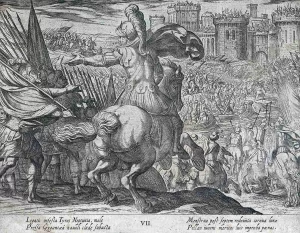
Alexander’s Coordinated Attack
https://www.thecollector.com/siege-of-tyre-alexander-the-great/
Siege of Tyre (332 BC) is often cited as the pinnacle of Alexander the Great’s military and engineering career. It was a confrontation that defied the traditional boundaries of ancient warfare, requiring the Macedonian king to quite literally reshape the geography of the Mediterranean.
To provide a comprehensive analysis, we break the siege into eight essential pillars: the strategic necessity of the island, the construction of the Great Mole, the naval revolution at Sidon, the application of torsion artillery, the defense-shattering siege towers, the tactical breach of the southern wall, the logistics of a Mediterranean coalition, and the brutal religious and political outcome.
1. Strategy: The Impregnable Island Fortress 🏝️
Tyre was a strategic “locked door” that Alexander had to open to secure his conquest of the Persian Empire.
- The Geographic Challenge: The “New City” of Tyre was located on an island roughly 800 meters (half a mile) off the coast of modern-day Lebanon. It was protected by massive walls reaching 150 feet in height on the landward side, making a traditional land assault impossible.
- The Persian Naval Threat: Alexander’s grand strategy involved “conquering the sea from the land.” He lacked a navy, but he knew that as long as Tyre remained a sovereign Persian naval base, the Tyrian fleet could harass his supply lines to Greece and potentially incite a revolt in his rear.
- The Ultimatum: Alexander initially sought a peaceful resolution by asking to sacrifice at the Temple of Melqart (Heracles). The Tyrians, confident in their island’s safety, refused. This “religious insult” gave Alexander the pretext for a total war of annihilation.
- The Commitment: Unlike other leaders who might have bypassed the island, Alexander understood that leaving Tyre undefeated would signal weakness to the Egyptian satraps and the remaining Persian provinces.
2. Engineering: The Great Mole (Land Bridge) 🏗️
Since Alexander could not sail to Tyre, he decided to bring the land to the island. This resulted in one of the most famous engineering feats in antiquity.
- Construction Process: Alexander ordered his troops and local laborers to build a mole (causeway) 200 feet wide across the sea.
- The “Stone-Eater”: To provide the material, Alexander ordered the complete demolition of “Old Tyre” on the mainland. Every stone, brick, and piece of timber from the old city was hauled to the shore and dumped into the Mediterranean.
- Foundation Work: To stabilize the mole in the shifting seabed, thousands of cedar piles were harvested from Mount Lebanon and driven into the mud.
- The Deep Water Crisis: As the mole reached deeper water, the current intensified, and the work became more hazardous. The Tyrian navy began constant harassment, firing arrows and stones at the workers, forcing Alexander to move from simple construction to combat engineering.
3. Technology: The Giant Siege Towers 🗼
To protect the workers on the mole from the 150-foot walls of Tyre, Alexander’s engineers, led by Diades of Pella, developed the most advanced siege towers of the era.
- Specifications: Alexander built two towers at the end of the mole, each approximately 150 feet (45 meters) tall, matching the height of the Tyrian walls.
- The “Skin” of the Tower: To counter the primary threat of fire, the wooden frames were covered in rawhide and wet animal skins. This served as a rudimentary fireproofing measure, absorbing the impact of incendiary arrows.
- Artillery Platforms: These towers weren’t just for scaling; they were mobile fortresses. The lower levels housed massive battering rams, while the upper levels housed tension- and torsion-powered engines to breach the walls.
- The Fire Ship Counter: The Tyrians launched a specialized fire ship—a transport vessel filled with sulfur and pitch—and crashed it into the towers. The resulting inferno destroyed Alexander’s first set of towers, forcing him to realize that the mole alone would never win the city.
4. Navy: The Turning Point at Sidon ⚓
The realization that “the mole needs a navy” led to the most significant diplomatic and naval shift in the campaign.
- The Diplomatic Mission: Alexander traveled to Sidon and Byblos. Because he had already captured the home ports of the Phoenician sailors serving in the Persian navy, their loyalty shifted.
- The Coalition Armada: Alexander returned with a fleet of 223 ships, including 80 Phoenician ships and 120 Cypriot ships. This gave him “Command of the Sea” for the first time.
- The Harbor Blockade: Alexander split his fleet to blockade Tyre’s two harbors: the Sidonian Harbor (north) and the Egyptian Harbor (south).
- Underwater Demolition: The Tyrians had dropped massive boulders into the sea to prevent ships from approaching the walls. Alexander used specialized crane ships to winch these boulders out of the water and dump them in the deep sea, clearing a path for his artillery ships.
5. Artillery: Ship-Mounted Torsion Engines ☄️
Once Alexander controlled the sea, he pioneered the use of naval artillery, a technology that would dominate Mediterranean warfare for centuries.
- The Catamarans: Standard galleys were too narrow for large catapults. Alexander’s engineers lashed pairs of triremes together to create wide, stable catamaran platforms.
- Torsion Power: These ships were equipped with torsion catapults that used twisted bundles of animal sinew. This enabled them to launch stones weighing more than 100 pounds with sufficient force to crack stone masonry.
- Mobile Battering Rams: He also mounted battering rams on ships. This allowed him to test every inch of the 2-mile circumference of the Tyrian walls, searching for a weak point less heavily reinforced than the landward side facing the mole.
6. Tactics: The Breach and the Bridges ⚔️
The final assault in July 332 BC was a masterful example of synchronized, multi-directional tactics.
- The Three-Pronged Attack: Alexander launched a simultaneous assault on the northern harbor, the southern harbor, and the landward mole to stretch the Tyrian defenses to the breaking point.
- The Southern Breach: His ship-mounted rams finally battered down a section of the southern wall.
- Boarding Bridges: Alexander used specialized ships equipped with boarding bridges (wide gangplanks). As soon as the wall crumbled, these bridges were lowered onto the rubble.
- The Hypaspist Charge: Alexander personally led the elite Hypaspists (shield-bearers) across the bridge. His presence on the battlements broke the Tyrian morale, leading to a total collapse of the city’s perimeter.
7. Logistics and Manpower: The Mediterranean Coalition 👥
The siege was a massive administrative effort that required the resources of three different cultures.
- Manpower Scale: Alexander managed a force of approximately 35,000–40,000 soldiers, plus thousands of Phoenician and Cypriot sailors and engineers.
- Supply Lines: Feeding 50,000 men on a barren coast required a constant stream of grain from Galilee and Samaria. Alexander had to lead “foraging raids” into the Arab-controlled interior to prevent his army from starving during the seven-month investment.
- Industrial Production: Massive field workshops were set up on the shore to manufacture the thousands of bolts and stones needed for the artillery engines. This required large quantities of iron and bronze, as well as the harvesting of animal hair/sinew from across the Levant.
8. Length, Religion, and Outcome: 7 Months of Fury ⏳
The conclusion of the siege was one of the bloodiest episodes of Alexander’s life, serving as a warning to the rest of the world.
- Duration: The siege lasted from January to July 332 BC.
- The Religious Sacrifice: After the city fell, Alexander finally marched to the Temple of Melqart. He performed the sacrifice he had been denied seven months earlier, dedicating the Tyrian sacred ship and the battering ram that broke the wall to the god.
- The Massacre: Enraged by the long resistance and the Tyrians’ execution of Macedonian prisoners on the walls, Alexander showed no mercy. 6,000 Tyrians were killed in the fighting, and 2,000 men were crucified along the shore.
- The End of an Era: 30,000 citizens were sold into slavery. The Persian navy ceased to exist as an effective force, and the way to Egypt—and ultimately to the heart of the Persian Empire—was now wide open.
- Geographical Legacy: Alexander’s mole was so massive that sand accumulated against it over centuries. Today, Tyre is no longer an island; it is a peninsula, a permanent monument to Alexander’s engineering will.
Would you like me to…
- Explain the internal mechanics of the torsion catapults Alexander used?
- Compare the siege of Tyre to the Roman siege of Carthage?
- Focus on the archaeological findings of the mole in modern-day Lebanon?
🌊 The Siege of Tyre Legacy
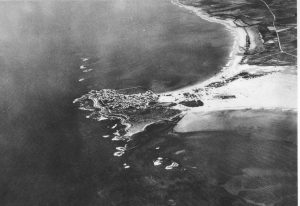
Tyre view from an airplane, 1934
(Wiki Image By work for the French government – Published in an academic French book “UN GRAND PORT DISPARU T Y R” in 1939, loaded from: almashriq.hiof.no/general/900/930/933/tyr-poidebard/tyr.html, Public Domain, https://commons.wikimedia.org/w/index.php?curid=1165307)
The legacy of the Siege of Tyre (332 BC) is unique because it is one of the few military engagements in history that resulted in a permanent change to the earth’s geography. Alexander the Great did not just defeat a city; he fundamentally altered the Mediterranean coastline.
Beyond the physical changes, the siege set new standards for military engineering, psychological warfare, and the strategic use of naval power.
🌍 1. Geographical Legacy: The Tombolo
The most enduring legacy is the Mole. Alexander’s engineers dumped millions of tons of rock and earth into the 800-meter channel separating the island from the mainland.
- Siltation: Because the mole blocked the natural north-to-south currents, sand and silt accumulated against the structure over the centuries.
- The Peninsula: This process, known as tombolo formation, eventually widened the land bridge. Today, the ancient island of Tyre is a permanent peninsula, and the modern city of Sour (Lebanon) sits directly atop the footprint of Alexander’s engineering project.
🏗️ 2. Engineering and Artillery Standards
The siege served as the “laboratory” for Hellenistic military technology. Many of the techniques developed here became the gold standard for the next 300 years.
- Torsion Power: The heavy use of torsion catapults (using twisted animal sinew) proved that stone walls were no longer invincible. This led to a “defense arms race,” in which cities began building much thicker, multilayered walls to withstand heavier projectiles.
- The Mobile Tower: The 150-foot siege towers built by Diades of Pella remained the most significant mobile structures ever built until the Roman era. They inspired the later Helepolis (“City-Taker”) used at the Siege of Rhodes.
⚓ 3. The Birth of Combined Arms Naval Warfare
Before Tyre, naval battles mainly were about ramming and boarding at sea. Alexander changed the role of the navy forever by integrating it into land-based siege tactics.
- The Naval Battery: By lashing ships together to create stable catamarans, Alexander invented the concept of the floating artillery platform. This allowed him to bring the power of a land-based siege engine to the weakest parts of a city’s defenses—the sea walls.
- Harbor Control: The systematic blockade of the Sidonian and Egyptian harbors at Tyre served as a blueprint for naval blockades employed throughout the Roman and Byzantine periods.
🏛️ 4. Political and Psychological Legacy
The fate of Tyre served as a terrifying “object lesson” for the rest of the ancient world.
- The Message of Gaza and Egypt: When Alexander moved south to besiege Gaza and then into Egypt, the memory of Tyre’s destruction ensured that resistance was minimal. The total enslavement of the population and the crucifixions along the shore were calculated acts of terror-as-strategy.
- The End of Phoenician Dominance: Tyre had been the premier maritime power of the Mediterranean for centuries. Its fall signaled the end of Phoenician independence and the beginning of the “Hellenization” of the Levant, in which Greek culture and language became the dominant forces.
🔍 5. Archaeological Legacy
Today, the remains of the siege provide a wealth of information for marine archaeologists.
- Submerged Structures: Underwater excavations have revealed the foundations of the mole and the massive boulders that Alexander’s “crane ships” winched aside.
- Weaponry Finds: Divers have discovered lead sling bullets, bronze arrowheads, and stone catapult balls in the harbors, offering a physical record of the “multi-directional” assault Alexander launched on the final day.
Would you like me to…
- Provide a technical comparison between the walls of Tyre and the later walls of Constantinople?
- Analyze the economic impact of losing Tyre on the Persian Empire’s war effort.
- Explore the legend of Alexander’s diving bell, which some accounts claim he used during this siege.
🌊 The Siege of Tyre (332 BC) YouTube Links Views
The Siege of Tyre (332 BC) is one of Alexander the Great’s most legendary accomplishments, often featured on YouTube for its unique blend of engineering and naval warfare.
🎥 Top-Rated & High-View Documentaries
- BazBattles: The Siege of Tyre 332 BC
- Views: ~1.6M+
- Style: The definitive visual guide for this siege. It uses a clean, minimalist animation style to show the construction of the mole, the Tyrian fire ship attack, and the final naval breakthrough.
- Kings and Generals: Siege of Tyre 332 BC – Alexander the Great DOCUMENTARY (Note: Often part of their “Alexander” playlist)
- Style: Known for cinematic map transitions and deep dives into the political stakes of the Phoenician coast. This video explains why Alexander had to take Tyre before moving to Egypt.
- IRON LEGACY: 332 B.C. The Siege of Tire and the Wrath of Alexander the Great
- Views: ~1.8K+
- Style: A newer narrative-driven account that focuses on the “wrath” of Alexander and the brutal aftermath of the seven-month investment.
🏛️ Engineering & Strategic Highlights
- Great Military Feats: Alexander The Great Greatest Victory: The Siege Of Tyre
- Views: ~2.4K+
- Style: Focuses on the “impossible” nature of the conquest, specifically the construction of the 800-meter mole that turned an island into a peninsula.
- Mysteries of the Past: The Impossible Conquest
- Style: A short, impactful summary of the technological innovations, such as the 150-foot siege towers and ship-mounted battering rams.
📊 Summary
- For Tactical Map Animation: Watch BazBattles.
- For Historical Context & “Big Picture”: Watch Kings and Generals.
For Engineering Focus: Great Military Feats provides a solid overview of the mole construction.
🌊 The Siege of Tyre Books
The Siege of Tyre is rarely the sole subject of a popular history book, as it is part of the larger Persian campaign. However, several specialized military histories dedicate significant chapters to the engineering and tactics of this specific battle.
Here are the top book recommendations for understanding the Siege of Tyre, categorized by their focus.
- The Definitive Military Analysis
“The Sieges of Alexander the Great” by Stephen English
- Focus: Military Engineering & Siegecraft.
- Why read it: Unlike general biographies that gloss over the mechanics, this book focuses exclusively on how Alexander took cities. It devotes a substantial section to Tyre, detailing the construction of the mole, the torsion artillery, and the countermeasures used by the Tyrians (such as heated sand and divers). It is the best resource for the specific technical details you are interested in.
- The Strategic Masterclass
“The Generalship of Alexander the Great” by J.F.C. Fuller
- Focus: Strategy & Tactics.
- Why read it: J.F.C. Fuller was a British Major General and a pioneer of armored warfare. He analyzes Alexander not as a “king” or “hero,” but as a professional general. His breakdown of the “Grand Strategy” of the Tyre campaign—explaining the “Dry Land” naval strategy and why the siege was a strategic necessity rather than an ego trip—is considered the gold standard in military academies.
- The Logistics “Why”
“Alexander the Great and the Logistics of the Macedonian Army” by Donald W. Engels
- Focus: Logistics & Supply Lines.
- Why read it: You were interested in why Alexander stopped to take Tyre. This book mathematically proves why he had to. Engels calculates the army’s calorie needs, water requirements, and march rates to show that Alexander could not march to Egypt while Tyre remained hostile in his rear. It turns the siege from a battle story into a fascinating study of survival and supply chains.
- The Primary Source (Eyewitness Account)
“The Campaigns of Alexander” (Anabasis Alexandri) by Arrian
- Focus: First-hand History.
- Why read it: This is the text all modern historians use. Arrian drew from the journals of Ptolemy (Alexander’s general), who was physically present at the siege. If you want to read the original description of the monsters of the deep attacking the workers on the mole, or the exact moment the wall was breached, this is the source.
- The Visual Guide
“Alexander the Great at War” by Ruth Sheppard (Osprey Publishing)
- Focus: Visuals, Maps & Equipment.
- Why read it: Osprey books are famous for their illustrations. This volume contains excellent tactical maps of the siege of Tyre, showing the progression of the mole and the naval blockade. It also features detailed illustrations of the siege towers (Helepolis) and the artillery used, helping you visualize the “Impossible Island.”
🔧 The Siege of Syracuse (213–212 BC)
🔧 Archimedes
The defense of Syracuse was masterminded by the polymath Archimedes, whose engineering genius transformed the city into an impregnable fortress against the Roman siege train. He devised terrifying counter-measures for the Roman fleet, most notably the “Claw of Archimedes”—a massive crane-operated hook that could descend from the walls, hoist enemy galleys by their prows, and capsize them into the sea. Furthermore, when the Romans deployed their Sambuca (floating siege towers mounted on paired ships) to scale the seawalls, Archimedes effectively neutralized them with hidden artillery and heavy stones that disabled the delicate mechanisms before they could breach the fortifications, demonstrating that superior intellect could hold an entire army at bay.
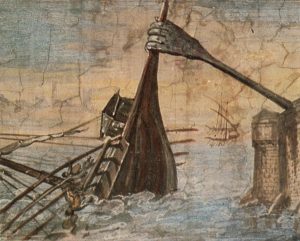
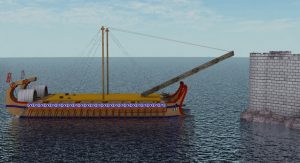
Claw of Archimedes (shown above) and the Sambuca (shown below) (Wikipedia Image)
According to Plutarch:
“A ship was frequently lifted to a great height [by the Claw] in the air (a dreadful thing to behold) and was rolled to and fro, and kept swinging until the mariners were thrown out when at length it was dashed against the rocks, or let fall. At the engine that [Proconsul] Marcellus brought upon the bridge of the ship, called a Sambuca, from some resemblance it had to an instrument of music, while it was yet approaching the wall, there was discharged a piece of rock of ten talents weight [710 pounds] than a second and a third, which, striking upon it with immense force and a noise like thunder, broke all its foundation to pieces, shook out all its fastings, and completely dislodged it from the bridge.”
🔧 The Siege of Syracuse Quotes
The Siege of Syracuse (213–212 BC) is primarily documented by the historians Polybius, Livy, and Plutarch. Their accounts focus heavily on the tension between Roman industrial military power and the singular, terrifying genius of Archimedes.
Here are the most significant quotations regarding the siege, categorized by the technologies and tactics employed.
⚙️ The Genius of Archimedes
Historians often described Archimedes not as a mathematician but as a “geometric Briareus” (a hundred-armed giant) who fought the Roman army single-handedly.
“Archimedes had so designed his artillery that it could be used against an enemy at any distance… as they [the Romans] fell into his range, he hit them with stones and bolts of every size.” — Polybius, The Histories
“He [Archimedes] did not think these inventions were worth any serious study, but considered them as the mere recreation of a geometrician in his leisure.” — Plutarch, Life of Marcellus
⚓ The Failure of the Naval Assault
The Roman commander Marcellus attempted a grand naval landing using the “Sambuca,” only to be mocked by the results of Archimedes’ machines.
“Marcellus was in a state of great distress… for Archimedes used his ships to ladle out his wine, and his engines to treat the Sambucas with the greatest possible ignominy.” — Plutarch
“The Claw [of Archimedes] would suddenly lift a ship by the prow, stand it upright on its stern, and then plunge it back into the sea… to the great terror and destruction of the crews.” — Polybius
🏹 The Psychological Warfare
The Romans, usually a fearless and disciplined force, became so traumatized by the “miracles” of the city’s defense that they lost their nerve.
“The Romans were so terrified that if they only saw a piece of rope or a small baulk of wood protruding over the wall, they would cry out that Archimedes was turning some engine upon them, and they would turn and flee.” — Plutarch
“In a word, such is the power of a single intellect… the Romans, who were so many and so brave, were baffled by the genius of one man.” — Polybius
🏺 The Fall and the Death of Archimedes
The siege ended not through technology, but through stealth during a religious festival. The death of Archimedes remains one of the most famous tragedies in military history.
“Do not disturb my circles!” (Noli turbare circulos meos!) — Archimedes’ traditional final words to the Roman soldier.
“Marcellus was deeply grieved by his death… he gave the man a burial with all honor and treated his relatives with great kindness.” — Livy, History of Rome
🏛️ The Cultural Impact
Syracuse was a center of Hellenistic art, and its fall marked the beginning of Rome’s transformation into a cosmopolitan empire.
“From this time began the Romans’ admiration for Greek art, and the custom of plundering the cities of the world.” — Plutarch.
“The city was so beautiful and so filled with treasure that Marcellus is said to have wept when he looked down upon it from the heights, thinking of its approaching ruin.” — Livy
Would you like me to…
- Analyze the technical accuracy of Polybius’s descriptions of the catapults?
- Explain the “Festival of Artemis” breach and how the Romans used a religious holiday to their advantage?
- Detail the tomb of Archimedes and how Cicero rediscovered it centuries later?
🔧 The Siege of Syracuse (213–212 BC) Prehistory
The “prehistory” of the Siege of Syracuse (213–212 BC) is a geopolitical tragedy driven by the power vacuum created by the Second Punic War. It explains how a city that had been Rome’s most loyal ally for fifty years suddenly became its most dangerous enemy.
- The Golden Age of Hiero II (270–215 BC)
For half a century, Syracuse was ruled by King Hiero II. He was a brilliant pragmatist who recognized early on that Rome was the rising superpower of the Mediterranean.
- The Roman Alliance: Hiero signed a treaty with Rome in 263 BC. For decades, he provided Rome with grain, gold, and archers during its wars against Carthage.
- The Preparation: Despite the peace, Hiero was paranoid about the city’s safety. He commissioned his kinsman, the mathematician Archimedes, to upgrade the city’s defenses. The “super-weapons” used against the Romans were actually designed years earlier, intended to protect the city from Carthage.
- The Shock of Cannae (216 BC)
The catalyst for the war occurred on the Italian mainland. In 216 BC, Hannibal Barca annihilated the Roman army at the Battle of Cannae.
- The Perception of Weakness: To the Greeks in Sicily, Rome appeared finished. The invincible legion had been crushed. Pro-Carthaginian factions within Syracuse began to whisper that Hiero was backing the wrong horse.
- The Death of the King: In 215 BC, the aged Hiero II died, leaving the throne to his 15-year-old grandson, Hieronymus.
- The Boy King and the Flip
Hieronymus was young, vain, and easily manipulated by courtiers whom Hannibal had bribed.
- The Carthaginian Offer: Hannibal promised Hieronymus that, if he defected, Carthage would grant him sovereignty over all of Sicily once Rome was defeated.
- The Defection: Hieronymus openly mocked the Roman envoys and pledged Syracuse’s vast navy and resources to Carthage. This threatened to cut off Rome’s grain supply precisely when it was most vulnerable.
- The Republic of Chaos (214 BC)
Hieronymus’s reign was short; he was assassinated by a pro-Roman conspiracy after only 13 months. Syracuse briefly declared itself a Republic, but it descended into anarchy.
- Hippocrates and Epicydes: Two brothers—Syracusan Greeks by birth but agents of Hannibal—seized control of the military. They whipped the population into a frenzy, claiming Rome intended to enslave the city.
- The Massacre at Leontini: The brothers took their army to the neighboring city of Leontini and massacred the Roman garrison there. This was the point of no return.
- The Roman Hammer: Marcellus Arrives
Rome sent Marcus Claudius Marcellus, known as the “Sword of Rome,” to Sicily to restore order.
- The Retaliation: Marcellus stormed Leontini. Reports (likely exaggerated by Carthaginian propaganda) spread that he had massacred the civilians.
- The Gates Close: Upon hearing of the “Sack of Leontini,” the citizens of Syracuse panicked. They fully embraced Hippocrates and Epicydes, locked the city gates, and manned the walls.
- The Stage Set: Marcellus marched his legions to the walls of Syracuse, expecting a quick surrender. Instead, he found Archimedes waiting for him.
Summary Table: The Slide into War
| Year | Event | Strategic Impact |
| 263–215 BC | Reign of Hiero II | Syracuse is a stable, wealthy Roman ally; Archimedes fortifies its defenses. |
| 216 BC | Battle of Cannae | Rome loses 50,000 men to Hannibal; Roman prestige collapses. |
| 215 BC | Hieronymus takes the throne | Carthaginian promises seduce the new boy-king. |
| 214 BC | Assassination & Coup | Pro-Carthaginian agents seize control of the Syracusan army. |
| 213 BC | Arrival of Marcellus | Rome invades Sicily; the Siege of Syracuse begins. |
Would you like me to…
- Analyze the geography of Syracuse (Ortygia vs. Epipolae) that made it so defensible?
- Detail the specific defensive preparations Archimedes made during the peace of Hiero II?
Compare the leadership style of Hiero II vs. that of his disastrous grandson, Hieronymus.
🔧 The Siege of Syracuse Chronological Table
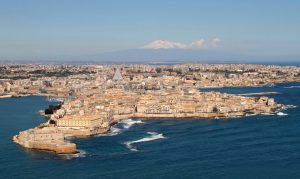
Ortygia Island, where Syracuse was founded in ancient Greek times
(Wiki Image By cc-by-2.0, Attribution, https://commons.wikimedia.org/w/index.php?curid=23148161)
🔧 The Siege of Syracuse (213–212 BC): Chronological Table
Below is a clear, step-by-step chronological table outlining the primary phases, technologies, tactics, and turning points of the Roman siege of Syracuse during the Second Punic War.
🔧 Siege of Syracuse — Chronological Timeline
| Year / Phase | Event | Key Technology & Tactics | Strategic Significance |
| 214 BC | Syracuse switches allegiance to Carthage after the death of King Hiero II | Political realignment; fortified city | Forces Rome to neutralize a critical naval and grain hub |
| 214 BC | Roman army and fleet arrive under Marcus Claudius Marcellus | Combined land–sea siege | Rome expects a quick victory based on overwhelming force |
| 214 BC | Initial Roman naval assault fails | Archimedes’ defensive machines: stone-throwers, ballistae | Romans shocked by technological superiority |
| 214 BC | “The Claw of Archimedes” deployed | Crane-like grappling device lifts and capsizes ships | Roman fleet suffers heavy losses and retreats offshore |
| 214 BC | High-angle artillery counters Roman siege towers | Adjustable torsion catapults | Syracuse controls both long- and short-range engagements |
| 213 BC | Roman morale collapses | Psychological warfare via surprise mechanical defenses | Romans abandon direct assaults |
| 213 BC | Roman blockade begins | Starvation strategy replaces engineering assault | Siege shifts from technology to logistics |
| 213 BC | Roman winter encampment established | Sustained supply lines | Demonstrates Roman endurance advantage |
| 212 BC (Spring) | Plague and famine inside Syracuse | Disease spreads due to overcrowding | Weakens civilian resistance |
| 212 BC (Summer) | Festival of Artemis was celebrated | Reduced guard discipline | Creates a critical vulnerability |
| 212 BC | Roman night infiltration | Ladder assault during the festival | Romans breached the Epipolae plateau |
| 212 BC | City systematically captured | Street-by-street infantry combat | End of organized Syracusan resistance |
| 212 BC | Death of Archimedes | Killed by a Roman soldier | Loss of the greatest scientific mind of antiquity |
| 212 BC | Sack of Syracuse | Looting; deportation of citizens | Rome acquires vast Greek art and knowledge |
🔑 Key Siege Characteristics (At a Glance)
| Category | Syracuse |
| Length | ~2 years |
| Primary Defender Advantage | Advanced engineering & artillery |
| Primary Roman Advantage | Logistics, manpower, patience |
| Decisive Factor | Starvation + internal complacency |
| Historical Legacy | Triumph of endurance over genius |
🧠 Why Syracuse Matters
- First recorded “scientific war”: mathematics and physics were used systematically in defense.
- Turning point in Roman warfare: Romans learn to outlast technology
- Cultural catastrophe: loss of Archimedes and absorption of Greek science into Rome
If you’d like, I can also provide:
- 📊 a side-by-side comparison with Tyre, Alesia, or Masada
- 🧠 a deep dive into Archimedes’ machines
- ⚔️ a Roman vs Greek siege doctrine comparison
Just say the word.
🔧 The Siege of Syracuse History
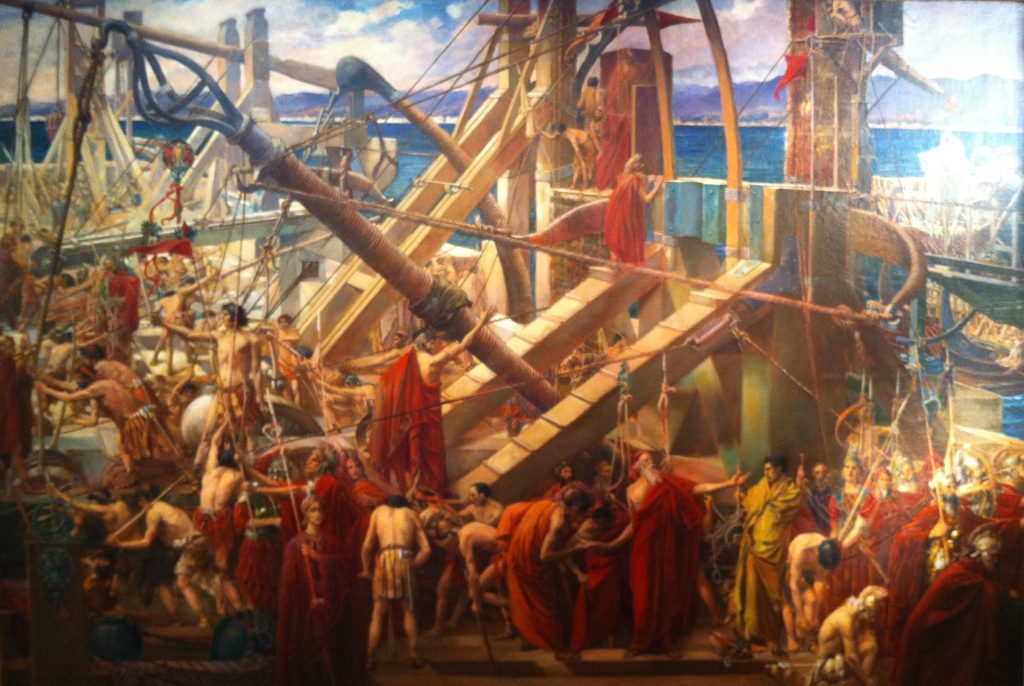
Archimedes directing the defenses of Syracuse
(Wiki Image By Thomas Ralph Spence – www.artfinding.com/Biography/Spence-Thomas-Ralph, Public Domain, https://commons.wikimedia.org/w/index.php?curid=30470075)
The Siege of Syracuse (213–212 BC) was a centerpiece of the Second Punic War, pitting the industrial military might of the Roman Republic against the scientific ingenuity of the Greek mathematician Archimedes.
The siege is legendary not just for its brutality, but for being perhaps the only time in history a single man’s intellect held an entire empire at bay for years.
🏛️ The Strategic Context: A Broken Alliance
For fifty years, Syracuse had been a loyal Roman ally under King Hiero II. However, after the Roman disaster at the Battle of Cannae, the pro-Carthaginian faction in Syracuse gained control. The young new king, Hieronymus, defected to Hannibal, threatening the Roman grain supply in Sicily. Rome responded by sending the veteran consul, Marcus Claudius Marcellus, to recapture the city.
⚓ Phase I: The Failed Naval Assault
Marcellus arrived with a fleet of 60 quinqueremes, confident that a direct sea assault would break the city. He deployed the Sambuca, a massive scaling ladder mounted on pairs of lashed-together ships.
However, the Romans were met with the “Super-Weapons” of Archimedes:
- The Claw of Archimedes: Giant crane-like arms equipped with grappling hooks that snagged Roman ships, lifted them out of the water, and dropped them to their destruction.
- Variable-Range Torsion Engines: Catapults and “Scorpions” (bolt-throwers) that fired with such precision that they cleared the Roman decks from hundreds of yards away, as well as at point-blank range through hidden “loopholes” in the walls.
🧱 Phase II: The Euryalus Fortress and Land War
Marcellus also attempted to storm the city by land via the Epipolae ridge. Here, the Romans encountered the Euryalus Fortress, the most sophisticated defensive work of the Greek world.
The fortress featured:
- Deep Dry Moats: Preventing the use of Roman battering rams or siege towers.
- Underground Tunnels: Allowing the defenders to move troops secretly to launch surprise counter-attacks on the Roman flanks before vanishing back into the earth.
🥖 Phase III: The Two-Year Blockade
Realizing that direct assault was suicide, Marcellus shifted to a blockade. For two years, the Roman army surrounded the city, attempting to starve the population.
- Logistical Strain: The Romans had to fend off Carthaginian relief fleets and armies while maintaining their own camps in the swampy, malaria-ridden lowlands south of the city.
- The “Marsh Fever”: A plague broke out in the Carthaginian relief camp in the Lysimachia marshes, killing their commanders and thousands of soldiers. At the same time, the Romans on higher ground remained relatively healthy.
🏹 The Fall: Stealth and Betrayal
The city did not fall to a machine, but to a lapse in security. In 212 BC, Marcellus noticed a low, unguarded section of the wall near the Trogilus gate.
- The Festival of Artemis: While the Syracusans were celebrating a religious festival with heavy wine, a small party of Roman soldiers scaled the walls in the dark.
- The Breach: They opened the gates from the inside, allowing the Roman army to flood the outer districts (Tyche and Neapolis).
- The Final Traitor: The inner island of Ortygia held out for a few more months until a Spanish mercenary officer betrayed the city and opened the final gates to the Romans.
⚖️ The Aftermath and the Death of Archimedes
The sack of Syracuse was famously brutal. Despite Marcellus giving strict orders to spare Archimedes, a Roman soldier found the 75-year-old mathematician drawing geometric diagrams in the dirt. When Archimedes reportedly told the soldier, “Do not disturb my circles,” the soldier killed him.
The legacy of the siege was two-fold:
- Political: It solidified Roman control over Sicily, which would remain a Roman province for centuries.
- Cultural: The massive amount of Greek art and scientific instruments looted from Syracuse and sent to Rome sparked the “Hellenization” of Roman culture, forever changing the Republic’s intellectual trajectory.
Would you like me to…
- Provide a technical breakdown of the physics behind the Claw of Archimedes?
- Detail the archaeological remains of the Euryalus Fortress today?
- Compare this siege to the Roman Siege of Jerusalem in 70 AD?
🔧 The Siege of Syracuse (213–212 BC): 8 top essential aspects, including technology, engineering, tactics, strategy, artillery, infantry, cavalry, navy, plague, religion, logistics, walls, manpower, and length.
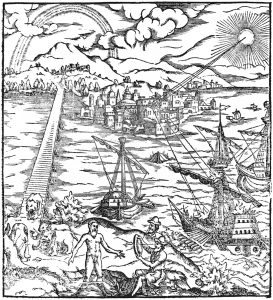
Archimedes set Roman ships on fire before Syracuse with the help of parabolic mirrors.
(Wiki Image By Unknown illustrator – Bavarian State Library, Public Domain, https://commons.wikimedia.org/w/index.php?curid=503708)
The Siege of Syracuse (213–212 BC) stands as one of the most intellectually and technologically sophisticated conflicts of the ancient world. It was a collision between the burgeoning industrial military might of the Roman Republic and the peak of Hellenistic scientific achievement, embodied by the polymath Archimedes.
To provide a comprehensive analysis, we will break the siege down into eight essential pillars: the defensive genius of Archimedes, the Roman naval innovations, the formidable engineering of the city walls, the grand strategy of the Second Punic War, the tactical stealth that led to the breach, the biological impact of the plague, the logistical nightmare of the blockade, and the tragic cultural outcome.
1. Technology: The “Machines of Archimedes” ⚙️
The defense of Syracuse was not a feat of manpower, but of mathematics. Archimedes turned the city’s fortifications into an automated killing machine that nearly broke Roman morale.
- The Claw of Archimedes: This was a giant, crane-like machine positioned behind the seawalls. When a Roman ship approached, the Claw would swing out, lower a grappling hook, snag the ship’s prow, and lift it vertically. Once the ship was suspended, the Claw would release it, causing the vessel to capsize or smash against the rocks. This neutralized the Roman naval advantage entirely.
- Variable-Range Torsion Engines: Archimedes revolutionized artillery by creating catapults and ballistae with adjustable ranges. Most ancient artillery had a “blind spot” near the wall; Archimedes created “scorpions” (small, high-velocity bolt throwers) that fired through narrow apertures in the masonry, striking Romans who believed they were safe at the base of the wall.
- The Burning Mirrors (Debated): While historically controversial, legend states Archimedes used parabolic bronze mirrors to focus sunlight onto Roman sails, igniting them. Whether true or a later embellishment, it reflects the Roman perception that Syracuse was defended by “miracles.”
- Mechanical Synergy: The technology was integrated into the architecture. The walls weren’t just stone; they were platforms for gears, pulleys, and winches that amplified the defenders’ force.
2. Engineering: The Walls of Dionysius 🧱
Syracuse was protected by one of the most sophisticated defensive systems in history, constructed over generations and perfected by the tyrant Dionysius I and later Hiero II.
- The Euryalus Fortress: Located at the western tip of the Epipolae ridge, this was the strongest fort in the Greek world. It featured three massive dry moats, complex gate systems designed to trap attackers in “kill zones,” and five massive towers that could house giant catapults.
- Subterranean Warfare: The fortress was connected to the city by an extensive network of underground tunnels. These allowed the defenders to move troops, supplies, and even small engines secretly across miles of territory, launching surprise sorties behind Roman lines and then vanishing back into the earth.
- Aperture Engineering: The sea-facing walls were modified with “loopholes”—small, funnel-shaped openings. These allowed archers to fire with a wide field of view while remaining almost entirely invulnerable to incoming Roman arrows.
3. Navy: The Roman Sambuca ⚓
The Roman commander, Marcus Claudius Marcellus, realized he could not take the city by land, so he attempted a massive naval assault using a new Roman engineering device: the Sambuca.
- Structure: The Sambuca (named after a triangular harp) was a massive scaling ladder mounted on two quinqueremes (galleys) lashed together. The ladder was enclosed in a protective wooden shed to shield the boarding party.
- The Counter-Measure: As the Sambucas approached, Archimedes used heavy catapults to launch stones weighing over 600 pounds. These massive projectiles smashed through the wooden roofs of the Sambucas and the decks of the ships below, sinking them before they could reach the walls.
- Psychological Impact: The failure of the Sambuca convinced the Romans that Syracuse was impregnable by sea. Marcellus famously joked that Archimedes was using his ships as “ladles to draw out his wine.”
4. Strategy: The Second Punic War Context 🌍
The siege was not an isolated event; it was a pivot point in the struggle between Rome and Hannibal’s Carthage.
- The Betrayal: Syracuse had been a Roman ally for 50 years under King Hiero II. Upon his death, his grandson Hieronymus switched sides to Carthage, threatening the Roman grain supply and their control over the Mediterranean.
- The Mediterranean “Chessboard”: Rome could not afford a Carthaginian stronghold in Sicily. If Syracuse held out, Carthage could use it as a base to ferry reinforcements to Hannibal, who was then ravaging the Italian mainland.
- Marcellus’s Mandate: Marcellus was given a “total war” mandate. He had to capture Syracuse at any cost to prevent the collapse of the Roman western front. This led to the shift from a tactical assault to a two-year strategic blockade.
5. Tactics: The Breach at the Feast of Artemis 🏹
After 24 months of stalemate, the Romans finally entered the city through intelligence and stealth rather than brute force.
- The Weak Point: During a parley with a Syracusan diplomat, a Roman officer observed a section of the wall (near the Trogilus gate) that was slightly lower and less heavily guarded.
- Religious Timing: Marcellus learned that the city was about to celebrate a three-day festival in honor of the goddess Artemis. He gambled that the garrison would be preoccupied with religious ritual and wine.
- The Night Raid: A small elite party of 1,000 Roman soldiers scaled the wall in the dead of night. They moved through the Tyche and Neapolis districts, killing the drunken guards and opening the gates for the main army. By dawn, the outer city had fallen.
6. Plague: The “Invisible” Defender 🤒
Just as it seemed the Romans would complete their conquest, a Carthaginian relief army arrived, leading to a biological catastrophe that determined the city’s fate.
- The Lysimeleia Marshes: The Carthaginian army, led by Himilco, camped in the low-lying, humid marshes south of the city. This was a breeding ground for disease (likely malaria or typhus).
- The Outbreak: In the summer heat of 212 BC, a devastating plague broke out. The Carthaginian and Syracusan relief forces were decimated, with Himilco and the Syracusan commander Hippocrates both dying from the infection.
- The Roman Advantage: The Romans, stationed on the higher, drier ground of the Epipolae ridge, suffered far fewer casualties. This plague removed the last hope of outside rescue for the besieged Syracusans.
7. Logistics: The Long Investment 🥖
A two-year siege requires an incredible amount of logistical planning for both the attacker and the defender.
- Supply Lines: The Romans had to maintain a fleet of 100 quinqueremes and a land force of 25,000–30,000 men. They relied on grain from eastern Sicily and Italy, which was constantly threatened by the Carthaginian navy.
- Internal Starvation: Inside the city, the blockade eventually did what the machines could not. As Carthaginian supply ships were intercepted, the citizens of Syracuse began to starve. This led to internal discord and, eventually, to the betrayal of the inner island of Ortygia by a Spanish mercenary officer named Mericus to the Romans.
- Roman Persistence: The Roman “logistics of will” was their greatest strength. Despite being defeated by Archimedes’ machines and the Carthaginian navy, they refused to lift the siege until the city fell.
8. Outcome: The Death of a Genius 🏛️
The siege ended in a brutal sack that marked the end of the Hellenistic Golden Age and the start of Roman cultural dominance.
- The Order: Marcellus, a lover of Greek culture, had specifically ordered his troops to spare Archimedes, hoping to bring the scientist back to Rome.
- The Conflict: During the chaos of the sack, a Roman soldier encountered an old man drawing geometric diagrams in the dirt. Archimedes, supposedly annoyed by the interruption, told the soldier, “Do not disturb my circles.”
- The Death: The soldier, insulted and not recognizing the man, killed Archimedes on the spot. Marcellus was reportedly devastated and gave Archimedes a burial with full honors, but the greatest mind of the age was gone.
- The Loot: Syracuse was stripped of its treasures. Statues, paintings, and scientific instruments were sent to Rome, marking the first significant influx of Greek art into the Republic and fundamentally changing Roman taste and education.
Would you like me to…
- Compare the mechanics of Archimedes’ Claw with modern crane engineering?
- Provide a map-based breakdown of the various districts of Syracuse (Ortygia, Tyche, Achradina)?
- Explore the political career of Marcellus after his victory at Syracuse.
🔧 The Siege of Syracuse Legacy
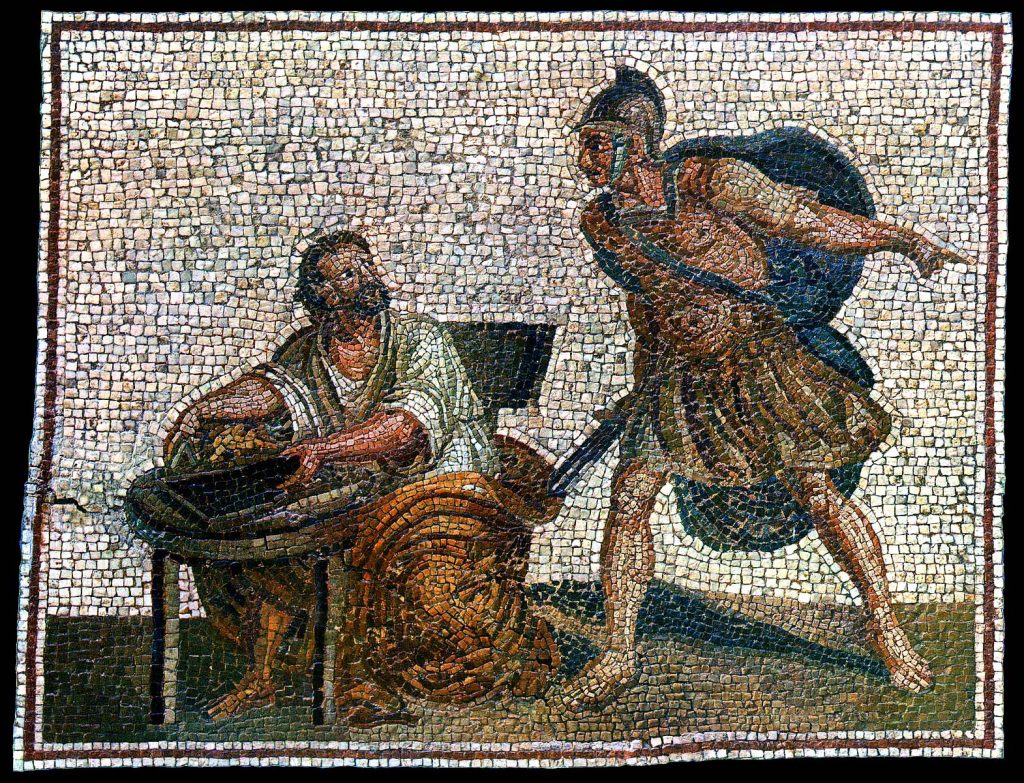
Archimedes, before his death, with a Roman soldier, a copy of a Roman mosaic from the 2nd century.
(Wiki Image By Unknown author – Scanned by Szilas from the book J. M. Roberts: Kelet-Ázsia és a klasszikus Görögország (East Asia and Classical Greece), Public Domain, https://commons.wikimedia.org/w/index.php?curid=52151843)
The legacy of the Siege of Syracuse (213–212 BC) extends far beyond a simple Roman victory in the Second Punic War. It represents a watershed moment in the history of science, the evolution of military engineering, and the cultural transformation of the Roman Republic itself.
Here are the 8 essential aspects of the siege’s enduring legacy:
- The Birth of “Genius” in Military History 🧠
Before Syracuse, battles were generally viewed as contests of manpower, bravery, or generalship. Syracuse introduced the concept of the scientist-as-warrior.
- Individual Impact: The siege proved that a single mind, using mathematics and physics, could neutralize the industrial might of a superpower.
- The “Archimedes Legend”: The accounts of his “super-weapons” created a template for the “mad scientist” or “defense contractor” that persists in Western literature and history to this day.
- Engineering: The Perfection of Defensive Architecture 🧱
The Euryalus Fortress remains one of the best-preserved examples of high Hellenistic military engineering.
- The Blueprint for Defense: Its use of complex dry moats, underground troop galleries, and tiered catapult batteries influenced later Roman and Byzantine fortification designs.
- Subterranean Warfare: The tunnels at Syracuse demonstrated the strategic value of “hidden” mobility, a concept later utilized in medieval castle design and modern trench warfare.
- The Industrialization of Siege Engines ⚙️
While Archimedes provided the “custom” genius, the Romans learned the value of standardized siege equipment.
- The Roman Response: Having been battered by Syracuse’s superior artillery, Rome accelerated its own development of the Ballista and Onager.
- Standardization: The failure of the Sambuca (the naval scaling ladder) led Roman engineers to refine amphibious landing craft and mobile boarding bridges that would eventually be used across the Mediterranean.
- Cultural Legacy: The “Grecianization” of Rome 🏺
The sack of Syracuse was the moment the Roman Republic “fell in love” with Greek culture—often called the Predatory Enlightenment.
- Art as Loot: Marcus Claudius Marcellus sent hundreds of statues, paintings, and scientific instruments from Syracuse to Rome.
- The Shift in Taste: The mass influx of Hellenistic art transformed Roman aesthetic tastes, leading to Horace’s famous quote: “Captive Greece took captive her savage conqueror.”
- Mathematics: The Preservation of the “Method” 📏
Despite his death at the hands of a Roman soldier, Archimedes’ works were mainly preserved because of the fame he gained during the siege.
- The Archimedes Palimpsest: His treatises on the sphere and cylinder, and his “Method of Mechanical Theorems,” were saved and studied by later Roman and Islamic scholars.
- The Tomb: Centuries later, the Roman statesman Cicero used his knowledge of the siege to locate Archimedes’ lost tomb (marked by a sphere and cylinder), proving that the scientist’s intellectual legacy outlived the city’s political power.
- Naval Tactics: The “Floating Battery” Concept ⚓
The siege pushed naval warfare beyond simple ramming and boarding.
- Stable Platforms: The Roman attempt to lash quinqueremes together to support heavy engines was a precursor to the modern monitor or battleship.
- Harbor Defense: Archimedes’ use of the “Claw” and sea-wall loopholes taught future empires that a harbor could be defended without a fleet, provided the shore-based artillery was sufficiently advanced.
- Strategic Logistics: The Importance of Sicily 🗺️
The fall of Syracuse effectively ended Carthaginian hopes of using Sicily as a “bridge” to Italy.
- Rome’s Breadbasket: With Syracuse back under Roman control, the Republic secured the grain supplies necessary to fuel its ultimate counter-offensive against Hannibal in Africa.
- Provincial Model: Sicily became Rome’s first province, and the administrative lessons learned there (taxation, grain quotas) set the standard for the entire Roman Empire.
- The Tragic Legend: Ethics in War ⚖️
The death of Archimedes remains a primary historical example of the “collateral damage” of war.
- The “Scholarly Martyr”: Archimedes is often portrayed as the first martyr of science—a man so focused on universal truths (his “circles”) that the mundane violence of political conquest destroyed him.
- Marcellus’s Regret: The fact that the Roman commander Marcellus mourned Archimedes’ death served as an early (if hypocritical) example of the “Laws of War” and the idea that some cultural assets should be spared from the sword.
Would you like me to…
- Analyze the physics of the “Death Ray” to see if Archimedes could have actually burned the Roman fleet?
- Detail the exact mechanisms of the Roman Ballista developed after this siege?
- Explore the modern ruins of Syracuse to see what remains of the 3rd-century BC walls.
🔧 The Siege of Syracuse (213–212 BC) YouTube Links Views
The Siege of Syracuse (213–212 BC) is one of the most famous sieges in ancient history, largely due to the legendary genius of Archimedes and his war machines. On YouTube, this topic is often covered by military history and ancient technology channels.
🎥 Top Documentary & Narrative Overviews
- Modern Historians: How One Genius Humiliated The Roman Republic: Siege of Syracuse (212 BC)
- Views: ~51K+
- Style: A deep-dive documentary (36 minutes) that focuses on the clash between Roman military persistence and the scientific ingenuity of Archimedes. It covers the political betrayal that ultimately led to the city’s fall.
- HistoryMarche: Siege of Syracuse, 213-212 BC – Hannibal (Part 21)
- Views: ~284K+
- Style: Part of a broader series on the Second Punic War. This video uses highly detailed 3D animated maps to explain the tactical movement of the Roman fleet under Marcellus and the layout of the city’s formidable defenses.
- Invicta: Punic-Sicilian Wars ⚔️ The Siege of Syracuse (397 BC)
- Views: ~192K+
- Note: While this focuses on an earlier siege, it provides essential context on why Syracuse was historically considered one of the most impregnable fortresses in the Mediterranean.
⚙️ Science & Inventions (The War Machines)
- Ancient Tech Files: Archimedes’ Death Ray
- Style: A short, technical look at the legend of the “heat ray”—mirrors used to set Roman ships on fire—and the archaeological/scientific debates surrounding it.
- The Claw of Archimedes: Many historical engineering channels feature recreations of the “Claw,” a giant crane mechanism that allegedly lifted Roman galleys out of the water and dropped them to their destruction.
🎬 Pop Culture Connections
- Indiana Jones and the Dial of Destiny: Meeting Archimedes (4K)
- Views: ~214K+
- Style: An excerpt from the 2023 film, which dramatizes a time-travel meeting during the actual 212 BC siege, bringing a renewed interest to the historical event.
📊 Summary
- For detailed tactical mapping, consult HistoryMarche.
- For Narrative & Historical Impact: Watch Modern Historians.
- For Ancient Engineering: Search for videos specifically on the Claw of Archimedes.
Would you like to find more information on the specific war machines Archimedes used, or perhaps a map of the city’s ancient fortifications?
🔧 The Siege of Syracuse Books
The Siege of Syracuse is often overshadowed by the larger conflict of the Second Punic War (Hannibal vs. Rome). Therefore, the most reliable information is found in books that focus on the war in Sicily or in biographies of the key players (Marcellus and Archimedes).
Here are the top book recommendations for the Siege of Syracuse.
- The Best Narrative History
“The Ghosts of Cannae: Hannibal and the Darkest Hour of the Roman Republic” by Robert L. O’Connell
- Focus: The Infantry & Manpower.
- Why read it: This is crucial for understanding the “Men” aspect of your request. The Roman legions besieging Syracuse were not regular troops; they were the “Ghosts”—the disgraced survivors of the Battle of Cannae. They had been banished to Sicily as punishment for losing to Hannibal. O’Connell explains how the Siege of Syracuse was their desperate bid for redemption, adding a powerful human element to the battle.
- The Definitive Military History
“The Fall of Carthage” (also published as “The Punic Wars”) by Adrian Goldsworthy
- Focus: Strategy & Tactics.
- Why read it: Goldsworthy is one of the top Roman military historians. His chapter on the Sicilian campaign is the best modern breakdown of the military situation. He analyzes Marcellus’s strategy, explaining why the Romans shifted from assault to blockade and how they handled the Carthaginian relief army (and the plague).
- The Engineering & Technology Source
“Archimedes” by E.J. Dijksterhuis
- Focus: Technology & Science.
- Why read it: If you want to understand the “Claw” and the catapults from a mathematical and engineering perspective, this is the classic scientific biography. It examines the mechanics of Archimedes’ inventions and his application of theoretical mathematics to physical warfare.
- The Primary Source (Where the myths come from)
“Life of Marcellus” (from Parallel Lives) by Plutarch
- Focus: Eyewitness-style Accounts.
- Why read it: This is the original source for almost every famous story about the siege. If you want to read the description of the Iron Hand lifting ships out of the water, or the account of Archimedes’ death (“Do not disturb my circles”), this is the text. It depicts the Roman terror of confronting “invisible” technological weapons vividly.
- The Regional Context
“Sicily: Three Thousand Years of Human History” by Sandra Benjamin
- Focus: Geopolitics & Walls.
- Why read it: Syracuse was the “New York City” of the ancient Mediterranean—wealthy, massive, and heavily fortified. This book provides the context for the city’s importance, detailing the construction of the gigantic Dionysian Walls and the Castle of Euryalus, which held the Romans at bay for two years.
Summary for your specific interests:
- For the “Men” (Infantry): Read The Ghosts of Cannae.
- For the “Machines” (Artillery): Read Archimedes or Plutarch.
- For the “Strategy”: Read The Fall of Carthage.
🌀 The Siege of Alesia (52 BC)
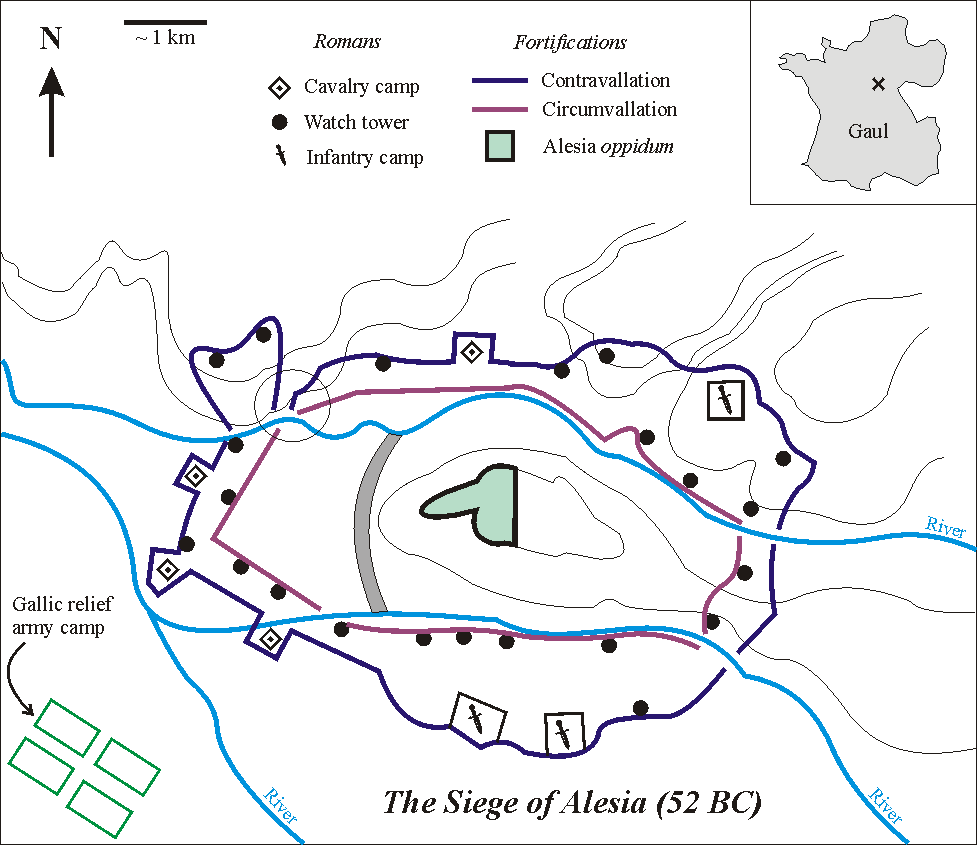
The fortifications built by Caesar in Alesia. Inset: a cross shows the location of Alesia in Gaul (modern France). The circle indicates a weakness in the northwestern section of the fortifications.
(Wiki Image By Muriel Gottrop at English Wikipedia, CC BY-SA 1.0, https://commons.wikimedia.org/w/index.php?curid=20851)
🌀 The Siege of Alesia Quotes
The Siege of Alesia (52 BC) is primarily documented by Julius Caesar himself in his Commentaries on the Gallic War (De Bello Gallico), with additional perspective provided later by Plutarch and Cassius Dio. These quotes capture the cold, clinical engineering of the Romans and the desperate, emotional defiance of the Gauls.
🏛️ Caesar’s Engineering Resolve
Caesar describes his massive fortifications with the detachment of an architect, highlighting the “Death Fields” he created to protect his legions.
“Since such a large body of men could not easily be maintained by a thin line of soldiers… Caesar thought that he should add further types of defenses, so that the fortifications might be defensible by a smaller number.” — Julius Caesar, De Bello Gallico
“The Gauls called these ‘lilies’ (lilia) from their resemblance to that flower… The whole field was thickly set with these, and then covered with brushwood and hurdles to conceal the traps.” — Julius Caesar
🪵 The Gallic Cry for Freedom
As the siege dragged on, the internal debate within Alesia became a choice between starvation and a “glorious” death. The speech of the Chieftain Critognatus is one of the most chilling in ancient literature.
“Death is a small thing to those who cannot endure a short time of want… But look at the rest of Gaul, which you have stirred up to help you. What heart do you think our relatives and brothers will have, if eighty thousand of us are butchered in one spot?” — Critognatus (recorded by Caesar)
“Vercingetorix summoned a council and declared that he had undertaken this war not for his own needs, but for the common liberty.” — Julius Caesar
⚔️ The Climax: The Red Cloak
During the final, desperate assault on the outer wall, Caesar’s personal intervention was the psychological turning point for his exhausted men.
“Caesar, as soon as he was recognized by the color of his cloak, which he was accustomed to wear in battles as a mark of distinction… the enemy joined the battle. A shout was raised on both sides.” — Julius Caesar
“The Roman soldiers, throwing away their javelins, carried on the fight with their swords. Suddenly, the cavalry was seen in the enemy’s rear; the other cohorts drew near. The enemy turned their backs.” — Julius Caesar
🏳️ The Final Surrender
The scene of Vercingetorix’s surrender is one of the most iconic moments in Roman history, marking the end of Gallic sovereignty.
“Vercingetorix, the chief leader of the whole war, putting on his most beautiful armor and adorning his horse, rode out of the gates… He circled around Caesar as he sat, then dismounted, threw off his armor, and sat quietly at Caesar’s feet.” — Plutarch, Life of Caesar
“I have conquered you, Caesar, but I have also conquered Gaul.” — Traditional (attributed to Vercingetorix during surrender)
🌍 The Historical Legacy
Later historians reflected on the sheer impossibility of what Caesar achieved—defeating an army within a wall while being surrounded by a larger one outside.
“The most remarkable thing of all was that Caesar, while besieging so great a multitude in Alesia, was himself besieged by a much greater multitude from without.” — Cassius Dio, Roman History.
“He [Caesar] enclosed himself in a double wall… performing two such great battles at the same time as were never performed by any other man.” — Plutarch
Would you like me to…
- Analyze the Latin terminology Caesar used for his specific traps (like abatis or stimuli)?
- Explain the psychological tactics Caesar used in his writing to justify the starvation of the Alesia civilians?
- Detail the archaeological evidence found at Alise-Sainte-Reine that matches these descriptions?
🌀The Siege of Alesia (52 BC) Prehistory
The “prehistory” of the Siege of Alesia (52 BC) is the story of the Great Gallic Revolt, the moment when the fractured tribes of Gaul finally united under a single leader to challenge Julius Caesar’s ten-year expansion. It represents the transition from localized guerrilla warfare to total war aimed at the survival of Celtic culture.
- The Landscape of Occupation (58–53 BC)
By 53 BC, Julius Caesar believed Gaul was “pacified.” For five years, he had played tribes against each other, rewarding allies and brutally crushing dissidents.
- The Roman “Peace”: Rome had imposed heavy taxes, seized grain, and taken thousands of Gauls as slaves.
- The Growing Resentment: Tribal leaders realized that Caesar’s “protection” was actually a permanent occupation. The execution of the chief Acco in 53 BC served as a final warning that Roman law now superseded tribal sovereignty.
- The Rise of Vercingetorix (Winter 53–52 BC)
The revolt began not on the battlefield, but in the shadows of the Carnutes’ forest, where tribal leaders met in secret.
- The King of the Arverni: Vercingetorix, a young nobleman whose father had been killed seeking kingship, seized power in his tribe and called for a general insurrection.
- The Unification: For the first time, traditional rivals—the Arverni, Carnutes, Senones, and others—vowed a sacred oath to fight under one supreme commander.
- The “Scorched Earth” Strategy
Vercingetorix understood he could not defeat Caesar’s legions in a head-on pitched battle. He pioneered a “scorched earth” policy to starve the Roman war machine.
- Destroying the Supply: The Gauls burned their own villages, granaries, and haylofts to prevent the Romans from foraging for food.
- The Siege of Avaricum: Against Vercingetorix’s advice, the Bituriges tribe insisted on defending their beautiful city, Avaricum. Caesar successfully besieged it and massacred nearly the entire population (40,000 people). This tragedy paradoxically strengthened Vercingetorix’s authority, as it proved his “scorched earth” warnings were correct.
- The Humiliation at Gergovia (Spring 52 BC)
Shortly before Alesia, Caesar suffered his first major tactical defeat at Gergovia, Vercingetorix’s capital.
- The Overextension: Caesar attempted to storm the high-altitude city but was repulsed with heavy losses.
- The Psychological Shift: The Roman retreat from Gergovia sent shockwaves through Gaul. Tribes that had remained neutral, including Rome’s oldest allies, the Aedui, defected to join Vercingetorix. Caesar was now effectively surrounded in a hostile land.
- The Retreat to Alesia
Following Gergovia, Vercingetorix attempted to harass the retreating Roman columns with his superior cavalry. However, in a skirmish near the Vingeanne River, the Roman-allied Germanic cavalry routed the Gallic horsemen.
- The Strategic Decision: Fearing he could not win a mobile battle against the Germanic cavalry, Vercingetorix withdrew his main army of 80,000 men to the hilltop fortress of Alesia.
- The Trap is Set: He believed the heights of Alesia were impregnable and that he could hold out until a massive relief army from all of Gaul arrived to crush Caesar from the rear. Caesar followed him, saw the strength of the position, and decided that instead of a frontal assault, he would build a wall around the entire mountain.
Summary Table: The Road to Alesia
| Year | Event | Impact |
| 53 BC | Execution of Acco | Tribal resentment reaches a breaking point. |
| Early 52 BC | Rising of the Arverni | Vercingetorix is declared “King” and leader of the revolt. |
| Spring 52 BC | Sack of Avaricum | 40,000 Gauls killed; Vercingetorix gains total command. |
| May 52 BC | Battle of Gergovia | Caesar is defeated; Gallic morale reaches its zenith. |
| August 52 BC | Retreat to Alesia | Vercingetorix takes refuge on the plateau; the siege begins. |
Would you like me to…
- Analyze the engineering of Caesar’s “Circumvallation” and “Contravallation” walls?
- Detail the final relief army’s composition and why they failed to break the Roman lines?
Explore the fate of Vercingetorix following his surrender at the end of the siege.
🌀The Siege of Alesia Chronological Table
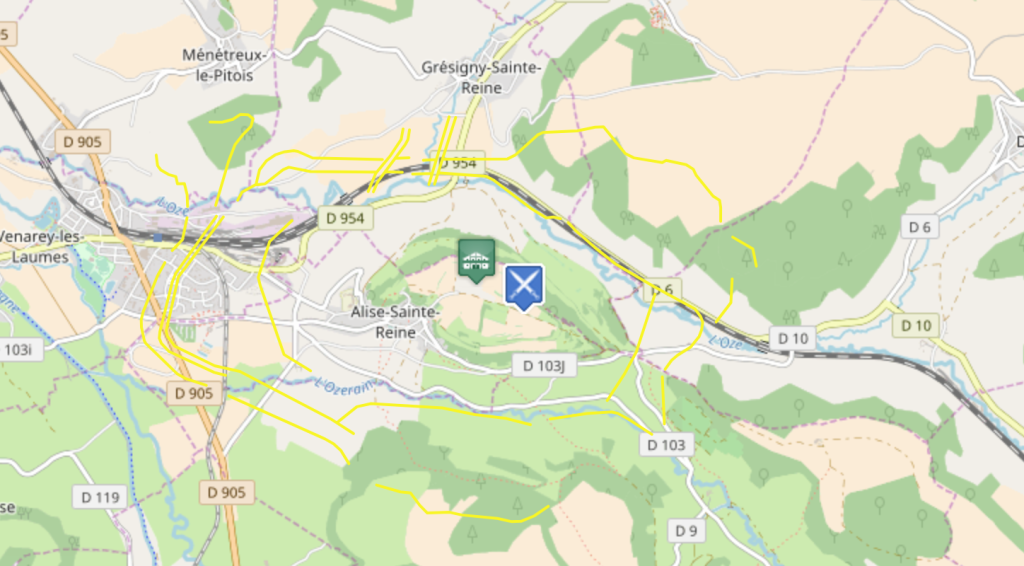
Map of the siege of Alesia
https://www.livius.org/articles/battle/alesia-52-bce/
🌀 The Siege of Alesia (52 BC): Chronological Table
Below is a clear, step-by-step chronological breakdown of Julius Caesar’s siege of Alesia, highlighting how the campaign unfolded from encirclement to final surrender. This is often considered the greatest single feat of Roman field engineering and command.
🌀 Chronological Table: Siege of Alesia
| Phase | Date (52 BC) | Event | Significance |
| 1. Gallic Retreat | Late summer | Vercingetorix retreats into Alesia after Roman pursuit | Chooses a hill-fort strong enough to withstand a siege |
| 2. Roman Encirclement Begins | September | Caesar decides not to assault directly | Avoids heavy casualties; commits to starvation strategy |
| 3. Circumvallation Built | Sept–Oct | Romans constructed 10–11 miles of inward-facing walls | Prevents escape; includes towers, ditches, and traps |
| 4. Defensive Traps Installed | Oct | Cippi, Lilia, iron hooks, and flooded trenches were added | Creates a lethal killing zone around Roman lines |
| 5. Contravallation Added | Oct | 13–14 miles of outward-facing walls constructed | Protects the Romans from the expected Gallic relief army |
| 6. Food Crisis Inside Alesia | Oct | Gallic civilians expelled by Vercingetorix | Caesar refuses passage → civilians starve between lines |
| 7. First Relief Attack | Late Oct | Gallic relief force attacks the Roman outer wall | Repulsed by Roman infantry and cavalry |
| 8. Coordinated Night Assault | Early Nov | Simultaneous attack from inside & outside | Romans barely hold; Caesar commits reserves |
| 9. Final Mass Assault | Mid-Nov | Full Gallic attack targets the weakest Roman sector | Caesar personally leads the counterattack |
| 10. Cavalry Breakthrough | Same day | Germanic cavalry flanks and routs the Gauls | Decisive moment—the relief army collapses |
| 11. Gallic Withdrawal | Next day | Relief army retreats | Alesia completely isolated |
| 12. Surrender of Vercingetorix | Late Nov | Vercingetorix surrenders to Caesar | End of organized Gallic resistance |
🏛️ Key Siege Metrics (At a Glance)
| Category | Details |
| Total Roman Walls | ~23 miles combined |
| Roman Forces | ~50,000–60,000 |
| Gallic Defenders | ~80,000 |
| Gallic Relief Army | 200,000+ (ancient sources; likely exaggerated) |
| Siege Duration | ~6–8 weeks |
| Outcome | Total Roman victory |
| Strategic Result | End of Gallic independence |
⚔️ Why Alesia Is Unique
- Only known siege with double encirclement
- Romans fought inward and outward simultaneously
- Logistics, engineering, and discipline mattered more than numbers
- Caesar won without taking the city by assault
🌀 Historical Impact
- Cemented Caesar’s reputation as Rome’s greatest general
- Made civil war inevitable
- Marked the end of the free Gaul
- Became a template for siege warfare, studied to this day
If you’d like, I can next:
- Compare Alesia vs. Tyre vs. Masada tactically
- Break down Roman siege engineering diagrams
- Analyze why Vercingetorix had no winning option
Just say the word.
🌀The Siege of Alesia History
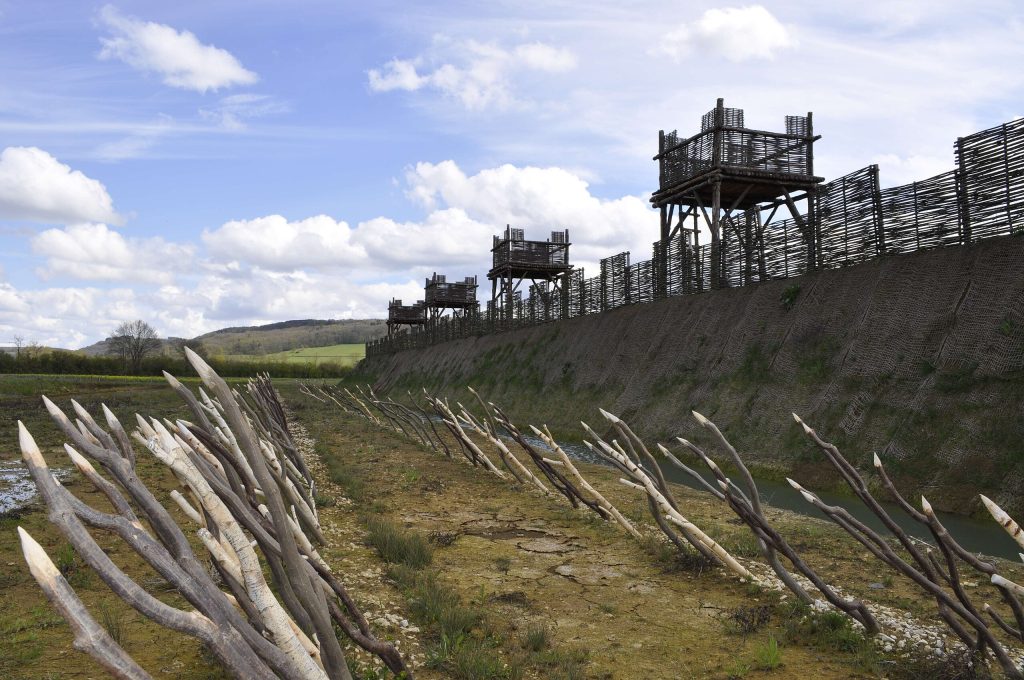
Modern recreation of the Alesia fortifications, featuring rows of stakes in front of a moat, a high banked approach, and regular towers for Roman sentries
(Wiki Image By Prosopee – Own work, CC BY-SA 3.0, https://commons.wikimedia.org/w/index.php?curid=19204553)
The Siege of Alesia (52 BC) was the decisive military engagement of the Gallic Wars. It was a confrontation that showcased the peak of Roman engineering, the ruthless strategic mind of Julius Caesar, and the final, desperate attempt by the Gallic tribes to secure their freedom under the leadership of Vercingetorix.
🏛️ The Strategic Context: The United Gallic Revolt
By 52 BC, Gaul was in open rebellion. Vercingetorix, a chieftain of the Arverni, had achieved the impossible: uniting the disparate and often feuding Gallic tribes. After defeating Caesar at Gergovia, Vercingetorix retreated to the hilltop fortress of Alesia. He intended to use the high ground to trap Caesar, waiting for a massive pan-Gallic relief army to arrive and crush the Romans from the rear.
🏗️ Phase I: The Double Wall (Circumvallation & Contravallation)
Caesar, realizing he could not storm the hilltop position, decided to starve the Gauls out. However, he knew he was about to be surrounded by the relief army. His solution was a masterpiece of combat engineering:
- The Inner Ring (Circumvallation): A 11-mile (18 km) long fortification facing inward to keep Vercingetorix trapped. It included an 11-foot wall, towers every 80 feet, and two deep moats (one filled with water).
- The Outer Ring (Contravallation): A 13-mile (21 km) long wall facing outward to protect the Romans from the relief army.
☠️ Phase II: The “Death Fields.”
Between the walls and the enemy, Caesar’s engineers constructed a lethal obstacle course designed to break the momentum of a charge:
- Stimuli: Iron barbs driven into the ground to maim feet.
- Lilia (“Lilies”): Pits containing sharpened stakes hidden by brushwood.
- Cippi: Interlocked, sharpened branches that formed an impenetrable hedge.
🥖 Phase III: The Starvation and the “Useless Mouths.”
As food ran low inside Alesia, Vercingetorix expelled the women, children, and elderly to save grain for his soldiers. Caesar, committed to “total war,” refused to let them through his lines. Thousands of civilians died of starvation in the “no-man’s land” between the two walls while both armies watched.
⚔️ Phase IV: The Triple Assault
The battle culminated when the relief army (estimated at 250,000 men) arrived. They launched a massive attack on the outer wall while Vercingetorix attacked the inner wall.
- The Weak Point: The Gauls identified a gap in the Roman lines at the foot of Mont Réa.
- The Red Cloak: Caesar, recognizing the crisis, donned his scarlet commander’s cloak and personally led his last reserves into the breach to rally his men.
- The Cavalry Charge: Caesar sent his Germanic cavalry to circle the hills and strike the relief army from the rear. The sight of the cavalry caused a total panic and rout among the Gauls.
🏳️ The Surrender and Aftermath
With the relief army scattered, Vercingetorix realized the cause was lost. To save his men from slaughter, he famously rode out of the gates, circled Caesar’s throne, and laid down his arms in silence.
The Legacy:
- The Fall of Gaul: This victory effectively ended Gallic resistance. Gaul became a Roman province and remained so for nearly 500 years.
- The Rise of Caesar: The prestige and wealth Caesar gained allowed him to cross the Rubicon and eventually transform the Roman Republic into the Roman Empire.
Would you like me to…
- Analyze the archaeological evidence found at the modern site of Alise-Sainte-Reine.
- Detail the specific armor and weaponry used by the Roman Legionary vs. the Gallic Noble?
- Explore the political aftermath in Rome immediately following Caesar’s victory.
🌀 The Siege of Alesia (52 BC): 8 top essential aspects, including technology, engineering, tactics, strategy, artillery, infantry, cavalry, plague, religion, logistics, walls, manpower, and length.
The Siege of Alesia (52 BC) is widely regarded as Julius Caesar’s tactical masterpiece and the definitive end of Gallic independence. It was a conflict of staggering complexity, characterized by “siege-within-a-siege” dynamics that pushed Roman engineering and psychological endurance to their absolute limits.
To provide a comprehensive analysis, we break the siege into eight essential pillars: the strategy of total containment, the engineering of the double-wall system, the lethal technology of the “Death Fields,” the tactical desperation of the relief force, the Roman artillery advantage, the logistical war of starvation, the decisive role of the Germanic cavalry, and the political outcome that forged the Roman Empire.
1. Strategy: The Total Investment 🌀
Caesar’s strategy at Alesia was a gamble on total containment. After a stinging defeat at Gergovia, Caesar realized he could not defeat the united Gallic tribes through conventional maneuvers.
- The Trap: When Vercingetorix retreated to the hilltop oppidum (fortified town) of Alesia, Caesar saw an opportunity to end the war in a single blow. Instead of a direct assault, which would have been suicidal against a hilltop position, he chose a strategy of Investment.
- The Strategic Paradox: Caesar’s goal was to trap the 80,000 Gallic soldiers inside the city. However, he knew that a massive relief force of hundreds of thousands of Gauls was being raised across the country.
- The Solution: Caesar decided to fight two wars simultaneously: one facing inward to keep Vercingetorix trapped, and one facing outward to defend against the coming relief army. This required a level of strategic discipline rarely seen in ancient history.
2. Engineering: The Double Circumvallation 🏗️
The scale of Roman labor at Alesia is often compared to industrial-age projects. Caesar ordered his legions to reshape the landscape of the Mandubii territory.
- The Inner Wall (Circumvallation): To lock Vercingetorix inside the hilltop fortress, Caesar’s engineers constructed the circumvallation, a massive inner line of fortifications stretching approximately 11 miles (18 km) around the base of Alesia. This barrier featured an 11-foot-high earthen rampart topped with sturdy wooden battlements and parapets to shield the defenders. To ensure constant surveillance and supporting fire, multi-story watchtowers were erected every 80 feet along the entire perimeter, creating a continuous kill zone that made any breakout attempt by the trapped Gauls nearly impossible.
- The Outer Wall (Contravallation): Anticipating the arrival of a massive Gallic relief army, Caesar ordered the construction of a second, outer ring of fortifications known as the contravallation, which faced outward to repel attacks from the rear. Spanning roughly 13 miles (21 km), this outer wall mirrored the defenses of the inner ring but on a larger scale, effectively trapping the Roman army within a “giant donut” of earth and timber. This strategic masterpiece transformed the Romans into “besieged besiegers,” enabling them to hold their ground against overwhelming forces from both sides simultaneously.
- Environmental Control: Beyond the wooden and earthen walls, the Romans exercised total environmental control by diverting nearby local streams to fill the deep trenches they had dug in front of their fortifications. These artificial water obstacles transformed the approach into a treacherous, muddy moat that the Gallic infantry struggled to cross. Forced to wade through deep water while weighed down by armor and under constant bombardment from the walls, the attackers were slowed to a vulnerable crawl, ensuring that the terrain itself became a weapon in Caesar’s arsenal.
3. Technology: The “Death Fields” ☠️
Caesar did not rely on walls alone; he designed a layered, technological “no-man’s land” between the Gallic lines and the Roman ramparts. These defenses were intended to break the momentum of a mass charge.
- Cippi: Formed a brutal outer layer of Caesar’s defenses, consisting of five rows of trenches filled with sharpened, interconnected branches that were woven together into a rigid, impenetrable hedge. These stout tree trunks were buried deep in the earth to prevent uprooting, creating a thorny maze in which an attacker caught in the thicket could not easily untangle themselves. This immobilization was the primary tactical objective, as it pinned the enemy soldiers in place, leaving them helplessly exposed to a hail of Roman arrows and artillery from the watchtowers above.
- Lilia (“Lilies”): Were a deceptive and vicious component of the Roman defense, consisting of three-foot-deep pits arranged in a quincunx pattern—similar to the five dots on a die—to ensure no straight path could be taken through the field. Inside each pit, a sharpened, fire-hardened stake was embedded at the bottom, often concealed by a light covering of brush and twigs to make the ground appear solid. These traps were explicitly designed to impale the feet and legs of charging Gauls; the weight of a running warrior would drive the spike through their foot, effectively removing them from the fight and creating a chaotic pile-up that made the remaining attackers easy targets for Roman projectiles.
- Stimuli: Acted as the insidious final layer of Caesar’s trap system, consisting of iron barbs embedded in wood and driven into the ground like primitive landmines. Entirely hidden by the grass, these vicious hooks were designed to maim both horses and men, piercing through soles and hooves to inflict debilitating injuries on anyone who managed to survive the pits and trenches. This created a zone of psychological terror where attackers were forced to slow their charge and watch their footing, knowing that every step was potentially lethal and that the ground itself was fighting against them.
4. Artillery: The Mechanical Edge 🏹
Roman superiority in mechanical engineering provided a “force multiplier,” enabling 50,000 Romans to hold off more than 300,000 enemies.
- Scorpios and Ballistae: Caesar deployed hundreds of torsion-powered engines along the walls. The Scorpio, a high-velocity bolt-thrower, functioned as the ancient equivalent of a sniper rifle, capable of picking off Gallic chieftains at long range.
- Tower Barrage: The 23 wooden towers along the circumvallation served as elevated platforms for artillery. This allowed the Romans to fire over the heads of their own men, creating a “curtain of fire” that Gallic shields (designed for hand-to-hand combat) could not withstand.
- Psychological Impact: The mechanical precision and power of the artillery, which could pierce through multiple men with a single bolt, had a devastating effect on Gallic morale, which relied heavily on individual bravado and momentum.
5. Logistics: The War of Starvation 🥖
Alesia was ultimately a battle of the stomach. The city was not designed to accommodate 80,000 soldiers and a civilian population for an extended period.
- The “Useless Mouths”: As food ran low, Vercingetorix made the agonizing decision to expel the women, children, and elderly from Alesia to save grain for his soldiers.
- The Tragedy of No-Man’s Land: Caesar, practicing “Total War,” refused to let the civilians through his lines. These thousands of people were trapped between the Roman wall and the Gallic wall, slowly starving to death in full view of both armies.
- Supply Lines: Caesar had to maintain his own supply lines through hostile territory. He built vast storehouses inside his double walls, stocking up on enough grain to feed his legions for thirty days, knowing that once the relief army arrived, he would be wholly cut off.
6. Tactics: The Weak Point at Mont Réa 🏔️
The battle reached its climax when the Gallic relief force (estimated at 250,000 men) identified a tactical flaw in Caesar’s engineering.
- The Gap: Due to the terrain, a small section of the Roman outer wall at the foot of Mont Réa could not be fully enclosed. This “weak link” became the focus of the final Gallic assault.
- The Synchronized Attack: Vercingetorix launched a massive sortie from inside the city at the exact moment the relief force struck the outer wall at Mont Réa. The Romans were attacked from both sides simultaneously, and their thin lines stretched to the breaking point.
- Caesar’s Red Cloak: Seeing his lines buckle, Caesar personally entered the fray. He donned his iconic red commander’s cloak so his men would recognize him, rallying the exhausted 10th and 12th legions for one last stand.
7. Cavalry: The Germanic X-Factor 🐎
While the Roman infantry held the line, it was Caesar’s Germanic cavalry that delivered the killing blow.
- The Rear Attack: As the Gauls were on the verge of breaking through the Roman inner wall, Caesar ordered his Germanic cavalry reserves to circle the hills and strike the Gallic relief force in the rear.
- The Rout: The sight of cavalry appearing behind them caused a total panic in the Gallic relief force. The “Great Army” of Gaul broke and fled, pursued and slaughtered by the Roman horsemen.
- The Collapse: Once the relief force vanished, the soldiers inside Alesia realized their last hope was gone. The tactical victory turned into a strategic surrender within hours.
8. Outcome and Length: 6 Weeks that Built an Empire ⏳
The siege lasted approximately six weeks, but its repercussions lasted for centuries.
- The Surrender: Vercingetorix, in a final act of nobility, rode out of Alesia alone, dismounted before Caesar, and threw his arms at the Roman’s feet. He was taken to Rome in chains, kept in a dungeon for six years, and eventually executed.
- The Manpower Toll: Gaul was effectively decapitated. Caesar claimed to have killed or captured over a million Gauls during the war. Each Roman soldier was given one Gallic prisoner to sell as a slave, making the legions immensely wealthy.
- The Birth of Empire: The victory at Alesia gave Caesar the political capital and the veteran army he needed to cross the Rubicon. It transformed him from a general into a dictator, ending the Roman Republic and beginning the Roman Empire.
Would you like me to…
- Provide a detailed technical diagram of the Roman Stimuli and Lilia traps?
- Compare the Roman logistics at Alesia to their logistical challenges at the Siege of Masada?
- Explore the archaeological findings at the modern site of Alise-Sainte-Reine?
🌀 The Siege of Alesia Legacy
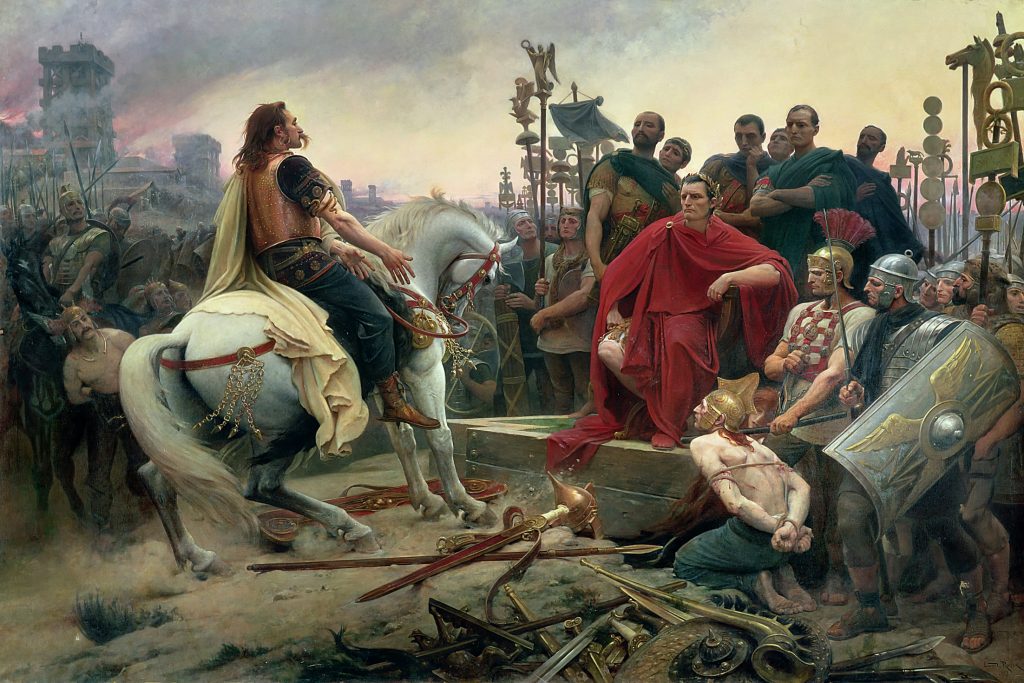
Vercingetorix Throws Down His Arms at the Feet of Julius Caesar, painted by Lionel Royer in 1899, now in the Crozatier Museum at Le Puy-en-Velay
(Wiki Image By Lionel Royer – Musée CROZATIER du Puy-en-Velay. — http://www.mairie-le-puy-en-velay.fr.http://forum.artinvestment.ru/blog.php?b=273473&langid=5, Public Domain, https://commons.wikimedia.org/w/index.php?curid=1218850)
The legacy of the Siege of Alesia (52 BC) is one of the most profound in military and political history. It was the moment that fundamentally broke the Celtic world and provided the momentum that transformed the Roman Republic into the Roman Empire.
Here are the 8 essential aspects of Alesia’s enduring legacy:
- The Death of Gallic Independence 🗡️
Alesia was the “end of the road” for the sovereign Gallic tribes.
- The Power Vacuum: By capturing Vercingetorix and destroying the massive relief army, Caesar decapitated the Gallic leadership. The tribes never again united in a significant way against Rome.
- Rapid Romanization: Within a generation, the fierce warrior culture of Gaul adopted Roman law, Latin, and Mediterranean architecture, eventually becoming one of the most stable and prosperous regions of the Roman Empire.
- The Prototype for “Total War” ⚔️
Caesar’s conduct during the siege—specifically his refusal to allow civilians to pass through his lines, leading to their starvation—served as a brutal blueprint for psychological and total warfare.
- The “No-Man’s Land”: The tragedy of the Mandubii civilians trapped between the walls remains a haunting historical example of military necessity overriding humanitarian concerns.
- Ruthless Efficiency: The siege proved that a disciplined, industrial-scale military could defeat a numerically superior force through sheer logistical and engineering persistence.
- Engineering as a Weapon of War 🏗️
Alesia demonstrated that a Roman Legion was just as much a construction crew as a fighting force.
- The Double-Wall System: The success of the circumvallation and contravallation became the gold standard for future Roman sieges, such as at Masada.
- Obstacle Science: Caesar’s “Death Fields” (Lilia, Stimuli, and Cippi) were early forms of passive area denial, akin to modern minefields and barbed-wire entanglements.
- The Political Rise of Julius Caesar 🏛️
Without the victory at Alesia, Caesar likely would have returned to Rome in disgrace, facing political prosecution.
- Wealth and Prestige: The sale of nearly 50,000 Gallic prisoners into slavery made Caesar and his soldiers immensely wealthy.
- The Rubicon: The veteran army forged in the trenches of Alesia was the same force that followed Caesar across the Rubicon in 49 BC, triggering the civil war that would end the Roman Republic.
- The “Vercingetorix” Myth in French Identity 🇫🇷
Centuries later, Alesia became a central pillar of French national identity.
- The Gallic Hero: In the 19th century, Napoleon III promoted Vercingetorix as France’s first national hero—a symbol of resistance and a unified Gallic spirit.
- Nationalism: The giant statue of Vercingetorix, erected at the site of Alesia in 1865, served as a rallying point for French pride during a period of European turmoil.
- Archaeological Validation 🔍
For centuries, historians debated whether Caesar’s account of the double walls was exaggerated.
- Aerial Photography: In the 20th century, aerial surveys and excavations at Alise-Sainte-Reine revealed the physical traces of Caesar’s trenches exactly where he described them.
- The Evidence: Thousands of Roman coins, Gallic weapons, and the distinctive iron “stimuli” barbs were recovered, making Alesia one of the most archaeologically verified battles of the ancient world.
- Military Literature: De Bello Gallico 📜
Caesar’s own account of the siege has served as a primary textbook for military leaders for two millennia.
- The Art of Command: Commanders from Napoleon to modern West Point cadets have studied the Siege of Alesia to understand leadership under pressure, the value of reserves, and the use of the “red cloak” to inspire troops.
- Persuasive History: The legacy of the siege is also one of propaganda; Caesar wrote his commentaries to convince the Roman public of his brilliance, effectively winning the “information war” of his time.
- Tactical Innovation: The Germanic Cavalry 🐎
The siege highlighted the importance of high-mobility reserves.
- The X-Factor: The late-stage intervention of Caesar’s Germanic cavalry proved that even in a static siege, mobile units are the deciding factor in breaking an enemy’s spirit.
- Integration: This led to a longer-term Roman legacy of integrating “barbarian” auxiliary units into the core of the Roman military machine.
Would you like me to…
- Explain the specific Latin terms Caesar used for his various fortifications.
- Detail the archaeological findings that proved the exact location of the Battle of Mont Réa?
- Compare Caesar’s tactics at Alesia to his earlier defeat at Gergovia?
🌀The Siege of Alesia (52 BC) YouTube Links Views
The Siege of Alesia (52 BC) is celebrated as Julius Caesar’s greatest military masterpiece. It is famous for the “double ring” of fortifications: an inner wall (circumvallation) to trap the Gauls inside, and an outer wall (contravallation) to defend against a massive Gallic relief army.
🎥 Top Animated & Narrative Documentaries
- Historia Civilis: The Battle of Alesia (52 B.C.E.)
- Views: ~2.6M+
- Style: The most popular video on the subject. It uses a clean, symbolic animation style to explain the tactical genius of the double-walled siege. It’s highly praised for making complex ancient maneuvers easy to understand.
- HistoryMarche: Caesar’s Masterpiece – Siege of Alesia, 52 BC
- Views: ~630K+
- Style: Uses high-quality 3D mapping and unit-by-unit animations. This video provides a deeper dive (34 minutes) into the logistical nightmare of building 25 miles of fortifications while under constant attack.
- CollapX: Here’s HOW JULIUS CAESAR CHANGED HISTORY !
- Views: ~467K+
- Style: A long-form (1.5 hours) documentary that places Alesia in the context of Caesar’s entire life and the fall of the Roman Republic.
⚔️ Tactical & Strategic Breakdowns
- SandRhoman History: The Battle of Alesia in the Context of Caesar’s 29 Other Well-Documented Sieges
- Views: ~98K+
- Style: Focuses on the engineering and “siege craft” of the Roman legions, explaining how Alesia was the culmination of everything Caesar had learned in Gaul.
- Total Rome: CAESAR VS. 330,000 GAULS: THE DOUBLE SIEGE
- Views: ~100+ (Newer upload)
- Style: Focuses on the sheer scale of the numbers—the 50,000 Romans trapped between 80,000 Gauls in the city and a relief force of nearly a quarter-million.
📊 Summary
- For Best Overall Explanation: Watch Historia Civilis.
- For Technical Mapping: Watch HistoryMarche.
- For Engineering Context: Watch SandRhoman History.
Would you like me to look for images of the Roman siege works (the pits, spikes, and towers) or books about Vercingetorix, the Gallic leader who surrendered at Alesia?
🌀 The Siege of Alesia Books
Because Julius Caesar wrote his own account of the battle, Alesia is one of the best-documented sieges in ancient history. However, to get past the propaganda and understand the engineering and tactics objectively, you need modern military analysis.
Here are the top book recommendations for the Siege of Alesia, categorized by their focus.
- The Essential Reference (Maps & Engineering)
“The Landmark Julius Caesar: The Gallic Wars” (Edited by Kurt A. Raaflaub)
- Focus: Geography, Maps & Primary Source.
- Why read it: This is the definitive version of Caesar’s own war diaries. The “Landmark” series is famous for placing maps on every single page that correspond to the text.
- Best for you: If you want to visualize the “Double Investment,” this book allows you to read Caesar’s description of the wall construction while viewing a detailed map showing exactly where the 10th Legion was stationed. It clarifies the complex geography of the hill fort better than any other book.
- The Visual & Technical Guide
“Alesia 52 BC: The Final Struggle for Gaul” by Nic Fields (Osprey Campaign Series)
- Focus: Technology, Traps & Illustrations.
- Why read it: Osprey books are designed for military modelers and enthusiasts. This thin yet dense volume contains full-color cross-sectional illustrations of Roman fortifications.
- Best for you: It provides the best visual breakdown of the “Garden of Death”—the lilia (pit traps), stimuli (hooks), and cippi (hedges)—showing exactly how they were constructed and placed to funnel the Gallic infantry into kill zones.
- The Strategic Masterpiece
“Caesar: Life of a Colossus” by Adrian Goldsworthy
- Focus: Strategy, Logistics & Leadership.
- Why read it: Adrian Goldsworthy is widely considered the top modern military historian of Rome. His chapter on Alesia is a masterful explanation of the “Command Decision”.
- Most useful for you: He explains the risks Caesar assumed. He analyzes the logistics of feeding 50,000 men in a siege camp and explains why the Gallic relief army failed to coordinate with Vercingetorix (the “communications failure”).
- The “Grunt’s” Perspective
“Caesar’s Legion: The Epic Saga of Julius Caesar’s Elite Tenth Legion” by Stephen Dando-Collins
- Focus: Infantry & Manpower.
- Why read it: Most history books focus on the generals; this one focuses on the soldiers. It follows the famous Legio X Equestris (10th Legion), Caesar’s favorites.
- Best for you: It captures the physical exhaustion of the siege. It details the digging, the night watches, and the desperate hand-to-hand combat when the Germans breached the outer wall. It humanizes the “Manpower” statistic.
- The Gallic Perspective
“Vercingetorix and the Struggle for Gaul” by Michel Rambaud (or similar biographies)
- Focus: The “Enemy” & The Tragedy.
- Why read it: Caesar’s account is biased. To understand the “Civilian Tragedy” (the Mandubii), you need a view from inside the city.
- Most useful for you: It examines Vercingetorix’s strategy. Was trapping himself a mistake, or his only option? It details the political infighting among the Gallic tribes that eventually doomed the relief effort.
Next Step: Would you like to see a comparison of the “walls” at Alesia versus the walls of Tyre, specifically regarding how they handled artillery?
⛰️ The Siege of Masada (73 AD)
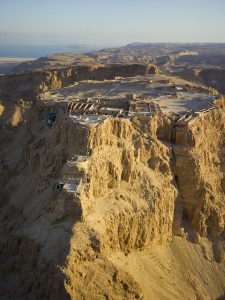
Aerial view of Masada (Hebrew מצדה), in the Judaean Desert (Hebrew: מִדְבַּר יְהוּדָה, Arabic: صحراء يهودا), with the Dead Sea in the distance.
(Wiki Image By Andrew Shiva / Wikipedia, CC BY-SA 4.0, https://commons.wikimedia.org/w/index.php?curid=25671212)
⛰️ The Siege of Masada Quotes
The Siege of Masada (73 AD) is documented almost exclusively by the Roman-Jewish historian Flavius Josephus in his work The Jewish War. Because Josephus was a former Jewish rebel commander who became a Roman citizen, his quotations reflect a unique blend of Roman military pride and a tragic, almost cinematic reverence for the Jewish defenders.
🏛️ On the Roman Engineering
Josephus was deeply impressed by the industrial scale of the Roman siege machine and the sheer persistence of the Tenth Legion.
“For the Roman commander [Silva] saw that it was a difficult thing to take the fortress… He therefore built a wall quite round the entire fortress, that none of the besieged might easily escape.” — Josephus, The Jewish War
“He also built a bank [the ramp] of earth… for the bank was three hundred cubits high, and on it was a structure of stone, sixty cubits high and sixty cubits wide.” — Josephus
🛡️ On the Defensive Genius
The Sicarii (Zealots) were not passive victims; their counter-engineering nearly halted the Roman advance.
“The besieged also built another wall, which would not be liable to the same misfortune [as stone]; for it was made soft and capable of yielding to the blows of the ram.” — Josephus
“When the battering-ram was brought, it made little impression… for the beams of wood being laid across one another, and the earth between them, it received the strokes of the engine, and the force was broken.” — Josephus
🕯️ The Final Speech of Eleazar ben Ya’ir
The heart of the Masada legacy lies in the two long speeches Josephus attributes to the leader of the rebels on the night of the breach.
“Long ago, my brave men, we determined neither to serve the Romans nor any other save God, for He alone is man’s true and righteous Lord.” — Eleazar ben Ya’ir
“Let us not receive from the Romans the reproach of slavery… Let our wives die before they are abused, and our children before they have tasted of slavery.” — Eleazar ben Ya’ir
⚔️ The Roman Discovery
When the Romans finally entered the fortress, they were met with a scene that even the hardened legionaries found difficult to process.
“They [the Romans] saw the fire on all sides… but they were not able to rejoice over their enemies as they had used to do.” — Josephus
“When they came upon the rows of dead bodies, they did not exult as over enemies, but admired the nobility of their resolve and their contempt of death.” — Josephus
🌍 The Modern Legacy
While not from antiquity, this quote from the 20th century became a foundational oath for the Israeli Defense Forces, showing how the siege continues to resonate.
“Masada shall not fall again!” (Shenit Masada Lo Tipol!) — Yitzhak Lamdan, 1927 Poem ‘Masada.’
Would you like me to…
- Analyze the historical reliability of Josephus’s account of the speeches.
- Detail the archaeology of the “Lots” found at Masada that seemingly confirm the suicide story?
- Explain the Roman perspective of Lucius Flavius Silva during the siege.
⛰️ The Siege of Masada (73 AD) Prehistory
The “prehistory” of the Siege of Masada (73 AD) is the final, desperate chapter of the First Jewish-Roman War. It is a story of internal Jewish schism, the relentless Roman pursuit of rebels, and the geographic transformation of a royal pleasure palace into a mountain fortress of last resort.
- The Judean Revolt (66 AD)
The path to Masada began with the explosion of the Great Revolt against Roman rule. Tensions over heavy taxation and religious friction in Jerusalem culminated in the rout of the Roman Governor of Syria, Cestius Gallus.
- The Rise of the Sicarii: A splinter group of Zealots known as the Sicarii (named for the sica, or curved dagger, they used to assassinate Roman collaborators) seized Masada in a surprise attack early in the revolt.
- The Fall of Jerusalem (70 AD): While the Sicarii held Masada, the Romans directed their primary effort toward Jerusalem. In 70 AD, Titus (son of Emperor Vespasian) sacked Jerusalem and destroyed the Second Temple, effectively crushing the organized Jewish government.
- The Fortress: Herod’s Desert Refuge
Masada was not built for war by the rebels; it was a legacy of Herod the Great (reigned 37–4 BC).
- A Royal Palace: Herod, paranoid about both a Jewish revolt and Egyptian invasion, turned an isolated mesa into a luxurious citadel.
- Engineering Feats: Herod built massive storerooms, sophisticated water cisterns that captured desert flash floods, and a defensive “casemate” wall that encircled the entire plateau.
- The Sicarii Occupation: When the Sicarii led by Eleazar ben Ya’ir took over, they found a fortress already stocked with enough dried food and weapons to sustain a small army for years.
- The Flight of the Extremists
Following the destruction of Jerusalem, the Sicarii at Masada were joined by refugees and survivors of the Roman “mopping-up” operations.
- Internal Conflict: The Sicarii were so radical that they had been expelled from Jerusalem by other Jewish factions during the war. They used Masada as a base to raid surrounding villages, including the Jewish settlement of Ein Gedi, to sustain themselves.
- The Final Outpost: By 72 AD, Masada was the very last holdout of the revolt. The Romans could not tolerate even this small spark of resistance, as it threatened the stability of the newly “pacified” province of Judaea.
- Flavius Silva and the Tenth Legion
In late 72 AD, the Roman governor Lucius Flavius Silva marched on Masada with the Legio X Fretensis (Tenth Legion).
- The Logistical Challenge: Masada is located in one of the most inhospitable environments on Earth. To maintain a siege, the Romans had to transport every drop of water and every pound of grain across miles of scorched desert.
- The Wall of Circumvallation: Upon arrival, Silva’s first act was to build a 7-mile-long stone wall around the entire base of the mountain, punctuated by eight fortified camps. This was a clear psychological message: No one leaves, and no one enters.
- Summary Table: The Road to the Mesa
| Year | Event | Impact |
| 37–4 BC | Herod builds Masada | Creates the infrastructure (walls, water, food) that rebels would later use. |
| 66 AD | Sicarii seize Masada | The fortress became a rebel stronghold at the start of the Great Revolt. |
| 70 AD | Destruction of Jerusalem | The center of the revolt falls; Masada becomes a refuge for survivors. |
| 72 AD | Arrival of Legio X | The Romans committed 15,000 troops and thousands of slaves to crush the last 960 rebels. |
- The Psychological Landscape
For the Romans, the siege was a matter of prestige and “Total War.” They needed to show that not even a mountain peak in the middle of a desert could protect an enemy of Rome. For the Sicarii, Masada was a “theological fortress”—a place where they believed they were the final keepers of Jewish freedom against a pagan empire.
Would you like me to…
- Analyze the engineering of the Roman Siege Ramp (the massive dirt structure built to reach the walls).
- Detail the contents of the Masada storerooms (how they survived for years on Herod’s supplies)?
- Explain the debate among historians regarding the truth of Josephus’s account of the mass suicide.
⛰️ The Siege of Masada Chronological Table
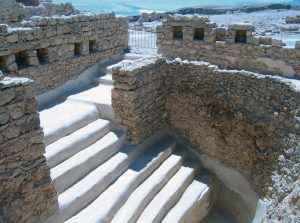
Stepped pool interpreted by Yadin as a Herodian swimming pool, possibly used as a public ritual immersion bath (mikveh) by the rebels
(Wiki Image By Talmoryair – Own work, CC BY 3.0, https://commons.wikimedia.org/w/index.php?curid=7517874)
⛰️ The Siege of Masada (73–74 AD): Chronological Table
Below is a clear, step-by-step timeline of the Roman siege of Masada, one of antiquity’s most dramatic and symbolically charged final stands.
⛰️ Siege of Masada — Chronological Timeline
| Phase | Date (Approx.) | Event | Significance |
| 1. Roman Decision | 72 AD | Roman governor Lucius Flavius Silva ordered the elimination of the last Jewish resistance after the First Jewish–Roman War. | Masada becomes the final symbolic target of Roman authority. |
| 2. Roman Arrival | Late 72 AD | Legio X Fretensis marches into the Judean Desert and encircles Masada | Marks the beginning of the formal siege |
| 3. Circumvallation | Late 72 AD | Romans constructed a stone wall (circumvallation) around the mountain | Prevents escape, resupply, or relief forces |
| 4. Siege Camps Built | Late 72 AD | Eight Roman camps were constructed around Masada | Demonstrates Roman logistical and engineering superiority |
| 5. Ramp Construction Begins | Winter 72–73 AD | Romans begin building a massive earthen ramp on Masada’s western slope | Ingenious solution to sheer cliffs |
| 6. Use of Forced Labor | 73 AD | Jewish prisoners used to build the ramp | Prevents defenders from attacking workers |
| 7. Siege Tower Assembled | Early 73 AD | Romans built a siege tower atop the ramp | Allows use of artillery and battering ram |
| 8. Artillery Bombardment | Early 73 AD | Ballistae and catapults pound Masada’s walls | Weakens defenses and morale |
| 9. Breach of Wall | Spring 73 AD | Roman battering ram breaks the outer wall | Roman victory becomes inevitable |
| 10. Night Pause | Night before final assault | Romans halt the attack, expecting the surrender the next day | Critical psychological moment |
| 11. Mass Suicide | Spring 73 AD | Defenders (≈960) choose collective suicide rather than enslavement | Central moral and historical legacy |
| 12. Roman Entry | Following morning | Romans enter Masada to find silence and death | Shocking conclusion to the siege |
| 13. Survivors Found | Same day | Two women and five children were discovered alive | Primary source of the story |
| 14. End of Revolt | 73–74 AD | Masada falls; Jewish resistance ends | Symbolic end of the First Jewish–Roman War |
🏛️ Key Features of the Siege
- Roman Engineering: The ramp remains visible today — a lasting monument to Roman siegecraft
- Logistics: Roman supply lines functioned flawlessly in extreme desert conditions
- Psychological Warfare: The ramp itself was a weapon of intimidation
- Religious Meaning: The defenders viewed death as preferable to enslavement and apostasy
- Historical Source: The account comes primarily from Josephus, whose reliability is debated
🕯️ Legacy
Masada became:
- A symbol of resistance and sacrifice
- A foundational myth in modern Israeli identity
- A case study in Roman siege engineering and psychological warfare
“Masada shall not fall again.”
If you’d like, I can next:
- Compare Masada to Alesia or Jerusalem (70 AD)
- Analyze whether the mass suicide was historical or rhetorical
- Break down Roman siege technology in visual diagrams
⛰️ The Siege of Masada History
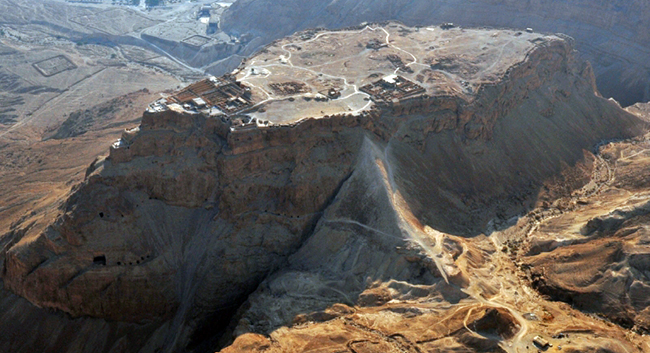
Roman siege ramp at Masada. Image Credit: Israel Tourism / CC.
https://www.historyhit.com/masada-judeas-last-stand-against-rome/
The Siege of Masada (73 AD) stands as the final, dramatic conclusion to the First Jewish-Roman War. While Jerusalem had fallen three years prior, a group of roughly 960 Jewish rebels known as the Sicarii (Zealots) held out atop a massive, isolated plateau in the Judean Desert.
The history of the siege is a story of a superpower’s refusal to allow defiance to go unpunished and a small group’s refusal to submit to an empire.
🏛️ The Fortress: Herod’s Desert Palace
Masada was originally built by Herod the Great as a winter palace and a fortress of last resort.
- The Geography: Located on the eastern edge of the Judean Desert, the plateau sits 1,300 feet above the Dead Sea. It is surrounded by sheer cliffs, with only two narrow paths (the “Snake Path” and the “White Promontory”) providing access.
- The Infrastructure: The fortress was equipped with massive storehouses for grain, wine, and oil, as well as an ingenious system of cisterns that captured rare desert rainfall, allowing the defenders to survive for years without an external water source.
🏗️ Phase I: The Roman Encirclement
In 72 AD, the Roman governor Lucius Flavius Silva marched on Masada with the Legio X Fretensis and thousands of Jewish prisoners of war.
- The Wall of Containment: Silva’s first move was to build a 2.5-mile (4 km) circumvallation wall around the entire base of the mountain. This was designed to ensure that no rebel could escape and no supplies could reach the summit.
- The Eight Camps: The Romans established eight fortified camps along this wall, positioning themselves to monitor all possible exits from the plateau.
🚧 Phase II: The Great Assault Ramp
Because the walls were too high to scale and the cliffs too steep to climb, Silva ordered a massive engineering project: the construction of a giant ramp on the western side of the mountain.
- The White Promontory: The Romans identified a natural rock spur that reached halfway up the cliff. They filled the gap with thousands of tons of earth and stone.
- Psychological Warfare: Silva forced Jewish prisoners to build the ramp. The Sicarii on the summit could not bring themselves to fire upon their own kin, allowing the Romans to complete the ramp with minimal casualties.
🗼 Phase III: The Breach and the Wooden Wall
Once the ramp was finished, the Romans rolled a 90-foot iron-plated siege tower to the summit.
- The Battering Ram: From the tower, a massive ram began pounding the stone Casemate walls.
- The Second Wall: The defenders built an inner wall made of wood and earth. When the Roman ram hit it, the soft earth compacted, strengthening the wall.
- The Fire: Silva ordered the wooden wall set on fire. A sudden shift in the wind initially threatened the Roman tower, but the wind eventually turned and consumed the wooden barrier, leaving the fortress open to assault.
🕯️ The Final Night: The Mass Suicide
According to the historian Josephus, the Roman army retired to their camps for the night, planning to storm the breach at dawn. Inside the walls, the rebel leader Eleazar ben Ya’ir realized that capture meant slavery for the men and violation for the women and children.
- The Pact: He convinced the defenders to kill their families and then draw lots to kill each other. The last man was to set the palace on fire and take his own life.
- The Lots: Archaeologists have found small shards of pottery (ostraca) bearing names, which some believe are the very “lots” used by the final ten men.
⚖️ The Outcome and Aftermath
When the Romans entered the breach the following morning, they were met not with a battle, but with silence and the smell of smoke. Two women and five children who had hidden in a cistern emerged to tell the story.
- The Strategic Message: The siege proved that there was no place on earth where Roman power could not reach.
- The National Symbol: In the 20th century, Masada became a foundational myth for the State of Israel, symbolizing the spirit of “never again” (Masada shall not fall again).
Would you like me to…
- Explain the hydraulic system Herod built to get water to the top of the mountain?
- Detail the findings of the 1963-1965 excavations at Masada?
- Compare the Roman tactics at Masada to their tactics at the Siege of Jerusalem?
⛰️ The Siege of Masada (73 AD): 8 top essential aspects, including technology, engineering, tactics, strategy, artillery, infantry, cavalry, plague, religion, logistics, walls, manpower, and length.
The Siege of Masada (73 AD) stands as the haunting final chapter of the First Jewish-Roman War. It was not a battle for territory or resources, but a clash of absolute wills: the Roman Empire’s need to project inescapable authority versus the Sicarii’s refusal to live under foreign subjugation.
While legend often emphasizes the tragic end, the military reality of Masada was a masterpiece of Roman siegecraft and logistical determination in one of the most hostile environments on Earth.
1. Strategy: The Doctrine of Inevitability 🧠
For the Roman governor Lucius Flavius Silva, Masada was a political necessity.
- The Message: Rome could not allow a band of roughly 960 rebels to remain defiant atop a mountain. To leave them alone would signal that Roman power had limits. The strategy was to demonstrate that no fortress, no matter how high or remote, was safe from the legions.
- The Sicarii Strategy: Led by Eleazar ben Ya’ir, the defenders relied on Masada’s natural geography. The plateau sits 1,300 feet above the Dead Sea with sheer cliffs on all sides. They possessed massive food stores and a sophisticated water system, believing they could outlast any Roman investment.
- Psychological Stalemate: The Romans sought to undermine the defenders’ morale by displaying constant, industrial progress along the assault ramp. At the same time, the Zealots used the height to mock the laboring Romans below.
2. Logistics: War in a Waterless Wasteland 🏜️
Masada is located in the Judean Desert, where summer temperatures regularly exceed 40°C (104°F). Logistics were the Romans’ greatest enemy.
- The Water Train: There were no natural springs at the base of Masada. Every drop of water for the 8,000–9,000 Romans and thousands of Jewish prisoners had to be hauled by hand or pack animals from miles away.
- The Circumvallation Wall: To ensure no rebel could escape and no supplies could enter, Silva ordered the construction of a 2.5-mile (4 km) stone wall encircling the entire mountain.
- Fortified Camps: Eight distinct camps (Camps A through H) were built along this wall to house the troops. This ensured that the Roman presence was a permanent, 360-degree prison.
3. Engineering: The Great Assault Ramp 🏗️
The most staggering feat of the siege was the construction of the Assault Ramp on the western side of the mountain, where the terrain was slightly less vertical.
- The “White Promontory”: Romans identified a natural rock spur. In addition, they moved thousands of tons of earth, stones, and timber to create a massive incline.
- The Manpower of Prisoners: Silva utilized Jewish prisoners captured in the fall of Jerusalem to build the ramp. This was a cruel but effective tactic: the Zealots on the summit were hesitant to fire on their own people, allowing the ramp to rise with minimal interference.
- The Stone Pier: A stone platform was built at the top of the ramp to provide a level, stable surface for the heavy siege engines.
4. Technology: The Iron-Plated Siege Tower 🗼
Once the ramp reached the level of the fortress walls, the Romans deployed their heavy mechanical weapons.
- The Tower: A massive wooden siege tower, approximately 90 feet (28 meters) high, was rolled up the ramp.
- Fireproofing: Because the defenders used fire as their primary defense, the Romans plated the front and sides of the tower in iron.
- The Battering Ram: Inside the base of the tower was a massive, bronze-headed battering ram. As the tower reached the summit, the ram began systematically pounding the Casemate (hollow) walls of Herod’s former palace.
5. Artillery: Ballistae and the “Whistling Stones” 🎯
During the construction of the ramp, the Legio X Fretensis utilized sophisticated torsion artillery to clear the walls of defenders.
- The Ballista Stones: Archaeologists have found hundreds of stones ranging in size from grapefruits to small boulders. These were fired at high velocity to “snatch” defenders off the ramparts.
- Psychological Terror: The stones were made of light-colored limestone. The defenders could see them coming against the dark desert sky. Legend says the Romans began painting the stones black so they couldn’t be seen until it was too late.
- Suppression Fire: The artillery ensured that whenever a Zealot attempted to throw rocks or fire at the ramp workers, they were met with a barrage of Roman bolts and stones.
6. Tactics: The Wooden Wall Counter-Measure 🪵
When the Roman ram finally breached the stone wall, the Zealots executed a brilliant tactical pivot.
- The Soft Wall: They built a secondary, inner wall made of two parallel wooden frameworks filled with earth.
- The Absorption Effect: Unlike stone, which cracks under impact, the earth-filled wooden wall absorbed the energy of the battering ram. The more the Romans hit it, the more the earth compacted, making the wall stronger.
- The Fire Solution: Silva realized the wall was made of wood. He ordered his men to throw torches at it. The wall caught fire, but a sudden shift in the wind nearly blew the flames back into the Roman siege tower. The Romans interpreted the eventual shift of the wind back toward the wall as a sign of divine favor.
7. Infantry: The Final Breach ⚔️
The Roman infantry, primarily the hardened veterans of the Tenth Legion, prepared for a standard “storming” of the breach.
- The Preparation: On the night after the wooden wall burned, the Romans retired to their camps, planning a full-scale assault for the following morning using scaling ladders and bridges.
- The Disciplined Advance: At dawn, the legionaries moved up the ramp in testudo (tortoise) formation, shields locked, expecting a desperate hand-to-hand struggle at the breach.
- The Silence: Upon entering the fortress, they found no resistance. The silence was absolute, as the defenders had already carried out their final, grim decision.
8. Religion, Length, and Outcome: The Mass Suicide ⏳
The siege lasted between 3 and 6 months (roughly the winter/spring of 73 AD) and concluded on the night of Passover.
- The Final Speech: According to the historian Josephus, Eleazar ben Ya’ir gave a powerful speech, convincing his followers that a “glorious death” was better than Roman slavery and the violation of their wives and children.
- The Systematic Killing: Since suicide is generally forbidden in Judaism, the men killed their own families, then drew lots to see who would kill the others. The final man set fire to the palace and took his own life.
- The Survivors: Two women and five children who had hidden in the deep-water cisterns emerged to inform the Romans what had happened.
- The Legacy: Masada became a symbol of national heroism in modern Israel. The Roman victory was total, but the story of the resistance became immortal, ironically granting the Sicarii the “victory of memory” over the Roman “victory of force.”
Would you like me to…
- Explore the archaeological controversy regarding Josephus’s account of the mass suicide.
- Detail the design of the Casemate walls and how the defenders lived within them?
- Compare the Roman siege of Jerusalem to the siege of Masada?
⛰️The Siege of Masada Legacy
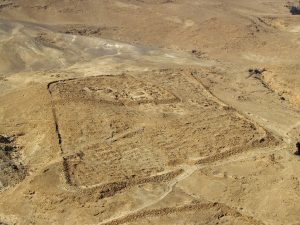
Remnants of Camp F, one of several legionary camps just outside the circumvallation wall around Masada
(Wiki Image By David Shankbone – Own work, CC BY-SA 3.0, https://commons.wikimedia.org/w/index.php?curid=3270982)
The legacy of the Siege of Masada (73 AD) is a unique intersection of military history, archaeological mystery, and national mythology. It represents the ultimate expression of the Roman “Doctrine of Inevitability” and has evolved into a powerful symbol of Jewish resilience and sovereignty.
Here are the 8 essential aspects of Masada’s enduring legacy:
- The Ultimate Symbol of Jewish Resistance 🇮🇱
Masada has transitioned from a historical defeat to a foundational myth for the modern State of Israel.
- “Masada Shall Not Fall Again”: This phrase, from Yitzhak Lamdan’s 1927 poem, became a rallying cry for the Zionist movement and the Israeli Defense Forces (IDF).
- Military Oaths: For decades, IDF armored corps recruits completed their basic training with a grueling night march to the summit of Masada, where they took their oath of allegiance, transforming a site of ancient suicide into a symbol of modern survival.
- The Masterclass in Roman Engineering 🏗️
Masada remains the most intact example of a Roman siege system in the world.
- Preservation of the Ramp: Due to the arid desert climate, the Assault Ramp remains visible today, providing a 1:1-scale view of how Roman legionaries could move thousands of tons of earth to overcome geography.
- Siege Camps: The eight Roman camps (circumvallation) are the best-preserved examples of Roman field fortifications, allowing archaeologists to study the exact layout and daily life of a legion on campaign.
- The “Inevitability” Doctrine of Rome 🏛️
The siege serves as a chilling testament to Roman political strategy.
- Total War: Rome spent an enormous amount of money and stationed thousands of troops in a remote desert for months just to capture 960 people.
- The Message: The legacy of the siege was the message it sent to the rest of the Empire: “No matter where you hide—even on a mountain in the middle of a wasteland—Rome will build a road to your door and destroy you.”
- Archaeological Validation and Mystery 🔍
The 1963–1965 excavations led by Yigael Yadin turned Masada into one of the most famous archaeological sites in the world.
- The Ostraca (The Lots): Eleven small pottery shards were found bearing inscriptions, including “Ben Ya’ir.” Many believe these are the actual lots drawn by the final defenders to determine who would carry out the final deaths.
- Physical Evidence: The discovery of high-quality Roman projectiles, Jewish ritual baths (Mikva’ot), and even 2,000-year-old date seeds (successfully germinated in 2005) provides a tangible link to the account recorded by Josephus.
- Ethical and Religious Debate ⚖️
The legacy of the mass suicide remains a point of intense debate within Jewish law and ethics.
- The Prohibition of Suicide: Orthodox Judaism generally forbids suicide, creating a tension with the heroic status of the Sicarii.
- Kiddush HaShem: Some view the act as Kiddush HaShem (sanctification of the Name), choosing a “pure” death over the defilement and slavery offered by the Romans. This ethical complexity makes Masada a frequent subject of philosophical study.
- Innovation in Desert Hydraulics 💧
The legacy of Masada includes a profound respect for ancient water management.
- Herod’s Ingenuity: The system of dams and channels that redirected flash flood waters into 12 massive cisterns allowed a thousand people to live in luxury (complete with bathhouses) in a place with zero rainfall.
- Engineering Legacy: This demonstrated that, with sufficient engineering, even the most inhospitable environments on Earth could be conquered.
- The “Josephus” Reliability Question 📜
The siege is the primary case study for the reliability of the historian Flavius Josephus.
- Historical Bias: Because Josephus was the only source, and he was writing for a Roman audience, historians have spent centuries debating if the “Mass Suicide” actually happened or if it was a literary device to provide a “noble” ending to a tragic war.
- Legacy of Scholarship: This debate has fostered new methods in “critical history,” in which scholars weigh archaeological finds against written propaganda to determine the truth.
- UNESCO World Heritage and Tourism 🌍
Masada’s physical legacy is now protected as a UNESCO World Heritage site.
- Global Landmark: It is one of Israel’s most-visited sites, serving as an educational hub for millions of visitors to learn about the Roman Empire and the Second Temple period.
- The Snake Path: The physical act of climbing the mountain at dawn remains a “pilgrimage” of sorts for people of all faiths, symbolizing the struggle for freedom and the weight of history.
Would you like me to…
- Detail the findings of the “Lots” found by Yigael Yadin in the 1960s?
- Compare the Roman siege of Jerusalem to the siege of Masada in terms of scale.
- Explain the specific hydraulic engineering Herod used to fill the cisterns?
⛰️ The Siege of Masada (73 AD) YouTube Links Views
The Siege of Masada (73 AD) is one of the most poignant episodes of the Great Jewish Revolt, known for the Roman engineering feat of the giant assault ramp and the final mass suicide of the Jewish defenders.
🎥 Top-Rated & High-View Documentaries
- Invicta: The Siege of Masada (73 AD) – Last Stand of the Great Jewish Revolt
- Views: ~2.8M+
- Style: The gold standard for this topic. It provides a detailed tactical and archaeological overview of the Roman siege works, the circumvallation wall, and the massive earthen ramp built to reach the plateau.
- The Incredible Journey: Masada and the Jewish Zealots’ Last Stand Against the Roman Empire
- Views: ~135K+
- Style: A cinematic narrative that combines historical storytelling with footage from the actual site in Israel, focusing on the religious and political motivations of the Zealots (Sicarii).
- Invicta (Context): The Siege of Jerusalem (70 AD)
- Views: ~7.7M+
- Note: Essential context. This full documentary covers the destruction of the Second Temple, which explains why the holdouts at Masada were the “last of the last.”
🏛️ Archaeological & Military Highlights
- The Roman Ramp: Many videos focus on the Legio X Fretensis and their commander, Lucius Flavius Silva, detailing how they moved thousands of tons of earth to neutralize Masada’s natural height advantage.
- The “Sicarii”: Documentaries often explore the history of the radical Jewish faction that held the mountain, using Josephus’ The Jewish War as the primary (and controversial) source.
📊 Summary
- For Tactical & Siege Engineering: Watch Invicta.
- For Narrative & Archaeological Visuals: Watch The Incredible Journey.
- For a general history of the revolt, the Jerusalem (70 AD) documentary is essential for the broader picture.
Would you like to see books on the archaeology of Masada or aerial images of the Roman camps that are still visible today?
⛰️ The Siege of Masada Books
The Siege of Masada is unique because almost everything we know comes from a single ancient text and 20th-century archaeology. The books below balance the dramatic legend with the complex science of the excavation.
Here are the top book recommendations for the Siege of Masada, categorized by their focus.
- The Primary Source (The Only Eyewitness)
“The Jewish War” by Flavius Josephus
- Focus: The Narrative & The Speech.
- Why read it: This is “Patient Zero” for the history of Masada. Josephus was a Jewish commander who defected to Rome, so his account is a mix of history and Roman propaganda.
- Best for you: This contains the famous (and likely embellished) final speeches of Eleazar ben Ya’ir, urging the defenders to choose death over slavery. If you want to read the original “tragic hero” narrative that inspired the legend, this is it.
- The Modern Scientific Reality Check
“Masada: From Jewish Revolt to Modern Myth” by Jodi Magness
- Focus: Archaeology, Geology & Myth-Busting.
- Why read it: Published in 2019, this is the most up-to-date analysis. Magness is a renowned archaeologist who re-examines the 1960s findings with modern technology.
- Best for you: She challenges the “heroic suicide” narrative. She analyzes the logistics of the siege camps, the water systems, and the actual duration of the siege (arguing it might have been much shorter than the legendary 3 years). It is the best book for a factual, rather than emotional, understanding of the site.
- The Visual & Military Guide
“Masada 74 AD: The Final Curtain” by Duncan B. Campbell (Osprey Campaign Series)
- Focus: Engineering, The Ramp & Maps.
- Why read it: Like the Alesia recommendation, this Osprey book is essential for visualizing the layout.
- Best for you: It features detailed 3D bird’s-eye views of the Roman circumvallation wall and the assault ramp. It explains the engineering mechanics of the siege tower and the battering ram used to breach the casemate wall, separating the military facts from the movie-style myths.
- The Classic Excavation Story
“Masada: Herod’s Fortress and the Zealots’ Last Stand” by Yigael Yadin
- Focus: Discovery & Artifacts.
- Why read it: Yadin was the Israeli general-turned-archaeologist who led the famous 1960s excavation. This book is as much about the adventure of the dig as the history of the siege.
- Best for you: It includes photos of the “Lots” (pottery shards with names) that Yadin believed were used by the last defenders to decide who would kill the others. While some of his conclusions are debated today, his passion establishes the emotional connection to the site.
- The Broader Military Context
“The Great Roman-Jewish War: A.D. 66-70” (Various Editions)
- Focus: Strategy & The Tenth Legion.
- Why read it: Masada was just the mop-up operation. To understand why the Romans spent so much money and manpower on a rock in the middle of nowhere, you need to understand the fury of the broader rebellion.
- Best for you: It explains the psychology of the Legio X Fretensis (Tenth Legion of the Strait), the unit that built the ramp. They had been fighting for years and were determined to crush the last symbol of resistance, no matter the cost.
Next Step: Would you like to know how the Roman siege ramp at Masada compares to the Mole at Tyre in terms of engineering difficulty and construction time?
⚔️ The Siege of Acre (1189–1191)
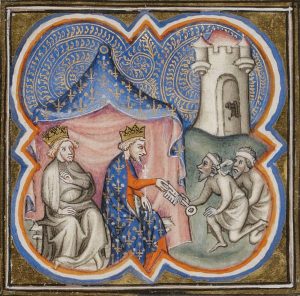
Manuscript depiction of Acre surrendering to Richard I of England and Philip II of France (late 14th century)
(Wiki Image By Unknown author – This file comes from Gallica Digital Library and is available under the digital ID btv1b84472995/f484, Public Domain, https://commons.wikimedia.org/w/index.php?curid=3845930)
⚔️ The Siege of Acre Quotes
The Siege of Acre (1189–1191) was the most dramatic theater of the Third Crusade. It was documented by chroniclers from both sides, including the poet Ambroise (for King Richard) and Baha ad-Din ibn Shaddad (Saladin’s biographer). These quotes capture the grit of the “double-siege,” the terrifying power of Greek Fire, and the cold-blooded conclusion of the campaign.
🛡️ On the Grueling Nature of the Stalemate
The siege was so long and the conditions so horrific that chroniclers described the camp as a city of the dead before the kings even arrived.
“The army was so large and the siege so long that the number of those who died from the sickness of the camp, from hunger and from the sword, was beyond counting.” — Itinerarium Peregrinorum et Gesta Regis Ricardi
“Never was seen so many people, nor so many tents, nor such an investment of a city… but the famine was so great that men ate the flesh of their own horses.” — Ambroise, L’Estoire de la Guerre Sainte
🔥 On the Terror of Greek Fire
The Saracen defenders used “Greek Fire” (naphtha) to devastating effect, nearly breaking the spirits of the European engineers.
“Whenever they [the Saracens] threw the Greek fire, every man among us threw himself on his face on the earth and cried: ‘Lord, save us from this fire which cannot be quenched!'” — attributed to the French Crusaders (recorded in later chronicles)
“A young man from Damascus… threw a pot of fire at the Great Tower. It broke, and the fire spread everywhere. The tower, which had cost so much labor, was consumed in a moment.” — Baha ad-Din ibn Shaddad, The Life of Saladin
⚔️ On King Richard’s Arrival and Will
Richard the Lionheart’s arrival in June 1191 changed the psychological landscape of the siege instantly.
“The earth shook with the shout the Christians raised… and the King of England arrived with his galleys, more than a hundred of them, and the Saracens were struck with great fear.” — Ambroise
“Though he [Richard] was sick with the ‘Leonardia’ (scurvy) and could not walk, he had himself carried on a silken mattress to the trenches… and from there he fired his crossbow at the Saracens on the walls.” — Itinerarium Peregrinorum
🕯️ On the Fall of the City and the Massacre
The surrender of Acre ended in one of the most controversial acts of the Crusades: the massacre of 2,700 prisoners at Ayyadieh.
“The King of England, seeing that Saladin did not fulfill the terms… led the Saracens out into the plain. There, in the sight of Saladin’s own camp, they were all put to the sword.” — Baha ad-Din ibn Shaddad
“This was done so that the army might be unburdened and ready to march to Jerusalem, for the King would not leave so many enemies in his rear.” — Chronicle of Richard of Devizes
🏛️ Saladin’s Lament
Saladin, who respected Richard’s military skill but was devastated by the loss of Acre, reflected on the nature of the war.
“Acre is the key to the whole country… if it falls, the coast is lost.” — Saladin (paraphrased by Baha ad-Din during the crisis)
“I see that the Frankish King is a man of great courage and spirit, but he gambles with the lives of his men as if they were stones in a game.” — attributed to Saladin’s court records
Would you like me to…
- Analyze the specific chemical ingredients of the Greek Fire described in these quotes?
- Compare Richard’s tactics at Acre to his later victory at the Battle of Arsuf?
- Detail the exact terms of the surrender that Saladin supposedly failed to meet?
⚔️ The Siege of Acre (1189–1191) Prehistory
The “prehistory” of the Siege of Acre (1189–1191) is the story of the collapse of the Kingdom of Jerusalem and the desperate attempt by a disgraced king to regain his honor. It is defined by the catastrophic aftermath of the Battle of Hattin and by Acre’s strategic importance as a maritime gateway to the Holy Land.
- The Catastrophe at Hattin (July 1187)
The path to the siege began with the total destruction of the Crusader field army at the Battle of Hattin.
- The Loss of the True Cross: Saladin, the Sultan of Egypt and Syria, annihilated the combined forces of the Christian states, capturing King Guy of Lusignan and the relic of the True Cross.
- The Collapse of the East: With no army left to defend them, most Crusader fortresses and cities fell to Saladin in rapid succession. Acre, the kingdom’s most vital port, surrendered in July 1187 after only a brief show of resistance.
- The Fall of Jerusalem and the Third Crusade
In October 1187, Jerusalem fell to Saladin. This event sent shockwaves through Europe, prompting the Pope to call for the Third Crusade.
- The European Response: The three most powerful monarchs in Europe—Richard the Lionheart of England, Philip Augustus of France, and Frederick Barbarossa of the Holy Roman Empire—began mobilizing their massive armies.
- The Strategic Goal: The Crusaders recognized that, if they were to retake Jerusalem, they first had to secure a deep-water port to receive reinforcements and supplies by sea. Acre was the only logical choice.
- The King’s Release and the Gamble at Acre
In a surprising move of chivalry (or calculated political manipulation), Saladin released King Guy of Lusignan from captivity in 1188 on the condition that he return to Europe. Guy, however, broke his oath and sought to re-establish his authority in the East.
- The Rejection at Tyre: Guy attempted to take command of Tyre, the last major Crusader stronghold, but was barred from the city by Conrad of Montferrat, who viewed Guy as a failed king.
- The Siege Begins (August 1189): Left with only a tiny force of a few hundred knights and 7,000 infantry, and having nowhere else to go, Guy marched to the walls of Acre. It was a suicidal gamble: he began a siege of a city that was far better defended than his own army was equipped to handle.
- The “Siege within a Siege”
By the time the prehistory of the main battle concluded, the situation had evolved into one of the most complex tactical setups in military history.
- Double Encirclement: Guy’s small army was besieging the city of Acre, but Saladin soon arrived with a massive relief army and moved to besiege Guy’s camp from the rear.
- The Stalemate: The Christians were trapped in a narrow crescent between the city walls and Saladin’s outer forces. They were saved only by their control of the sea, which allowed small fleets of European pilgrims and early crusaders to trickle in and sustain the camp.
- Summary Table: The Road to the Walls
| Date | Event | Impact |
| July 1187 | Battle of Hattin | Crusader army destroyed; King Guy captured. |
| July 1187 | Fall of Acre | Saladin gains the kingdom’s primary port and supply hub. |
| Oct 1187 | Fall of Jerusalem | Triggers the call for the Third Crusade in Europe. |
| May 1188 | Guy’s Release | The king returns to find himself a leader without a kingdom. |
| Aug 1189 | Investment of an Acre | Guy begins the siege, creating the “double-ring” stalemate. |
- The Technological Prelude
While the siege began as a simple blockade, it quickly became an engineering arms race. The Crusaders began building massive wooden siege towers and trebuchets (early counterweight catapults), while the Muslim defenders inside Acre prepared Greek Fire to incinerate the Christian engines. This set the stage for two years of horrific attrition before the arrival of the Great Kings of Europe.
Would you like me to…
- Analyze the design of the “Bad Neighbor” and “God’s Own Stone-Thrower” (the famous Crusader trebuchets)?
- Detail the naval blockade of Acre and how the Egyptian fleet attempted to break it?
Explain the tactical arrival of Richard the Lionheart and how he finally broke the stalemate?
⚔️ The Siege of Acre Chronological Table
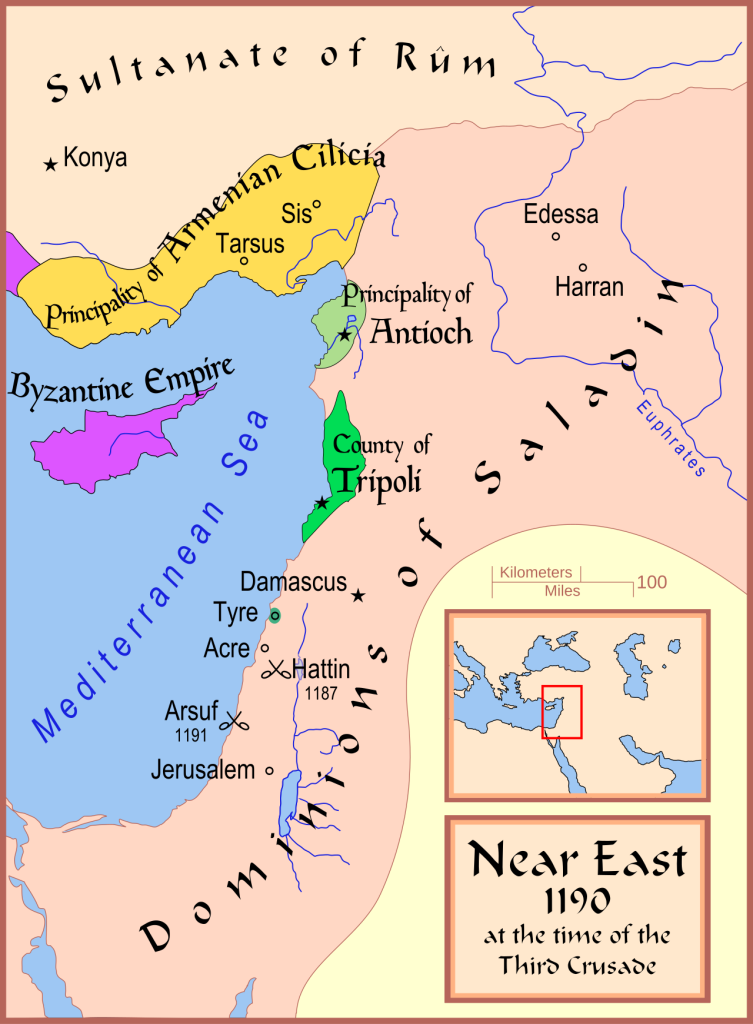
The Near East in 1190, at the outset of the Third Crusade, showing the locations of Acre, the Battle of Arsuf, and other important sites.
(Wiki Image By MapMaster – Own work, CC BY-SA 4.0, https://commons.wikimedia.org/w/index.php?curid=3549805)
⚔️ The Siege of Acre (1189–1191) — Chronological Table
A two-year “siege within a siege” during the Third Crusade marked by brutal attrition, naval power, and shifting leadership.
| Phase | Date | Key Events | Significance |
| Background | Jul 1187 | Saladin defeats the Crusaders at Hattin; Jerusalem falls | Sets the stage for the Third Crusade |
| Crusader Landing | Aug 1189 | Guy of Lusignan lands near Acre and begins the siege | Crusaders attempt to regain a strategic port |
| Siege Within a Siege | Late 1189 | Crusaders besiege Acre; Saladin encircles the Crusaders | Creates a deadly stalemate on land |
| Early Assaults | Winter 1189–1190 | Failed assaults; disease spreads in camps | Attrition favors defenders; morale falters |
| Naval Contest | 1190 | Italian city-states (Genoa, Pisa) contest the harbor | Control of sea lanes becomes decisive |
| Royal Arrivals | Apr–Jun 1191 | Philip II of France and Richard I of England arrive | Fresh troops, leadership, and siege engines |
| Intensified Bombardment | Jun 1191 | Massive trebuchets batter walls (e.g., “Bad Neighbor”) | Sustained artillery pressure weakens defenses |
| Acre Capitulates | Jul 12, 1191 | Garrison surrenders after the terms agreed upon | Major Crusader victory; port secured |
| Aftermath: Prisoners | Aug 20, 1191 | Richard orders the execution of ~2,700 captives | Poisoning relations hardens the war |
| Strategic Shift | Late 1191 | Crusaders advance south along the coast | Enables later battles (e.g., Arsuf) |
Why Acre Mattered
- Logistics & Navy: A deep-water port enabling supply and reinforcement.
- Leadership: The arrival of the kings broke the deadlock.
- Technology: Heavy trebuchets and naval blockades proved decisive.
- Cost: Enormous casualties from combat, famine, and disease on both sides.
If you’d like, I can place Acre side-by-side with Tyre, Syracuse, Alesia, and Masada in a single comparative timeline or focus on siege engines and naval warfare at Acre specifically.
⚔️ The Siege of Acre History
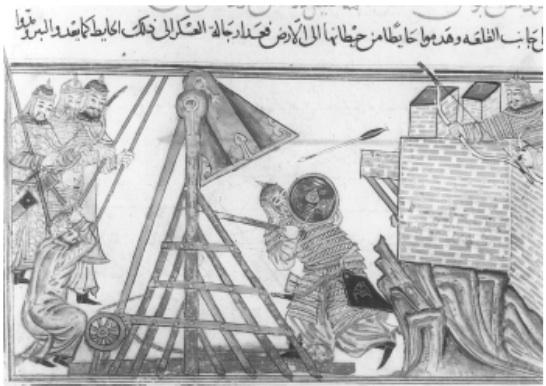
King Richard’s trebuchets hurled constantly by day and night. It can be firmly stated that one of them killed twelve men with a single stone. That stone was sent for Saladin to see, with messengers who said that the diabolical king of England had brought from Messina, a city he had captured, sea flint and the smoothest stones to punish the Saracens. Nothing could withstand their blows; everything was crushed or reduced to dust.
https://webhelper.brown.edu/joukowsky/courses/13things/7675.html
The Siege of Acre (1189–1191) was the defining struggle of the Third Crusade. It was a brutal, two-year war of attrition that pitted the legendary Saladin against the combined forces of Western Europe, most notably Richard the Lionheart and Philip II of France. It is unique in military history as a “double siege”—the Crusaders were simultaneously besieging the city and being besieged by Saladin’s relief army.
🏛️ 1. The Strategic Prelude: Guy’s Gamble
After the crushing defeat at the Battle of Hattin in 1187, the Kingdom of Jerusalem was nearly extinguished. Guy of Lusignan, the released King of Jerusalem, sought to regain his prestige. In August 1189, with a small force of 7,000–9,000 men, he marched on Acre.
- The Goal: Capture a deep-water port to allow Western reinforcements to land.
- The Trap: Guy did not have enough men to surround the city entirely. Saladin arrived shortly after with a massive field army, surrounding Guy’s camp on the landward side.
🏗️ 2. The Engineering War: Towers vs. Greek Fire
The siege was a laboratory for medieval technology. The Crusaders built three massive wooden siege towers, over 60 feet tall, to overlook Acre’s walls.
- The Counter-Measure: In 1190, a Syrian engineer from Damascus perfected a recipe for Greek Fire (naphtha and sulfur). He used specialized siphons and ceramic grenades to incinerate the Crusader towers.
- The Sapping War: Engineers on both sides engaged in “mining.” Crusaders dug tunnels to collapse Acre’s “Accursed Tower,” while Saracen counter-miners dug to intercept them, leading to claustrophobic hand-to-hand combat beneath the earth.
⚓ 3. The Naval Blockade: The Struggle for the Harbor
Acre’s survival depended on its harbor. For much of the siege, the Egyptian fleet successfully ran the Crusader blockade, bringing in fresh troops and supplies.
- The Sea Battles: Pisan, Genoese, and Venetian galleys engaged in constant skirmishes with the Fatimid navy.
- The Chain: Acre’s harbor was protected by a massive iron chain and the “Tower of Flies.” It wasn’t until the arrival of the English and French fleets in 1191 that the Crusaders truly achieved naval supremacy, finally cutting off the city’s lifeline.
🥖 4. Logistics and the “Sickness of the Camp”
The length of the siege created horrific conditions. From 1189 to 1191, the Crusader camp suffered more from disease and famine than from Saracen arrows.
- Famine: At the height of the winter, grain prices skyrocketed; knights were reduced to eating their warhorses, and commoners ate grass.
- Plague: Dysentery and scurvy decimated the ranks. High-profile casualties included Queen Sibylla of Jerusalem and the French Count of Champagne, which shifted the political leadership of the Crusade.
🦁 5. The Arrival of the Kings (1191)
The arrival of Philip II of France (April) and Richard the Lionheart (June) fundamentally changed the siege.
- Industrial Artillery: The French brought massive counterweight trebuchets, including one named “God’s Stone-Thrower.” These engines pounded the walls day and night.
- The Malvoisin: Richard constructed a trebuchet named “Bad Neighbor” and utilized specialized crossbowmen to clear the walls of defenders. Richard himself, though bedridden with scurvy, was carried to the front on a mattress to fire his crossbow at the battlements.
⚔️ 6. The Breach and the Massacre at Ayyadieh
By July 1191, the walls were crumbling, and the city was starving. The garrison surrendered on July 12, 1191.
- The Terms: Saladin was to pay 200,000 gold pieces, return the True Cross (captured at Hattin), and release 2,500 Christian prisoners.
- The Massacre: When Saladin delayed the payments, Richard grew impatient. On August 20, he led 2,700 Muslim prisoners to the plain of Ayyadieh and executed them in full view of Saladin’s army. This act of brutality stained Richard’s reputation but allowed him to march toward Jerusalem without an encumbered rear.
⚖️ 7. The Outcome and Legacy
The fall of Acre saved the Crusader presence in the Levant for another century.
- The New Capital: With Jerusalem remaining in Saladin’s hands, Acre became the new capital of the Second Kingdom of Jerusalem.
- The Teutonic Knights: The order was founded during the siege as a field hospital to care for the sick and wounded German crusaders.
- Historical Impact: The victory demonstrated that the Crusader states could be revived, but the subsequent failure to retake Jerusalem highlighted the strategic limits of the Third Crusade.
Would you like me to…
- Explain the internal mechanics of the counterweight trebuchets used by Philip and Richard?
- Detail the archaeological remains of the Crusader city found in modern Akko.
- Compare the Siege of Acre with the later Siege of Acre in 1291, which ended the Crusades.
⚔️ The Siege of Acre (1189–1191): 8 top essential aspects, including technology, engineering, tactics, strategy, artillery, infantry, cavalry, navy, plague, religion, logistics, walls, manpower, and length.
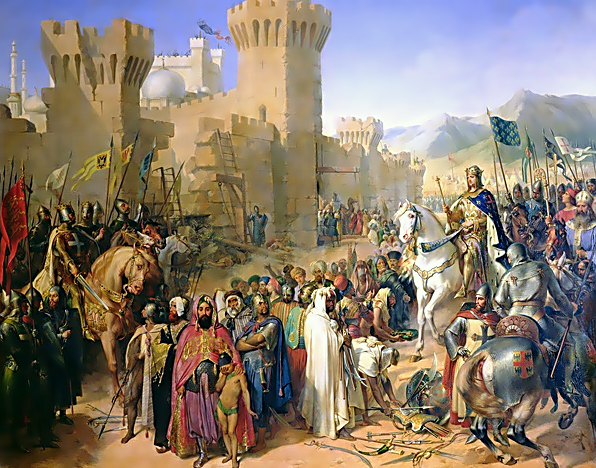
A 19th-century depiction of the Acre’s surrender to Philip in 1191
(Wiki Image By Merry-Joseph Blondel – http://www.beearty.com/index.cfm?event=catalogue.product&productID=130991, Public Domain, https://commons.wikimedia.org/w/index.php?curid=5186503)
The Siege of Acre (1189–1191) was the centerpiece of the Third Crusade, representing one of the longest and most grueling military engagements of the Middle Ages. It was a “Super-Siege” that featured a unique triple-layered conflict: the Crusader army was simultaneously besieging the city of Acre while being besieged by Saladin’s massive relief army from the outside.
To provide a comprehensive analysis, we break the siege into eight essential pillars: the “double-siege” strategy, the naval blockade, the nightmare of logistics and plague, the engineering of the mining wars, the technology of Greek Fire, the arrival of the Heavy Trebuchets, the manpower of the Mediterranean coalition, and the brutal religious outcome.
1. Strategy: The Triple-Layered Stalemate 🏰
The Siege of Acre was a tactical “sandwich” that lasted nearly two years. It began when Guy of Lusignan, the King of Jerusalem without a kingdom, marched on Acre with a tiny force to reclaim his prestige after the disaster at Hattin.
- The Investment: Guy established a camp on the Hill of Turon, overlooking the city. However, he did not have sufficient forces to encircle Acre.
- Saladin’s Response: Saladin arrived with a massive field army, surrounding the Crusaders. The result was a bizarre geographic formation: the City of Acre was trapped by the Crusaders, who, in turn, were trapped by Saladin.
- The Static War: For months, the battle was a stalemate. The Crusaders couldn’t take the city because Saladin attacked their rear whenever they attempted to do so; Saladin couldn’t break the Crusader camp because they had built formidable trenches and ramparts.
2. Navy: The Battle for the Mediterranean ⚓
Control of the sea was the only factor that could break the stalemate. Acre was a peninsula, and its survival depended entirely on its harbor.
- The Egyptian Fleet: Initially, the Fatimid navy dominated. They successfully ran the Crusader blockade, bringing food, fresh troops, and the dreaded Greek Fire into the city.
- The Crusader Blockade: The arrival of fleets from the Pisans, Genoese, and Venetians eventually tipped the scales. They used large galleys to intercept supply ships, slowly starving the garrison.
- Richard’s Arrival: The turning point was the arrival of Richard the Lionheart’s massive fleet. His advanced galleys destroyed the last of Saladin’s supply ships, effectively sealing the city’s fate by sea.
3. Engineering: The Mining and Counter-Mining Wars ⛏️
Because the walls of Acre were exceptionally thick and reinforced by the “Accursed Tower,” the Crusaders turned to subterranean warfare.
- Sapping: Specialized miners dug deep tunnels toward the foundations of the main towers. Once underneath, they filled the tunnels with dry wood and pig fat, then set them on fire to collapse the masonry above.
- Counter-Mining: The Muslim defenders were masters of this craft. They dug their own tunnels to intercept the Crusader mines. This led to terrifying, pitch-black combat in narrow tunnels beneath the earth, where men fought with daggers and short swords in the dust.
- The Accursed Tower: This became the focus of the engineering war. It was mined and repaired multiple times, becoming a symbol of the city’s stubborn resistance.
4. Technology: The Terror of Greek Fire 🧪
The defenders possessed a technological “wonder weapon” that nearly defeated the Crusaders’ engineering projects: Greek Fire.
- Chemical Warfare: A secret incendiary mixture (likely containing naphtha, sulfur, and quicklime) that could burn even on water.
- Incendiary Siphons: The defenders used hand-pumped siphons to spray this liquid onto Crusader siege towers. One famous account describes a single Muslim engineer from Damascus who destroyed three massive, multi-story Crusader towers in a single afternoon using specialized ceramic grenades filled with the substance.
- Crusader Protection: The Crusaders tried to protect their wooden engines with rawhide soaked in vinegar and urine, but the heat of the Greek Fire was often too intense to withstand.
5. Artillery: The Rise of the Heavy Trebuchets ☄️
The Siege of Acre saw the transition from traditional torsion catapults to massive gravity-powered counterweight trebuchets.
- God’s Stone-Thrower: King Philip II of France brought a massive engine nicknamed Petraria Bellica (“God’s Stone-Thrower”). It was capable of launching 200lb stones with enough force to pulverize the outer curtain walls.
- The Bad Neighbor: Richard the Lionheart countered with his own engine, Malvoisin (“Bad Neighbor”). These engines fired day and night, rhythmically pounding the same spot on the wall until the stones shattered.
- Psychological Impact: The constant “thumping” of these stones against the city walls had a devastating effect on the garrison’s sleep and morale, signaling that the breach was inevitable.
6. Logistics and Plague: The “Sickness of the Camp” 🤒
The length of the siege created a humanitarian disaster in the Crusader camp that claimed more lives than the actual fighting.
- Famine: At several points, the Crusader blockade was so ineffective that Saladin’s army could prevent food from reaching the Crusaders. Knights were reduced to eating their own valuable warhorses, and ordinary soldiers ate grass and leather.
- Trench Fever: Scurvy, dysentery, and likely typhus decimated the camps. The crowded, unsanitary conditions caused a plague that killed thousands, including Queen Sibylla of Jerusalem and the French Count of Champagne.
- The Arrival of the Kings: Logistics stabilized only when the English and French fleets arrived with substantial stores of grain and salted meat, providing the nutrition required for the final assault.
7. Manpower: A Clash of Civilizations 👥
Acre became the focal point for the entire known world. The sheer volume of manpower was unprecedented for the Crusades.
- The Crusader Coalition: The army eventually swelled to more than 25,000, including English, French, Germans (led by survivors of Barbarossa’s army), Templars, Hospitallers, and Italians.
- Saladin’s Jihad: Saladin called upon the entire Islamic world, drawing troops from Egypt, Syria, Mesopotamia, and Anatolia. His camp was a massive city in itself, constantly shifting to harass the Crusader perimeter.
- High-Value Casualties: The siege was a “meat grinder” for the nobility. Hundreds of knights and several high-ranking bishops and counts perished during the two-year investment.
8. Length, Religion, and the Brutal Outcome ⏳
The siege lasted 685 days (August 1189 – July 1191), ending in a victory marred by one of the Crusade’s darkest acts.
- The Surrender: In July 1191, the starving garrison finally surrendered. They agreed to return the True Cross (captured at Hattin) and pay a massive ransom in exchange for their lives.
- The Massacre at Ayyadieh: When Saladin delayed the ransom payments and the return of the Cross, Richard the Lionheart became impatient. To clear his army for the march on Jerusalem, he ordered the execution of 2,700 Muslim prisoners—men, women, and children—in full view of Saladin’s camp.
- The Strategic Legacy: The fall of Acre saved the Crusader presence in the Holy Land. It provided a vital port that enabled the “Kingdom of Acre” to survive for another 100 years, even though the Crusaders never ultimately retook Jerusalem.
Would you like me to…
- Detail the specific armor and weaponry of a Crusader Knight vs. a Saracen Mamluk?
- Explore the archaeological remains of the Crusader walls in modern-day Akko?
- Provide a technical comparison between the traction trebuchet and the counterweight trebuchet.
⚔️ The Siege of Acre Legacy
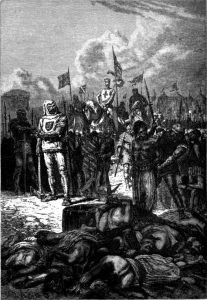
Massacre of the Saracen prisoners, ordered by King Richard the Lionheart (Alphonse de Neuville, 1883)
(Wiki Image By Alphonse de Neuville – François Guizot (1787-1874), The History of France from the Earliest Times to the Year 1789, London: S. Low, Marston, Searle & Rivington, 1883, p. 447, Public Domain, https://commons.wikimedia.org/w/index.php?curid=2548987)
The legacy of the Siege of Acre (1189–1191) is defined by its role as the survival anchor for the Crusader States. While the Third Crusade failed to retake Jerusalem, the victory at Acre ensured that the “Latin East” would persist for another hundred years. It transformed the city from a secondary port into the political and military nerve center of the Levant.
Here are the 8 essential aspects of Acre’s enduring legacy:
- The Birth of the “Second Kingdom” 🏰
Acre replaced Jerusalem as the capital of the Crusader states.
- The New Metropolis: Because Jerusalem remained under Muslim control, Acre became the seat of the King of Jerusalem and the Patriarch. For the next century, it was the most important Christian city in the East.
- Economic Hub: The siege’s success secured a deep-water port that enabled the Italian maritime republics (Venice, Genoa, Pisa) to dominate Mediterranean trade, thereby linking European markets to Silk Road goods.
- The Rise of the Military Orders 🛡️
The siege was the defining moment for the legendary knightly orders.
- The Teutonic Knights: This order was officially founded during the siege (initially as a field hospital) to care for German crusaders. It would later become one of the most powerful military forces in Europe.
- Headquarters: Both the Knights Templar and the Knights Hospitaller built massive, fortified headquarters in Acre, the ruins of which remain among the finest examples of Gothic military architecture.
- The Trebuchet Revolution ⚙️
Acre marked a major technological shift from tension-powered engines to gravity-powered ones.
- The Counterweight Trebuchet: The siege saw the first widespread, effective use of the counterweight trebuchet in the Levant. King Philip II’s “God’s Stone-Thrower” proved that even the most formidable stone walls could be systematically dismantled.
- Artillery Doctrine: The success of these engines at Acre led to an “arms race” in fortification design, with engineers building thicker walls and rounded towers to deflect massive stone projectiles better.
- The “Lionheart” Legend and Chivalric Code 🦁
The personal rivalry between Richard the Lionheart and Saladin during the siege created the blueprint for the medieval concept of “Chivalry.”
- Mutual Respect: Stories of Saladin sending fruit and ice to a feverish Richard, and Richard offering to knight Saladin’s nephew, became central to European and Islamic folklore.
- The Dark Mirror: Conversely, the massacre of 2,700 prisoners at Ayyadieh left a legacy of brutality that complicated Richard’s saintly image and fueled centuries of religious tension.
- Medical and Logistical Innovation 🩺
The horrific conditions of the “Sickness of the Camp” forced advancements in field medicine and logistics.
- Hospitaler Standards: The Knights Hospitaller refined their methods for large-scale casualty care and sanitation, setting standards for European hospitals that were later reintroduced in the West.
- Naval Supply Chains: The siege demonstrated that a large-scale army could be sustained only through a constant, coordinated naval “conveyor belt” of supplies from Europe, a lesson in logistics that influenced future maritime empires.
- Archaeological Treasure Trove 🔍
Because the Crusader city was eventually buried or built over, modern Acre (Akko) is one of the world’s premier archaeological sites.
- The Underground City: Excavations have revealed entire streets, shops, and the “Templar Tunnel”—a secret strategic passage connecting the fortress to the port.
- UNESCO Site: The legacy of the 1191 siege is preserved in the city’s very stones, which were designated a UNESCO World Heritage Site for their exceptional preservation of medieval urban design.
- Demographic and Cultural Synthesis 🌍
The century of Crusader rule that followed the siege created a unique “Levantine” culture.
- The Pullani: A generation of “Frankish” settlers was born in Acre who spoke Arabic, wore Eastern clothing, and acted as cultural intermediaries between Europe and the Islamic world.
- Architectural Influence: The “Acre Style” of Gothic architecture influenced buildings as far away as Cyprus and France, representing a fusion of Western design and Eastern masonry techniques.
- The Blueprint for 1291 ⏳
The legacy of 1191 ironically provided the map for the city’s eventual destruction.
- The Final Siege: Exactly 100 years later, the Mamluks employed the same tactics and even some of the same siege positions as Richard and Philip to finally take the city in 1291, ending the Crusader era.
- Total Demolition: To ensure the Crusaders could never return to their “anchor,” the Mamluks razed the city’s sea walls, a landscape change that lasted until the Ottoman era.
Would you like me to…
- Explore the architectural details of the Templar Tunnel discovered in Acre.
- Detail the specific medical practices used by the Hospitallers during the siege?
- Analyze the tactical differences between the Siege of 1191 and the final Fall of Acre in 1291.
⚔️ The Siege of Acre (1189–1191) YouTube Links Views
The Siege of Acre (1189–1191) was the pivotal event of the Third Crusade, famous for the confrontation between Richard the Lionheart and Saladin. On YouTube, the most viewed videos offer epic, deep-dive explorations of this two-year struggle.
🎥 Top-Rated & High-View Documentaries
- HistoryMarche: The Lion Awakens! History of the Third Crusade (FULL DOCUMENTARY)
- Views: ~3.5M+
- Style: This 90-minute compilation is the definitive visual resource. It uses high-quality 3D mapping and unit animations to cover the entire siege, the arrival of the European kings, and the complex “double siege” in which the Crusaders besieged the city while Saladin besieged them.
- HistoryMarche: Siege of Acre, 1189 – 1191 ⚔️ Third Crusade (Part 1)
- Views: ~1.2M+
- Style: The standalone first part of the series mentioned above, focusing specifically on the early years of the siege before the arrival of Richard and Philip II.
- Real Crusades History: The First, Second, and Third Crusades: MEGA-COMPILATION
- Views: ~1.1M+
- Style: A massive 5-hour deep dive. This channel is known for its academic rigor and focus on the primary chronicles, explaining the religious and psychological motivations of both sides.
⚔️ Key Moments Covered in These Videos
- The Arrival of the Kings: Documentaries detail how the arrival of Philip II of France and Richard I of England turned the tide with superior siege engines and naval power.
- The “Double Siege”: Most videos highlight the unusual tactical situation in which the Crusaders were trapped between the city walls and Saladin’s external army.
- The Massacre at Acre: The grim conclusion, where Richard ordered the execution of nearly 3,000 Muslim prisoners after Saladin failed to meet ransom terms, is a major focus of narrative accounts.
📊 Summary
- For Best Tactical Visuals: Watch HistoryMarche.
- For Chronicle-based History: Watch Real Crusades History.
- For a Quick Overview: World Battle History provides a 5-minute summary.
Would you like to find books on the Third Crusade or images of Acre’s medieval fortifications as they appear today?
⚔️ The Siege of Acre Books
The Siege of Acre (1189–1191) is among the best-documented events of the Middle Ages. Because it lasted two years and involved the highest nobility of Europe and the Islamic world, we have exceptional primary sources and modern scholarly analyses.
Here are the essential books for understanding the siege, categorized by their perspective.
- Primary Sources (Eyewitness Accounts)
These books were written by men who were actually in the camps or the city during the siege.
- “The Chronicle of the Third Crusade” (Itinerarium Peregrinorum et Gesta Regis Ricardi): This is the definitive Latin account from the Crusader perspective. It provides vivid details on the “sickness of the camp,” the construction of the siege towers, and Richard the Lionheart’s personal combat.
- “The Rare and Excellent History of Saladin” by Baha ad-Din ibn Shaddad: Written by Saladin’s personal confidant and judge. It is an essential counter-perspective, describing the siege from the view of the Muslim relief army and the inner turmoil Saladin felt during the city’s fall.
- “The History of the Holy War” by Ambroise: A verse chronicle by a Norman poet who traveled with Richard. It is famous for its “boots-on-the-ground” feel, describing the high cost of food and the terror of Greek Fire.
- Modern Scholarly Masterworks
These books provide the strategic and archaeological context that eyewitnesses often missed.
- “The Life and Legend of the Sultan Saladin” by Jonathan Phillips: A modern, balanced biography that devotes significant space to Acre. It examines how the siege exhausted Saladin’s resources and prompted a shift in his strategy from offensive conquest to defensive preservation.
- “Richard I” by John Gillingham: Often considered the best biography of the Lionheart. Gillingham brilliantly analyzes Richard’s tactical use of naval power and artillery at Acre, debunking myths of him being merely a “reckless” warrior.
- “Victory in the East: A Military History of the First Crusade” (Contextual) by John France: While focused on the First Crusade, John France’s work on medieval warfare is essential for understanding the logistics and siege technology (such as the transition to the counterweight trebuchet) employed at Acre.
- Specialized and Archaeological Studies
For those interested in the physical legacy and the specialized military orders.
- “The Knights Hospitaller in the Levant, c.1070-1309” by Jonathan Riley-Smith: A deep dive into how the military orders functioned during the siege and how they established Acre as their new headquarters afterward.
- “Akko: The Maritime Capital of the Crusader Kingdom” by Eliezer Stern: This archaeological study is the primary resource for understanding the city’s physical layout, its secret tunnels, and the harbor defenses that played a critical role in the 1189–1191 investment.
- Compelling Narrative History
- “The Crusades: The Authoritative History of the War for the Holy Land” by Thomas Asbridge: If you only read one book on the Crusades, this should be it. Asbridge’s chapter on the Siege of Acre is a cinematic but rigorous account that captures the sheer human misery of the two-year stalemate.
Would you like me to…
- Summarize the specific tactical differences highlighted between Richard and Saladin in these books?
- Provide a reading list specifically focused on the “Greek Fire” technology mentioned in the chronicles?
- Extract the key archaeological findings from Eliezer Stern’s work regarding the Templar Tunnel?
🌊 Tyre (332 BC), 🔧 Syracuse (213–212 BC), 🌀 Alesia (52 BC), ⛰️ Masada (73 AD), and ⚔️ Acre (1189–1191) Similarities: Ancient Sieges
While these five sieges span over 1,500 years and three continents, they share striking strategic and mechanical similarities. These common threads reveal the “universal laws” of ancient and medieval siege warfare, in which the laws of physics, the limits of human endurance, and the brilliance of engineering remained the decisive factors.
Here are the 8 top essential similarities across these legendary conflicts:
1. The Mastery of Geography (The “High Ground” Problem) ⛰️
In every case, the defender chose a position that seemed naturally impregnable, forcing the attacker to “reshape the earth” to win.
- Verticality: Alesia and Masada utilized mountain plateaus; Tyre and Acre used the sea as a barrier; Syracuse used steep coastal cliffs.
- The Solution: The attackers all used Terrforming. Alexander built a bridge to Tyre; the Romans built a mountain-sized ramp at Masada; Caesar dug miles of trenches at Alesia.
2. The “Double Siege” Dynamic (Investment vs. Relief) 🌀
The most dangerous moment for any besieger was the arrival of a relief army.
- The “Sandwich”: At Alesia, Caesar was trapped between the city and a Gallic relief force. At Acre, the Crusaders were trapped between the city walls and Saladin’s army.
- The Response: Both Caesar and the Crusaders had to build Double Walls (circumvallation facing in, contravallation facing out) to fight two wars at once.
3. Torsion and Gravity: The Artillery Evolution ☄️
The exchange of heavy projectiles defined all five sieges, though the technology evolved from twisted rope to counterweights.
- Long-Range Suppression: Syracuse and Tyre utilized Torsion Catapults (using twisted sinew). Acre saw the debut of the Counterweight Trebuchet.
- Anti-Personnel: Every siege used smaller “Scorpions” or bolt-throwers to clear the walls of defenders, allowing engineering teams to work at the base of the fortifications.
4. The Engineering of Inevitability (Siege Towers) 🗼
The attacker’s primary goal was to deploy their infantry to the level of the defenders’ walls using massive wooden towers.
- Protection: In all five sieges, towers were covered with rawhide or metal plating to prevent them from being set on fire (especially critical against Greek Fire at Acre and fire arrows at Tyre).
- Scale: Alexander’s 150-foot towers at Tyre and the Roman tower at Masada were designed to psychologically break the defenders by literally looking down on them.
5. Logistics: The Water and Grain War 🍞
The “hidden” battle in every siege was the struggle to feed thousands of men in a single spot.
- Supply Lines: At Masada and Tyre, the Romans and Macedonians had to haul water and food over vast distances. At Acre, the Crusaders nearly starved to death before their navy secured the harbor.
- Starvation as a Weapon: Every one of these cities (except Masada) eventually considered or suffered from famine, proving that a wall is only as strong as the food stored behind it.
6. Subterranean Warfare: The Mining Race ⛏️
When the walls were too thick to batter down, the attackers went underground.
- Sapping: At Alesia and Acre, miners dug tunnels to undermine the towers’ foundations.
- Counter-mining: The defenders in Syracuse and Acre dug their own tunnels to intercept attackers, resulting in brutal hand-to-hand combat in the dark.
7. The Naval Necessity ⚓
For the coastal sieges (Tyre, Syracuse, and Acre), the city could not be taken without Naval Supremacy.
- Blockades: Alexander could take Tyre only after he built a fleet; the Crusaders took Acre only after Richard the Lionheart secured the harbor; Syracuse fell only after the Roman fleet blocked Carthaginian supplies.
- Naval Artillery: Both Alexander and Marcellus (at Syracuse) pioneered lashing ships together to create stable floating platforms for battering rams and catapults.
8. The Psychological Outcome: Total Defeat 🏛️
Because of the length and cost of these sieges, the outcome was almost always total.
- No Quarter: The frustration of a long siege led to massacres at Tyre, Alesia, and Acre.
- The Symbolic End: Each siege marked the end of an era. Tyre ended Persian naval power; Syracuse ended Greek independence in Sicily; Alesia ended Gallic freedom; Masada ended the Jewish revolt; and Acre preserved the Crusader states for a final century.
Would you like me to…
- Create a comparative table of the specific siege engines used in each of these five battles.
- Focus on the role of women and civilians trapped within these five sieges?
- Analyze the archaeological evidence remaining at these five sites today.
🌊 Tyre (332 BC), 🔧 Syracuse (213–212 BC), 🌀 Alesia (52 BC), ⛰️ Masada (73 AD), and ⚔️ Acre (1189–1191) Differences: Ancient Sieges
While these sieges share standard features of ancient warfare, their differences highlight the distinct evolution of military genius and the unique challenges posed by diverse environments. From the chemical fire of the Crusades to the mathematical “magic” of Archimedes, each siege was lost or won for distinct reasons.
1. Technological Archetype: Engineering vs. Science
The “power source” of the defense varied wildly across these conflicts.
- Syracuse (The Scientist): This was a Technological Defense. It was the only siege where the defenders had a technological advantage over the attackers. Archimedes used complex levers, gears, and optics to repel an industrial Roman army.1
- Tyre & Masada (The Engineers): These were Attacker-Driven Engineering feats. The defenders relied on passive stone walls, while the attackers (Alexander and the Romans) used brute-force landscape alteration to reach them.
- Acre (The Alchemist): This introduced the Concept of Chemical Warfare. The use of Greek Fire at Acre added a layer of incendiary technology that was largely absent or less sophisticated in the earlier Roman and Macedonian sieges.
2. Defensive Geometry: The “Island” vs. The “Hill.”
The physical nature of the fortresses compelled the attackers to adopt entirely different modes of thinking.
- Maritime Penetration (Tyre & Acre): These required Amphibious Logistics. The attackers had to master naval blockades and ship-mounted artillery to succeed.
- Vertical Ascension (Masada): This was a Topographical Battle. There was no water to cross, only gravity to defeat. The challenge was to construct an incline capable of supporting a 90-foot tower at a 45-degree slope.
- The Encirclement (Alesia): Unlike the others, Alesia involved horizontal containment. Caesar didn’t need to climb a massive ramp or sail a fleet; he needed to build a “prison” of trenches and walls 24 miles long.
3. The “Relief Force” Variable
The presence of outside help completely altered the strategic pressure on the besiegers.
- The Isolated Siege (Tyre & Masada): These defenders were truly alone. Once the sieges began, there was no hope of a massive Persian or Jewish army arriving to strike the attackers’ rear. This allowed Alexander and Silva to focus 100% of their energy on the forward direction.
- The Double-Front War (Alesia & Acre): Caesar and the Crusaders were “besieged while besieging.” They had to split their manpower, building walls that faced both directions. At Alesia, the relief force was the primary threat; at Acre, Saladin’s relief force was an ever-present shadow for two whole years.
4. The Fate of the Defenders
The “End Game” of each siege reflected different cultural and political motivations.
- Masada (Individual Agency): This is the only siege that ended in Mass Suicide. The defenders chose their own end, denying the Romans the satisfaction of a “capture.”3
- Alesia (Political Theatre): This ended in Ritual Surrender. Vercingetorix surrendered to save his people, leading to a decade of Romanization in Gaul.
- Tyre & Acre (The Massacre): These ended in Total Annihilation. Enraged by the length of the resistance, the victors carried out systematic executions (2,000 crucified at Tyre; 2,700 beheaded at Acre) to send a message to other cities.
📊 Comparative Summary of Differences
| Feature | Tyre | Syracuse | Alesia | Masada | Acre |
| Primary Attacker Error | Lack of Navy | Underestimating Science | Outnumbered 6-to-1 | Desert Logistics | Disease/Plague |
| Defensive Style | Naval Superiority | Mechanical Traps | High-Ground Cavalry | Absolute Isolation | Chemical Incendiaries |
| Decisive Blow | Naval Breach | Stealth at a Festival | Germanic Cavalry | The Assault Ramp | Famine/Exhaustion |
| Victors’ Spirit | Fury/Revenge | Cultural Respect | Political Ambition | Cold Professionalism | Religious Zeal |
5. Tactical Specificity: Torsion vs. Gravity
- Torsion (Tyre, Syracuse, Alesia, Masada): These relied on the Catapult. The energy was stored in twisted ropes of hair or sinew. The range was shorter, and the projectiles were smaller.
- Gravity (Acre): By 1189, the Counterweight Trebuchet had arrived. This employed a massive swinging weight to launch stones much heavier than anything Caesar or Alexander ever threw, enabling the systematic demolition of stone towers from a safe distance.
Would you like me to…
- Analyze the specific archaeological remains at one of these sites to see how the landscape still shows these differences.
- Explore the cost of these sieges in modern currency to see which was the most “expensive” victory?
- Detail the life of a common soldier in a Roman trench vs. a Crusader camp?
🌊 Tyre (332 BC), 🔧 Syracuse (213–212 BC), 🌀 Alesia (52 BC), ⛰️ Masada (73 AD), and ⚔️ Acre (1189–1191) Compared: Ancient Sieges Table
Here is a clear, side-by-side comparison table of the five great sieges, focusing on engineering, technology, tactics, scale, and historical impact—a kind of “siege warfare evolution chart.”
| Siege | Date | Attacker | Defender | Length | Core Engineering Feat | Key Technology | Tactical Genius | Outcome | Historical Significance |
| 🌊 Tyre | 332 BC | Alexander the Great | Phoenician Tyre | ~7 months | Causeway (mole) built across the sea | Siege towers, naval artillery, fire ships | Adaptive warfare: land → naval | Tyre destroyed | Redefined siege engineering; island → peninsula |
| 🔧 Syracuse | 213–212 BC | Rome (Marcellus) | Greek Syracuse | ~2 years | Defensive machines by Archimedes | Claw of Archimedes, cranes, catapults | Defensive innovation over brute force | Rome wins via starvation | Showed science could defeat legions (temporarily) |
| 🌀 Alesia | 52 BC | Julius Caesar | Gallic Confederation | ~2 months | Double ring fortifications (inward & outward) | Ballistae, traps, towers | Strategic containment & attrition | Roman victory | End of Gallic independence; Caesar’s rise |
| ⛰️ Masada | 73 AD | Roman Empire | Jewish Sicarii | ~7 months | Massive siege ramp up a cliff | Battering rams, towers | Psychological & logistical dominance | Romans breach; defenders die | Icon of resistance and martyrdom |
| ⚔️ Acre | 1189–1191 | Crusaders | Ayyubids (Saladin) | ~2 years | Siege-within-a-siege | Trebuchets, Greek fire | Coalition warfare, naval supply | Crusader victory | Secured Crusader foothold in the Levant |
1. 🌊 Tyre (332 BC): The Geographical Alteration
Alexander’s siege is the ultimate example of industrial-scale engineering. When the island city refused to surrender, Alexander used the ruins of the old mainland city to build a land bridge (The Mole) across the sea.
- Tactical Innovation: He was the first to mount heavy torsion catapults and battering rams on pairs of ships lashed together, creating the first effective naval artillery platforms.
2. 🔧 Syracuse (213–212 BC): Man vs. Machine
Syracuse was a battle of intellectual superiority. Archimedes turned the city’s walls into a giant, semi-automated defense system that terrified the Roman legions.
- The Claw of Archimedes: A crane that could lift Roman ships by the prow and drop them.
- Layered Defense: Archimedes calculated the exact trajectories for his catapults, creating “kill zones” at multiple ranges so the Romans were under fire from the moment they appeared on the horizon until they touched the wall.
3. 🌀 Alesia (52 BC): The Double-Wall Strategy
Caesar’s masterpiece was the Circumvallation and Contravallation. To capture a hilltop fort while being threatened by a massive relief army, he built two concentric circles of walls.
- The Death Fields: Between the walls, Caesar installed a “security system” of Lilia (pitfalls with stakes) and Cippi (sharpened branches).
- Logistical Cruelty: He forced the Gauls to watch their own women and children starve in the “no man’s land” between the lines to conserve Roman supplies.
4. ⛰️ Masada (73 AD): The Engineering of Inevitability
The Romans at Masada used psychological engineering. The fortress was inaccessible by normal means, so the Romans spent months building a massive earthen ramp on the western face.
- The Message: The ramp demonstrated to the world that no height or desert could protect a rebel from Rome’s reach.
- Technology: Once the ramp was complete, they rolled a 90-foot iron-plated siege tower to the summit, using a massive ram to breach the casemate walls.
5. ⚔️ Acre (1189–1191): The Maritime Sledgehammer
Acre was a Third Crusade “Super-Siege.” It combined the naval blockades of Tyre with the brutal attrition at Alesia, complicated by the presence of a “Double Siege” in which Saladin’s army surrounded the Crusaders.
- Chemical Warfare: The defenders utilized Greek Fire, an unquenchable incendiary liquid that decimated Crusader siege towers.
- Counterweight Trebuchets: This siege marked the peak of gravity-powered artillery, capable of launching stones weighing more than 200 lb to pulverize masonry.
Summary of Outcomes
While Tyre and Syracuse fell to direct assault and stealth, Alesia and Acre were won primarily through starvation and blockade. Masada remains the outlier—a victory of engineering over morale, ending in the mass suicide of the defenders before the Romans could lay a hand on them.
Would you like me to…
- Provide the blueprint of Caesar’s trap system at Alesia?
- Analyze the chemical composition and defense against Greek Fire at Acre?
- Detail the mathematical principles Archimedes used for his variable-range catapults?