Audio Jingle and Ad Break, Brand Trust and Certification, Visual Identity, Mass Media Advertising, Educational Marketing, Visual Hierarchy, and Lifestyle Branding: Ancient to 19th Century Marketing
Here are 7 pivotal marketing innovations from Ancient History up to the 19th Century that laid the foundation for how we buy and sell today.
1. The “Sonic” Brand (The Town Crier, 5th–15th Century)
- The History: With the collapse of Rome, literacy plummeted. The written word was useless for reaching the masses, so the “Town Crier” became the only broadcast channel.
- The Innovation: Criers were not just newsmen; they were paid advertisers. To distinguish official Royal decrees from commercial advertisements (e.g., a miller selling flour), criers used distinct horns, bells, or vocal preambles (like “Oyez, Oyez”).
- The Legacy: This invented the Audio Jingle and Ad Break. It established the rule that commercial messages must be sonically distinct from editorial news.
2. The Trademark (The Goldsmiths’ Hallmark, 1300)
- The History: In Medieval London, fraud was rampant. Buyers couldn’t tell whether a gold plate was pure gold or a cheap metal coated in gold.
- The Innovation: King Edward I enacted a law requiring gold and silver to be tested by the “Guild of Goldsmiths.” If it passed, it was stamped with a “Leopard’s Head” symbol.
- The Legacy: This was the birth of Brand Trust and Certification. It proved that a symbol (a logo) could guarantee quality, allowing customers to trust the product without knowing the specific craftsman.
3. The Visual Logo (The Pub Sign Act, 1393)
- The History: As commerce grew, cities became crowded, yet 90% of the population remained illiterate. Writing “The Red Lion Inn” on a board was useless.
- The Innovation: King Richard II passed an act forcing alehouses to display a sign. Innkeepers commissioned bright, distinct images—A Red Lion, A White Hart, A Swan with Two Necks—so customers could say, “Meet me at the Sign of the Green Man.”
- The Legacy: This was the standardization of Visual Identity. It recognized that the human brain processes images faster than text, a principle still used by Apple and Nike today.
4. The First Print Ad (William Caxton, 1477)
- The History: Before the printing press, books were handwritten and sold via word-of-mouth.
- The Innovation: William Caxton, the man who brought printing to England, printed a small handbill to sell a religious rulebook (The Pyes of Salisbury). He pinned it to church doors. It ended with a plea in Latin: “Please do not tear this down.”
- The Legacy: This was the birth of Mass Media Advertising. It was the first time a seller could create hundreds of identical sales pitches and distribute them without being physically present.
5. Benefit-Driven Copy (The First Coffee Ad, 1652)
- The History: When coffee first arrived in London, people were terrified of it. It was black, bitter, and hot. Why drink it?
- The Innovation: Pasqua Rosée, who opened the first coffeehouse, printed a flyer titled “The Vertue of the Coffee Drink.” It didn’t just say “Buy Coffee”; it listed the medical benefits: it stops drowsiness, helps digestion, and cures headaches.
- The Legacy: This was Educational Marketing. Rosée realized that for a radically new product, you have to sell the solution (energy/health), not the product (hot bean water).
6. The Layout Revolution (Benjamin Franklin, 1729)
- The History: Early newspaper ads were dense walls of tiny text, like classifieds, to save money on paper.
- The Innovation: Benjamin Franklin, in his Pennsylvania Gazette, observed that eyes tire. He bought extra space just to leave it empty (white space) around his headlines. He wrote short, punchy copy instead of long paragraphs.
- The Legacy: Franklin invented Visual Hierarchy in advertising. He proved that paying for “nothing” (empty space) was profitable because it made the ad the first thing the reader looked at.
7. The “Brand Image” (Pears Soap, 1880s)
- The History: By the late 19th century, factories were churning out identical commodities. Soap was just soap.
- The Innovation: Thomas J. Barratt, the “Father of Modern Advertising,” bought the copyright to a famous painting (Bubbles by Sir John Everett Millais) and inserted a bar of Pears Soap into the foreground.
- The Legacy: He invented Lifestyle Branding. He associated a commodity (soap) with high culture and art, proving that advertising could sell a status symbol rather than just a hygiene product.
🎶📣 Audio Jingle and Ad Break
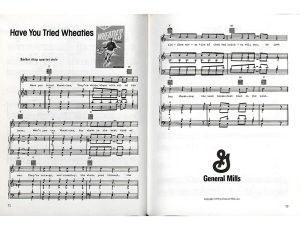
The first known example of a radio jingle is the 1926 Wheaties breakfast cereal commercial, featuring the famous line, “Have You Tried Wheaties?”
https://exhibitions.lib.umd.edu/libraryofamericanbroadcasting/featured/jingles
Here is the 1926 radio jingle for Wheaties, often cited as the first singing commercial in history.
Video: Have You Tried Wheaties? (1926 Radio Jingle) Channel: Jake, The Air Warden Views: 29,884 Link: https://www.youtube.com/watch?v=CJpeR6GvpC8
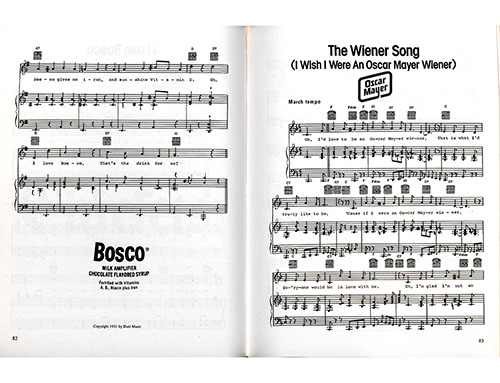
Trentlage is likely best known for the classic, long-running ad “Wiener Song (Oh, I Wish I Were an Oscar Mayer Wiener)” (Associated Press 2016), a jingle that resulted from him winning a contest run by the J. Walther Thompson agency for the Oscar Mayer brand. The “Wiener Song” eventually reached an estimated 49 million people in 19 countries worldwide (Wisconsin Historical Society 2009).
https://exhibitions.lib.umd.edu/libraryofamericanbroadcasting/featured/jingles
Here is the classic 1965 animated commercial featuring the “Oh, I Wish I Were an Oscar Mayer Wiener” jingle.
Video: Oscar Mayer Wiener 1965 Commercial (one of America’s Best Ads) Channel: AlwaysGutom Views: 3,023,291 Link: https://www.youtube.com/watch?v=aNddW2xmZp8
Audio Jingle and Ad Break Quotes Table
Here are the definitive quotes on Audio Jingles and Ad Breaks, explaining the psychology of why a simple melody can outlast a billion-dollar ad campaign.
The Power of the Earworm
| Quote | Speaker | Context |
| “When you have nothing to say, sing it.” | David Ogilvy
(Father of Modern Advertising) |
Ogilvy was a copywriter who preferred facts, but he admitted that when a product had no unique selling point (like soda or cigarettes), music was the only way to create an emotional bond. |
| “The best way to get into someone’s head is not through their eyes, but through their ears.” | Unknown
(Music Industry Maxim) |
Visuals require active attention (you have to look). Audio is passive (you can’t close your ears). A jingle enters the brain even if the consumer is looking away. |
| “A jingle is a slogan that you can’t get out of your head.” | Linda Kaplan Thaler
(Creator of “I Don’t Wanna Grow Up” for Toys ‘R’ Us) |
She explains that the goal of a jingle isn’t art; it’s persistence. It is a mnemonic device designed to make the brand name unforgettable. |
| “Music is the emotional shorthand of the brand.” | Leo Burnett | Music bypasses logic and goes straight to the limbic system. A minor key makes you sad; a major key makes you happy. You don’t have to argue; you just have to play the chord. |
| “You can’t hum a print ad.” | Tony Schwartz
(Media Guru) |
This highlights the viral nature of audio. People walk around whistling “I’m Lovin’ It.” No one walks around reciting a billboard. |
The Psychology of the Ad Break
| Quote | Speaker | Context |
| “We interrupt this program to bring you a message.” | Radio Standard
(1920s) |
The original definition of the Ad Break. It acknowledges that the ad is an intrusion. The deal is: “We give you entertainment; you give us 30 seconds of your time.” |
| “The silence between the notes is as important as the notes themselves.” | Mozart
(Applied to Radio) |
In radio advertising, a pause (silence) is the only way to create emphasis. A constant wall of noise is tuned out. A sudden silence grabs attention. |
| “If you can’t make it good, make it loud.” | The Loudness War
(TV Engineering) |
Refers to the practice of compressing audio dynamic range so commercials sound “louder” than the TV show they interrupt, forcing the viewer to pay attention. |
| “Sonic Branding is the audio equivalent of a logo.” | Gary Vaynerchuk | Referring to the “Ta-dum” sound of Netflix or the “Bong” of Intel. It’s a 2-second audio logo that triggers instant brand recognition. |
Audio Jingle and Ad Break Chronological Table
Here is a chronological breakdown of how the Audio Jingle and the Commercial Break evolved from medieval shouting to modern psychological triggers.
Timeline of Sound & Interruption
| Era / Year | Innovation | Key Player / Brand | The Shift in Marketing |
| Middle Ages
(5th–15th C.) |
The Sonic Separator | Town Criers | Criers used distinct horns or bells to separate “Royal News” from “Paid Announcements” (e.g., a miller selling flour). This established the rule that ads must sound different from content. |
| 1922 | The First Radio Ad | WEAF New York | The first radio commercial airs for a real estate complex (Queensboro Corp). It was a 10-minute dry lecture. No music, just talking. |
| 1926 | The First Jingle | Wheaties | General Mills, on the verge of canceling Wheaties, aired a barbershop quartet singing “Have You Tried Wheaties?” Sales spiked, saving the brand and proving melody aids memory. |
| 1939 | The First National Hit | Pepsi-Cola | The “Nickel, Nickel” jingle aired. It was the first jingle to be broadcast coast-to-coast in the US, becoming so popular that it was played in jukeboxes. |
| 1950s | The “Magazine Concept”
(The Ad Break) |
NBC / Pat Weaver | Networks shifted from single-sponsor shows (e.g., “The Colgate Hour”) to selling 30-second spots to multiple brands. This invented the Commercial Break structure we use today. |
| 1971 | The Pop Crossover | Coca-Cola | The “I’d Like to Buy the World a Coke” jingle was so catchy it was re-recorded as a pop song and hit #1 on the charts, blurring the line between Commercials and Culture. |
| 1984 | The Cinematic Event | Apple | The “1984” Super Bowl ad proved visuals could dominate sound. It shifted the focus from catchy rhymes to visual storytelling and “Event Marketing.” |
| 1987 | The Licensing Era | Nike | Nike used the Beatles’ original recording of “Revolution” in an ad. This marked the decline of custom jingles and the rise of Licensing Pop Hits to borrow a band’s “cool factor.” |
| 1994 | Sonic Branding | Intel | The creation of the 3-second “Intel Bong” (five notes: D♭, D♭, G, D♭, A♭). Marketing moved from 60-second songs to split-second Audio Logos (Mnemonics). |
| 2003 | The Last Giant | McDonald’s | “I’m Lovin’ It” launched. Uniquely, it was released as a Justin Timberlake pop single before it was revealed as a burger jingle, mastering the modern viral integration. |
| 2010s | The 5-Second Hook | YouTube | The introduction of the “Skip Ad” button forced advertisers to front-load their best audio/visual hooks into the first 5 seconds rather than saving the punchline for the end. |
The Current State (2020s)
We have now entered the era of Silent Advertising. With the rise of mobile scrolling (Instagram/TikTok), 80% of ads are viewed with the sound off. The “Jingle” has evolved into “Trending Audio”—viral sounds that users voluntarily add to their own content, turning consumers into broadcasters.
Would you like me to explain the specific musical theory behind why the sounds of Intel or McDonald’s are so “sticky” in the human brain?
Audio Jingle and Ad Break History
The history of the audio jingle and the commercial break reveals how advertisers evolved from shouting in the street to engineering “earworms” that stick in the brain for decades.
1. The Medieval “Ad Break” (Town Criers)
Before mass media, the Town Crier was the broadcast system. Criers were paid by the King to announce laws, but they also took side jobs from local merchants (the first “sponsors”).
- The First Sonic Brand: To distinguish official Royal News from a sales pitch for a local tavern, criers used specific sounds—bells, horns, or a vocal preamble like “Oyez, Oyez!”
- The Legacy: This established the rule that advertising must be sonically distinct from the content, a standard that eventually became the “And now, a word from our sponsors” bumper on TV.
2. The First Jingle: “Have You Tried Wheaties?” (1926)
In the 1920s, radio ads were stiff and spoken, like lectures. Wheaties cereal was failing and on the verge of being discontinued.
- The Innovation: General Mills hired a barbershop quartet to sing a bouncing, rhyming song live on the radio in Minneapolis on Christmas Eve, 1926.
- The Result: It was the first singing commercial in history. Sales in the region skyrocketed, saving the brand. This moment proved that music could bypass logic and enter the consumer’s memory directly.
3. The Invention of the “Commercial Break” (1950s)
In early TV and radio, there were no “breaks.” A single company (such as soap manufacturer Procter & Gamble) would sponsor the entire show, often weaving its product into the script (hence the term “Soap Opera”). The advertiser owned the program.
- The Shift: In the 1950s, NBC executive Sylvester “Pat” Weaver realized that if one advertiser quit, the network would go broke. He introduced the “Magazine Concept.”
- The Legacy: Weaver shifted control from the advertiser to the network. Instead of one sponsor owning the show, he sold 30-second “spots” to multiple companies, inserting them into breaks. This created the modern Commercial Break, allowing competing brands (like Ford and Chevy) to advertise on the same channel.
4. The Modern Era: Sonic Branding
As attention spans shortened in the 21st century, the minute-long jingle died out, replaced by Sonic Branding—short, 3-second audio cues designed to trigger instant recognition.
- Examples: The “Ta-Dum” of Netflix, the Intel “Bong,” or McDonald’s “Ba Da Ba Ba Ba.” These are the digital descendants of the Town Crier’s bell.
The world’s first singing radio commercial
This video features a recreation of the original 1926 “Have You Tried Wheaties?” jingle, which is widely considered the first singing commercial in advertising history.
Given your interest in the history of technology and early computing, would you like to explore how early computer-generated sound was first utilized in commercial broadcasting?
Audio Jingle and Ad Break Innovation
Here are the key innovations that transformed the audio jingle and the ad break from simple announcements into sophisticated psychological triggers.
1. The “Singing Commercial” (1926)
The Innovation: The Wheaties Jingle (“Have You Tried Wheaties?”)
- Before: Radio ads were dry, spoken lectures read by the announcer.
- The Shift: General Mills Cereal was failing. In a last-ditch effort, they hired a barbershop quartet to sing a bouncing rhyme about the cereal.
- The Result: It proved that melody aids memory. The jingle bypassed the listener’s logical skepticism and lodged the product name directly into their brain.
2. The “Magazine Concept” (1950s)
The Innovation: The 30-Second Spot
- Before: A single sponsor owned an entire show (e.g., “The Colgate Comedy Hour”). The stars of the show would stop acting and hold up the product.
- The Shift: NBC executive Sylvester “Pat” Weaver realized this gave advertisers too much power. He invented the “Magazine Concept,” in which the network controlled the content and sold small “spots” of time to multiple advertisers.
- The Result: This created the Commercial Break. It forced advertisers to condense their entire message into 30 or 60 seconds, birthing the high-pressure, fast-paced TV ad industry.
3. The “Buy Out” (1971)
The Innovation: “I’d Like to Buy the World a Coke”
- Before: Jingles were seen as cheesy, separate from “real” music.
- The Shift: Coca-Cola created a jingle so catchy that it was re-recorded as a pop song (“I’d Like to Teach the World to Sing”) and hit #1 on the Billboard charts.
- The Result: This blurred the line between Content and Commerce. It proved that an ad could be a cultural product in its own right, paving the way for modern brands to license hit songs from artists like The Beatles or The Rolling Stones.
4. Sonic Branding (1990s–Present)
The Innovation: The Audio Logo (The Intel “Bong”)
- Before: Brands needed a whole song to identify themselves.
- The Shift: As attention spans shrank, brands needed instant recognition. Intel created a 3-second, five-note sound (D-flat, D-flat, G, D-flat, A-flat).
- The Result: This is Pavlovian Marketing. You don’t need to see the screen to know who the ad is for; the sound alone triggers the brand association. (Think of the Netflix “Ta-Dum” or McDonald’s “Ba Da Ba Ba Ba”).
5. The “Skip-Proof” Ad (2010s)
The Innovation: The 5-Second Hook
- Before: TV ads saved the punchline for the end.
- The Shift: YouTube introduced the “Skip Ad in 5 Seconds” button.
- The Result: This completely inverted the narrative structure of commercials. Innovators realized they had to place the most explosive, engaging, or funny moment within the first 5 seconds to prevent users from clicking skip, shifting storytelling from a “slow build” to an “immediate hook.”
Audio Jingle and Ad Break Legacy
The legacy of the audio jingle and the commercial break goes far beyond selling products; these innovations fundamentally rewired our culture, our media consumption, and even our brain chemistry.
1. The Colonization of Memory (The Earworm)
The most enduring legacy of the jingle is its ability to hijack human memory. Advertisers discovered that setting words to music bypasses the brain’s “logic filters” and lodges directly in long-term memory.
- The Result: Millions of people can still sing “Two all-beef patties, special sauce…” or “Plop, plop, fizz, fizz” decades after the ads stopped airing. This proved that commercial messaging could become permanent cultural knowledge, often more durable than what we learned in school.
2. The Fragmentation of Time
The invention of the “Commercial Break” (the 30-second spot) changed the rhythm of storytelling.
- The Result: It created a culture accustomed to interruption. TV shows began to be written around the breaks, creating “cliffhangers” every 12 minutes to keep viewers from changing the channel. This staccato rhythm trained modern audiences to expect bite-sized content, paving the way for the short-form videos of TikTok and YouTube Shorts.
3. The Democratization of Art (and the “Sellout”)
For decades, the “Ad Break” was the primary patron of the arts.
- The Result: It created a massive economy for actors, musicians, and directors. Famous directors like Ridley Scott (Alien) and David Fincher (Fight Club) cut their teeth making commercials. However, it also birthed the concept of “Selling Out”—the tension between art created for expression and art created to move units.
- Modern Legacy: Today, this stigma is largely gone. Indie bands fight to get their songs in Apple commercials because it is now the primary way to break a new hit.
4. Sonic Branding (The Death of Silence)
As the 60-second jingle died out, it evolved into “Sonic Branding”—short, Pavlovian sound triggers.
- The Result: We now live in a world of constant sonic notification. The legacy of the jingle is the Intel “Bong,” the Netflix “Ta-Dum,” and the iPhone “Ding.” These sounds condition us to react instantly to technology, turning the entire world into a series of “Ad Breaks” for our attention.
5. The “Ad-Free” Premium Class
Finally, the ubiquity of the commercial break created a new class divide: The ability to pay for silence.
- The Result: In the 20th century, everyone watched the same commercials. In the 21st century, the wealthy pay for “Premium” subscriptions (YouTube Premium, Netflix, Spotify) to avoid ads, while the working class trades their attention for access. The legacy of the ad break is that time without interruption has become a luxury good.
Audio Jingle and Ad Break YouTube Links View, and Books
Creating memorable audio jingles and effective ad breaks is a core component of branding and advertising history. Below are key resources from YouTube and recommended literature to help you understand and master these skills.
YouTube Links & Examples
- Top Examples & Collections:
- Commercial Jingle Collection (2.1M+ views) – A large compilation of famous commercial jingles that have shaped consumer culture.
- Top 10 Jingles of All Time (139K+ views) – A countdown of the most effective and catchy jingles from the 70s, 80s, and 90s.
- 10 Famous Funny Commercials (55M+ views) – A showcase of some of the most memorable and award-winning funny commercials that made advertising history.
- Jingle Hoops (41M+ views) – A famous NBA holiday ad that uses “jingle bells” in a creative, sports-focused way.
- Tutorials & Production:
- How to Make a Radio Jingle in Less Than a Minute (180K+ views) – Mike Russell demonstrates quick production techniques using Adobe Audition presets.
- 3 FREE AI Tools For Making Radio Jingles (50K+ views) – A 2024 guide on using AI for vocal isolation, celebrity-style voiceovers, and epic voice-over effects.
- How to Write Ad Music To A Brief (without picture) – A tutorial on the creative process of composing music specifically for commercial briefs.
- ElevenLabs Music: Create AI Songs, Commercial Jingles & More – A 2025 look at how to use AI to generate jingles and background music for ads.
Essential Books on Advertising & Jingles
For a deep understanding of the psychology and strategy behind audio branding, these books are foundational:
- “Audio Branding: Using Sound to Build Your Brand” by Laurence Minsky and Colleen Fahey: A practical guide to how music, sound, and voice can be used to strengthen brand identity and emotional connection with consumers.
- “Jingles: How to Write, Produce and Sell Commercial Music” by Al Stone: A classic manual for musicians and advertisers that covers the technical and business aspects of creating successful jingles.
- “Hey, Whipple, Squeeze This: The Classic Guide to Creating Great Advertising” by Luke Sullivan: While covering advertising broadly, this book provides invaluable insights into creating catchy, memorable concepts and avoiding common industry clichés.
- “The Brand Gap: How to Bridge the Distance Between Business Strategy and Design” by Marty Neumeier: A highly visual and influential book that explains how all elements of branding—including sound—must work together to form a cohesive identity.
- “Alchemy: The Dark Art and Curious Science of Creating Magic in Brands” by Rory Sutherland: A fascinating look at the “irrational” side of advertising and why catchy jingles and small psychological tweaks are often more effective than traditional logic.
Would you like more information on the history of specific ad campaigns, such as those for Coca-Cola or McDonald’s, or tutorials for a specific software like Logic Pro?
🏷️🔒 Brand Trust and Certification Marketing
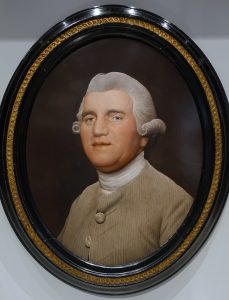
Wedgwood replaced the fear of “Is this good?” with the safety of “I can return it.” (Exhibit in the Wedgwood Museum – Barlaston, Stoke-on-Trent, England)
(Wiki Image By Daderot – Own work, Public Domain, https://commons.wikimedia.org/w/index.php?curid=59422488)
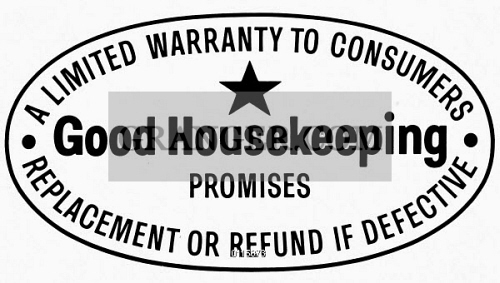
SEALS: GOOD HOUSEKEEPING. The Good Housekeeping seal of approval was introduced in 1909 by the Good Housekeeping Research Institute for products advertised in Good Housekeeping magazine.
Brand Trust and Certification Marketing Quotes Table
Here are the definitive quotes on Brand Trust and Certification, illustrating why consumers look for “Seals of Approval” before they open their wallets.
The Psychology of Trust
| Quote | Speaker | Context |
| “It takes 20 years to build a reputation and five minutes to ruin it.” | Warren Buffett | The foundational law of brand trust. Trust is an asset that accumulates slowly but depreciates instantly. A single scandal (e.g., VW Dieselgate) can erase decades of “Certified” safety. |
| “If people like you they’ll listen to you, but if they trust you they’ll do business with you.” | Zig Ziglar
(Sales Legend) |
This distinguishes “Brand Awareness” from “Brand Trust.” A funny Super Bowl ad makes people like you. A money-back guarantee or a safety certification makes them trust you enough to buy. |
| “Trust is the currency of the new economy.” | Rachel Botsman
(Author of Who Can You Trust?) |
In the digital age (Uber, Airbnb), we trust strangers based on “Stars” and “Reviews.” The 5-star rating system is the modern equivalent of the Good Housekeeping Seal—a decentralized certification of safety. |
| “Nobody ever got fired for buying IBM.” | 1970s Business Adage | The ultimate quote on Risk Reduction. Corporate buyers didn’t buy IBM because it was the best; they bought it because it was the safest. The brand name itself acted as a certification that protected the buyer’s career. |
The Power of Certification (Third-Party Validation)
| Quote | Speaker | Context |
| “A brand is a promise. A good brand is a promise kept.” | Muhtar Kent
(Former CEO of Coca-Cola) |
Certification (e.g., “Organic,” “Fair Trade”) is the evidence that the promise is being kept. It is a contract with the consumer that says, “We have been audited, and we are telling the truth.” |
| “92% of consumers trust recommendations from people they know above all other forms of advertising.” | Nielsen Research | This explains why Social Proof (Testimonials) has replaced the “Expert Seal.” Today, a photo of a real person using the product on Instagram is a more powerful “certification” than a doctor’s endorsement. |
| “The purpose of a brand is to reduce the risk of a bad decision.” | Larry Light
(Brand Expert) |
When a consumer sees a “UL Listed” stamp on a heater or an “ISO 9001” badge on a factory, they aren’t admiring the logo; they are exhaling. Certification removes the fear of the unknown. |
| “When you say it, it’s marketing. When they say it, it’s social proof.” | Andy Crestodina | The core philosophy of certification. You can claim you are “The Best,” but it means nothing until a third party (J.D. Power, The Michelin Guide, or a User Review) certifies it. |
Brand Trust and Certification Marketing Chronological Table
Here is the chronological evolution of Brand Trust and Certification, tracing how humanity moved from stamping gold to verifying digital identities.
Timeline of Trust Engineering
| Era / Year | Innovation | Key Player / Entity | The Shift in Trust Mechanics |
| Ancient Rome
(~100 AD) |
The Maker’s Mark | Fortis Lamps | Pottery workshops stamped their lamps (e.g., “FORTIS”) to prove origin. This was the first anti-counterfeiting measure to protect a reputation for quality. |
| 1300 | The Hallmark | Goldsmiths’ Hall
(London) |
King Edward I required gold to be tested and stamped with a “Leopard’s Head.” Trust shifted from the Person (the smith) to the System (the Guild). |
| 1618 | The Royal Warrant | British Monarchy | Tradesmen supplying the King received a “Royal Warrant.” Trust was established by Association—”If it’s good enough for the King, it’s safe for you.” |
| 1760s | The Guarantee | Josiah Wedgwood | Wedgwood offered a “Satisfaction or Money Back” guarantee on pottery. Trust shifted to Risk Reversal—removing the customer’s fear of regret. |
| 1894 | Safety Certification | UL (Underwriters Laboratories) | Created to test electrical devices for fire risk. Trust moved to Scientific Verification—a third-party lab using physics to prove safety. |
| 1909 | The Media Seal | Good Housekeeping | The magazine launched its “Seal of Approval.” If a product failed, the magazine (not the manufacturer) refunded you. Trust was based on Editorial Authority. |
| 1968 | Data-Driven Trust | J.D. Power | Started ranking cars based on owner surveys. Trust shifted from “What the brand says” to “What the customers say” (aggregated data). |
| 1995 | Peer Reputation | eBay | Introducing the “Feedback Score.” Trust was engineered between two strangers by gamifying reputation. Trust became Decentralized. |
| 1999 | Digital Security | Verisign (SSL) | The “Green Padlock” in browsers. Trust was no longer about quality, but Security—”Is my credit card safe from theft?” |
| 2009 | Identity Verification | The “Blue Checkmark” was introduced to stop impersonation of celebrities (after a lawsuit by Tony La Russa). Trust became about Authenticity. | |
| 2015+ | The Trustless Ledger | Blockchain | Bitcoin/Ethereum introduced trust without a middleman. The ledger is the trust. Trust shifted to Code. |
The Three Ages of Trust
- The Age of Authority (1300–1900): “Trust us because the King/Guild says so.”
- The Age of Institutions (1900–1990): “Trust us because the Science/Lab says so.”
- The Age of Distributed Trust (1990–Present): “Trust us because Everyone Else says so.”
Brand Trust and Certification Marketing History
The history of Brand Trust and Certification is the history of solving one specific economic problem: Information Asymmetry. The seller always knows more about the product than the buyer. Throughout history, “Certification” has been the tool used to bridge that gap, evolving from royal decrees to algorithmic reputation scores.
Here is the history of how we learned to trust strangers.
Phase 1: The “Anti-Scam” Era (Ancient – Medieval)
In the ancient world, trade was local. You trusted the blacksmith because you knew him. But as trade expanded, you had to buy from strangers, and fraud became rampant.
- The Roman Potter: As early as 100 AD, Roman pottery workshops (like the famous Fortis workshop) stamped their names on oil lamps. This was the first “Trademark,” designed to prevent inferior workshops from selling leaky lamps under a famous name.
- The Goldsmiths’ Hallmark (1300): This is the gold standard of certification. In Medieval London, you couldn’t tell if a plate was solid gold or gold-plated lead. King Edward I commanded that no gold could be sold until it was assayed (tested) by the “Guardian of the Craft” at Goldsmiths’ Hall. If it passed, it received the “Leopard’s Head” stamp.
- The Innovation: This introduced the Third-Party Auditor. Trust was no longer between Buyer and Seller; it was mediated by a powerful Institution.
Phase 2: The “Royal” Era (17th – 19th Century)
As the middle class grew, they wanted to emulate the aristocracy. Marketing shifted from “purity” to “prestige.”
- The Royal Warrant (1618): Tradesmen who supplied the British Crown received a “Royal Warrant of Appointment,” allowing them to display the Royal Arms.
- The Psychology: This was Trust by Association. The logic was simple: “If this jam is safe enough for the Queen, it is safe enough for me.” It was the original celebrity endorsement, but with the weight of the State behind it.
- The “Money Back” Guarantee (1760s): Josiah Wedgwood realized that the emerging middle class was terrified of wasting money on fragile pottery. He offered to refund any customer for any reason. He replaced the fear of “Is this good?” with the safety of “I can return it.”
Phase 3: The “Safety” Era (1890s – 1950s)
The Industrial Revolution brought mass-produced food and electricity, introducing new, invisible dangers (botulism, electrocution).
- The UL Mark (1894): When electricity entered homes, houses burned down. “Underwriters Laboratories” (UL) was formed to test wires and lamps. They didn’t sell products; they sold Safety. Their stamp on a plug meant “This won’t kill you.”
- The Good Housekeeping Seal (1909): Good Housekeeping magazine established an internal lab to test the products they advertised. If a product with their Seal failed, the magazine (not the manufacturer) would refund the customer $5,000.
- The Innovation: This was Liability Marketing. The certifier put their own money on the line to prove the product’s quality.
Phase 4: The “Peer” Era (1995 – 2010)
The internet broke the old models. You couldn’t see the seller, and there was no “Royal Warrant” for eBay sellers.
- The Feedback Loop (eBay, 1995): Pierre Omidyar realized people wouldn’t send money to strangers without a mechanism for trust. He invented the “Feedback Score.”
- The Shift: Trust moved from Vertical (Institutions/Kings) to Horizontal (The Crowd). A seller with a “99% Positive” rating was more trusted than a major corporation with no reviews.
- The SSL Padlock (Netscape, 1994): To enable e-commerce, Netscape invented the SSL protocol (the lock icon in your browser). This certified the channel, not the product. It proved that your credit card number wouldn’t be intercepted, birthing the trillion-dollar e-commerce industry.
Phase 5: The “Identity” Crisis (2010 – Present)
In the social media age, the problem shifted from “Fake Products” to “Fake People.”
- The Blue Check (Twitter, 2009): After being sued by baseball manager Tony La Russa (who was being impersonated), Twitter introduced “Verification.” It was a badge of Authenticity.
- The Collapse of Verification (2022): When platforms (like X/Twitter and Meta) began selling verification badges for a monthly fee, the meaning of the symbol changed. It shifted from “This person is who they say they are” (Certification) to “This person paid $8” (Subscription).
- The Current State: We are currently in a crisis of certification, where “verified” badges no longer guarantee identity, leading to a resurgence of the ancient problem: Who can you actually trust?
Brand Trust and Certification Marketing Innovation
Here are the 5 specific mechanisms that were invented to engineer trust, moving from “taking a man at his word” to trusting a digital algorithm.
1. The Third-Party Auditor (The Hallmark, 1300)
The Innovation: The separation of Maker and Certifier.
- The Problem: In the Middle Ages, you couldn’t trust a goldsmith to grade his own work. He had an incentive to cheat.
- The Solution: King Edward I mandated that a completely separate entity (The Guild of Goldsmiths) test the metal. The “Leopard’s Head” stamp wasn’t a brand logo; it was a receipt of an audit.
- The Legacy: This created the concept of Independent Verification. It is the ancestor of the “USDA Organic” sticker and the ISO 9001 certification. It proved that trust requires a neutral referee.
2. Risk Reversal (The Money-Back Guarantee, 1760s)
The Innovation: Shifting financial risk from Buyer to Seller.
- The Problem: Under English Common Law, the rule was Caveat Emptor (“Let the buyer beware”). If you bought a bad pot, it was your fault. This froze the market because people were afraid to buy expensive things.
- The Solution: Josiah Wedgwood inverted the law. He voluntarily offered to take the loss if the customer was unhappy.
- The Legacy: This invented Customer Service. It proved that assuming the risk actually increases profit because the increase in sales volume outweighs the cost of the refunds.
3. Liability Marketing (The Good Housekeeping Seal, 1909)
The Innovation: The Publisher as Insurer.
- The Problem: Magazines in the early 1900s were full of snake oil ads. Readers stopped trusting the ads, which hurt the magazine’s revenue.
- The Solution: Good Housekeeping created a laboratory to test every toaster and cream they advertised. If the product broke, the magazine reimbursed the reader, not the manufacturer.
- The Legacy: This was the first time a media platform accepted liability for its advertisers. It is the precursor to Amazon’s “A-to-z Guarantee,” which protects you against third-party sellers.
4. Quantified Reputation (The eBay Feedback Score, 1995)
The Innovation: The Digitization of “Word-of-Mouth.”
- The Problem: In a global digital market, you can’t look the seller in the eye. How do you trust a stranger in another country?
- The Solution: Pierre Omidyar turned reputation into a number (e.g., “98% Positive”). He gamified trust. A seller would fight to the death to avoid a “Negative” because it destroyed their digital capital.
- The Legacy: This invented the Review Economy (Yelp, Uber, Airbnb). It proved that “Peer Pressure” is a more powerful regulator of behavior than government law.
5. Cryptographic Trust (The SSL Padlock, 1994)
The Innovation: Machine-to-Machine Verification.
- The Problem: As credit cards moved online, consumers weren’t afraid of bad products; they were afraid of invisible theft.
- The Solution: Netscape introduced the Secure Sockets Layer (SSL). It used math to verify that the server you were talking to was actually the bank, not an imposter.
- The Legacy: This shifted trust from “Reputation” (Social) to “Protocol” (Mathematical). You don’t trust the website because it’s nice; you trust it because the encryption makes it impossible to lie.
Brand Trust and Certification Marketing Legacy
The legacy of Brand Trust and Certification is the foundation of the modern global economy. Without the mechanisms to trust strangers, we would still be trading only with our neighbors in the village square.
Here are the enduring legacies of this innovation.
1. The Creation of “Intangible Value”
The most profound legacy is that a symbol became more valuable than the product it stamped.
- The Shift: In the Middle Ages, gold was the asset. Today, the “Hallmark” (the Brand) is the asset. Companies like Coca-Cola or Nike are worth billions not because of their factories (tangible assets), but because of their Brand Equity (intangible trust).
- The Result: This gave rise to the modern concept of “Intellectual Property.” You can rebuild a factory in a year, but you cannot rebuild 100 years of trust in a year.
2. The Outsourcing of Critical Thinking
Certification allowed the human brain to stop worrying. We no longer test our own water, inspect our own meat, or test the purity of our gold rings.
- The Result: We have outsourced our survival instincts to Logos. When we see the “USDA Organic” stamp or the Apple logo, our brain skips the “Is this safe?” check. This efficiency allows the speed of modern commerce, but it also makes us vulnerable when trusted brands quietly lower quality (Skimpflation).
3. The “Safety Tax” (Premium Pricing)
Wedgwood’s legacy is the economic rule that Trust = Margin.
- The Result: Consumers will voluntarily pay 30-300% more for a product simply to remove the fear of regret. We pay more for Tylenol than generic acetaminophen, even though they are chemically identical, because we are paying a “Safety Tax” for the Tylenol certification. Trust is the most expensive ingredient in any product.
4. The Review Economy (The Democratization of Trust)
The legacy of the eBay Feedback Score is that reputation is now a quantifiable, portable currency.
- The Shift: We moved from “Institutional Trust” (The Government says this hotel is safe) to “Distributed Trust” (500 strangers on TripAdvisor say this hotel is safe).
- The Result: This birthed the Gig Economy. You would never get into a stranger’s car (Uber) or sleep in a stranger’s bed (Airbnb) without the “Certification” of their 4.8-star rating.
5. The Crisis of Authenticity (The Future Legacy)
In the age of AI and Deepfakes, the legacy of certification is facing its greatest test.
- The Current State: As “Blue Checks” became purchasable commodities rather than identity proofs, and as AI can fake a CEO’s voice, the ancient need for the “Goldsmith’s Hallmark” is returning. We are entering an era where Digital Provenance (proving a video or image is real) will become the most valuable commodity on the internet, likely powered by cryptographic signatures.
Brand Trust and Certification Marketing YouTube Links View, and Books
Building trust is a critical component of brand success, especially in a market where consumers are increasingly wary. Certifications and strategic trust-building measures act as powerful signals of credibility.
YouTube Links & Strategic Insights
- Defining Brand Trust & Credibility:
- What Is Branding? 4 Minute Crash Course (2.7M+ views) – The Futur provides a high-impact overview of why branding is ultimately about a customer’s “gut feeling” and how trust is established.
- How to Build Brand Trust & Credibility – A 2025 guide from IndeedSEO on why some brands remain unstoppable while others fade, focusing on the core pillar of trust.
- What Will Happen to Marketing in the Age of AI? (835K+ views) – A TED talk by Jessica Apotheker discussing the evolving need for human-driven trust and ideas in an AI-dominated marketing landscape.
- Marketing Strategies for 2025 & 2026:
- 5 Digital Marketing Strategies For 2025 (85K+ views) – Wes McDowell breaks down how the rules of digital trust and visibility are shifting in the coming year.
- 5 Marketing Changes I’m Making In 2026 – Alex Cattoni discusses the shift away from trends toward deeper, more authentic brand-building strategies for 2026.
Essential Books on Brand Trust & Marketing Ethics
For a deep dive into the psychology of trust and how to leverage certifications and credibility, these books are foundational:
- “Trust Factor: The Science of Creating High-Performance Companies” by Paul J. Zak: Explores the neuroscience of trust and how building a culture of transparency and reliability creates more loyal customers and employees.
- “Fascinate: How to Make Your Brand Impossible to Resist” by Sally Hogshead: This book details “trust” as one of the seven triggers of fascination, explaining how to use expert credentials and consistent messaging to bind customers to your brand.
- “The Speed of Trust: The One Thing That Changes Everything” by Stephen M.R. Covey: A masterclass on how trust functions as a “measurable accelerator” to business success and the specific behaviors that build it.
- “Marketing Ethics & Society” by Robert V. Kozinets: A deeper academic look at how certifications (like Fair Trade, B Corp, etc.) influence consumer behavior and the ethical responsibilities of modern brands.
- “Building a StoryBrand” by Donald Miller: While focusing on messaging, this book emphasizes the role of the “Guide”—the brand that establishes trust through empathy and authority (often via certifications and proven results).
Would you like to explore specific certifications for your industry, such as B Corp, ISO standards, or organic labeling, and how to market them?
🎨🪧 Visual Identity Marketing

“A logo doesn’t sell (directly), it identifies.” Portrait of graphic designer, Paul Rand.
(Wiki Image By Unknown author – This image is available from the United States Library of Congress’s Prints and Photographs division under the digital ID cph.3f05881.This tag does not indicate the copyright status of the attached work. A normal copyright tag is still required. See Commons:Licensing., Public Domain, https://commons.wikimedia.org/w/index.php?curid=94661679)
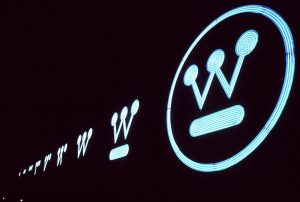
Rand’s Westinghouse Sign and logo
(Wiki Image By Richard Huppertz – Collection of Richard Huppertz., CC BY-SA 3.0, https://commons.wikimedia.org/w/index.php?curid=20643529)
Visual Identity Marketing Quotes Table
Here are the definitive quotes on Visual Identity, illustrating the power of symbols to bypass language and logic.
The Philosophy of the Logo
| Quote | Speaker | Context |
| “Design is the silent ambassador of your brand.” | Paul Rand
(Creator of IBM, UPS, ABC logos) |
Rand is the father of corporate identity. He argued that before a customer reads a word of copy or meets a salesperson, the visual look has already told them if the company is serious, playful, or cheap. |
| “Logos and branding are so important. In a big part of the world, people cannot read French or English—but are great in remembering signs.” | Karl Lagerfeld
(Chanel Creative Director) |
This captures the global power of visual identity. A “Swoosh” or “Golden Arches” requires no translation. It is the only truly universal language of commerce. |
| “A logo is not communication, it is identification.” | Sagi Haviv
(Partner at Chermayeff & Geismar & Haviv) |
A common mistake is trying to make a logo “tell a story.” The Mercedes logo isn’t a car; the Apple logo isn’t a computer. It is a flag, not a description. Its only job is to say “This is us.” |
| “Products are made in the factory, but brands are created in the mind.” | Walter Landor
(Design Legend) |
The visual identity (the packaging, the colors, the font) is the bridge that turns a commodity (sugar water) into a personality (Coca-Cola). It exists in the consumer’s mental space. |
| “Design is thinking made visual.” | Saul Bass
(Creator of Bell, AT&T, United Airlines logos) |
Bass argued that a logo isn’t just “art”; it is a strategic business decision compressed into a single symbol. It is the company’s strategy made visible. |
The Economics of Design
| Quote | Speaker | Context |
| “Good design is good business.” | Thomas Watson Jr.
(CEO of IBM, 1973) |
Watson hired Paul Rand because he realized that a chaotic visual identity made IBM look disorganized. By standardizing the look, he increased the company’s value. He proved that aesthetics appear on the balance sheet. |
| “If you think good design is expensive, you should look at the cost of bad design.” | Ralf Speth
(CEO of Jaguar Land Rover) |
A poor visual identity confuses customers and requires millions of dollars in advertising to explain. A great visual identity (like Target’s red bullseye) does the marketing for you. |
Visual Identity Marketing Chronological Table
Here is the chronological evolution of Visual Identity, tracing the journey from medieval laws requiring signage to the modern era of “responsive” digital systems.
Timeline of Visual Identity
| Era / Year | Innovation | Key Player / Brand | The Shift in Design Strategy |
| 1393 | The Visual Mandate | King Richard II
(The Pub Sign Act) |
The King required all alehouses to display a sign so inspectors (and the illiterate public) could identify them. This birthed the “Red Lion” and “White Hart,” creating the first Standardized Logos. |
| 1876 | The First Trademark | Bass Brewery
(The Red Triangle) |
On Jan 1, 1876, a Bass employee slept outside the registrar’s office to secure UK Trademark #1. It proved that a Shape (Red Triangle) could be legal property, just like a factory. |
| 1886 | The Timeless Script | Coca-Cola | Frank Robinson designed the Spencarian script logo. It established the power of Consistency—while Pepsi changed its logo 11 times, Coke’s visual identity has remained virtually unchanged for ~140 years. |
| 1916 | The Design System | London Underground
(Edward Johnston) |
The first total “Corporate Identity.” It wasn’t just a logo; it was a custom font (Johnston Sans), color scheme, and map style. It proved visual identity is a System, not just a stamp. |
| 1956 | The Corporate Look | IBM / Paul Rand | Paul Rand redesigned IBM, moving from a messy globe to bold, authoritative slab-serif letters. This marked the birth of Modern Corporate Identity—using design to signal efficiency and order. |
| 1971 | The Abstract Icon | Nike
(Carolyn Davidson) |
For $35, a student designed the “Swoosh.” It proved a logo didn’t need to name the company; it could represent an Idea (Speed/Motion) and eventually stand alone without text. |
| 1977 | The Humanized Tech | Apple
(Rob Janoff) |
Computers were seen as cold and scary. Apple’s “Rainbow” logo made the brand feel warm, creative, and accessible. It used color to Democratize technology. |
| 1994 | The Digital Canvas | The first “Doodle” appeared. Google broke the golden rule of branding (“Never touch the logo”) by dressing it up for holidays. It proved a brand could be Playful and dynamic, not just static. | |
| 2013 | Flat Design | Apple (iOS 7) | Apple killed “Skeuomorphism” (icons that looked like real leather/glass) in favor of flat, 2D colors. This standardized the Mobile-First Aesthetic, ensuring logos loaded fast on screens. |
| 2016 | The Responsive Logo | Mastercard / Uber | Brands began redesigning logos to “collapse.” A full logo for a billboard, a symbol for a website, and a tiny dot for a watch screen. Identity became Scalable. |
The Three Ages of Visual Identity
- Identification (1300s–1800s): “I am here.” (The sign tells you where the shop is).
- Differentiation (1900s): “I am different.” (The logo distinguishes Coke from Pepsi).
- Abstraction (2000s–Present): “I am a feeling.” (The Nike Swoosh or Apple Icon triggers an emotional concept without using words).
Visual Identity Marketing History
The history of Visual Identity is the story of how humanity moved from Decoration (making things look nice) to Communication (making things speak without words). It is a journey driven by necessity: first by illiteracy, then by competition, and finally by the shrinking size of our screens.
Here is the history of how the logo conquered the world.
Phase 1: The “Illiteracy” Era (Middle Ages – 1600s)
In the beginning, visual identity wasn’t about branding; it was about navigation.
- The Problem: In Medieval Europe, 90% of the population couldn’t read. If you wrote “The Red Lion Inn” on a board, nobody would come in.
- The Solution (1393): King Richard II passed the Pub Sign Act, requiring alehouses to display a sign. Innkeepers commissioned bright, distinct images—A Red Lion, A Green Dragon, A White Hart.
- The Logic: This was the first “Visual Language.” You didn’t tell your friend to meet you at the “Inn on 4th Street”; you said, “Meet me at the Sign of the Golden Cross.” The image was the address.
Phase 2: The “Trademark” Era (1800s)
The Industrial Revolution flooded the world with generic goods. A barrel of beer from Factory A looked exactly like a barrel from Factory B.
- The Bass Red Triangle (1876): On New Year’s Eve, 1875, an employee of the Bass Brewery slept on the steps of the Registrar’s office in London. The next morning, he registered the Bass Red Triangle as the UK’s first trademark.
- The Shift: This was the moment visual identity became Property. The red triangle wasn’t just a picture; it was a legal asset that guaranteed the liquid inside was authentic. It proved that a simple shape could hold monetary value.
Phase 3: The “System” Era (1910s – 1940s)
As corporations grew, they needed more than just a logo; they needed a “uniform” for their entire existence.
- The London Underground (1916): Edward Johnston didn’t just design a logo (the famous Red Roundel); he designed a proprietary font (Johnston Sans) and a specific way to draw maps.
- The Innovation: This was the birth of the Design System. Whether you were looking at a train ticket, a station sign, or a map, it all “felt” the same. Visual Identity moved from being a symbol to being an atmosphere.
Phase 4: The “Corporate” Era (1950s – 1980s)
This is the “Mad Men” era, dominated by one man: Paul Rand.
- The Philosophy: Before Rand, logos were often crests, illustrations, or messy signatures. Rand convinced CEOs (like those at IBM, UPS, and ABC) that a logo should be minimalist and abstract.
- The Shift: He designed the IBM striped logo to convey speed and efficiency. He proved that “Good Design is Good Business.” This era established that a company’s visual identity should reflect its internal culture (efficiency, order, authority).
- The Nike Swoosh (1971): This era peaked with the Swoosh. It proved that a logo didn’t even need the company’s name. A pure abstract shape could trigger the concept of “Athleticism” in the brain.
Phase 5: The “Digital” Era (2000s – Present)
The internet and the smartphone forced the biggest change in history: The Shrinking Canvas.
- The Problem: A complex logo (like the old Starbucks mermaid with all the details) looks like a smudge when shrunk down to a 16×16 pixel “Favicon” on a browser tab or an app icon.
- The Solution: Flat Design & Debranding: Companies began stripping away depth, shadows, and text.
- Starbucks: Removed the words “Starbucks Coffee” and zoomed in on the Mermaid’s face.
- Apple: Moved from a 3D “Glass” Apple to a flat black/grey silhouette.
- The Innovation (Responsive Logos): Today, visual identity is “fluid.” The logo is not one static image; it is a shapeshifter. On a billboard, it is the full name and icon. On a tablet, it is just the icon. On a watch, it is just a dot or a color.
Summary of the Evolution
- Medieval: “I am a picture because you can’t read.”
- Industrial: “I am a shape because I need to stand out on a shelf.”
- Modern: “I am a system because I need to look the same on a billboard and a watch.”
Visual Identity Marketing Innovation
Here are the 5 specific mechanisms that transformed “drawing pictures” into the science of Visual Identity.
1. The Protected Asset (The Trademark Act, 1875)
The Innovation: Turning a shape into legal property.
- The Problem: In the early industrial age, if you made a great beer, a competitor could just copy your barrel design. There was no legal way to “own” a look.
- The Solution: The UK passed the Trade Marks Registration Act. The Bass Brewery (Red Triangle) became the first to prove that a specific arrangement of lines and colors could be an asset as valuable as land or machinery.
- The Legacy: This created Brand Equity. It meant a company could invest millions in advertising a logo, knowing that the “goodwill” generated was legally theirs to keep.
2. The “Total Design” System (AEG, 1907)
The Innovation: Consistency across every touchpoint.
- The Problem: Companies used to be disjointed. The factory looked industrial, the letterhead looked fancy, and the product looked utilitarian.
- The Solution: German architect Peter Behrens was hired by AEG (Allgemeine Elektricitäts-Gesellschaft, or General Electricity Company). He didn’t just design a logo; he designed the factories, the lamps, the catalogs, and the font.
- The Legacy: This invented Corporate Identity. It proved that a brand is not just a stamp; it is an atmosphere. Every interaction, from the building you walk into to the invoice you receive, must speak the same visual language.
3. The Abstract Symbol (Nike, 1971)
The Innovation: Semiotics (Meaning without Words).
- The Problem: Logos used to be literal. A baker had a picture of bread; a car company had a crest with a wheel. This was limiting and hard to read at high speeds.
- The Solution: Carolyn Davidson designed the Swoosh. It wasn’t a picture of a shoe; it was a picture of motion.
- The Legacy: This proved that visual identity could bypass language entirely. You don’t need to speak English to understand what the Swoosh means. It paved the way for the “Textless Future” of apps (e.g., the Instagram camera icon).
4. The Humanized Interface (Apple, 1977 / 1984)
The Innovation: Using design to change emotional context.
- The Problem: Early computers were beige, command-line boxes seen as cold, intimidating tools for the military or scientists.
- The Solution: Steve Jobs and Rob Janoff introduced the Rainbow Apple. It used bright, “kindergarten” colors to signal that the computer was a creative tool for humans, not a calculator for robots.
- The Legacy: This invented User-Centric Identity. It showed that visual identity isn’t just about identifying the company; it’s about mirroring users’ aspirations.
5. The Responsive Logo (The Mobile Era, 2010s)
The Innovation: Fluidity and Scalability.
- The Problem: A complex logo (like the old Starbucks mermaid or detailed crests) turns into illegible mush when shrunk to a 16-pixel “Favicon” on a browser tab or a smartwatch.
- The Solution: Brands like Google, Airbnb, and Mastercard adopted Responsive Systems. The identity is no longer a single image; it is a “family” of assets that reveals details as the screen size decreases (Full Name -> Icon -> Dot).
- The Legacy: This killed “Skeuomorphism” (fake 3D textures) and established Flat Design as the global standard. The priority shifted from “looking expensive” (details) to “loading fast” (simplicity).
Visual Identity Marketing Legacy
The legacy of Visual Identity is that it transformed the world from a text-based society into an image-based one. We no longer read our environment; we scan it.
Here are the enduring legacies of this innovation.
1. The Creation of a Universal Language
Visual identity is the only language that requires no translation.
- The Shift: Before global logos, trade was limited by language barriers.
- The Legacy: Today, a red octagon means “Stop” and a golden arch means “Food” in almost every country on Earth. Visual Identity became the Esperanto of Commerce, allowing brands to scale globally without changing their core message.
2. The “Branded Self” (Tribalism)
The most psychological legacy is that consumers began using corporate logos to define their own identities.
- The Shift: In the 19th century, a logo was a sign of the maker. Today, a logo is a sign of the wearer.
- The Legacy: We voluntarily pay a premium to be walking billboards. Wearing a Supreme box logo, carrying a Birkin bag, or glowing with an Apple logo signals our status, values, and tribe. Visual identity gave us the tools to categorize ourselves and others instantly.
3. The “Face” of the Faceless (Corporate Personhood)
Visual identity allowed massive, inhuman conglomerates to feel like friends.
- The Shift: Legally, a corporation is a “person,” but emotionally, it is a pile of contracts.
- The Legacy: The mascot (Michelin Man, Mickey Mouse) and the logo gave these cold entities a warm, human face. This allows us to feel “loyalty” or “love” for a tax entity. It is the magic trick that makes Capitalism feel Emotional.
4. The “Blanding” of Culture (Homogenization)
The technological requirement for logos to work on tiny screens has led to a massive flattening of design.
- The Shift: In the 20th century, logos were intricate, quirky, and distinct (think of the detailed heraldry of Cadillac or the complex script of GE).
- The Legacy: To survive on a smartphone pixel grid, distinctiveness has been sacrificed for legibility. Fashion houses (Burberry, Saint Laurent) and Tech Giants (Google, Spotify, Airbnb) have all adopted nearly identical bold, sans-serif fonts. The legacy of digital visual identity is a world that looks increasingly the same—clean, efficient, and soulless.
5. The Neuro-Hack (System 1 Thinking)
Finally, visual identity permanently rewired how we make decisions.
- The Legacy: We have been trained to trust “Good Design” as a proxy for “Good Quality.” We instinctively trust a website with a clean UI and distrust one that looks cluttered, even if the cluttered one has better information. Visual Identity proved that Aesthetics is a Function, not just a decoration. We judge a book by its cover because it’s the only thing we have time to process.
Visual Identity Marketing YouTube Links View, and Books
Establishing a strong visual identity is more than just designing a logo; it’s about creating a cohesive sensory experience that communicates your brand’s values across all touchpoints.
YouTube Links & Design Tutorials
- 2026 Trends & Strategy:
- Graphic Design Trends 2026 — And How to Actually Use Them! – Satori Graphics explores the most important visual shifts coming in 2026 and how to integrate them into your brand work.
- Predicting the 7 Biggest Social Media Marketing Trends for 2026 (142K+ views) – Neil Patel discusses how visual content on social media is transforming, emphasizing the shift toward dynamic and AI-integrated identities.
- Adobe’s 2026 Creative Trends Forecast – A deep dive into contemporary imagery and the visual styles Adobe predicts will be relevant for the modern consumer.
- Step-by-Step Identity Design:
- How To ACTUALLY Design a Brand Identity (Full Guide 2026) (215K+ views) – A comprehensive current guide on the end-to-end process of developing a professional visual brand.
- Designing a Brand from Scratch: Oracle (Future Brand Identity) – A behind-the-scenes look at a futuristic brand redesign, demonstrating research, strategy, and execution.
- Creating a Brand Identity in 2026 is Simple, Actually – Jack Watson offers a modern “free course” style video on simplifying the complex process of identity design for 2026.
- Building a Brand – Redesigning a Business Start to Finish (1M+ views) – Matthew Encina provides a detailed case study on the complete visual overhaul of a real-world business.
Essential Books on Visual Identity & Design
For those who want to master the principles of visual storytelling and brand systems, these books are industry benchmarks:
- “Designing Brand Identity: An Essential Guide for the Whole Branding Team” by Alina Wheeler: Often considered the “textbook” for identity design, this book provides a rigorous 5-phase process for creating and implementing a brand system.
- “Logo Design Love: A Guide to Creating Iconic Brand Identities” by David Airey: A highly practical book that focuses on the art of logo design while explaining how those logos fit into a larger visual language.
- “Identity Designed: The Definitive Guide to Visual Branding” by David Airey: This work features case studies from top design studios worldwide, illustrating how visual identities are developed across diverse industries.
- “Graphic Design School: The Principles and Practice of Graphic Design” by David Dabner, Sandra Stewart, and Abbie Vickress: A fundamental guide for understanding color theory, typography, and layout—the building blocks of any visual identity.
- “Visual Intelligence: Sharpen Your Perception, Change Your Life” by Amy E. Herman: While not a “marketing” book, it teaches the critical skill of observing visual details, which is essential for any creative director or brand strategist.
Would you like to explore specific design tools, such as Figma or Adobe Creative Cloud, or dive into using AI to generate brand assets?
📰🖨️ Mass Media Advertising
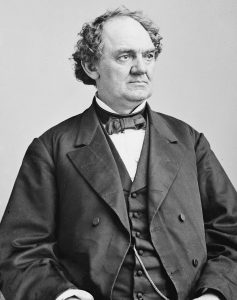
“I am a showman by profession … and all the gilding shall make nothing else of me.” P. T. Barnum
(Wiki Image By Brady-Handy Photograph Collection (Library of Congress) – This image is available from the United States Library of Congress’s Prints and Photographs divisionunder the digital ID cwpbh.02176.This tag does not indicate the copyright status of the attached work. A normal copyright tag is still required. See Commons:Licensing., Public Domain, https://commons.wikimedia.org/w/index.php?curid=154258447)
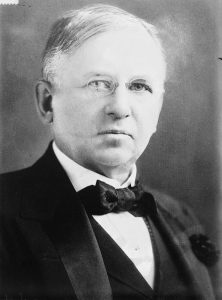
“Half the money I spend on advertising is wasted; the trouble is I don’t know which half.” Wanamakes in July 1915
(Wiki Image By Bain News Service, publisher. – This image is available from the United States Library of Congress’s Prints and Photographs division under the digital ID ggbain.19598.This tag does not indicate the copyright status of the attached work. A normal copyright tag is still required. See Commons:Licensing., Public Domain, https://commons.wikimedia.org/w/index.php?curid=8358951)
Mass Media Advertising Quotes Table
Here are the definitive quotes on Mass Media Advertising, capturing the era when brands could speak to millions of people simultaneously—and the chaos that ensued.
The Economics of Attention
| Quote | Speaker | Context |
| “Half the money I spend on advertising is wasted; the trouble is I don’t know which half.” | John Wanamaker
(Department Store Pioneer, late 1800s) |
This is the most famous quote in advertising history. It defines the central flaw of Mass Media. When you buy a Super Bowl ad or a billboard, you are paying to reach everyone (the “Mass”), even though only 1% might want your product. It highlights the inefficiency of the “Spray and Pray” method. |
| “Stopping advertising to save money is like stopping your clock to save time.” | Henry Ford | Ford understood that Mass Media was the engine of the industrial economy. Mass production (factories) requires mass consumption. If you stop the ads, the factory has no one to sell to, and the system collapses. |
| “Nobody reads ads. People read what interests them, and sometimes it’s an ad.” | Howard Luck Gossage
(The “Socrates of San Francisco”) |
Gossage reminded the “Mad Men” era that they had no right to the consumer’s attention. In mass media, you are an intruder in someone’s living room. Unless you are entertaining, you are just noise. |
The Power of the Medium
| Quote | Speaker | Context |
| “The medium is the message.” | Marshall McLuhan
(Media Theorist, 1964) |
McLuhan argued that where you see the ad matters more than what it says. A TV commercial changes you differently than a newspaper ad because the medium itself (television) encourages passivity and emotion, while print encourages logic. |
| “Advertising is the rattling of a stick inside a swill bucket.” | George Orwell | Orwell, ever the skeptic, saw mass media advertising as a noisy, degrading distraction designed to treat the populace like animals (pigs feeding at a trough) rather than thinking citizens. |
| “TV was the ‘bomber’ approach. You flew over the city and dropped leaflets, hoping one hit the right person. The Internet is the ‘sniper’ approach.” | Gary Vaynerchuk | This contrasts the Mass Media era with the current Digital era. We moved from “Broadcasting” (One-to-Many) to “Narrowcasting” (One-to-One). |
| “The business of the advertiser is to see that we go about our business with some kind of groove behind us.” | Marshall McLuhan | Mass media creates “Social Proof.” It doesn’t just sell you a car; it tells you that everyone else respects this car. It manufactures a shared reality where we all agree on what is “cool” or “trustworthy.” |
Mass Media Advertising Chronological Table
Here is the chronological evolution of Mass Media Advertising, tracing the journey from the first printed handbill to the fragmentation of the global audience.
Timeline of The Broadcast Era
| Era / Year | Innovation | Key Player / Medium | The Shift in Strategy |
| 1477 | The Printed Ad | William Caxton | The first printed advertisement in English (for a prayer book) was tacked to church doors. This proved that Scale was possible—you didn’t need a town crier; you could print 100 salesmen. |
| 1704 | The Newspaper Ad | Boston News-Letter | The first successful American newspaper ran ads for lost estates and stolen goods. This created the Subscription Model—news is sold at a loss, and advertisers pay the difference to reach the reader. |
| 1833 | The Penny Press | The New York Sun
(Benjamin Day) |
Day sold his paper for 1 cent (undercutting the 6-cent standard). He lost money on every copy but gained a massive audience (the “Masses”). He proved that Eyeballs are the Product sold to advertisers. |
| 1890s | The National Magazine | Ladies’ Home Journal | The rise of national rail allowed magazines to be distributed coast-to-coast. This led to the creation of the National Brand (e.g., Ivory Soap), allowing companies to sell the same product to everyone in the country simultaneously. |
| 1922 | Radio Advertising | WEAF New York | The first radio ad (for apartments) aired. This was the first Intrusive Media—it entered your home and spoke to you while you were cooking or cleaning. It added Voice and Emotion to the sales pitch. |
| 1941 | Television Advertising | Bulova Watches | The first legal TV commercial aired before a baseball game. It cost $9. It introduced Visual Demonstration—you could show the product working, not just describe it. |
| 1950s | The Soap Opera | Procter & Gamble | P&G didn’t just buy ads; they produced the shows (e.g., Guiding Light) to sell soap to housewives. This was the peak of Sponsorship Control, where the advertiser owned the content. |
| 1984 | The Super Bowl Ad | Apple (“1984”) | Directed by Ridley Scott, this ad proved that a commercial could be a Cultural Event. People began tuning in for the ads, turning advertising into entertainment. |
| 1994 | The Banner Ad | HotWired / AT&T | The first digital banner ad appeared (“Have you ever clicked your mouse right here? You will”). This marked the beginning of the End of Mass Media—advertisers could now track exactly who clicked. |
| 2006 | The Algorithmic Feed | Facebook News Feed | The introduction of the feed moved us from “Broadcasting” (One-to-Many) to “Narrowcasting” (One-to-One). Mass media shattered into millions of personalized timelines. |
The Three Ages of Reach
- The Age of Print (1400s–1920s): “I read it.” (Logic-based, slow, requires literacy).
- The Age of Broadcast (1920s–1990s): “I saw/heard it.” (Emotion-based, passive, “watercooler” moments).
- The Age of The Feed (2000s–Present): “It found me.” (Data-based, hyper-targeted, isolated experience).
Mass Media Advertising History
The history of Mass Media Advertising is the story of Aggregation. It is the history of how businesses learned to gather millions of people into a single room (metaphorically) and shout at them all at once.
Here is how we moved from the Town Crier to the Super Bowl.
Phase 1: The Invention of the “Mass” (1833)
Before the 19th century, there was no “Mass Media” because there was no “Mass Audience.” People lived in isolated villages.
- The Innovation: In 1833, Benjamin Day launched The New York Sun.
- The Shift: Before Day, newspapers cost 6 cents and were for the elite. Day sold his paper for 1 penny. He lost money on every single copy he sold.
- The Model: How did he survive? He realized that if he had 30,000 readers, he could charge advertisers a fortune. He invented the modern media business model: The product is not the news; the product is the audience. The advertiser is the customer.
Phase 2: The Intruder (Radio, 1920s)
Print required active effort (reading). Radio changed the game by becoming passive and intrusive.
- The Soap Opera: In the 1930s, companies like Procter & Gamble realized they didn’t just have to buy ads; they could own the culture. They produced radio dramas (The Guiding Light) specifically to sell Duz Laundry Soap to housewives.
- The Result: Advertising became Entertainment. You listened to the story, and the brand was woven into the fabric of your daily emotional life.
Phase 3: The Golden Age of the Monolith (Television, 1950s–1980s)
This was the peak of Mass Media power. In the US, there were only three networks (ABC, CBS, NBC).
- The Captive Audience: If you bought an ad on the I Love Lucy finale, 70% of the country saw it. There was no “Skip Ad” button. There was no second screen.
- The “Watercooler” Effect: Because everyone watched the same commercials, brands became a shared cultural language. “Where’s the Beef?” or “Just Do It” weren’t just slogans; they were national inside jokes.
- The Trade-off: This was the era of “Spray and Pray.” You couldn’t target dog owners; you had to pay to reach everyone and hope dog owners were watching.
Phase 4: The Fragmentation (Cable, 1980s)
The monolith cracked with the arrival of Cable TV (MTV, CNN, ESPN).
- The Shift: The audience split into tribes. Advertisers could now target “Sports Fans” (ESPN) or “Teenagers” (MTV).
- The Result: Mass media began to lose its “Mass.” The shared national culture began to dissolve into niche subcultures, a trend that would explode with the internet.
Phase 5: The Death of the Mass (The Internet, 1990s–Present)
The internet didn’t just fragment the audience; it atomized it.
- The End of Broadcasting: Today, a 16-year-old on TikTok sees a completely different set of ads than their 40-year-old parent on Facebook.
- The Last Stand: The Super Bowl is the only true “Mass Media” event left on Earth—the one time of year where 100 million people agree to watch the same screen at the same time. That is why a 30-second spot costs $7 million; it is a scarcity tax for the last remaining “Town Square.”
Summary of Evolution
- 1800s: “We sell to the Crowd.” (Newspapers)
- 1950s: “We sell to the Nation.” (Network TV)
- 2020s: “We sell to You.” (The Algorithm)
Mass Media Advertising Innovation
Here are the 5 specific mechanisms that transformed local announcements into the engine of Mass Media Advertising.
1. The Subsidized Audience (The Penny Press, 1833)
The Innovation: Selling the News at a Loss.
- The Problem: Before 1833, newspapers were expensive (6 cents) and only read by the elite. There was no “Mass” to sell to.
- The Solution: Benjamin Day launched The New York Sun for one cent. He lost money on every copy printed.
- The Legacy: He invented the Ad-Supported Business Model. He proved that if you give the content away for free, you can build a massive audience that you can then sell to advertisers for a premium. This is the exact model used by Radio, TV, Facebook, and Google today.
2. The National Brand (The Railroad & Magazine, 1880s)
The Innovation: Synchronization of Supply and Demand.
- The Problem: You couldn’t advertise “Ivory Soap” nationwide if you could only ship it to Ohio. Mass Media required Mass Distribution.
- The Solution: The completion of the Railroads (Distribution) collided with the rise of National Magazines like Ladies’ Home Journal (Media). Brands like Uneeda Biscuit launched the first multi-million dollar campaigns.
- The Legacy: This created Homogenization. For the first time, a person in New York and a person in San Francisco bought the exact same soap, listened to the same jingle, and shared a single commercial culture.
3. The Rating System (Nielsen, 1950)
The Innovation: Quantifying the Invisible.
- The Problem: In the early days of Radio and TV, advertisers had no idea if anyone was actually listening. It was a black box.
- The Solution: Arthur Nielsen invented the “Audimeter,” a device attached to TV sets that recorded what channel was on.
- The Legacy: This turned “Attention” into a tradeable currency (CPM – Cost Per Mille). It allowed TV networks to price their airtime like a commodity. Without Nielsen, the multi-billion-dollar TV ad market could not exist.
4. The “Soap Opera” (Content Ownership, 1930s)
The Innovation: The Advertiser as Producer.
- The Problem: Early ads were just interruptions. Listeners could tune them out.
- The Solution: Procter & Gamble didn’t just buy ads; they produced the entire show. They created The Guiding Light specifically to target housewives and weave Duz Laundry Soap into the narrative.
- The Legacy: This is the ancestor of Branded Content. It proved that the most effective way to sell is to own the environment where consumers spend their time.
5. The “Event” Ad (Apple “1984”, 1984)
The Innovation: Advertising as Pop Culture.
- The Problem: By the 1980s, people were using VCRs to fast-forward through commercials. Ads were seen as a nuisance.
- The Solution: Apple and director Ridley Scott created a commercial that was so cinematic and mysterious that people wanted to watch it. It only aired once during the Super Bowl.
- The Legacy: This created Event Marketing. It shifted the goal from “Frequency” (showing a cheap ad 100 times) to “Impact” (showing a masterpiece once). It turned the Super Bowl into the only TV show where the commercials are as important as the game.
Mass Media Advertising Legacy
The legacy of Mass Media Advertising is that it created the operating system for modern culture. It taught us how to desire, how to vote, and how to value our own time.
Here are the enduring legacies of the broadcast era.
1. The Manufacturing of Desire (Consumerism)
Mass media changed the fundamental purpose of buying.
- The Shift: Before mass media, you bought things because you needed them (e.g., a new coat because the old one tore). Mass media introduced the concept of Psychological Obsolescence.
- The Legacy: It convinced us to discard perfectly functional items (cars, clothes, phones) because they were “out of style.” It shifted the economy from fulfilling biological needs to fulfilling psychological wants, creating the engine of infinite consumption that drives modern capitalism.
2. The Expectation of “Free” (The Ad-Subsidized Life)
The “Penny Press” model (1833) broke our understanding of value.
- The Shift: We became accustomed to getting expensive things (news, entertainment, search engines, maps) for “free.”
- The Legacy: This created a culture that refuses to pay for content. The legacy of mass media is the Data Economy. We are shocked when asked to pay $1 for an app, yet we happily hand over our private data, location, and attention worth thousands of dollars. We were trained for 100 years to be products, not customers.
3. The Homogenization of Culture (The Watercooler)
Mass media created the first truly “National” culture.
- The Shift: In 1900, a Texan and a New Yorker lived in different worlds. By 1960, they both watched I Love Lucy, drank Coca-Cola, and hummed the same jingles.
- The Legacy: It created a shared language of brands. To this day, corporate mascots (Santa Claus, as drawn by Coke, Ronald McDonald) are more recognizable globally than religious figures or heads of state. It unified human experience, but at the cost of local diversity.
4. The Political “Product”
Mass media techniques eventually swallowed politics.
- The Shift: In 1952, Dwight D. Eisenhower was the first presidential candidate to hire a specialized ad agency (Rosser Reeves, who sold M&Ms). They created the “I Like Ike” jingle.
- The Legacy: This turned voters into consumers. Politics stopped being about long-form debate (the Lincoln-Douglas debates lasted hours) and became about the Soundbite. The 30-second spot trained us to judge leaders based on “Q-Scores” (likability) and slogans rather than policy, a direct line to modern meme-politics.
5. The Fragmentation of Reality (The Echo Chamber)
While Mass Media started by uniting us (Broadcasting), its evolution into Cable and Digital (Narrowcasting) ended by dividing us.
- The Shift: As the “Mass” audience became too expensive to buy, media fractured into niches (Fox News vs. MSNBC).
- The Legacy: We no longer share a single objective reality. The legacy of targeted media is that we now live in parallel universes where we are only shown ads and news that confirm our existing biases. The “Global Village” that Marshall McLuhan predicted has become a collection of gated communities.
Mass Media Advertising YouTube Links View, and Books
Mass media advertising has evolved from simple print and radio spots into a complex, multi-channel machine that shapes both commerce and culture.
YouTube Links & Historical Perspective
- Evolution & History:
- How Advertising Infected… Everything (80K+ views) – A documentary-style look at the expansion of advertising from a niche industry to a pervasive element of daily life.
- The History of Advertising in 60 Seconds (451K+ views) – A rapid-fire overview of the industry’s evolution, from early agencies to the digital age.
- Noam Chomsky: The five filters of the mass media machine (2.8M+ views) – A critical look at the role advertising plays as one of the primary filters in how mass media operates.
- History Brief: Mass Production and Advertising in the 1920s (239K+ views) – Specifically examines the “golden age” of mass media birth and how production led to the first major wave of consumer advertising.
- 2026 Trends & Future Outlook:
- The 8 Trends I’m Betting My Entire Marketing Strategy On in 2026 (263K+ views) – Neil Patel discusses how traditional search and media are fragmenting and where mass-scale attention is moving.
- Predicting the 7 Biggest Social Media Marketing Trends for 2026 – An analysis of the transformation of social media from personal networks into mass advertising hubs.
- Marketing Trends & Predictions For 2026 – Alex Cattoni explores the key shifts in how mass audiences will consume brand messages in the near future.
Essential Books on Mass Media & Advertising
To understand the mechanics of mass persuasion and the structure of the media industry, these books are the standard references:
- “Ogilvy on Advertising” by David Ogilvy: Often called the “Bible” of the industry, it offers timeless principles for creating advertising that actually sells to a mass audience.
- “Manufacturing Consent: The Political Economy of the Mass Media” by Edward S. Herman and Noam Chomsky: A seminal text that explains the “propaganda model” of media and the critical role advertising revenue plays in shaping content.
- “The Attention Merchants: The Epic Scramble to Get Inside Our Heads” by Tim Wu: A comprehensive history of how businesses have learned to capture and sell human attention, from the first newspapers to the modern internet.
- “Amusing Ourselves to Death: Public Discourse in the Age of Show Business” by Neil Postman: A prophetic look at how mass media (specifically television) has transformed all aspects of public life into a form of entertainment.
- “Propaganda” by Edward Bernays: Written by the “father of public relations,” this book explores the psychological techniques used to manage the “mass mind” and influence public opinion.
Would you like to explore the specifics of 1950s television advertising history or perhaps modern “programmatic” advertising and how it automates mass media buys?
📚☕ Educational Marketing
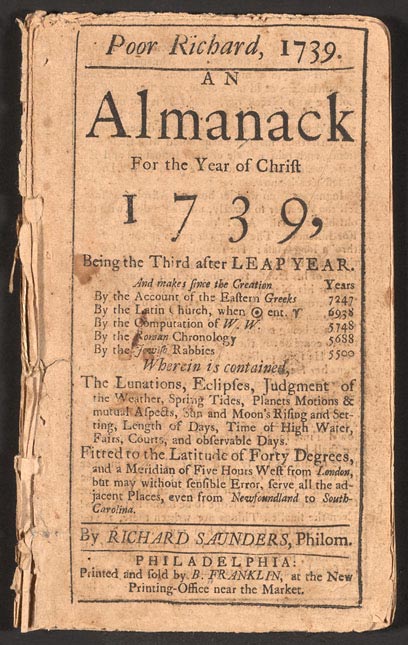
1739 edition of Poor Richard’s Almanack published by Benjamin Franklin
(Wiki Image Public Domain, https://commons.wikimedia.org/w/index.php?curid=1940575)

“Content is King.” Bill Gates
(Wiki Image By © European Union, 2026, CC BY 4.0, https://commons.wikimedia.org/w/index.php?curid=168588253)
Educational Marketing Quotes Table
Here are the definitive quotes on Educational Marketing, illustrating the philosophy that the best way to sell something is to teach the customer why they need it.
The Philosophy of Value
| Quote | Speaker | Context |
| “The best marketing strategy ever: Care.” | Gary Vaynerchuk | Educational marketing is rooted in empathy. Instead of shouting “Buy Me!”, you say, “Here is how to solve your problem.” It creates a debt of gratitude in the customer. |
| “Sell the problem you solve, not the product you make.” | Unknown
(Marketing Maxim) |
This is the core of the strategy. A drill manufacturer shouldn’t sell drills; they should teach people “How to build a deck.” The drill becomes merely a necessary tool for applying the knowledge they just acquired. |
| “Make your user awesome.” | Kathy Sierra
(Tech Author) |
This is the ultimate goal. If you sell cameras, don’t just advertise the megapixels; teach your customer how to take better portraits. A smarter customer buys more expensive gear because they understand the difference. |
On Trust and Authority
| Quote | Speaker | Context |
| “Teaching is the new selling.” | Jim Jimieson | In a cynical world, people tune out “salesmen” but listen to “teachers.” By taking the podium, the brand establishes Authority. If you wrote the book on the subject, you must be the expert. |
| “You can’t sell a man who isn’t listening.” | Bill Bernbach
(Legendary Creative Director) |
Educational marketing solves the attention problem. People will ignore a banner ad, but they will actively search for a “How-To” guide. You don’t have to interrupt them; they come to you. |
| “If you give away your best secrets, people will pay you to help them apply them.” | Chris Anderson
(Author of Free) |
This counters the fear that “if we teach them, they won’t hire us.” Educational marketing operates on the paradox that free knowledge builds the trust required for high-ticket sales. |
Historical Origins
| Quote | Speaker | Context |
| “The consumer is not a moron; she is your wife.” | David Ogilvy | Ogilvy hated “hype.” He believed in “Long Copy” ads that treated the customer as intelligent. He would write 2,000 words explaining the engineering of a Rolls-Royce. He proved that if you provide real information, people will read every word. |
| “Content is King.” | Bill Gates
(1996 Essay) |
Gates predicted that the internet would shift value from distribution to information. He foresaw that brands would become publishers, using educational articles and videos to capture audiences. |
| “Give them quality. That is the best kind of advertising.” | Milton Hershey | Before mass media, Hershey built his empire by inviting people to tour his factory. He educated them on the sanitation and quality of his milk. The “Education” (the tour) was the marketing. |
Educational Marketing Chronological Table
Here is the chronological evolution of Educational Marketing, tracing the journey from 17th-century handbills to the YouTube tutorial.
Timeline of “The Helpful Brand”
| Era / Year | Innovation | Key Player / Brand | The Shift in Strategy |
| 1652 | The Explainer | Pasqua Rosée
(First Coffee House) |
Coffee was a new, suspicious “black water.” Rosée printed a handbill titled “The Vertue of the Coffee Drink,” listing its medical benefits. It proved you must Teach before you can Sell. |
| 1850s | The Class | Singer Sewing Machines | The machine was expensive and complex. Isaac Singer offered free sewing classes to women. He shifted the focus from selling hardware to selling a New Skill. |
| 1895 | The Brand Magazine | John Deere
(The Furrow) |
Deere launched a magazine for farmers, featuring articles on agricultural science rather than just ads for plows. It is considered the first true piece of Content Marketing—building authority by being helpful. |
| 1900 | The Usage Guide | Michelin Tires
(The Michelin Guide) |
French drivers didn’t drive enough to wear out tires. Michelin published a free guide of hotels and restaurants to encourage travel. They created the Demand by teaching people where to go. |
| 1904 | The Recipe Book | Jell-O | Jell-O was on the verge of bankruptcy because no one knew what it was. They distributed millions of free “Best Sellers” recipe booklets. Sales skyrocketed. They sold the Application, not the ingredient. |
| 1924 | The Expert Persona | General Mills
(Betty Crocker) |
To answer customer questions about baking, General Mills invented “Betty Crocker.” She became a trusted radio voice, teaching America how to cook. It proved that a brand could have a Human Voice. |
| 1982 | The Infomercial | Ginsu Knives | The rise of the 30-minute TV spot allowed for the “Long Demo.” It wasn’t an ad; it was a lesson on how to cut through a tin can. It proved that Demonstration destroys skepticism. |
| 2001 | The White Paper | Salesforce / Google | In B2B tech, companies began releasing free “Industry Reports” and “White Papers.” They gave away proprietary data to establish Thought Leadership. |
| 2006 | Inbound Marketing | HubSpot | HubSpot coined the term “Inbound.” Instead of cold-calling (Outbound), they wrote thousands of blog posts solving user problems (“How to write a subject line”), attracting customers organically via Search Engines. |
| 2015 | The Video Tutorial | Home Depot / Sephora | Brands pivoted to YouTube. Home Depot’s “How to tile a bathroom” videos get millions of views. They capture the customer at the exact moment of Intent. |
The Three Ages of Education
- The Age of Explanation (1600s–1800s): “What is this?” (Overcoming fear of the new).
- The Age of Application (1900s–1990s): “How do I use this?” (Expanding the market by teaching recipes/skills).
- The Age of Authority (2000s–Present): “Who should I trust?” (Using free value to prove expertise in a crowded web).
Educational Marketing History
The history of Educational Marketing is the history of the Soft Sell. It is the realization that a customer who understands the product is more valuable than a customer who is merely aware of it.
Here is how brands moved from shouting slogans to teaching classes.
Phase 1: Overcoming Fear (The “What Is It?” Era)
In the early days of global trade, new products arrived that were confusing or terrifying to the public. Marketing had to be educational just to get people to try them.
- The First Coffee Ad (1652): When Pasqua Rosée opened the first coffee house in London, people were suspicious of the “bitter black water.” He didn’t just hang a sign; he printed a detailed handbill titled “The Vertue of the Coffee Drink,” explaining exactly how to drink it, when to drink it (mornings), and listing its medical benefits (cures headaches, prevents drowsiness).
- The Lesson: If the product is new, the marketing must be a User Manual.
Phase 2: Skill Acquisition (The “How Do I Use It?” Era)
During the Industrial Revolution, companies invented complex machines (sewing machines, cameras, tractors) that the average person didn’t know how to operate.
- Singer Sewing Machines (1850s): Isaac Singer’s machines were expensive ($125) and intimidating. He realized he couldn’t sell the machine until he sold the skill. He offered free sewing classes to any woman, regardless of whether she bought a machine.
- The Shift: Once the women learned to sew on a Singer, they refused to buy any other brand because it was “certified” for that specific hardware. This is the ancestor of Adobe, offering tutorials for Photoshop.
Phase 3: The Application Era (The Recipe Book)
By the 1900s, the problem wasn’t complexity; it was utility. “I know what this is, but what do I do with it?”
- The Jell-O Crisis (1904): Jell-O was failing. It was a weird, powdered gelatin that housewives didn’t understand. The company sent salesmen door-to-door, not to sell the powder, but to give away Free Recipe Books showing beautiful, molded desserts.
- The Result: Sales exploded. The book created the Use Case. They didn’t sell the ingredients; they sold the dessert.
- John Deere’s The Furrow (1895): Instead of sending farmers a catalog of plows, Deere sent them a magazine about farming. It featured articles on new agricultural science. It is considered the first true piece of Content Marketing. It positioned Deere as a “Partner in Profit,” not just a vendor.
Phase 4: Demand Creation (The Lifestyle Era)
The most sophisticated form of educational marketing is teaching people a lifestyle that requires your product.
- The Michelin Guide (1900): The Michelin brothers (tire manufacturers) had a problem: people in France didn’t drive their cars enough to wear out their tires.
- The Solution: They published a free red guide listing the best hotels and restaurants in the French countryside.
- The Logic: If we teach people where to travel, they will drive more. If they drive more, they destroy their tires. If they destroy their tires, they buy Michelin. They educated the market into consumption.
Phase 5: The Information Age (Inbound Marketing)
The internet changed the dynamic from “Push” (mailing magazines) to “Pull” (Search).
- The River Pools Case (2009): During the financial crisis, a fiberglass pool installer named Marcus Sheridan stopped spending money on radio ads. Instead, he wrote blog posts answering every single question customers asked (“How much does a pool cost?”, “Fiberglass vs. Concrete”).
- The Result: He became the #1 Google search result for pool-related questions worldwide. This coined the philosophy: “They Ask, You Answer.”
- The Modern Era: Today, Home Depot doesn’t just sell tiles; it also hosts the most popular YouTube channel on “How to Tile a Bathroom.” They capture the customer at the exact moment of Intent.
Summary of Evolution
- 1600s: “Here is what this strange liquid does.” (Explanation)
- 1800s: “Here is how to operate this machine.” (Training)
- 1900s: “Here is a recipe for this powder.” (Application)
- 2000s: “Here is the answer to your Google search.” (Authority)
Educational Marketing Innovation
Here are the 5 specific mechanisms that transformed “helpful advice” into a scalable revenue engine.
1. The User Manual (The Coffee Handbill, 1652)
The Innovation: Marketing as Education, not Hyperbole.
- The Problem: Pasqua Rosée wanted to sell coffee in London, but the public saw it as a bitter, muddy, foreign potion. They were afraid to drink it.
- The Solution: He printed The Vertue of the Coffee Drink, a handbill that functioned as a medical and instructional guide. It taught customers how to drink it (hot, on an empty stomach) and why (it prevents drowsiness and aids digestion).
- The Legacy: This invented the Explainer Model. It proved that for high-barrier-to-entry products, the marketing must first serve as a manual. This is the ancestor of the “Quick Start Guide” and the SaaS “Onboarding” email sequence.
2. The Free Class (Singer Sewing Machines, 1850s)
The Innovation: The “Razor and Blade” of Skills.
- The Problem: Isaac Singer’s sewing machine was revolutionary but complicated. Housewives didn’t know how to operate the mechanical device, so they wouldn’t buy it.
- The Solution: Singer offered free sewing classes in his showrooms. Importantly, these classes were open to everyone, even if they hadn’t bought a machine yet.
- The Legacy: This invented Customer Success. By training the customer, Singer locked them into his ecosystem. Once a woman learned to sew on a Singer, she was terrified to switch to a competitor’s machine because the muscle memory was different. It proved that skill acquisition creates loyalty.
3. The Proprietary Magazine (John Deere’s The Furrow, 1895)
The Innovation: The Brand as Publisher.
- The Problem: Farmers were skeptical of “city slicker” salesmen trying to sell them new plows. They only trusted other farmers.
- The Solution: John Deere launched The Furrow, a magazine that didn’t just sell plows; it featured articles on soil science, crop rotation, and meteorology.
- The Legacy: This invented Content Marketing. It shifted the dynamic from “Selling” to “Helping.” By becoming the source of truth for agricultural best practices, Deere ensured that when the farmer finally needed a plow, they bought from the “expert” who had been helping them for free for years.
4. The Recipe Strategy (Jell-O, 1904)
The Innovation: Selling the End Result, Not the Ingredient.
- The Problem: Jell-O is a useless powder until you know what to do with it. The product has no intrinsic value; its value lies entirely in its application.
- The Solution: Jell-O distributed millions of free recipe booklets. These books featured beautiful illustrations of molded salads and desserts that could only be made with Jell-O.
- The Legacy: This invented Usage Expansion. It showed that teaching customers new ways to use your product increases consumption. This is why every bag of chocolate chips has a cookie recipe on the back—the recipe is the marketing.
5. The “Answer Engine” (River Pools / HubSpot, 2000s)
The Innovation: Radical Transparency (Inbound Marketing).
- The Problem: In the Internet age, customers stopped trusting brochures. They started Googling their problems (“cost of fiberglass pool,” “pool problems”). Most companies hid this info to force a sales call.
- The Solution: Marcus Sheridan (River Pools) and HubSpot pioneered the strategy of answering every question publicly on a blog, including pricing and “why you shouldn’t buy from us.”
- The Legacy: This invented Inbound Marketing. Instead of interrupting people (Outbound), you position your brand as the answer to their search query. It treats Google as a matchmaking service between a person with a question and a brand with the answer.
Educational Marketing Legacy
The legacy of Educational Marketing is that it fundamentally changed the relationship between buyer and seller from adversarial (“I’m trying to trick you”) to collaborative (“I’m trying to help you”). It proved that the most profitable way to sell is to tell the truth.
Here are the enduring legacies of this strategy.
1. The Death of Information Asymmetry
Educational marketing destroyed the salesperson’s greatest advantage: secrets.
- The Shift: In 1990, the car dealer knew the invoice price, and the buyer didn’t. In 2026, the buyer walks onto the lot having watched 10 YouTube reviews, read the repair manuals, and knowing the exact dealer cost.
- The Legacy: It forced sales to evolve into Consulting. Since the customer already knows “what” the product is, the salesperson’s job is no longer to inform, but to validate and customize. You cannot “hustle” an educated buyer.
2. Marketing as an Asset (The Long Tail)
This strategy changed marketing from an expense (burning money) to an investment (building equity).
- The Shift: A Super Bowl ad dies the second it airs. If you stop paying, the traffic stops.
- The Legacy: A “How-To” video or a high-quality blog post is an Asset. It continues to generate leads 5, 10, or 20 years after it was created, without costing a penny more. John Deere’s The Furrow is still running after 130 years. Educational marketing created the concept of Evergreen Content—marketing that appreciates in value over time.
3. The “Freemium” Economy
The idea that “you must give before you take” is now the standard operating model of the digital world.
- The Shift: Companies used to guard their knowledge as “Trade Secrets.”
- The Legacy: Educational marketing normalized Freemium. Software companies (like HubSpot or Canva) give away excellent tools and training for free, relying on the “Law of Reciprocity” to convert a percentage of users into paid subscribers. We now expect to “try” and “learn” for free before we commit a single dollar.
4. Authority Over Attention
It shifted the metric of success from “How many people saw this?” (Reach) to “How many people trust this?” (Authority).
- The Shift: Mass media shouted at everyone. Educational marketing speaks only to those with a problem.
- The Legacy: This created the Thought Leader. Today, a consultant with 5,000 email subscribers who hang on their every word is more profitable than a billboard seen by 50,000 drivers. It proved that Deep Trust scales better than Broad Awareness.
5. The Search Engine as the Global Marketplace
Educational marketing is the fuel that powers Google.
- The Shift: People stopped asking their neighbors for advice and started asking the search bar.
- The Legacy: It created the SEO Industry. Businesses realized that the only way to rank #1 is to provide the best answer to the question. This forced brands to become libraries. If you want to sell pool tables, you must have the best article on “Slate vs. Wood Pool Tables.” If you don’t teach, you don’t rank.
Summary: The Ultimate Legacy
The ultimate legacy is the realization that Competence is the best Marketing. No amount of flashy colors or catchy jingles can compete with a brand that simply teaches you how to solve your problem.
Would you like me to:
- Deep dive into “Visual Hierarchy” to complete the analysis of the seven concepts?
- Compare two specific eras (e.g., “Mass Media vs. The Internet”) to see how the strategy flipped.
- Generate a “Cheatsheet” summarizing all 7 concepts into a single strategic guide?
Educational Marketing YouTube Links View, and Books
Educational marketing—often referred to as “content marketing” or “edutainment”—focuses on providing value through knowledge to build trust and authority with your audience.
YouTube Links & Strategic Guides
- 2026 Trends & Strategy:
- The 8 Trends I’m Betting My Entire Marketing Strategy On in 2026 (263K+ views) – Neil Patel discusses how search is fragmenting and why value-driven, educational content is becoming the primary way to capture attention.
- 2026’s Biggest Content Marketing Strategies – Wes McDowell explores upcoming shifts in content marketing, emphasizing the need for authentic, helpful information.
- Predicting the 7 Biggest Social Media Marketing Trends for 2026 – An analysis of how platforms are evolving to favor creators who provide deep educational value over superficial engagement.
- Tutorials for Creating Educational Content:
- Content Marketing For Beginners: Complete Guide (236K+ views) – Ahrefs provides a foundational look at how to start a content marketing engine that teaches your audience.
- What Everyone Must Know About CONTENT MARKETING? (163K+ views) – HubSpot’s guide on the essential principles of building authority through helpful content.
- How To Become a Content Creator – Complete Beginner’s Guide (736K+ views) – A guide on the tools and workflows needed to produce high-quality educational videos and posts.
Essential Books on Educational & Content Marketing
To master the art of teaching as a sales tool, these books are highly recommended:
- “They Ask, You Answer” by Marcus Sheridan: A revolutionary approach to marketing that advocates for answering every customer question transparently to build unbeatable trust.
- “Content Inc.: How Entrepreneurs Use Content to Build Massive Audiences and Create Radically Successful Businesses” by Joe Pulizzi: Explores the “content-first” business model, showing how to build an audience through education before selling a product.
- “Epic Content Marketing: How to Tell a Different Story, Break through the Clutter, and Win More Customers by Marketing Less” by Joe Pulizzi: A comprehensive guide on creating content that your customers actually want to consume.
- “Contagious: Why Things Catch On” by Jonah Berger: While focusing on virality, it explains the “Practical Value” trigger—why people share educational tips and useful information.
- “The Education of Millionaires: It’s Not What You Think and It’s Not Too Late” by Michael Ellsberg: While more about personal growth, it offers deep insights into the “marketing of expertise” and the value of self-taught, high-level skills.
Would you like to explore specific ways to structure a “how-to” video or learn more about using webinars as an educational marketing tool?
🧱👁️ Visual Hierarchy Marketing
Don’t Make Me Think
(Wiki Image By https://www.abebooks.co.uk/servlet/BookDetailsPL?bi=30379731095, Fair use, https://en.wikipedia.org/w/index.php?curid=58671118)
“Design is not just what it looks like and feels like. Design is how it works.” Jobs introduced the iPad in 2010.
(Wiki Image By Matt Buchanan – originally posted to Flickr as Apple iPad Event, CC BY 2.0, https://commons.wikimedia.org/w/index.php?curid=9110964)
Visual Hierarchy Marketing Quotes Table
Here are the definitive quotes on Visual Hierarchy, illustrating the science of guiding the human eye through content.
The Science of Attention
| Quote | Speaker | Context |
| “If everything is important, then nothing is important.” | Patrick Lencioni
(Business Author) |
The fundamental law of hierarchy. If every headline is bold, red, and large, the viewer is overwhelmed (Cognitive Overload). To make something stand out, something else must fade back. |
| “Don’t Make Me Think.” | Steve Krug
(UX Legend) |
Krug argues that a user shouldn’t have to burn calories figuring out what is a title and what is a button. Good hierarchy answers these questions instantly through size and color. |
| “People don’t read design; they scan it.” | Jakob Nielsen
(The “King of Usability”) |
Eye-tracking studies prove we don’t read websites like books. We scan in “F-Patterns,” looking for visual anchors. Hierarchy creates those anchors so the skimmer gets the message. |
| “Design is not just what it looks like and feels like. Design is how it works.” | Steve Jobs | Hierarchy is the functionality of the page. It is a set of invisible instructions: “Look here first (Headline), look here second (Image), click here last (Button).” |
The Tools of Hierarchy
| Quote | Speaker | Context |
| “White space is to be regarded as an active element, not a passive background.” | Jan Tschichold
(Typography Legend) |
Inexperienced designers fear empty space. Masters realize whitespace is a spotlight. The more space you put around an object, the more important that object becomes. |
| “Clutter and confusion are failures of design, not attributes of information.” | Edward Tufte
(Data Visualization Pioneer) |
Tufte argues there is no such thing as “too much information,” only “poorly organized information.” You can display complex data clearly if the hierarchy (grouping, size) is correct. |
| “Typographical hierarchy is not just about size and weight; it’s about the voice of the text.” | Ellen Lupton
(Design Curator) |
Hierarchy sets the tone. A massive, bold headline shouts; a tiny italic caption whispers. The visual weight tells the reader how to “hear” the words in their head. |
Visual Hierarchy Marketing Chronological Table
Here is the chronological evolution of Visual Hierarchy, tracing how we learned to guide the human eye from medieval manuscripts to the mobile screen.
Timeline of Organized Information
| Era / Year | Innovation | Key Player / Movement | The Shift in Strategy |
| c. 700 AD | The “Diminuendo” | Irish Monks
(Book of Kells) |
Scribes realized a wall of text was intimidating. They invented the “Diminuendo”: a massive initial letter, followed by large words, shrinking to normal text. It eased the eye into reading. |
| 1450s | Standardized Structure | Gutenberg Press | Gutenberg didn’t just print; he organized. He used consistent indentation and line spacing (leading) to separate thoughts. He proved that space is as important as ink. |
| 1890s | The 3-Second Rule | Jules Chéret / Toulouse-Lautrec | In the “Poster Craze,” artists had to catch a busy pedestrian’s eye. They invented the hierarchy of Scale: Huge Image > Big Headline > Tiny Details. |
| 1919 | The “New Typography” | The Bauhaus
(Laszlo Moholy-Nagy) |
They rejected decoration. They argued that hierarchy should be purely functional. If a word is important, make it bold/red. If not, make it small. Form follows function. |
| 1950s | The Grid System | Swiss Style
(Müller-Brockmann) |
Designers began using invisible mathematical grids to align elements. This created Modular Hierarchy—order and clarity through strict alignment rather than just size differences. |
| 1984 | The UI Button | Apple Macintosh | The introduction of the GUI (Graphical User Interface). They used Bevels and Drop Shadows to make clickable elements look 3D (“raised”). This taught the eye: “If it looks 3D, you can touch it.” |
| 2006 | The “F-Pattern” | Nielsen Norman Group | Eye-tracking studies revealed that on screens, people don’t read; they scan in an “F” shape. This forced designers to front-load important keywords on the Left side of the screen. |
| 2014 | Z-Axis Hierarchy | Google Material Design | As screens became flat, hierarchy was lost. Google reintroduced Depth (shadows). The “higher” an element floats (bigger shadow), the more important it is. Hierarchy became 3-dimensional. |
| 2016 | The “Thumb Zone” | Steven Hoober | Mobile hierarchy shifted from “What you see” to “What you can reach.” Critical buttons (CTA) moved to the Bottom of the screen for thumb accessibility. |
The Three Ages of the Eye
- The Age of Decoration (700–1900): “Make the important stuff pretty.” (Ornate capitals, borders).
- The Age of Structure (1900–1990): “Make the important stuff big and aligned.” (Grids, bold fonts).
- The Age of Usability (1990–Present): “Put the important stuff where the eye naturally falls.” (F-patterns, Thumb Zones).
Visual Hierarchy Marketing History
The history of Visual Hierarchy is the history of Cognitive Ease. It is the story of how designers learned to “hack” the human brain’s laziness, creating layouts that allow us to understand a message without actually reading it.
Here is the history of how we learned to direct the eye.
Phase 1: The “Wall of Text” (The Manuscript Era, 700 AD)
Before the printing press, books were handwritten. Scribes were paid by the page, so they crammed as much text as possible onto each page to save on expensive vellum.
- The Problem: A page was a solid block of ink. It was intimidating and impossible to scan.
- The Innovation: Irish Monks (creators of the Book of Kells) realized the eye needed an “Entry Point.” They invented the Diminuendo.
- They started a page with a massive, ornate initial letter (Drop Cap).
- The next few words were large capital letters.
- The text then shrank to normal size.
- The Legacy: This was the first time Size was used to signal Sequence. It told the brain: “Start here, then go here.”
Phase 2: The “3-Second Rule” (The Poster Era, 1890s)
The Industrial Revolution brought the first “Distracted Audience”: the urban pedestrian.
- The Problem: In a busy city street, no one had time to stop and read a paragraph about a cabaret show.
- The Solution: Artists like Toulouse-Lautrec and Jules Chéret invented the “Hierarchy of Scale.”
- Dominant Image: (50% of space) Grabs attention from 20 feet away.
- Headline: (20% of space) “Moulin Rouge” – Readable from 10 feet.
- Details: (5% of space) Date/Price – Readable only if you stop.
- The Legacy: This proved that hierarchy is a Funnel. You trade detail for distance.
Phase 3: The “Grid” (The Swiss Style, 1950s)
This is the era where design became “Science.”
- The Innovation: Swiss designers like Josef Müller-Brockmann argued that hierarchy shouldn’t be artistic intuition; it should be mathematical. They invented the Grid System.
- The Method: They divided the page into rigid columns and rows. They used Whitespace (the empty grid modules) to group related information.
- The Legacy: This taught us that Proximity creates meaning. If two things are close together, they are related. If they are far apart, they are different. This is the foundation of every modern website layout.
Phase 4: The “F-Pattern” (The Web Era, 2006)
The internet changed how we read. We stopped reading linearly (like a book) and started “foraging” for keywords.
- The Discovery: The Nielsen Norman Group used eye-tracking cameras to watch people browse websites.
- The Result: They discovered the F-Pattern.
- Users scan the top headline (Horizontal bar of the F).
- They scan a bit of the subhead (Lower bar of the F).
- They scan down the left side seeking keywords (Vertical stem of the F).
- The Legacy: This killed the “centered” layout. Designers realized that important information (Logos, Headlines, Bullet points) must be “front-loaded” on the left to catch the scanning eye.
Phase 5: The “Thumb Zone” (The Mobile Era, 2015)
The smartphone changed its hierarchy from “Visual” to “Physical.”
- The Shift: On a desktop, the most important place is the Top-Left (where the eye starts). On a phone, the Top-Left is the hardest place to reach with your thumb.
- The Innovation: Steven Hoober mapped the “Thumb Zone.”
- The Reversal: Hierarchy flipped upside down.
- Old Hierarchy: Navigation at the top (Header).
- New Hierarchy: Navigation at the bottom (Tab Bar).
- The Legacy: Usability now trumps visibility. The “Buy Button” moved to the bottom, not because it looks better, but because it is biologically easier to tap.
Summary of Evolution
- Medieval: “Size guides the eye.” (Drop Caps)
- 1950s: “Space groups the data.” (Grids)
- 2000s: “Pattern predicts the scan.” (F-Pattern)
- 2020s: “Ergonomics dictates the layout.” (Thumb Zones)
Visual Hierarchy Marketing Innovation
Here are the 5 specific mechanisms that transformed “putting things on a page” into the science of controlling the human eye.
1. The Diminuendo (The Book of Kells, c. 800 AD)
The Innovation: The Visual “On-Ramp.”
- The Problem: A page of uniform text is a “grey wall.” The brain perceives it as high-effort and instinctively wants to skip it. There was no clear place to start.
- The Solution: Medieval scribes invented a transition technique. They started with a massive Initial Cap (Drop Cap), followed by large bold text, which slowly shrank down to the standard body size.
- The Legacy: This invented The Entry Point. It proved that the eye needs to be “escorted” into the content. Every modern magazine article that starts with a large quote or bold intro paragraph is using this 1,200-year-old hack.
2. Active Whitespace (The New Typography, 1920s)
The Innovation: Nothingness as a Design Element.
- The Problem: For centuries, designers suffered from Horror Vacui (Fear of Empty Space). They felt that if they paid for the paper, they had to fill every inch with ink. This resulted in clutter.
- The Solution: Jan Tschichold and the Bauhaus movement argued that Whitespace is an active arrow. If you put a small object in the middle of a giant empty page, it becomes the loudest thing in the room.
- The Legacy: This invented Focus. It taught marketers that to make something important (like a luxury watch or a “Buy” button), you don’t make it bigger; you remove everything around it.
3. The Modular Grid (Swiss Style, 1950s)
The Innovation: Mathematical Order.
- The Problem: Layouts were often based on “feeling” or artistic whim, leading to messy, inconsistent pages that were hard to scan.
- The Solution: Swiss designers (like Müller-Brockmann) divided the page into a rigid mathematical grid of columns and rows. Content could only be placed within these invisible zones.
- The Legacy: This invented Scannability. It aligns the content so the eye doesn’t have to “jump” around. It is the underlying technology of the entire internet (CSS Grids, Bootstrap) and newspaper design.
4. The “F-Pattern” Optimization (Nielsen Norman Group, 2006)
The Innovation: Designing for Biology, Not Logic.
- The Problem: Designers assumed people read websites like books: top-to-bottom, left-to-right.
- The Solution: Eye-tracking studies proved that on screens, users scan in an “F” shape. They read the headline, scan a bit of the first paragraph, and then just drag their eyes down the left margin looking for keywords.
- The Legacy: This invented Front-Loading. It forced marketers to put the most important words (Benefits, Verbs) as the first word of a bullet point or headline. If the key info isn’t on the left rail, it doesn’t exist.
5. The Isolation Effect (Amazon / Conversion Science, 1990s)
The Innovation: The “Pop” (Von Restorff Effect).
- The Problem: In a digital store, the “Add to Cart” button is just another rectangle on a screen full of rectangles. How do you make sure the user clicks it?
- The Solution: Designers began applying the Von Restorff Effect (also known as the Isolation Effect). They made the primary action button a color that did not exist anywhere else on the page (e.g., Amazon’s Orange button on a White/Blue page).
- The Legacy: This invented Conversion Design. It proved that hierarchy isn’t just about size; it’s about contrast. The element that breaks the pattern is the one that gets the click.
Visual Hierarchy Marketing Legacy
It sounds like you’re exploring the intersection of design, strategy, and long-term brand impact. When these three concepts—Visual Hierarchy, Marketing, and Legacy—converge, they create a powerful framework for how information is consumed and remembered.
Here is a breakdown of how they connect:
1. Visual Hierarchy: The Strategy of Attention
Visual hierarchy is the arrangement of elements to imply importance. It’s the “road map” for the eye.
- Size and Scale: Larger elements (like a bold headline) naturally command attention first.
- Color and Contrast: Bright colors or high-contrast elements draw the eye to specific “Call to Action” points.
- Typography: Using different fonts and weights helps categorize information, making it scannable.
- The Goal: To ensure the viewer processes the most important message in the first 2 seconds.
2. Marketing: The Application of Influence
In marketing, visual hierarchy isn’t just about “looking good”; it’s about conversion and communication.
- Guiding the Journey: Marketers use hierarchy to lead a customer from an emotional hook (the image) to a logical reason (the text) to a final action (the button).
- Information Architecture: In a digital age of short attention spans, hierarchy ensures that even if a user only skims, they still walk away with the “Big Idea.”
3. Legacy: The Enduring Brand
Legacy is what remains after the campaign ends. It is the long-term recognition and trust built through consistent visual language.
- Iconic Recognition: Think of brands like Apple or Nike. Their visual hierarchy is so consistent that you recognize their marketing before you even see a logo.
- Aesthetic Longevity: A brand that masters its visual hierarchy creates a “timeless” feel, allowing it to survive design trends and become a permanent fixture in the culture.
- Trust through Clarity: Clean, well-structured visuals signal professionalism. Over decades, this clarity builds a legacy of reliability.
Summary Table: How They Interact
| Concept | Role | Purpose |
| Visual Hierarchy | The Foundation | Organizes information so it is easy to understand. |
| Marketing | The Vehicle | Uses that organization to drive specific consumer behaviors. |
| Legacy | The Result | The cumulative effect of years of clear, impactful communication. |
Would you like to analyze a specific brand’s visual hierarchy, or perhaps see how these principles apply to a website or print ad you’re working on?
Visual Hierarchy Marketing YouTube Links View, and Books
Visual hierarchy is the arrangement and presentation of elements in a way that implies importance. In marketing, it is used to guide the viewer’s eye toward a specific call to action or key piece of information.
YouTube Links & Design Tutorials
- Core Principles & Masterclasses:
- The ONLY Video On Visual Hierarchy ANY Graphic Designer Needs (100K+ views) – Satori Graphics offers a full course-style masterclass on mastering hierarchy in design.
- 11 Visual Hierarchy Design Principles (224K+ views) – A breakdown by Visme of the 11 key principles you can use to improve the “flow” of your marketing graphics.
- The Principles of Design | FREE COURSE (1.6M+ views) – Envato Tuts+ provides a comprehensive look at how hierarchy fits into the broader set of rules for visually pleasing work.
- Quick Techniques & Advanced Skills:
- Master ADVANCED Hierarchy In Under 7 Minutes! (264K+ views) – A focused video on powerful, advanced techniques that many designers overlook.
- How To MASTER Visual Hierarchy – Will Paterson demonstrates how to use hierarchy to make your marketing materials more effective and professional.
Visual Hierarchy in Marketing
Visual hierarchy works by leveraging human psychology and how we naturally process information.
| Principle | How it’s used in Marketing |
| Size & Scale | Larger elements (like a headline) catch the eye first. |
| Color & Contrast | Bright colors or high contrast draw attention to buttons or offers. |
| Typography | Bold or different fonts distinguish headers from body text. |
| White Space | “Negative space” around an object makes it stand out more clearly. |
| Scanning Patterns | Designing for F-patterns (reading) or Z-patterns (scanning ads). |
Essential Books on Visual Hierarchy & Layout
To build a deep understanding of how to control the viewer’s attention, these books are foundational:
- “Universal Principles of Design” by William Lidwell, Kritina Holden, and Jill Butler: A comprehensive reference that covers every major concept, including many that dictate visual hierarchy (like the Golden Ratio and Fitts’ Law).
- “Design for Hackers: Reverse Engineering Beauty” by David Kadavy: This book breaks down classical design principles (typography, color, hierarchy) in a way that is highly practical for non-designers and marketers.
- “The Non-Designer’s Design Book” by Robin Williams: A classic guide that introduces the “CRAP” principles (Contrast, Repetition, Alignment, Proximity), which are the building blocks of visual hierarchy.
- “Grid Systems in Graphic Design” by Josef Müller-Brockmann: The definitive book on using grids to create organized, hierarchical layouts that guide the eye effectively.
- “Thinking with Type” by Ellen Lupton: Focuses on the hierarchical use of typography—how to use fonts to signal what is most important to the reader.
Would you like to see a specific example of how to apply a “Z-pattern” to a landing page or an “F-pattern” to a blog post?
🛁🖼️ Lifestyle Branding Marketing

“I don’t design clothes. I design dreams.” — Ralph Lauren 2013
(Wiki Image By Arnaldo Anaya-Lucca – File:Arnaldo Anaya Lucca w Ralph Lauren.jpg, CC BY-SA 3.0, https://commons.wikimedia.org/w/index.php?curid=30599740)

“What we sell is the ability for a 43-year-old accountant to dress in black leather, ride through small towns and have people be afraid of him.” Richard Teerlink, President and CEO of Harley Davidson Motorcycles
https://www.loc.gov/item/2018651388/
Lifestyle Branding Marketing Quotes
Here are the definitive quotes on Lifestyle Branding, the strategy of selling a way of life rather than a specific product. These quotes explain why we pay premiums for brands that make us feel like better versions of ourselves.
The Definition of the Dream
“I don’t design clothes. I design dreams.” — Ralph Lauren
Context: Ralph Lauren is the godfather of lifestyle branding. When you buy a Polo shirt, you aren’t buying cotton; you are buying a ticket to a fantasy of New England aristocracy, horses, and old money. He proved that the context of the product is more valuable than the product itself.
The Ultimate Value Proposition
“What we sell is the ability for a 43-year-old accountant to dress in black leather, ride through small towns and have people be afraid of him.” — Richard Teerlink (Former CEO of Harley-Davidson)
Context: This is widely considered the single best definition of Lifestyle Branding ever spoken. Teerlink understood that Harley-Davidson wasn’t selling motorcycles (which were often technically inferior to Japanese bikes); they were selling Rebellion. They sold a costume that allowed a rule-following accountant to feel like an outlaw for the weekend.
On Belonging (Tribalism)
“People like us do things like this.” — Seth Godin
Context: Lifestyle branding relies on tribal signals. It says, “If you are a creative rebel, you use a Mac. If you are a serious corporate person, you use a PC.” The brand becomes a uniform that signals membership in a specific social group.
The Psychological Shift
“People don’t buy what you do; they buy why you do it.” — Simon Sinek (Start With Why)
Context: This explains why Apple survives flops. Because their “Why” (Challenging the Status Quo) is a lifestyle belief, fans stick with them even when they release a bad product. They aren’t customers; they are believers.
The “Third Place”
“We are not in the coffee business serving people, but in the people business serving coffee.” — Howard Schultz (Starbucks)
Context: Schultz realized early on that Starbucks wasn’t selling caffeine (which you can make at home for pennies). They were selling a Lifestyle Space—a “Third Place” between work and home where you could feel sophisticated, relaxed, and urban.
The Emotional Mirror
“A great brand is a story that’s never completely told. A brand is a metaphorical story that connects with something very deep—a fundamental human appreciation of mythology.” — Scott Bedbury (Marketing Executive for Nike and Starbucks)
Context: Bedbury engineered the “Just Do It” campaign. He realized that Nike shouldn’t talk about the rubber in the soles; they should talk about the struggle of the athlete. By aligning the brand with the universal concept of “Willpower,” Nike ceased to be a shoe company and became a motivational system.
The Consumer’s Ego
“We buy things to make us feel like the person we want to be.” — Unknown (Psychology of Consumption)
Context: This is the engine of the sector. A Patagonia vest isn’t just for warmth; it’s a signal that “I am an outdoorsy, environmentally conscious person,” even if I’m just walking to a coffee shop in the city. The brand is a prop in the movie of our own lives.
Lifestyle Branding Marketing Chronological Table
Here is the chronological evolution of Lifestyle Branding, tracing the journey from selling products to selling identities.
Timeline of The Aspirational Self
| Era / Year | Innovation | Key Player / Brand | The Shift in Strategy |
| 1760s | The Aristocratic Signal | Josiah Wedgwood | Wedgwood marketed his pottery as “Queen’s Ware” after selling a set to Queen Charlotte. He invented Snob Appeal—people bought it not to hold food, but to feel like royalty. |
| 1920s | The Psychological Link | Edward Bernays
(Torches of Freedom) |
Hired to sell cigarettes to women, Bernays didn’t mention taste. He positioned smoking as a symbol of Female Empowerment. He sold the feeling of liberation, not the tobacco. |
| 1963 | The “Pepsi Generation” | Pepsi | While Coke sold “Tradition,” Pepsi decided to sell Youth. They stopped talking about the drink and started showing young people having fun. It was the first time a brand sold an age demographic as a lifestyle. |
| 1967 | The Elite Fantasy | Ralph Lauren | Lauren launched a tie line called “Polo” (despite never having played). He built an entire world of English aristocracy. He proved you could sell a Total Worldview—clothing, paint, furniture—based on one aesthetic. |
| 1983 | The Corporate Rebel | Apple (“1984”) | Steve Jobs positioned the Mac not as a computer, but as a weapon against conformity. Buying Apple became a Political Act. It signaled you were a “Creative,” not a “Suit.” |
| 1987 | The Motivational Cult | Nike (“Just Do It”) | Nike stopped advertising shoes and started advertising Willpower. They featured amateur athletes sweating and struggling. They sold the internal lifestyle of the “athlete,” regardless of ability. |
| 1990s | The Counter-Culture | Supreme / Stüssy | Skate brands restricted supply to create “hype.” They didn’t advertise; they relied on the “cool kids” to wear it. They sold Exclusivity and membership in an underground tribe. |
| 2004 | The Ethical Self | Dove (“Real Beauty”) | Dove realized women were tired of fake models. They sold Self-Acceptance. The soap became secondary to the social mission of body positivity. |
| 2011 | The Curated Life | Instagram Influencers | The rise of the “Personal Brand.” Ordinary people began treating their lives as lifestyle brands, curating every meal and outfit. The Human became the product. |
| 2015+ | The “Wellness” Religion | Goop / Peloton | Brands like Gwyneth Paltrow’s Goop sold not just products, but a holistic system of health and spiritualism. The brand became a Guru, guiding every aspect of the user’s existence. |
The Three Ages of Aspiration
- The Age of Status (1700s–1950s): “Buy this to look rich.” (External Validation).
- The Age of Cool (1960s–1990s): “Buy this to look rebellious/young.” (Social Validation).
- The Age of Meaning (2000s–Present): “Buy this to be a better person.” (Internal Validation).
Lifestyle Branding Marketing History
The history of Lifestyle Branding is the history of Identity Construction. It is the story of how companies stopped selling “things” and started selling “masks”—props that allow us to signal to the world who we want to be.
Here is how we moved from buying pots to buying personalities.
Phase 1: The Invention of “Status” (1760s)
Before the 18th century, you bought a pot because you needed to hold soup. Josiah Wedgwood changed that forever.
- The Innovation: Wedgwood was a marketing genius. When he sold a tea set to Queen Charlotte, he didn’t just cash the check. He petitioned the King to let him call his pottery “Queen’s Ware.”
- The Shift: He raised his prices to double that of his competitors. He realized that the rising middle class didn’t want a pot; they wanted to feel like the Aristocracy.
- The Legacy: This created Aspirational Marketing. He proved that if you price a product high enough and associate it with the “Right People,” the price itself becomes a feature, not a bug.
Phase 2: The Psychology of “Freedom” (1929)
The shift from “Class” to “Emotion” happened with Edward Bernays (Sigmund Freud’s nephew).
- The Problem: It was taboo for women to smoke in public. Tobacco companies were missing 50% of the market.
- The Solution: Bernays staged a parade in New York where debutantes lit cigarettes on cue. He didn’t call them cigarettes; he called them “Torches of Freedom.”
- The Shift: He wasn’t selling nicotine; he was selling Feminism. He linked the product to a deep psychological desire (liberation).
- The Legacy: This proved that you can break social taboos by framing the consumption of your product as a political or moral act.
Phase 3: The “Tribe” Era (1960s – 1980s)
As mass media homogenized culture, people became desperate to be unique. Brands began to sell “Tribal Membership.”
- The Pepsi Generation (1963): Pepsi realized they couldn’t beat Coke on “tradition” (Coke was the original). So they gave up on the product and attacked the user. They declared that Coke was for old people and Pepsi was for the young, lively “Pepsi Generation.”
- The Result: They sold Youth. You drank Pepsi to prove you weren’t your parents.
- Harley-Davidson (1980s): On the brink of bankruptcy, Harley stopped selling motorcycles (mechanically, they were losing to Honda). They started selling the “Outlaw” lifestyle. They sold the leather, the noise, and the brotherhood. The bike became a ticket to a weekend gang.
Phase 4: The “Total World” Era (1990s)
Brands began to expand beyond their original products to colonize every aspect of users’ lives.
- Ralph Lauren: He started with ties. But he understood that “Preppy” wasn’t just a tie; it was a world. So he launched paint, furniture, sheets, and cologne.
- The Shift: This was Horizontal Expansion. Once a customer buys into the lifestyle (e.g., “I am a rigid, classic, wealthy person”), you can sell them anything that fits that aesthetic. The brand becomes the curator of their entire existence.
Phase 5: The “Ethical Self” (2000s – Present)
In the modern era, lifestyle branding has moved to the soul. We now buy brands to prove we are “Good People.”
- Patagonia: Their “Don’t Buy This Jacket” campaign and commitment to the environment turned wearing a fleece vest into a moral statement.
- The Shift: This is Conscience Consumption. The customer isn’t buying warmth; they are buying an alleviation of guilt about climate change. The brand serves as a moral offset.
- Goop / Wellness: Brands like Goop or Peloton sell Self-Actualization. They promise that if you buy this candle or ride this bike, you will essentially become a better human—healthier, more spiritual, and more centered.
Summary of Evolution
- 1700s: “I buy this to look Rich.” (Status)
- 1920s: “I buy this to feel Free.” (Psychology)
- 1960s: “I buy this to belong to the Tribe.” (Sociology)
- 2000s: “I buy this to be Good.” (Morality)
Lifestyle Branding Marketing Innovation
Here are the 5 specific mechanisms that transformed products into personalities, allowing companies to sell “who you are” instead of just “what you need.”
1. The “Royal” Endorsement (Wedgwood, 1765)
The Innovation: Artificial Scarcity and Status.
- The Problem: In the 1700s, pottery was a commodity sold by the pound. There was no reason to pay more for one bowl than another.
- The Solution: Josiah Wedgwood successfully petitioned the British Crown to become the official “Potter to Her Majesty.” He renamed his standard line “Queen’s Ware” and immediately raised prices to double the market rate.
- The Legacy: This invented Snob Appeal. Wedgwood proved that if you make a product expensive and hard to get (exclusive to the elite), the high price becomes a desirable feature. It allows the buyer to signal their status to their neighbors.
2. The Psychological Bridge (Torches of Freedom, 1929)
The Innovation: Linking Product to Political/Social Identity.
- The Problem: Tobacco companies had saturated the male market, but it was considered taboo/unladylike for women to smoke. They were missing 50% of the population.
- The Solution: Edward Bernays (Freud’s nephew) hired debutantes to smoke Lucky Strikes during the Easter Parade. He didn’t sell the taste; he issued a press release calling the cigarettes “Torches of Freedom.”
- The Legacy: This invented Values-Based Marketing. He proved you could break a social taboo if you framed the product as a symbol of a larger ideal (Feminism/Rebellion). Today, this is why buying a Toyota Prius signals “I care about the Earth.”
3. The Demographic Pivot (The Pepsi Generation, 1963)
The Innovation: Defining the User, Not the Product.
- The Problem: Pepsi could not beat Coca-Cola on “tradition” or “Americana” (Coke owned Christmas and Santa Claus).
- The Solution: Pepsi stopped talking about the cola. Instead, they attacked the user of the competitor. They implied that Coke was for “Old People” (the past) and Pepsi was for “Young People” (the future).
- The Legacy: This invented Generational Marketing. It taught brands to weaponize the “Generation Gap.” It forced consumers to choose a drink based on how young they wanted to feel, not which one tasted better.
4. The “Total World” (Ralph Lauren, 1967)
The Innovation: The Cinematic Brand.
- The Problem: Fashion was fragmented. You bought a suit from a tailor and a tie from a haberdasher. Brands were narrow.
- The Solution: Ralph Lauren didn’t just design clothes; he designed a movie set. He built an entire visual universe of “New England Old Money.” Because the aesthetic was the product, he could slap his logo on anything that fit that movie scene: paint, towels, cologne, furniture, and rugs.
- The Legacy: This invented Horizontal Expansion. It allowed a brand to move out of its category and colonize the user’s entire house. It is the reason “Ferrari” can sell theme parks and laptops.
5. The Content Ecosystem (Red Bull, 1987)
The Innovation: The Brand as Media Company.
- The Problem: Advertising is expensive and easy to ignore. How do you market an energy drink without talking about ingredients (which are just sugar and caffeine)?
- The Solution: Dietrich Mateschitz decided Red Bull would not sponsor events; it would create them. They launched the Red Bull Stratos jump (from space) and Flugtag. They became a publisher of extreme sports content.
- The Legacy: This invented Brand-as-Media. Red Bull is essentially a media production company that funds its operations by selling cans of soda. The product is just a souvenir of the lifestyle. This paved the way for the “Influencer” economy, where the lifestyle is the product.
Lifestyle Branding Marketing Legacy
The legacy of Lifestyle Branding is that it decoupled price from cost. It convinced the world that the value of an object lies not in its atoms, but in its aura. It transformed the economy from a factory of goods into a factory of meanings.
Here are the enduring legacies of this innovation.
1. The “Extended Self” (Identity Construction)
Lifestyle branding fundamentally changed psychology. We no longer use products; we wear them.
- The Shift: In the 1950s, a toaster was just a toaster. Today, a Smeg toaster is a statement about your taste, your income, and your appreciation for mid-century design.
- The Legacy: Brands became the “bricks” we use to build our public identities. As traditional pillars of identity (religion, local community, job tenure) faded, we replaced them with commercial tribes. We are “Apple people,” “Tesla drivers,” or “Patagonia wearers.” The brand is the shortcut to showing the world who we are.
2. The De-Commodification of the Market
It provided the only escape from the “Race to the Bottom.”
- The Shift: Without lifestyle branding, every industry eventually becomes a commodity where the cheapest option wins (e.g., sugar, salt, generic cables).
- The Legacy: Lifestyle branding allowed companies to charge 1,000% markups for functionally identical products. A white cotton T-shirt costs $5; a white cotton T-shirt with a Supreme logo costs $150. The legacy is the Margin of Meaning—the realization that the story is worth more than the stuff.
3. The Rise of “Woke Capital” (Consumption as Voting)
Lifestyle branding inevitably merged with politics.
- The Shift: If a brand represents a “set of values,” it must eventually take a stand on social issues.
- The Legacy: This created Corporate Activism. Brands like Nike (Colin Kaepernick) or Ben & Jerry’s don’t just sell products; they sell political alignment. We now “vote with our wallets,” boycotting brands that don’t align with our moral values and championing those that do. Consumption has become a civic act.
4. The “Human Corporation” (The Influencer)
The logic of lifestyle branding eventually seeped into the individual.
- The Shift: Ralph Lauren taught us to curate a consistent, aspirational aesthetic.
- The Legacy: Social media allowed every human to become a Lifestyle Brand. We now “curate” our Instagram feeds, manage our “personal image,” and worry about our “reach.” The legacy of lifestyle branding is the Influencer Economy—where humans objectify themselves, turning their own lives into a performative product to be consumed by followers.
5. The Anxiety of Inadequacy
The dark legacy is a permanent state of dissatisfaction.
- The Shift: Product marketing promises, “This will clean your floor.” Lifestyle marketing promises “This will make you happy/cool/loved.”
- The Legacy: Since a pair of sneakers or a car cannot provide spiritual fulfillment or genuine belonging, the consumer is left on a “Hedonic Treadmill,” constantly buying new lifestyle props to fill a void that commerce cannot. It created an economy driven by Insecurity.
Lifestyle Branding Marketing YouTube Links View, and Books
Lifestyle branding is a strategy that goes beyond the product to sell an ideal, an identity, or a way of life. It creates deep emotional bonds by aligning a brand with its target audience’s aspirations and values.
YouTube Links & Strategic Insights
- Core Concepts & Strategy:
- What Is Lifestyle Branding? (Top Lifestyle Brand Examples) – Brand Master Academy defines lifestyle branding and provides classic examples of companies that have mastered the art of appealing to audience desires.
- How To Create A Lifestyle Brand (5 Step Strategy) – A practical five-step framework for transitioning a traditional brand into a lifestyle-focused entity.
- How to build a brand in 7mins | Gary Vaynerchuk (756K+ views) – GaryVee emphasizes building a brand through depth and emotional resonance rather than just tactical marketing.
- How brands can build cult followings in 2026 – A 2025 look at how organic social media and cult-like affinity are the new frontiers for lifestyle branding in 2026.
- Psychology & Case Studies:
- How Apple and Nike have branded your brain | Big Think (4.6M+ views) – A fascinating look at the neuroscience of lifestyle branding and how elite companies create a physical and emotional response in consumers.
- How to Use Psychology to Sell Luxury Items (488K+ views) – Explores why consumers are willing to pay massive premiums for items that signal status and lifestyle alignment.
- How Brands Use Design & Marketing to Control Your Mind (3.1M+ views) – A deep dive into the subtle visual and psychological cues used in lifestyle marketing to create “unconscious” loyalty.
Essential Books on Lifestyle Branding
To master the nuances of identity-driven marketing, these books are considered the industry standards:
- “Emotional Branding: The New Paradigm for Connecting Brands to People” by Marc Gobé: A seminal text that explains how to shift from “mind share” to “heart share,” focusing on sensory and emotional experiences.
- “The Culting of Brands: When Customers Become True Believers” by Douglas Atkin: An analysis of why certain brands (like Harley-Davidson or Apple) develop cult-like followings and the specific mechanics used to build that devotion.
- “Primalbranding: Create Zealots for Your Brand, Your Company, and Your Future” by Patrick Hanlon: This book introduces a 7-step system for building a brand “religion” that people want to belong to.
- “Buyology: Truth and Lies About Why We Buy” by Martin Lindstrom: A groundbreaking book on neuromarketing that reveals how our brains respond to lifestyle cues, logos, and advertising.
- “The Tipping Point: How Little Things Can Make a Big Difference” by Malcolm Gladwell: While broader in scope, it explains how lifestyle trends become “epidemic” and the role of “connectors” and “mavens” in spreading a brand’s influence.
Would you like to explore the specific strategies used by brands like Patagonia or Lululemon, or perhaps learn about the role of influencer marketing in lifestyle branding?
Audio Jingle and Ad Break, Brand Trust and Certification, Visual Identity, Mass Media Advertising, Educational Marketing, Visual Hierarchy, and Lifestyle Branding Similarities
Despite spanning centuries—from medieval hallmarks to modern lifestyle influencers—these seven concepts share a fundamental DNA. They are all psychological heuristics (mental shortcuts) designed to solve the same problem: The brain is lazy, and the market is crowded.
Here are the key similarities that bind these diverse marketing innovations together.
1. The Economy of Trust (Reducing Risk)
Every single one of these concepts exists to answer the consumer’s subconscious question: “Is this safe to buy?”
- Brand Trust/Certification: Answers this explicitly (“The stamp says it’s gold”).
- Mass Media Advertising: Answers this implicitly (“If they can afford a Super Bowl ad, they must be a legitimate company”).
- Educational Marketing: Answers this through authority (“They taught me how to fix my sink, so their pipes must be good”).
- Similarity: They all function as Risk Reduction mechanisms. They lower the barrier to entry by making the unknown feel known.
2. The Bypass of Logic (System 1 Thinking)
Nobel prize-winning psychologist Daniel Kahneman distinguished between “System 1” (fast, intuitive, emotional) and “System 2” (slow, logical, calculating). These marketing tools are all designed to trigger System 1.
- Audio Jingles: Bypass logic to enter memory directly via melody.
- Visual Identity: The brain recognizes a red can (Coke) faster than it can read the word “Soda.”
- Lifestyle Branding: You don’t calculate the shoe’s utility; you feel the athlete’s emotion.
- Similarity: They all attempt to short-circuit the logical brain to create an instant, gut-level preference before the consumer has time to overthink.
3. The Creation of Intangible Value
None of these concepts changes the physical product, but they all affect its value.
- Visual Hierarchy: A well-laid-out ad makes the product feel more “premium” than a cluttered one.
- Certification: A stamp makes a metal cup worth 3x more.
- Lifestyle Branding: A logo makes a cotton shirt worth 10x more.
- Similarity: They are all forms of Alchemy. They take a commodity (soap, flour, cotton) and add a layer of psychological meaning (status, safety, art) that allows the seller to charge a premium.
4. The Management of Attention
In a noisy world, attention is the scarcest resource. These tools are different methods of directing the eye and ear.
- Ad Breaks: Force attention by interrupting the content you want.
- Visual Hierarchy: Guides attention by using whitespace and size to direct the eye.
- Visual Identity: Grabs attention with distinct colors and shapes that stand out on a shelf.
- Similarity: They are all Traffic Control systems for human perception, ensuring the message cuts through the noise.
5. Standardization and Consistency
To work, all of these concepts require rigid consistency over time.
- Jingles: Only work if repeated until memorized.
- Brand Trust: Only works if the “Hallmark” is never put on fake gold.
- Visual Identity: Only works if the logo is never distorted.
- Similarity: They rely on the Mere Exposure Effect. The more consistently a consumer is exposed to the same signal (sound, symbol, or layout), the more they like it.
Summary: The “Brain Shortcut” Table
| Concept | The “Brain Shortcut” (Heuristic) | The Shared Goal |
| Audio Jingle | The Earworm | “Don’t think, just hum.” |
| Visual Identity | Pattern Recognition | “Don’t read, just spot the color.” |
| Certification | Authority Bias | “Don’t test it, trust the stamp.” |
| Mass Media | Social Proof | “Don’t doubt, everyone sees this.” |
| Lifestyle Branding | Tribalism | “Don’t judge quality, judge status.” |
| Educational Marketing | Reciprocity | “Don’t be skeptical, be grateful.” |
| Visual Hierarchy | Cognitive Ease | “Don’t search, look here.” |
Audio Jingle and Ad Break, Brand Trust and Certification, Visual Identity, Mass Media Advertising, Educational Marketing, Visual Hierarchy, and Lifestyle Branding Differences
While these concepts share the same goal (selling things), they differ fundamentally in how they attack the problem. Some use logic, some use emotion; some target the eye, others the ear; some scream for attention, while others whisper.
Here are the key differences that separate these marketing tools.
1. The Primary Sense Targeted
The most obvious difference is the biological channel used to reach the brain.
- Audio Jingle & Ad Break: exclusively targets the Ear (Auditory). It works even when you are looking away from the screen.
- Visual Identity, Hierarchy & Mass Media: exclusively target the Eye (Visual). They require an active look to work.
- Brand Trust & Certification: targets the Abstract Mind. You don’t “sense” trust; you calculate it based on a symbol.
2. The Mechanics of Influence (Logic vs. Emotion)
Does the tool try to convince you with facts or trick you with feelings?
- Educational Marketing: Relies on Pure Logic. It assumes the customer is smart and needs information to make a decision (e.g., “Here is why coffee cures headaches”).
- Lifestyle Branding: Relies on Pure Emotion. It assumes the customer is aspirational and wants to feel cool (e.g., “Buy this soap to be like a painting”).
- Brand Trust & Certification: Relies on Fear. Its primary driver is avoiding a negative outcome (scams, bad quality).
3. The Duration of Effect (Immediate vs. Long Term)
How long does the marketing tool take to work?
- Visual Hierarchy: Instantaneous (Milliseconds). It works immediately to guide the eye across a page. It has no long-term memory component; it’s a usability tool.
- Audio Jingle: Long Term (Decades). It takes time to learn, but once learned, it lasts forever. It is a storage mechanism.
- Mass Media Advertising: Medium Term (Campaigns). It works while the ad is running (Ubiquity) but fades quickly if the budget stops.
4. The Relationship to the Product
Does the marketing change the product itself or just the perception?
- Brand Trust & Certification: Validates the Physical Reality of the product. The stamp proves the gold is real. It is objective.
- Lifestyle Branding: Validates the Social Reality of the product. The brand proves the wearer is cool. It is subjective.
- Visual Identity: Identifies the Origin of the product. It tells you who made it, not necessarily how good it is.
5. Push vs. Pull
Does the marketing interrupt you or do you seek it out?
- Audio Jingle & Ad Break / Mass Media: This is Interruption Marketing (Push). It forces its way into your life while you are trying to do something else (watch a show).
- Educational Marketing: This is Permission Marketing (Pull). You actively look for the guide because you have a problem (e.g., “How to fix a flat tire”).
- Visual Identity: This is Passive Marketing. It sits on a shelf waiting for you to notice it.
Summary of Differences Table
| Concept | Primary Sense | Psychological Lever | Relationship | Strategy |
| Audio Jingle | Ear | Memory (Earworm) | “Remember Me” | Interruption |
| Brand Trust | Logic | Security (Fear) | “Trust Me” | Verification |
| Visual Identity | Eye | Recognition (Speed) | “Spot Me” | Passive |
| Mass Media | Eye/Ear | Authority (Scale) | “Respect Me” | Interruption |
| Educational | Logic | Reciprocity (Value) | “Learn from Me” | Permission |
| Visual Hierarchy | Eye | Cognitive Ease (Lazy) | “Read Me” | Guidance |
| Lifestyle | Emotion | Aspiration (Ego) | “Be Like Me” | Association |
Audio Jingle and Ad Break, Brand Trust and Certification, Visual Identity, Mass Media Advertising, Educational Marketing, Visual Hierarchy, and Lifestyle Branding Compared Table
Here is a comparative breakdown of these seven pivotal marketing innovations, analyzing how they originated, how they hack the human brain, and what they look like in the modern world.
The Evolution of Marketing Mechanics
| Concept | Key Innovation | Historical Origin | Psychological Mechanism | Modern Equivalent |
| Audio Jingle & Ad Break | Sonic Memory
Separating “Content” from “Commerce” using sound. |
Town Criers (Middle Ages)
Used bells to signal ads. Wheaties (1926) First singing commercial. |
The Earworm
Melody bypasses logic filters and lodges directly in long-term memory. Interruption creates suspense. |
Sonic Branding
(Netflix “Ta-Dum”, Intel “Bong”) & Podcast Mid-rolls. |
| Brand Trust & Certification | Third-Party Verification
A symbol that guarantees quality regardless of the seller. |
Goldsmiths’ Hallmark (1300)
Stamping gold to prove purity. Fortis Lamps (2nd C.) Anti-counterfeit stamps. |
Risk Reduction
Replaces the need to trust a person with trust in a system or symbol. Alleviates buyer anxiety. |
“Verified” Checkmarks
(Twitter/Instagram), SSL Certificates, & Amazon Reviews. |
| Visual Identity | The Logo
A distinct image that replaces text for instant recognition. |
Pub Sign Act (1393)
Forcing inns to hang distinct signs (Red Lion, etc.) for the illiterate. |
Cognitive Speed
The brain processes images 60,000x faster than text. Creates tribal recognition. |
App Icons
The Nike Swoosh, Apple Logo, & Favicons. |
| Mass Media Advertising | Scale & Reach
The ability to sell to thousands simultaneously without being present. |
William Caxton (1477)
Printed the first handbill ad for a book and pinned it to church doors. |
Social Proof via Ubiquity
“If everyone is seeing this, it must be important.” Creates a shared cultural reality. |
Facebook Ads, Super Bowl Commercials, & Spam Email. |
| Educational Marketing | The “How-To” Pivot
Selling the solution to a problem rather than the product itself. |
Pasqua Rosée (1652)
Printed a flyer explaining the medical benefits of coffee to overcome fear of the new drink. |
Rationalization
Overcomes fear/skepticism by offering value (knowledge) upfront, establishing authority. |
Content Marketing
YouTube Tutorials, Blogs, White Papers, & “Life Hacks.” |
| Visual Hierarchy | The Use of White Space
Using layout and empty space to guide the eye, rather than filling every inch. |
Benjamin Franklin (1729)
Paid for empty space in the Pennsylvania Gazette to make his ads stand out. |
Attention Guidance
Reduces cognitive load. The eye is naturally drawn to contrast and isolation. |
UX/UI Design
Landing Page optimization, “Call to Action” buttons, & Heatmaps. |
| Lifestyle Branding | Aspirational Identity
Associating a commodity with high status, art, or culture. |
Pears Soap (1880s)
Used fine art to sell soap. Wedgwood (1760s) Used “Royal” associations. |
Self-Actualization
The consumer buys the product to signal who they want to be (rich, cool, rugged). |
Influencer Culture
Apple (Creativity), Red Bull (Adrenaline), & Supreme (Exclusivity). |
Summary of the Shift
- Ancient/Medieval: Focused on Identification (Who am I?) and Trust (Am I a scam?).
- Enlightenment/Industrial: Focused on Education (What do I do?) and Attention (Look at me!).
- Modern: Focused on Identity (Who do you want to be?) and Subconscious Triggering (Sound/Memory).