📘 From the Michelin Guide to Edward Bernays, marketing shifted from information to persuasion and cultural influence.
💍 De Beers and Volkswagen proved that emotion and honesty could redefine entire industries.
🏃 Nike and Google transformed marketing into identity and intent, targeting how people feel and what they seek.
📱 Today, creators like MrBeast show that trust has moved from corporations to individuals, where content truly becomes the kingdom.
Seven Top Marketing from the 20th Century to Today
Here are 7 pivotal moments in marketing from the 20th Century to Today, tracing the industry’s evolution from helpful guidebooks to the algorithmic dominance of the modern era.
1. The Invention of Content Marketing (The Michelin Guide, 1900)
- The History: André and Édouard Michelin sold tires in France, but there were fewer than 3,000 cars nationwide. People simply didn’t drive enough to wear out their tires.
- The Shift: They didn’t run tire ads. Instead, they published a free red guide listing hotels, mechanics, and restaurants in the countryside to encourage wealthy Parisians to drive further.
- The Legacy: This defined Content Marketing. They created a product (the Guide) that created a problem (travel) that only their main product (tires) could solve. Today, a tire company still decides the fate of the world’s best chefs.
2. The Birth of Public Relations (Torches of Freedom, 1929)
- The History: In the 1920s, it was a social taboo for women to smoke in public. Tobacco companies were missing 50% of the market.
- The Shift: Edward Bernays (Freud’s nephew) staged a “protest” at the Easter Parade in New York. He tipped off the press and hired debutantes to light cigarettes, branding them not as “smokes” but as “Torches of Freedom.”
- The Legacy: Bernays invented PR. He proved that you don’t sell a product by listing its features; you sell it by tying it to a cultural movement or deep psychological desire (in this case, equality).
3. The Invention of Tradition (De Beers, 1947)
- The History: Diamonds were just rare rocks with fluctuating prices. During the Depression, the market collapsed.
- The Shift: Copywriter Frances Gerety wrote the line “A Diamond is Forever.” De Beers launched a campaign equating the stone’s durability with that of marriage, creating the “rule” that a man must spend two months’ salary on a ring.
- The Legacy: This is Cultural Engineering. Marketing didn’t just reflect culture; it created a mandatory social ritual (the engagement ring) that persists today.
4. The Creative Revolution (Volkswagen, 1959)
- The History: Car ads in the 50s were loud, selling size and ego. VW had to sell a small, odd-looking “Hitler car” to post-war Americans.
- The Shift: The agency DDB ran a black-and-white ad with a tiny picture of the car and the headline “Think Small.” It was honest, self-deprecating, and quiet.
- The Legacy: This was Anti-Marketing. It respected the consumer’s intelligence, proving that honesty and minimalism could stand out in a sea of noise.
5. The Emotional Pivot (Nike “Just Do It”, 1988)
- The History: Reebok was beating Nike because they owned the aerobics market. Nike was seen as too intense, focused only on elite male athletes.
- The Shift: The “Just Do It” campaign featured an 80-year-old jogger, Walt Stack, not just superstars. It stopped selling shoes and started selling “grit.”
- The Legacy: This perfected Emotional Universality. Nike allowed anyone—from pro athletes to elderly joggers—to feel like part of the brand’s tribe, shifting marketing from “product benefits” to “shared values.”
6. The Intent Revolution (Google AdWords, 2000)
- The History: For a century, marketing was “Outbound”—interrupting you (TV, Radio, Billboards) to shout a message.
- The Shift: Google launched a self-service platform where advertisers bid to show ads only to people already searching for a solution.
- The Legacy: This shifted the industry from Demographics (targeting “Women, 30-40”) to Intent (targeting “People typing ‘buy running shoes’ right now”). It democratized advertising and birthed the data-driven economy.
7. The Creator Economy (MrBeast & Influencers, 2010s–Today)
- The History: Trust in corporate logos plummeted. People stopped looking at billboards and started looking at their phones.
- The Shift: Individuals (YouTubers, TikTokers) began commanding larger audiences than major networks. When Jimmy Donaldson (MrBeast) launched “Feastables,” he didn’t buy TV ads; he just told his audience to buy it, and it sold out instantly.
- The Legacy: This is the Death of the Middleman. We have moved from “Business-to-Consumer” (B2C) to “Human-to-Human” (H2H). The “Personal Brand” is now more powerful than the corporate brand.
📕 Content Marketing

“Content isn’t king, it’s the kingdom.” — Shama Kabani Speaking in San Francisco, April 2012
https://en.wikipedia.org/wiki/File:Shama_Hyder_Kabani.jpg
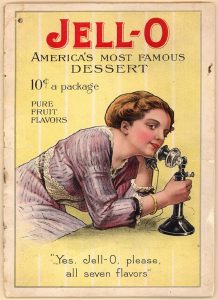
1904 – The Jell-O Recipe Book: Jell-O struggled to sell its strange gelatin cubes until salesmen started going door-to-door, handing out free cookbooks. The recipes taught housewives exactly how to use the product, skyrocketing sales to over $1 million by 1906.
https://en.wikipedia.org/wiki/File:Jell-O_-_America%27s_Most_Famous_Dessert.pdf
Content Marketing Quotes
As the digital landscape evolves, so does the philosophy of how brands communicate. Modern content marketing has moved away from simply “publishing articles” to creating immersive ecosystems that respect the consumer’s time and intelligence.
Here is a collection of quotes from modern strategists who are defining how content marketing works in the era of social media, algorithms, and hyper-targeted audiences.
1. The Modern Philosophy: Showing vs. Telling
| Strategist | The Quote | The Core Concept |
| Robert Rose | “Marketing is telling the world you’re a rock star. Content marketing is showing the world you are one.” | Proof: Modern consumers are cynical toward traditional advertising. Content provides undeniable proof of your expertise. |
| Doug Kessler | “Traditional marketing talks at people. Content marketing talks with them.” | Dialogue: The internet is a two-way street. Modern content invites comments, shares, and community interaction. |
| Shama Hyder | “Content isn’t king, it’s the kingdom.” | Ecosystem: Content is no longer just a tactic; it is the entire environment in which a modern digital brand exists. |
| Brian Clark | “These days, people want to learn before they buy, be educated instead of pitched.” | Empowerment: Giving the buyer the tools to make their own informed decision creates stronger brand loyalty than a hard sell. |
2. Tactical Execution in the Digital Age
| Strategist | The Quote | The Tactical Concept |
| Lee Odden | “Content is the reason search began in the first place.” | SEO (Search Engine Optimization): Search engines do not rank websites; they rank the specific content that answers a user’s question. |
| Jon Buscall | “Content marketing is a commitment, not a campaign.” | Longevity: Unlike a 30-day ad buy, content marketing requires a long-term publishing mindset. It builds equity over years, not days. |
| Michael Brenner | “Behind every piece of bad content is an executive who asked for it.” | Audience-Centricity: Content must be created for the customer’s needs, not to satisfy internal corporate egos or feature-pushing. |
| Gary Vaynerchuk | “Document, don’t create.” | Sustainability: Instead of obsessing over highly polished, fictionalized campaigns, brands should simply document their real, behind-the-scenes processes to build authentic trust. |
The Legacy of Modern Content
In the past, a brand’s legacy was built on physical monuments, historical PR stunts, or decades of television advertising. Today, a modern brand’s legacy is its digital footprint.
When a brand consistently publishes high-value content, it builds a compounding library of assets. Years from now, that content will continue to educate, entertain, and attract audiences long after the marketing budget has been spent.
Would you like to examine how a specific modern company (such as HubSpot or Red Bull) built a billion-dollar legacy almost entirely through executing these modern content marketing strategies?
Content Marketing History
While content marketing might feel like a modern byproduct of the internet age, the practice of brands using valuable, audience-centric information to build trust and drive sales dates back hundreds of years.
Here is a timeline of how content marketing evolved from early print publications to today’s digital landscape.
The Early Pioneers (1700s – 1800s)
- 1732 – Poor Richard’s Almanack: Benjamin Franklin is widely credited with one of the earliest examples of content marketing. He published his annual almanac—filled with weather predictions, puzzles, and practical advice—specifically to generate interest in his own printing business.
- 1801 – Galignani’s Messenger: The Parisian bookstore Librairie Galignani launched a newspaper featuring articles from famous authors to promote its new reading rooms and expand its customer base.
- 1895 – John Deere’s The Furrow: John Deere launched a magazine that didn’t just push tractors; it educated farmers on new agricultural technology and how to run more profitable businesses. The Furrow is widely considered the first true custom brand publication and is still in circulation today.
The Rise of Brand Storytelling (1900s – 1980s)
- 1900 – The Michelin Guide: Facing a lack of demand for car tires in France, the Michelin brothers published a free 400-page guide with travel tips, auto maintenance advice, and restaurant recommendations. The goal was to encourage people to drive more, wear out their tires, and ultimately buy new ones.
- 1904 – The Jell-O Recipe Book: Jell-O struggled to sell its strange gelatin cubes until salesmen started going door-to-door, handing out free cookbooks. The recipes taught housewives exactly how to use the product, skyrocketing sales to over $1 million by 1906.
- 1920s to 1930s – Radio & “Soap Operas”: Sears-Roebuck launched its own radio station (WLS) to provide farming information and music interspersed with ads. Shortly after, Procter & Gamble began sponsoring serialized radio dramas to market their household cleaning products to housewives—giving birth to the term “soap opera.”
- 1987 – LEGO’s Brick Kicks: LEGO launched a print magazine offering building inspiration, comics, and games to children. It successfully created a highly engaging product catalog that kids actively looked forward to reading.
The Digital Revolution (1990s – 2000s)
- 1996 – Coining the Term: Despite centuries of practice, the phrase “content marketing” was officially coined by journalist John F. Oppedahl during a roundtable discussion for the American Society for Newspaper Editors.
- 1998 to 1999 – A Mainstream Strategy: Titles like “Director of Online and Content Marketing” began appearing at tech companies like Netscape. Shortly after, the strategy became a recognized and essential marketing discipline.
- Early 2000s – The Rise of SEO and Blogging: As search engines became the primary way consumers found information, brands shifted focus to publishing blogs, whitepapers, and e-books to rank higher and attract inbound web traffic.
- 2006 – Viral Video Content: Blendtec launched its “Will It Blend?” YouTube series, demonstrating the power of its blenders by destroying iPhones, golf balls, and other random objects. It proved that marketing could be highly entertaining, inexpensive to produce, and wildly viral.
The Modern Era (2010s – Present)
- 2011 – The Quality Shift: Google launched its “Panda” algorithm update to penalize low-quality sites, forcing marketers to abandon keyword-stuffing and prioritize high-value, well-researched content.
- 2014 – “Content Shock”: As the internet became saturated with corporate blogs and videos, marketers realized that simply producing content wasn’t enough. The focus shifted heavily from quantity back to quality, storytelling, and interactive media.
- Present Day: Modern content marketing is heavily multi-channel, leveraging podcasts, short-form video (such as TikTok and Reels), and data-driven personalization to cut through the noise in a crowded digital landscape.
Would you like to explore the history of a specific era in more detail or learn how to apply one of these historical strategies to a modern marketing campaign?
Content Marketing Innovation
The landscape of content marketing is undergoing a massive shift. We are moving out of the era when sheer volume wins and into one where depth, interactivity, and trust are the primary currencies. Because AI models like me can instantly generate infinite amounts of baseline copy, the bar for what actually captures human attention has been fundamentally raised.
Here is a look at the core innovations driving content marketing forward right now:
1. The Premium on Emotional Universality
With the internet flooded by automated, purely informational text, brands are pivoting hard back to human-centered storytelling. The most innovative campaigns aren’t just answering search queries; they are tapping into emotional universality. Content that highlights real-world case studies, behind-the-scenes realities, and shared human experiences cuts through digital fatigue. The goal is to move hearts, not just metrics, creating a connection that feels authentic rather than manufactured.
2. Generative Engine Optimization (GEO) & Digital PR
Traditional SEO is evolving into GEO. AI search features (like Google’s AI Overviews or ChatGPT Search) don’t just rank links; they synthesize answers. To be visible, a brand needs to be cited by AI as an authoritative source. This is where modern PR becomes critical to content strategy. Earning high-quality mentions, building quantifiable trust signals, and maintaining absolute brand consistency across the web ensure a company is recommended by AI advisors, not just indexed by search engines.
3. Dynamic Visual Hierarchy & “Scrollytelling”
Visual hierarchy is no longer limited to the static layout of a blog post or landing page. Innovation is happening through interactive content—think immersive infographics, responsive data visualizations, and ROI calculators. We’re seeing a major surge in “scrollytelling,” where a narrative unfolds dynamically as the user scrolls down the page. This interactive approach forces active participation, guiding the eye perfectly while drastically increasing dwell time and information retention.
4. Hyper-Personalized Lifestyle Branding
Segmentation used to mean dividing audiences into broad demographic buckets. Now, predictive analytics allow for hyper-individualization. Lifestyle branding is becoming more adaptive in real time. Depending on a user’s browsing behavior and emotional cues, the same core campaign might dynamically swap out imagery, adjust the copy’s tone, or change the call to action to perfectly mirror that user’s daily life and aspirations.
5. The Multisensory Renaissance
Content isn’t just visual or text-based anymore. With the explosive growth of short-form social video and the heavy reliance on voice search, audio is a massive frontier. We are seeing a renaissance in sonic branding. Memorable audio cues and modern iterations of the classic jingle are being strategically deployed across short-form video hooks, podcasts, and smart speaker skills to build immediate, screen-free brand recognition.
Would you like to dive deeper into structuring dynamic visual hierarchies for interactive content, or explore modern PR strategies to build brand authority?
Content Marketing Legacy
While often discussed as a modern, digital-age phenomenon, the legacy of content marketing is deeply rooted in historical business practices. Long before the internet, companies realized that providing genuine education, utility, or entertainment was an incredibly effective way to build brand loyalty and outlast standard direct-response advertising.
Foundational Milestones
The strategy of offering value before asking for a sale was pioneered by several iconic campaigns that set the standard for modern marketing.
- John Deere’s The Furrow (1895): Widely considered the first true example of content marketing, this publication didn’t just pitch plows. It provided farmers with valuable information on new agricultural techniques and business management, establishing John Deere as a trusted advisor rather than just a vendor.
- The Michelin Guide (1900): The French tire company began distributing a free guide featuring maps, tire-repair instructions, and hotel and restaurant directories. The strategy was brilliant utility: by encouraging people to travel more, Michelin indirectly created a greater need for replacement tires.
- Jell-O Recipe Books (1904): By distributing free, highly visual recipe books detailing versatile ways to use its new, relatively unknown gelatin product, Jell-O essentially manufactured consumer demand and embedded the brand in American domestic life.
- Procter & Gamble’s “Soap Operas” (1930s): P&G sponsored and eventually produced serialized daytime radio dramas. By providing engaging entertainment for their target demographic of homemakers, they seamlessly integrated their cleaning products into their audience’s daily routines.
Shaping Modern Brand Strategy
The historical foundation laid by these early efforts paved the way for the sophisticated ecosystems we see today. The legacy of these campaigns demonstrates that successful marketing relies on a few timeless principles:
- Utility Over the Pitch: Providing tangible value to the consumer establishes a relationship based on reciprocity.
- Lifestyle Integration: Just as early guides aligned with the advent of the automobile, content marketing naturally bridges the gap into lifestyle branding by aligning a product with a consumer’s broader aspirations.
- Building Authority: Acting as an expert resource shifts public relations from reactive damage control to proactive brand building.
The transition from printed magazines and radio dramas to modern digital content marketing represents an evolution of the medium, not the fundamental strategy. It continues to rely on the same emotional universality that has always driven human connection and commerce.
Would you like to dive deeper into how one of these early historical examples compares to modern digital content strategies?
Content Marketing YouTube Views Links, and Books
Here are the definitive YouTube examples of Content Marketing—the strategy of creating value (entertainment or education) so good that people choose to watch it, rather than being forced to watch an ad.
YouTube Links: The Hall of Fame
| The Campaign | The Concept | Views | Link |
| Red Bull | “Space Jump” (Stratos)
Red Bull doesn’t sell energy drinks; they sell “human potential.” This livestream of Felix Baumgartner jumping from space was the ultimate proof. |
64M+ | Watch Video |
| Blendtec | “Will It Blend? – iPad”
A boring B2B blender company became a viral sensation by blending expensive electronics. It proved the product’s power without a single boring spec sheet. |
19M+ | Watch Video |
| LEGO | “The LEGO Movie Analysis”
The LEGO Movie is widely considered the greatest piece of content marketing ever made. It is a 100-minute commercial that people paid to see. |
13M+ | Watch Video |
| Michelin | “The Origin of the Michelin Guide”
How a tire company invented the 3-Star Restaurant system just to give people a reason to drive their cars more often and wear out their tires. |
2.4M+ | Watch Video |
Essential Books: The Library of Publishing
- The Bible of the Industry
“Epic Content Marketing” by Joe Pulizzi
- Why read it: Pulizzi is the “Godfather” of the industry (he founded the Content Marketing Institute). This book lays out the “Content Inc.” model: Build an audience first by giving away value, then sell them a product once they trust you.
- The Writer’s Manual
“Everybody Writes” by Ann Handley
- Why read it: In content marketing, writing is the currency. Handley argues that “words are your ambassador.” This book teaches you how to stop writing like a corporation and start writing like a human being.
- The Strategy
“Building a StoryBrand” by Donald Miller
- Why read it: Miller simplifies content into a movie script. He argues that the customer is the Hero (Luke Skywalker), and your brand is the Guide (Yoda). Most brands fail because they try to be the Hero.
- The Psychology of Virality
“Contagious: Why Things Catch On” by Jonah Berger
- Why read it: Why do some articles get shared while others die? Berger breaks down the “STEPPS” framework (Social Currency, Triggers, Emotion, Public, Practical Value, Stories) that makes content engineered to travel.
🗞️ PR Marketing
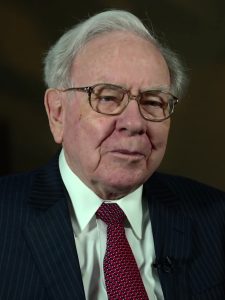
“It takes 20 years to build a reputation and five minutes to ruin it.” — Buffett in 2015
(Wiki Image By USA International Trade Administration – YouTube: https://www.youtube.com/watch?v=GLKDFhCjaY4 – View/save archived versions on archive.org and archive.today, Public Domain, https://commons.wikimedia.org/w/index.php?curid=67067635)

When seven people died from cyanide-laced Tylenol capsules, Johnson & Johnson faced a PR nightmare. Instead of denying responsibility, they immediately recalled 31 million bottles, introduced tamper-proof packaging, and communicated transparently with the public. It remains the gold standard for crisis PR.
(Wiki Image By Unknown author – https://www.tylenol.com/, Public Domain, https://commons.wikimedia.org/w/index.php?curid=177615788)
PR Marketing Quotes
Here are the definitive quotes on Public Relations (PR), illustrating the art of managing reputation and the subtle science of getting other people to tell your story.
The Nature of Credibility (Earned vs. Paid)
| Quote | Speaker | Context |
| “Advertising is what you pay for, publicity is what you pray for.” | Helen Woodward
(Ad Executive, 1938) |
The fundamental difference. You can buy a billboard (Advertising), but you cannot buy a glowing review in the New York Times (PR). Because PR is “earned” rather than bought, the public trusts it more. |
| “Advertising is saying you’re good. PR is getting someone else to say you’re good.” | Jean-Louis Gassée
(Former Apple Exec) |
This highlights the power of Third-Party Validation. A consumer assumes an ad is biased. But if a journalist or a friend recommends it, the skepticism shield drops. |
| “If I was down to my last dollar, I would spend it on public relations.” | Bill Gates | Gates understood that a software startup couldn’t compete with IBM’s ad budget. He had to win the “mindshare” war by getting tech magazines to write about Microsoft as the “future.” |
| “A good PR story is infinitely more effective than a front page ad.” | Richard Branson
(Virgin Group) |
Branson built an empire on stunts (driving a tank down Fifth Avenue, flying balloons). He realized that a photo on the front page of the newspaper was worth millions in free advertising. |
The Mechanics of Influence (Spin & Perception)
| Quote | Speaker | Context |
| “The engineering of consent.” | Edward Bernays
(Father of PR) |
Bernays (Freud’s nephew) didn’t view PR as “news”; he viewed it as psychological manipulation. He believed you could scientifically “engineer” the public to want something (like bacon or cigarettes) by linking it to their unconscious desires. |
| “Some are born great, some achieve greatness, and some hire public relations officers.” | Daniel Boorstin
(Historian) |
A cynical look at the modern celebrity. Boorstin argued that PR creates “Pseudo-Events”—things that only happen so they can be reported (e.g., a Red Carpet photo op). It blurs the line between reality and performance. |
| “There is no such thing as bad publicity except your own obituary.” | Brendan Behan
(Irish Poet) |
The motto of the “Attention Economy.” In a crowded world, obscurity is a bigger threat than controversy. Even a scandal keeps your name in the conversation (a tactic used by everyone from P.T. Barnum to modern influencers). |
| “It takes 20 years to build a reputation and five minutes to ruin it.” | Warren Buffett | The golden rule of Crisis Management. PR isn’t just about getting attention; it’s about survival. When a crisis hits (e.g., an oil spill), the PR response determines if the company lives or dies. |
PR Marketing History
While content marketing has historically focused on creating valuable content to attract an audience, Public Relations (PR) emerged from the need to manage perception, control narratives, and build relationships between organizations and the public.
Here is a timeline of how PR evolved from early press agentry to a sophisticated, data-driven marketing discipline.
Early Press Agentry and Publicity (1800s)
- The 1830s – The Penny Press: The advent of cheap, mass-produced newspapers created a hungry audience for sensational stories. Press agents realized they could manipulate coverage to sell tickets and books.
- The Mid-1800s – P.T. Barnum: The infamous showman was a master of early PR, known as “press agentry.” Barnum used stunts, exaggerated claims, and pseudo-events (events created solely to generate news coverage) to ensure his circus was constantly in the headlines.
The Gilded Age and the Birth of Modern PR (Late 1800s – 1910s)
During the Gilded Age, industrial titans faced intense public and political scrutiny over monopolies, labor strikes, and wealth inequality. The realization that they could no longer operate with a “the public be damned” attitude (a quote famously attributed to railroad magnate William Henry Vanderbilt) forced “robber barons” to formalize the practice of public relations.
- 1889 – Westinghouse’s PR Department: George Westinghouse established the first corporate PR department to promote his alternating current (AC) electricity over Thomas Edison’s direct current (DC) in the “War of the Currents.”
- 1906 – Ivy Lee’s “Declaration of Principles”: Often called the father of modern PR, Ivy Lee was hired by the coal industry to handle a massive strike. He issued a declaration stating his goal was to provide the press and public with prompt, accurate information.
- 1914 – The Ludlow Massacre: When John D. Rockefeller Jr. faced massive public outrage after guards violently ended a coal miners’ strike in Colorado, he hired Ivy Lee. Lee shifted Rockefeller’s image from a ruthless industrialist to a philanthropic family man through carefully orchestrated photo opportunities and press releases.
World Wars and the Psychology of Persuasion (1910s – 1940s)
Global conflicts demonstrated the immense power of organized mass communication, shifting PR from just damage control to active persuasion.
- 1917 – The Creel Committee: During World War I, President Woodrow Wilson created the Committee on Public Information (CPI) to influence American public opinion toward supporting the war. The CPI utilized thousands of “Four-Minute Men” to deliver pro-war speeches across the country.
- 1923 – Edward Bernays and “Crystallizing Public Opinion”: Bernays, the nephew of Sigmund Freud, applied psychology and sociology to PR. He believed the public’s subconscious desires could be engineered.
- 1929 – “Torches of Freedom”: In one of the most famous PR campaigns in history, Bernays was hired by the American Tobacco Company to break the taboo against women smoking in public. He organized a march of debutantes lighting cigarettes—dubbed “torches of freedom”—during the Easter Parade, successfully linking smoking to women’s rights and dramatically boosting sales.
- 1942 – The Office of War Information (OWI): During World War II, the U.S. government launched massive PR campaigns to recruit soldiers, sell war bonds, and encourage rationing, solidifying the strategic use of media to unite a populace.
The Corporate Boom and Crisis Management (1950s – 1980s)
- The 1950s – The Rise of PR Agencies: Post-WWII economic expansion saw the massive growth of global PR firms like Edelman and Burson-Marsteller. PR became a staple of corporate marketing, focusing on consumer lifestyle branding and corporate social responsibility.
- 1982 – The Tylenol Crisis: When seven people died from cyanide-laced Tylenol capsules, Johnson & Johnson faced a PR nightmare. Instead of denying responsibility, they immediately recalled 31 million bottles, introduced tamper-proof packaging, and communicated transparently with the public. It remains the gold standard for crisis PR.
The Digital and Social Era (1990s – Present)
- Late 1990s – The 24/7 News Cycle: The rise of cable news and the internet meant PR professionals could no longer just manage a daily news cycle; they had to monitor and respond to global narratives in real-time.
- 2000s – Direct-to-Consumer PR: Social media platforms like Twitter and Facebook allowed brands to bypass traditional journalists and communicate directly with the public, blurring the lines between PR, marketing, and customer service.
- Present Day: Modern PR is heavily intertwined with content marketing and SEO. It relies on influencer partnerships, digital reputation management, and data analytics to measure shifts in public sentiment around a brand.
Would you like to dive deeper into how figures like Edward Bernays shaped modern consumerism, or explore how crisis PR strategies have adapted to the speed of social media?
PR Marketing Innovation
Public relations is experiencing a rapid technological evolution. As AI tools take over the heavy lifting of baseline content generation and daily media monitoring, the focus of PR is shifting heavily toward measurable business impact, deep relationship-building, and protecting brand trust in an unpredictable digital landscape.
Here are the key innovations reshaping PR right now:
1. Generative Engine Optimization (GEO)
Traditional SEO is being heavily augmented—and in some cases replaced—by GEO. Because consumers, journalists, and investors increasingly rely on AI platforms (like ChatGPT, Gemini, and Perplexity) for summarized answers, PR strategies are pivoting to ensure brands are actively cited by these Large Language Models. This means structuring press releases and owned content with direct, authoritative answers to common industry questions so AI systems prioritize them as reliable source material.
2. Predictive “Narrative Intelligence”
Crisis management is moving from reactive to proactive. Modern PR teams are using AI-driven predictive analytics and “narrative intelligence” to detect reputational threats before they escalate. Rather than just monitoring basic social media sentiment, these advanced systems can spot coordinated bot networks, deepfakes, and emerging negative narratives in their infancy, allowing brands to prepare a response before a story hits the mainstream media.
3. Hyper-Personalized Media Relations
The “spray and pray” approach to mass media pitching is effectively dead. With the number of traditional journalists shrinking and inboxes flooded with AI-generated pitches, PR professionals are using technology to run hyper-personalized outreach. By analyzing a reporter’s past articles, preferred formats, and current audience focus, AI helps tailor a unique angle for each individual journalist, ensuring pitches offer immediate, highly relevant value.
4. Hard ROI and Attribution Modeling
For decades, PR struggled to prove its exact financial value, often relying on vanity metrics like raw impressions or Advertising Value Equivalency (AVE). Today, advanced attribution software links public relations directly to organizational growth. Teams can now track exactly how a specific piece of earned media influenced brand searches, inbound website traffic, lead generation, and ultimately, sales lift.
5. Founder-Led PR and Micro-Influence
In an internet saturated with automated content, human authenticity is the ultimate premium. Massive, faceless corporate statements and mega-celebrity endorsements are losing their impact. Instead, innovation is happening through founder-led branding and strategic partnerships with micro-influencers. Highlighting real, mission-driven employees or partnering with niche voices who have deep, genuine connections with their audiences builds a level of verifiable trust that traditional advertising simply can’t buy.
Would you like to explore the mechanics of optimizing content for GEO, or dive into how predictive analytics are set up for modern crisis management?
PR Marketing Legacy
While advertising has traditionally focused on buying space to sell a product, the historical legacy of Public Relations (PR) is rooted in the much more complex task of managing reputation, shaping public perception, and earning trust. The evolution of PR transformed marketing from a one-way street of sheer promotion into a sophisticated, psychological discipline.
Foundational Milestones
The modern PR and marketing landscape was shaped by a shift away from simple hucksterism toward strategic communication, guided by a few key historical figures and eras:
- The Press Agentry Era (1800s): Typified by showmen like P.T. Barnum, early “PR” was essentially press agentry. The goal was to manufacture news and execute publicity stunts to drum up ticket sales and media coverage. While lacking modern ethical standards, it proved the massive commercial power of earned media attention.
- Ivy Lee and the “Declaration of Principles” (1906): Ivy Lee marked the transition from stunt-driven publicity to transparent communication. Advising massive industrial corporations (including the Pennsylvania Railroad and the Rockefeller family during severe labor crises), Lee championed the idea that companies should deal openly and honestly with the press, essentially inventing modern corporate crisis management.
- Edward Bernays and the Psychology of Persuasion (1920s): Widely considered the “father of public relations,” Bernays—who was Sigmund Freud’s nephew—applied psychoanalysis to marketing. He believed the public’s choices could be engineered by tapping into their unconscious desires. His campaigns shifted PR from simply disseminating information to actively shaping cultural norms and consumer behavior.
- Arthur W. Page and Corporate Responsibility (1927): As the first PR vice president at AT&T, Page established that public relations must be a core management function. His enduring philosophy was that a company’s public perception is defined 90% by what it does and only 10% by what it says, permanently linking PR to corporate behavior and policy.
Shaping Modern Brand Strategy
The foundational tactics developed in the early 20th century established the core principles that continue to drive modern public relations, brand management, and marketing:
- Earned Trust Over Bought Space: The most enduring legacy of PR is the understanding that third-party validation (news coverage, expert endorsements, and today, influencer reviews) carries significantly more weight and credibility with consumers than direct-response advertising.
- Crisis as an Opportunity: The frameworks established by early pioneers remain the exact blueprints modern companies use to navigate product recalls, social media scandals, and public apologies.
- Psychological Framing: Early PR campaigns proved that consumers buy products not just for their functional utility, but for the lifestyle, status, and emotional benefits they represent.
The transition from the printing press to the 24-hour news cycle and social media has vastly accelerated the pace of PR, but the underlying goal remains the same: cultivating a mutually beneficial relationship between an organization and the public it depends on.
Would you like me to detail the psychology behind one of Edward Bernays’ famous campaigns, or focus on how early crisis management tactics translate to the modern digital era?
PR Marketing YouTube Views Links, and Books
Here are the definitive YouTube examples of PR (Public Relations)—the art of getting other people to talk about you, often by engineering a “news event” that the media cannot ignore.
YouTube Links: The Hall of Fame
| The Campaign | The Concept | Views | Link |
| Barbie | “Barbenheimer”
The Barbie movie team didn’t just buy ads; they engineered a cultural moment. By partnering with 100+ brands (from Xbox to Airbnb) and leaning into the “Barbenheimer” meme, they turned a movie release into a global dress-up party. |
90M+ | Watch Video |
| Steve Jobs | “The iPhone Introduction”
The ultimate PR event. Jobs didn’t buy a Super Bowl ad; he held a press conference. By framing the iPhone not as a product but as a “revolutionary magical device,” he secured billions of dollars in free news coverage. |
48M+ | Watch Video |
| Burger King | “The Moldy Whopper”
A masterclass in “Counter-Intuitive PR.” Burger King released an ad showing their product rotting and covered in green mold. It was gross, but it proved they had removed artificial preservatives, challenging McDonald’s “forever burger” myth. |
2.9M+ | Watch Video |
| Edward Bernays | “Torches of Freedom”
The original sin of PR. Bernays (Sigmund Freud’s nephew) hired debutantes to smoke cigarettes at the Easter Parade, branding them “Torches of Freedom.” He didn’t sell tobacco; he sold feminism, doubling the market overnight. |
179K+ | Watch Video |
Essential Books: The Library of Spin
- The Original Manual
“Propaganda” by Edward Bernays (1928)
- Why read it: This is the book that started it all. Bernays openly discusses the “engineering of consent” and how the “invisible government” (PR pros) shapes the habits and opinions of the masses. It is chilling and essential.
- The Modern Confession
“Trust Me, I’m Lying: Confessions of a Media Manipulator” by Ryan Holiday
- Why read it: Holiday explains how modern PR works in the digital age. He reveals how he vandalized his own billboards and created fake controversies to get blogs to write about his clients, proving that the news is often just a laundered press release.
- The Ethics Guide
“Spin Sucks” by Gini Dietrich
- Why read it: A counter-argument to the “dark arts.” Dietrich argues that in the Internet age, lying eventually kills you. She advocates for the “PESO” model (Paid, Earned, Shared, Owned) and building authority through honesty rather than stunts.
- The Newsroom Playbook
“The Father of Spin: Edward L. Bernays and the Birth of Public Relations” by Larry Tye
- Why read it: A biography that breaks down exactly how Bernays did it—from convincing women to smoke to making bacon a breakfast staple by bribing 5,000 doctors.
Edward Bernays 1: Torches of Freedom The “Torches of Freedom” PR Campaign History
This video is relevant because it documents the most famous PR campaign in history, illustrating the exact moment “Public Relations” was invented to manipulate social behavior under the guise of news.
🎭 Cultural Engineering Marketing
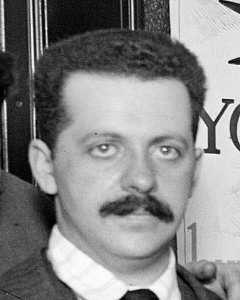
Bernays is the father of Cultural Engineering. He didn’t just sell bacon; he paid doctors to say a “heavy breakfast” was healthy, permanently changing the American morning. He didn’t just sell cigarettes; he organized the “Torches of Freedom” march to break the taboo against women smoking in public.
(Wiki Image By Bain News Service – File:Birnbaum,_Gordon,_Bernays,_Fornia,_Mrs._Coppicus,_Amato,_Botta_(LOC).jpg, Public Domain, https://commons.wikimedia.org/w/index.php?curid=68971679)
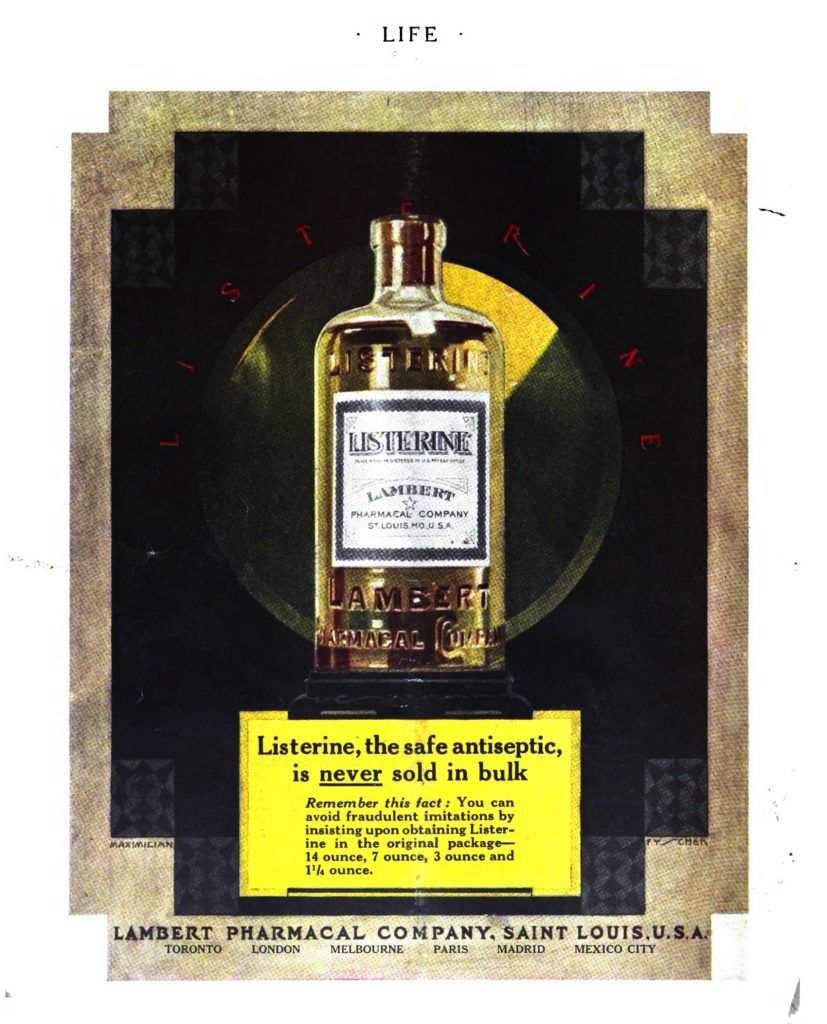
The Invention of “Halitosis”: Before the 1920s, bad breath was considered a minor nuisance, not a social catastrophe. The creators of Listerine dug up an obscure medical term—halitosis—and launched aggressive campaigns warning that it would ruin your career and romantic prospects. They engineered a universal social insecurity, transforming mouthwash from a niche surgical antiseptic into a daily bathroom staple.
(Wiki Image By LIFE Magazine – https://babel.hathitrust.org/cgi/pt?id=mdp.39015034750037&view=image&seq=564, Public Domain, https://commons.wikimedia.org/w/index.php?curid=98876170)
Cultural Engineering Marketing Quotes
Here are the definitive quotes on Cultural Engineering, illustrating the highest level of marketing: not just selling a product, but rewriting the social contract, inventing traditions, and changing human behavior.
The Architecture of Society
| Quote | Speaker | Context |
| “The conscious and intelligent manipulation of the organized habits and opinions of the masses is an important element in a democratic society.” | Edward Bernays
(Propaganda, 1928) |
Bernays is the father of Cultural Engineering. He didn’t just sell bacon; he paid doctors to say a “heavy breakfast” was healthy, permanently changing the American morning. He didn’t just sell cigarettes; he organized the “Torches of Freedom” march to break the taboo against women smoking in public. |
| “We need things consumed, burned up, worn out, replaced, and discarded at an ever-increasing pace.” | Victor Lebow
(Economist, 1955) |
This is the blueprint for Consumerism as a culture. Lebow argued that for the post-war economy to survive, buying things couldn’t just be a necessity; it had to become a ritual. This logic engineered “Planned Obsolescence” and “Retail Therapy.” |
| “A Diamond Is Forever.” | Frances Gerety
(Copywriter, N.W. Ayer, 1947) |
Before this campaign, diamond engagement rings were not a universal standard. De Beers and Ayer engineered the tradition. They linked the durability of a rock to that of a marriage, creating a cultural rule requiring a man to spend “two months’ salary” to prove his love. |
The Alchemy of Value
| Quote | Speaker | Context |
| “We don’t value things; we value the meaning of things.” | Rory Sutherland
(Ogilvy Vice Chairman) |
Sutherland cites Frederick the Great of Prussia, who rebranded the potato. Peasants refused to eat the “dirty” tuber. Frederick didn’t lower the price; he declared it a “Royal Vegetable,” planted it in a guarded garden, and let peasants “steal” it. He engineered a culture of desire to solve a famine. |
| “Culture is the strategy.” | Douglas Holt
(Cultural Strategy) |
Holt argues that the biggest brands (Nike, Starbucks, Jack Daniel’s) don’t sell better products; they sell Ideologies. Jack Daniel’s sells the myth of the “Frontier Gunsmith.” Starbucks sells the “Cosmopolitan Sophisticate.” They provide the cultural props for the lives we want to live. |
| “Tradition is just peer pressure from dead people.” | Unknown
(Sociological Maxim) |
This explains why cultural engineering sticks. Once a marketer successfully invents a tradition (like Santa Claus in a red suit—popularized by Coca-Cola, or Hallmark’s “Grandparents Day”), it becomes self-enforcing. We do it not because the ad tells us to, but because “it’s what we’ve always done.” |
Cultural Engineering Marketing History
While Public Relations manages a brand’s reputation and Content Marketing attracts an audience, Cultural Engineering is the most ambitious discipline of the three. It is the deliberate attempt by marketers to alter societal norms, invent new traditions, or shift daily human behavior to create permanent, self-sustaining market demand.
Instead of asking, “How do we sell this product to society?” cultural engineers ask, “How do we change society so that this product becomes a fundamental necessity?”
Here is a timeline of how marketing moved beyond selling items and began shaping human culture itself.
The 1920s – 1930s: Inventing Insecurities and Traditions
Early cultural engineering relied on reframing common human conditions as urgent social crises or embedding products into the cultural fabric of life milestones.
- 1920s – The Invention of “Halitosis”: Before the 1920s, bad breath was considered a minor nuisance, not a social catastrophe. The creators of Listerine dug up an obscure medical term—halitosis—and launched aggressive campaigns warning that it would ruin your career and romantic prospects. They engineered a universal social insecurity, transforming mouthwash from a niche surgical antiseptic into a daily bathroom staple.
- 1938 – De Beers and the Engagement Ring: In the 1930s, diamond engagement rings were rare; people usually proposed with less expensive stones or no ring at all. The De Beers diamond cartel hired N.W. Ayer to engineer a cultural shift. Through relentless product placement in Hollywood films and the eventual slogan “A Diamond is Forever,” they successfully fabricated a global tradition, permanently linking diamonds to the concept of eternal love and societal status.
The 1950s: Motivational Research and Emotional Universality
Following World War II, marketers realized that an economy based solely on “needs” would stall once everyone owned a refrigerator and a car. They needed to engineer a culture of constant “wants.”
- The Rise of Ernest Dichter: Psychologist Ernest Dichter pioneered “Motivational Research,” moving the industry away from rational sales pitches toward subconscious desires. He argued that to change consumer culture, advertising had to tap into emotional universality—the shared, fundamental human desires for security, masculinity/femininity, and social belonging.
- The “Add an Egg” Paradigm: When instant cake mixes were introduced, they failed. Dichter discovered that housewives felt guilty using them because it felt too easy, violating the cultural norm of “providing” for the family. The solution was to require the consumer to add a fresh egg. This minor behavioral shift engineered a feeling of participation and love, making instant baking culturally acceptable.
The 1980s – 1990s: The Birth of Lifestyle Branding
As the market became saturated with identical products, cultural engineering shifted from creating social anxieties to commodifying identities. This era fully realized lifestyle branding—the idea that what you buy defines who you are.
- 1984 – Apple’s Rebel Identity: Apple’s famous “1984” Super Bowl commercial engineered a massive cultural narrative: computers were no longer just for cold, corporate mainframes; they were tools for creative rebellion. Apple successfully engineered a subculture in which buying its products signaled nonconformity.
- Late 1980s – Nike and the Fitness Culture: Before the late 1970s and 80s, running for pleasure was considered bizarre. Nike didn’t just sell shoes; they engineered a global culture around everyday athletic achievement. The “Just Do It” campaign codified a lifestyle where everyday people viewed themselves as athletes, permanently integrating sportswear into daily fashion and routine
The 2000s – Present: Algorithmic Culture and Micro-Engineering
Today, cultural engineering is less about massive, top-down campaigns (like De Beers) and more about utilizing algorithms to engineer rapid, community-driven cultural shifts.
- The Attention Economy: Social media platforms are engineered to shape behavior by rewarding specific aesthetics and trends. Brands no longer have to push a single cultural narrative; they can sponsor thousands of micro-cultures.
- Aesthetic Commodification: Modern cultural engineering involves creating and rapidly cycling through entirely new “aesthetics” (e.g., “cottagecore,” “clean girl aesthetic,” “quiet luxury”). Marketers use these highly specific, algorithmically-fueled lifestyle trends to drive rapid consumption of very specific clothing, home goods, and media.
Would you like to look closer at the psychology behind how emotional universality is used to design these campaigns, or explore the origins of a specific lifestyle brand?
Cultural Engineering Marketing Innovation
The concept of “cultural engineering” in marketing represents a fundamental shift. Instead of merely reacting to trends or trying to fit into an existing conversation, brands are actively shaping culture, dismantling outdated societal norms, and instilling new behaviors. It is the evolution of marketing from simply participating in a market to designing the cultural ecosystem itself.
Here is how cultural engineering is currently driving marketing innovation:
1. The Evolution of Lifestyle Branding into Ideological Leadership
In the past, lifestyle branding was primarily about reflecting a consumer’s aesthetic back to them. Cultural engineering takes this further by positioning the brand as an ideological leader. Brands are actively identifying societal tensions—such as shifting work paradigms, environmental anxieties, and evolving family dynamics—and offering distinctive points of view to resolve them. It’s not just about selling products that fit into a lifestyle; it’s about sharing values and establishing rituals that actually define it.
2. Achieving Emotional Universality Through Micro-Culture
While achieving emotional universality remains the holy grail of human connection, the innovation lies in how marketers get there. Instead of relying on mass-market, watered-down messaging, cultural engineers use highly specific, niche micro-communities to tap into universal feelings. By deeply understanding the semiotics, language, and unique behaviors of a specific subculture, a brand can tell a hyper-local story that universally resonates precisely because of its undeniable, raw authenticity.
3. Content Marketing as a Shared Community Ritual
Within a cultural engineering framework, content marketing abandons the traditional, transactional sales funnel. Instead, content is designed to establish community rituals. To combat the homogenization of AI-generated text, brands are pivoting to tactile and unmistakably human formats. Whether it’s through transparent founder-led storytelling, highlighting real employee experiences, or launching participatory campaigns, the goal is to give the audience a shared sense of ownership over the brand’s cultural movement.
4. Algorithmic PR and Narrative Defense
Public relations is taking on a much more aggressive role in shaping societal narratives. With the rapid spread of cultural conversations (and misinformation), brands are deploying advanced “narrative intelligence” to detect and respond to cultural shifts in real time. Furthermore, as consumers shift from traditional search to AI agents, PR strategies are heavily focused on Generative Engine Optimization (GEO). The goal is to ensure that when an AI model synthesizes a cultural answer, the brand’s engineered narrative is the one cited as the authoritative truth.
5. Encoding Visual Hierarchy with Cultural Signifiers
Visual hierarchy is expanding far beyond the basic layout of a screen to encompass deep cultural signifiers. Every color, typography choice, and interactive element is strategically audited for its cultural weight and historical meaning. The innovation happens when brands create immersive, sensory-rich experiences—both through dynamic digital interactivity and tactile, physical activations—that seamlessly guide a user’s attention while subconsciously reinforcing the brand’s overarching cultural ideology.
Would you like to explore how to audit visual elements for their cultural weight, or look into the specific frameworks brands use to identify actionable societal tensions?
Cultural Engineering Marketing Legacy
While traditional marketing fulfills an existing consumer need, the legacy of cultural engineering is rooted in a much more ambitious goal: altering societal norms, traditions, and behaviors to essentially manufacture a new need. Rather than adapting a product to fit the market, cultural engineering adapts the culture to fit the product.
Foundational Milestones
The most potent examples of this strategy occurred when marketers stopped selling a product’s physical attributes and instead positioned it as a fundamental pillar of modern life.
- The Invention of “Halitosis” (1920s): Listerine was originally formulated in the 19th century as a surgical antiseptic, but sales truly exploded when the company coined the term “halitosis” (using Latin to make it sound like a serious medical condition). By engineering a universal social anxiety around bad breath—framing it as a silent relationship-killer—Listerine transformed mouthwash from a niche medical supply into a daily hygiene necessity.
- Edward Bernays and “Torches of Freedom” (1929): Hired by the American Tobacco Company to expand the cigarette market to women, Bernays orchestrated a campaign where women smoked Lucky Strikes during the Easter Sunday Parade in New York. He framed the cigarettes as symbols of women’s emancipation and equality. He didn’t sell tobacco; he engineered a cultural shift that broke a societal taboo.
- De Beers and the Diamond Engagement Ring (1938): Before the N.W. Ayer advertising agency took on the De Beers account; diamond engagement rings were not a universal standard. Through strategic product placement in movies, targeted educational materials, and the eventual 1947 slogan “A Diamond is Forever,” the agency successfully engineered a global tradition where the size and presence of a diamond became the definitive measure of a man’s love.
- The “Breakfast” Paradigm (Late 19th/Early 20th Century): During the transition to the industrialized era, companies like Kellogg’s didn’t just sell ready-to-eat cereal; they helped establish and heavily promoted the idea that “breakfast is the most important meal of the day.” By aligning their products with the demands of the modern workday and the pursuit of health, they permanently altered morning routines.
Shaping Modern Brand Strategy
The legacy of these massive historical shifts proves that the most successful marketing campaigns transcend simple transactions. They lay the groundwork for modern strategies by demonstrating that:
- Creating the Category: The ultimate competitive advantage is inventing the very problem your product is designed to solve.
- Deep Lifestyle Branding: Cultural engineering is the purest form of lifestyle branding. It positions a product not just as an accessory, but as a mandatory prerequisite for a specific identity, social status, or milestone.
- Leveraging Emotional Universality: These campaigns succeeded by bypassing rational logic and tapping directly into universally human emotions—the desire for romantic love, the fear of social rejection, the drive for independence, and the pursuit of health.
The tactics have shifted from organizing public parades to engineering viral trends and digital echo chambers, but the psychological mechanism remains exactly the same: convincing the public that a commercial product is a natural, inseparable part of the human experience.
Would you like me to break down how a specific modern company uses these historical cultural engineering tactics in their digital ecosystem today?
Cultural Engineering Marketing YouTube Views Links, and Books
Here are the definitive YouTube examples of Cultural Engineering—the highest form of marketing, where a brand doesn’t just sell a product, but fundamentally alters society’s traditions, language, or values to create a permanent need for that product.
YouTube Links: The Hall of Fame
| The Campaign | The Concept | Views | Link |
| Coca-Cola | “The Invention of Santa Claus”
Before 1931, Santa was often depicted as a spooky, elf-like bishop. Coca-Cola commissioned artist Haddon Sundblom to paint him as a jolly, fat man in Coke Red. They didn’t just sell soda; they engineered the modern face of Christmas. |
891K+ | Watch Video |
| Always | “#LikeAGirl”
Always (P&G) realized that “Like a Girl” was a cultural insult used to destroy confidence. They engineered a campaign to reclaim the phrase. It didn’t focus on the product (pads); it focused on rewriting the language of puberty. |
322K+ | Watch Video |
| De Beers | “The Diamond Invention”
In 1938, diamonds were going out of style. De Beers engineered the “2 Month Salary Rule” and the slogan “A Diamond is Forever,” creating a mandatory cultural tax on marriage that didn’t exist before. |
271K+ | Watch Video |
| Edward Bernays | “The American Breakfast”
Bacon was not a breakfast food until PR legend Edward Bernays was hired by Beech-Nut Packing. He paid doctors to say a “heavy breakfast” was healthier, effectively engineering the classic “Bacon & Eggs” tradition out of thin air. |
94K+ | Watch Video |
Essential Books: The Library of Manipulation
- The User Manual
“Cultural Strategy: Using Innovative Ideologies to Build Breakthrough Brands” by Douglas Holt
- Why read it: This is the textbook on the subject. Holt explains that brands like Nike and Starbucks didn’t win because of better coffee or shoes; they won because they identified a “cultural fracture” in society and offered their brand as the glue to fix it.
- The Origin Story
“Propaganda” by Edward Bernays (1928)
- Why read it: Bernays is the “Father of Cultural Engineering.” In this chilling classic, he explains how the “invisible government” of marketers manipulates the habits and opinions of the masses to ensure democracy functions smoothly.
- The Historical Analysis
“Engineered to Sell: European Émigrés and the Making of Consumer Capitalism” by Jan L. Logemann
- Why read it: A fascinating look at how advertising psychologists (many fleeing WWII Europe) brought scientific principles to America to engineer a society of hyper-consumption.
- The Modern Playbook
“Cultural Engineering” by Vasanth Seshadri
- Why read it: A modern guide for brands that want to move beyond “selling” and start “leading.” It argues that in the 21st century, consumers expect brands to take a stand on cultural issues, making engineering a necessity rather than a luxury.
🚫📣 Anti-Marketing

“The more you know, the less you need” — Yvon Chouinard in 1975 (Founder, Patagonia)
(Wiki Image By Portlandjim – Own work, Public Domain, https://commons.wikimedia.org/w/index.php?curid=4338238)

“We aren’t wasting your money on decoration.” — Costco Wholesale logo since 1997.
(Wiki Image By Renaik – Own work, CC BY-SA 4.0, https://commons.wikimedia.org/w/index.php?curid=45604620)
Anti-Marketing Quotes
Here are the definitive quotes on Anti-Marketing, the movement that rejects manipulation, mocks corporate insincerity, and argues that the most powerful brand is the one that hates branding.
The Cynics (The Rejection of Manipulation)
| Quote | Speaker | Context |
| “By the way, if anyone here is in advertising or marketing… kill yourself.” | Bill Hicks
(Stand-up Comedian) |
The most famous quote in the history of anti-marketing. Hicks argued that marketers are “Satan’s spawn” because they weaponize human insecurity to sell useless junk. His rant highlights the visceral anger people feel toward being manipulated. |
| “They have rearranged the world to put themselves in front of you. They never asked for your permission, don’t start asking for theirs.” | Banksy
(Street Artist) |
Banksy justifies graffiti as a response to advertising. He argues that brands pollute public space with billboards (visual noise) without our consent, so the public has a moral right to “rearrange” (vandalize) them. |
| “Advertising has us chasing cars and clothes, working jobs we hate so we can buy shit we don’t need.” | Tyler Durden
(Fight Club) |
This quote defined a generation’s cynicism. It attacks the core promise of marketing: that products bring happiness. Durden argues that marketing is a trap that enslaves us in a cycle of debt and dissatisfaction. |
The Philosophers (The “No Logo” Movement)
| Quote | Speaker | Context |
| “Brands are not products but the ideas, attitudes, and values that the products embody.” | Naomi Klein
(No Logo) |
Klein exposed that companies like Nike shifted from making things to making images. This “hollow corporation” model led to the backlash, where consumers realized they were paying $150 for $5 worth of rubber and a “Swoosh” myth. |
| “The more you know, the less you need.” | Yvon Chouinard
(Founder, Patagonia) |
The ultimate “Un-Marketer.” Chouinard argues that if you buy high-quality gear (and know how to fix it), you stop consuming. Ironically, by telling people not to buy his stuff (the famous “Don’t Buy This Jacket” ad), he built one of the most loyal customer bases in the world. |
| “Authenticity is the benchmark against which all brands are now judged.” | John Grant
(The New Marketing Manifesto) |
In a world of fake news and Photoshop, “slickness” is suspicious. Flaws are trusted. Anti-marketing succeeds because it feels “real” (e.g., ugly websites, shaky camera video, honest admissions of failure). |
The Paradox of Anti-Marketing
The irony of this movement is that hating marketing is a great marketing strategy.
- Supreme treats its customers with disdain (limited drops, high prices, rude staff), which makes the customers want it more.
- Costco refuses to advertise or make its stores look nice, which signals to the customer, “We aren’t wasting your money on decoration.”
- The Lesson: When everyone zigs (shouting “Buy Me!”), the best way to zag is to whisper, “I don’t care if you buy me.”
Anti-Marketing History
While traditional marketing emphasizes benefits, projects perfection, and urges consumers to buy, Anti-Marketing flips the script. It is the deliberate use of reverse psychology, radical transparency, self-deprecation, or outright rebellion against standard advertising tropes to build trust and cut through commercial noise.
If cultural engineering is about making a product feel like a societal necessity, anti-marketing is about making a brand feel like a trustworthy co-conspirator against the exhausted, hyper-commercialized modern world.
Here is a timeline of how anti-marketing evolved from clever copywriting to radical corporate transparency.
The 1950s – 1960s: The Creative Revolution and Radical Honesty
In the post-WWII era, advertising was dominated by exaggerated claims, idealized families, and massive, flashy products. Anti-marketing was born when a few agencies realized that consumers were becoming skeptical of perfection.
- 1959 – Volkswagen’s “Think Small” and “Lemon”: Engineered by the ad agency Doyle Dane Bernbach (DDB), this is widely considered the birth of modern anti-marketing. While American car companies were bragging about massive tailfins and luxury, VW ran ads with vast amounts of white space, tiny images of their Beetle, and headlines calling the car a “Lemon” (because of a minor scratch on the glovebox). By leading with flaws and self-deprecation, they engineered a sense of absolute honesty and intelligence, making the Beetle a massive success.
+3 - 1962 – Avis’s “We Try Harder”: Car rental company Avis was trailing far behind Hertz. Instead of claiming to be the best, they launched a campaign stating: “Avis is only No. 2 in rental cars. So why go with us? We try harder.” Admitting second place was unheard of, but it positioned them as the scrappy underdog consumers wanted to root for.
The 1980s – 1990s: Culture Jamming and Anti-Establishment
As corporations grew into massive global conglomerates and “lifestyle branding” took over, a counter-culture emerged that viewed advertising as brainwashing. Brands began co-opting this punk-rock, anti-corporate sentiment to sell products.
- 1989 – Adbusters and Culture Jamming: The magazine Adbusters popularized “culture jamming”—the act of subverting mainstream advertising campaigns to critique corporate America (e.g., turning “Joe Camel” into “Joe Chemo”). While not a corporate brand, it forced marketers to realize that a growing demographic actively hated traditional marketing.
- 1991 – Death Cigarettes: The Enlightened Tobacco Company launched “Death” brand cigarettes in the UK. The packaging featured a skull and crossbones, and the marketing explicitly stated that the product would kill you. It was the ultimate anti-marketing stunt: bypassing all the glamorous lifestyle branding of Marlboro to offer pure, brutal truth.
- 1994 – Sprite’s “Image is Nothing”: Parodying the intense lifestyle branding of Nike and Coca-Cola, Sprite launched its “Grant Hill Drinks Sprite” campaign. The tagline, “Image is nothing. Thirst is everything. Obey your thirst,” was a direct anti-marketing attack on the idea that buying a product would turn you into a superstar athlete.
The 2000s – 2010s: Purpose-Driven De-Marketing
In this era, anti-marketing merged with environmentalism and corporate social responsibility. Brands began actively telling consumers not to buy their products to prove their commitment to a higher cause.
- 2011 – Patagonia’s “Don’t Buy This Jacket”: In one of the most famous anti-marketing stunts in history, outdoor brand Patagonia took out a full-page ad in The New York Times on Black Friday featuring their best-selling jacket and the headline “Don’t Buy This Jacket.” The ad detailed the environmental cost of manufacturing the coat and urged people to repair their old clothes instead. The radical stance resulted in massive brand loyalty and, ironically, a surge in sales.
- 2014 – Cards Against Humanity’s Black Friday Stunts: The subversive party game company repeatedly mocked the consumerism of Black Friday. One year, they removed their game from their store and sold actual boxes of sterilized bull feces. Another year, they sold absolutely nothing for $5 (and made over $71,000). They successfully built a brand identity around open hostility toward traditional retail holidays.
The 2020s – Present: Meta-Irony and “De-Influencing”
Today’s consumers—particularly Gen Z—are hyper-literate in marketing tactics. They immediately recognize when they are being sold to, forcing brands to use extreme self-awareness, meta-humor, and irony.
- Oatly’s Meta-Advertising: The oat milk brand frequently runs billboards that read, “We spent an absurd amount of money on this billboard, and all we can say is: Oatly.” They also printed negative customer reviews (“This tastes like sh*t”) directly on their packaging. By mocking the advertising process itself, they disarm the consumer’s natural defenses.
- 2023 – The “De-Influencing” Trend: A movement on TikTok where creators actively tell their audiences which viral products are not worth buying. While it started as a rejection of consumerism, brands quickly adapted by sponsoring “honest” reviews in which creators list a product’s minor flaws before explaining why they still like it, proving that even anti-marketing can become a marketing tool.
Would you like to explore how to effectively implement a self-deprecating campaign without damaging a brand’s reputation, or dive deeper into the psychology of why reverse psychology works so well on modern consumers?
Anti-Marketing Innovation
Anti-marketing is a counterintuitive strategy that acknowledges—and weaponizes—the modern consumer’s profound exhaustion with traditional advertising. It operates on the premise that consumers are highly marketing-literate; they know when they are being manipulated. To break through this cynicism, brands are actively breaking the established rules of engagement.
Here is how anti-marketing is driving innovation today:
1. The “De-Influencing” Movement
Instead of the traditional hard sell, innovation is currently being driven by “de-influencing.” In an era of intense consumer skepticism and economic caution, brands and creators are building deep trust by explicitly telling audiences what not to buy, or by radically highlighting the limitations of their own products. By actively discouraging mindless consumption and pushing for mindful purchasing, the brand positions itself as an honest advisor rather than a vendor.
2. Strategic Alienation (Anti-Messaging)
Traditional marketing aims to cast the widest net possible to minimize acquisition costs. Anti-marketing innovates through strategic alienation—loudly and clearly declaring who the product is not for. By actively repelling a large segment of the market (e.g., “This isn’t for people who want a quick fix” or “If you want a polite brand, look elsewhere”), companies create an intense, tribal loyalty among the exact niche they actually want to capture.
3. Manufactured Friction and Scarcity
For a decade, the ultimate goal of digital marketing was to create a “frictionless” customer journey. Anti-marketing flips this by introducing intentional obstacles. Whether it is invite-only access, cryptic product drops that are hard to find, or requiring consumers to pass a “test” to make a purchase, this engineered friction taps into human psychology. It transforms the act of buying from a simple transaction into an exclusive achievement.
4. Corporate Satire and Radical Transparency
Because consumers easily see through polished, corporate messaging, innovative brands are leaning into satire, openly mocking the mechanics of advertising itself. Brands like Liquid Death have mastered this by exposing the “man behind the curtain” and refusing to take themselves seriously. When an ad is essentially a shared joke about the absurdity of advertising, it disarms the consumer’s natural defense mechanisms and paradoxically drives massive engagement.
5. Dark Social and the “No-Ad” Flex
Some of the most aggressive anti-marketing strategies involve abandoning traditional paid media entirely. Instead of fighting algorithm changes and rising ad costs, brands are retreating into “dark social”—private community channels, closed forums, and untrackable word-of-mouth networks. The deliberate absence of traditional commercials or sponsored posts becomes the ultimate brand flex, signaling that the product’s quality is so undeniable it doesn’t need to be explicitly sold.
Would you like to explore how to effectively implement strategic alienation without damaging your bottom line, or to look more closely at the mechanics of the de-influencing trend?
Anti-Marketing Legacy
While traditional marketing tries to persuade through polish and hyperbole, the legacy of anti-marketing is built on radical transparency, self-deprecation, and rebellion. It emerged as a direct response to consumer fatigue with conventional advertising, proving that sometimes the most effective way to sell something is to explicitly refuse to “sell” it at all.
Foundational Milestones
The strategy of breaking the fourth wall and leaning into consumer skepticism was pioneered by campaigns that deliberately subverted the accepted rules of their eras.
- Volkswagen’s “Think Small” (1959): In an era when American car advertising featured massive, glamorous vehicles in full color, the ad agency Doyle Dane Bernbach (DDB) launched a campaign for the VW Beetle that was minimalist, black-and-white, and self-deprecating. By playfully calling their own car a “lemon” or focusing on its slow speed, they captured a demographic tired of post-war consumerist boasting.
- Avis’s “We Try Harder” (1962): Instead of claiming to be the best, Avis openly admitted they were only the second-largest rental car company behind Hertz. They turned a perceived weakness into a massive strength, arguing that because they weren’t the biggest, they couldn’t afford to take their customers for granted.
- The Body Shop’s Plain Packaging (1970s): Founded by Anita Roddick, The Body Shop rejected the glamorous, expensive, and heavily idealized marketing of the mainstream cosmetics industry. They used simple, utilitarian packaging and focused strictly on ethical sourcing and the raw ingredients, appealing directly to consumers who felt alienated by traditional beauty standards.
- Patagonia’s “Don’t Buy This Jacket” (2011): In a modern milestone of anti-marketing, the outdoor apparel company ran a full-page ad on Black Friday detailing the environmental costs of manufacturing its best-selling jacket, urging people to reconsider their consumption. Paradoxically, by telling people not to buy their products, they solidified immense brand loyalty and ultimately increased sales.
Shaping Modern Brand Strategy
The historical foundation of anti-marketing persists today because modern audiences—bombarded daily by thousands of digital ads—are more media-literate and skeptical than ever before. The legacy of these campaigns relies on a few core principles:
- Radical Transparency: Admitting flaws, limitations, or the actual costs of doing business builds trust much faster than claiming corporate perfection.
- The Power of Reverse Psychology: Creating artificial barriers, using unpolished visuals, or actively discouraging a purchase often triggers an intense desire in consumers to seek out the product.
- Satire and Self-Awareness: Brands that mock their own industry (or themselves) signal to the consumer that they are “in on the joke,” transforming standard corporate messaging into peer-to-peer entertainment.
The transition from 1960s print ads to today’s chaotic, self-aware social media presence represents a profound understanding of consumer psychology: when people expect a pitch, giving them unvarnished honesty is the ultimate pattern interrupt.
Would you like to explore how a specific brand successfully used self-deprecation, or discuss how the concept of “radical transparency” is applied in today’s digital landscape?
Anti-Marketing YouTube Views Links, and Books
Here are the definitive YouTube examples of Anti-Marketing—the strategy of mocking the industry, telling customers not to buy, or performing stunts that expose the absurdity of consumerism.
YouTube Links: The Hall of Fame
| The Campaign | The Concept | Views | Link |
| Patagonia | “Don’t Buy This Jacket”
The gold standard. On Black Friday 2011, Patagonia ran a full-page New York Times ad detailing the environmental cost of their own product. Sales rose 30% because customers trusted honesty. |
150K+ | Watch Analysis |
| Banksy | “Love is in the Bin”
The ultimate anti-commodity statement. Moments after a Banksy painting sold for $1.4 million at Sotheby’s, a hidden shredder inside the frame destroyed it. Ironically, the shredded version is now worth even more. |
2M+ | Watch Video |
| Morgan Spurlock | “The Greatest Movie Ever Sold”
A documentary completely funded by product placement… about the process of getting funding for product placement. It is the perfect “meta” deconstruction of selling out. |
2.6M+ | Watch Trailer |
| Oatly | “Wow No Cow”
A Super Bowl ad that consisted of the CEO standing in a field singing a terrible song on a synthesizer. It was intentionally “bad” to cut through the slick, over-produced noise of other $7 million commercials. |
5M+ | Watch Video |
| Cards Against Humanity | “The Holiday Hole”
To mock Black Friday, the company asked for donations to dig a hole in the ground for no reason. They raised $100,000, dug the hole, and then filled it back in. Zero product, pure cynicism. |
1.5M+ | Watch Video |
Essential Books: The Library of Resistance
- The Manifesto
“No Logo” by Naomi Klein
- Why read it: Published in 1999, this is the Bible of the anti-corporate movement. Klein exposes how brands shifted from manufacturing products to manufacturing “lifestyle images,” leading to the hollow, sweatshop-driven economy we have today.
- The Philosophy
“Fight Club” by Chuck Palahniuk
- Why read it: While known as a movie, the book is a marketing textbook in reverse. It explores the spiritual cost of consumerism (“The things you own end up owning you”) and the violent desire to destroy the “IKEA nesting instinct.”
- The Insider’s View
“Brandwashed: Tricks Companies Use to Manipulate Our Minds” by Martin Lindstrom
- Why read it: Lindstrom is a branding expert who turned whistleblower. He reveals the dark arts—from how grocery stores use smell to trigger hunger, to how companies mine data to target pregnant women before they’ve told their families.
- The Satire
“Jennifer Government” by Max Barry
- Why read it: A novel set in a future where employees take the last names of the companies they work for (e.g., “John Nike”). It illustrates the terrifying endgame of privatization and the total merger of identity and brand.
Trailer – The Greatest Movie Ever Sold The Greatest Movie Ever Sold Trailer
This video is relevant because it serves as a perfect tutorial on “Meta-Marketing,” showing how transparency about selling out can ironically build trust with a cynical audience.
❤️ Emotional Universality Marketing
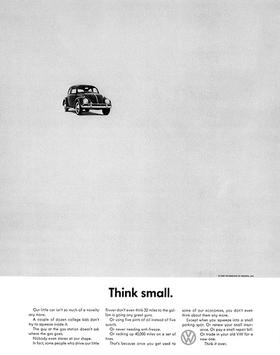
The most popular variant of the Think Small advertisement features a bare background, with only the VW Beetle in view, shifting the reader’s focus to the vehicle immediately.
(Wiki Image By Magazine, Fair use, https://en.wikipedia.org/w/index.php?curid=28042292)
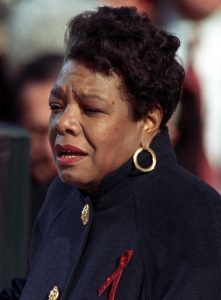
“People will forget what you said, people will forget what you did, but people will never forget how you made them feel.” — Angelou in 1993
(Wiki Image By Clinton Library – William J. Clinton Presidential Library, Public Domain, https://commons.wikimedia.org/w/index.php?curid=67072902)
Emotional Universality Marketing Quotes
Emotional Universality in marketing is the practice of tapping into feelings shared across cultures, generations, and demographics. It bypasses logic and speaks directly to the human condition (fear, love, belonging, safety, ambition).
While trends change, human nature does not. Brands that anchor themselves to these universal emotions build the strongest legacies.
Here is a collection of quotes that define this approach:
The Philosophy of Emotional Connection
| Author / Expert | The Quote | The Universal Truth |
| Maya Angelou | “People will forget what you said, people will forget what you did, but people will never forget how you made them feel.” | Memory: Emotion is the only thing that survives long-term memory. |
| Donald Calne (Neurologist) | “The essential difference between emotion and reason is that emotion leads to action while reason leads to conclusions.” | Behavior: If you want someone to think, give them facts. If you want them to buy, give them feelings. |
| Simon Sinek | “People don’t buy what you do; they buy why you do it.” | Belief: We are biologically wired to trust those who share our values and worldview. |
| Antonio Damasio (Neuroscientist) | “We are not thinking machines that feel; we are feeling machines that think.” | Biology: Every “logical” decision we make is actually filtered through an emotional lens first. |
| Dale Carnegie | “When dealing with people, remember you are not dealing with creatures of logic, but creatures of emotion.” | Nature: Even in B2B or technical fields, you are still selling to a human with insecurities and dreams. |
| Leo Burnett | “Don’t tell me how good you make it; tell me how good it makes me feel when I use it.” | Benefit: The customer is not interested in the product features, only the emotional transformation. |
The “Core Four” Universal Emotions
Marketing data (like that from the Institute of Practitioners in Advertising) suggests that campaigns focusing on these four universal themes consistently outperform rational ones:
- Happiness/Joy: (Coca-Cola, McDonald’s) – Promotes sharing and virality.
- Sadness/Empathy: (Charities, Insurance) – Builds deep trust and connection.
- Fear/Surprise: (Security, News) – Triggers immediate instinctual action.
- Anger/Injustice: (Activism, Political campaigns) – Mobilizes tribes to fight a common enemy.
The Legacy Connection
How does this connect to your previous interest in Legacy?
- Facts Fade: You likely cannot quote a specific Volkswagen ad from 1960, but you remember the feeling of their “Think Small” campaign (humility, honesty).
- Trans-Generational: Universal emotions (like a parent’s love for a child) are the same in 1920 as they are in 2024. Brands that speak this language (e.g., Johnson & Johnson) do not need to reinvent their core message every decade.
Would you like to explore “Brand Archetypes” (The Hero, The Caregiver, The Rebel)? This is the specific framework marketers use to assign a human personality to a corporation.
Emotional Universality Marketing History
While content marketing educates, PR manages perception, and anti-marketing rebels, Emotional Universality seeks to bypass logic, language, and cultural barriers entirely. It is the practice of anchoring a brand to core human feelings—such as love, fear, joy, parental instinct, or the desire for belonging—that resonate with everyone, regardless of their demographic or geography.
Instead of selling a product’s features, this discipline sells a shared human experience. Here is a timeline of how marketing shifted from rational arguments to universal emotional triggers.
The Early 1900s: From Logic to Longing
Before the 20th century, most advertisements were highly rational, text-heavy lists of product features, ingredients, and prices. The shift toward emotion began when marketers realized that human desires were far more persuasive than facts.
- 1911 – Woodbury Soap and the Desire for Intimacy: The J. Walter Thompson agency created an ad for Woodbury’s Facial Soap with the headline, “A Skin You Love to Touch.” Instead of focusing on the soap’s cleaning properties, the campaign featured a romantic illustration of a couple. It was one of the first times a product was explicitly sold on the universal human desire for romantic connection and physical touch.
- 1920s – John B. Watson and the Psychology of Fear: Pioneering behavioral psychologist John B. Watson left academia to work for the J. Walter Thompson agency. He applied his theories of human behavior to advertising, realizing that tapping into three universal innate emotions—fear, rage, and love—could compel people to buy. He pioneered campaigns for Johnson & Johnson that used the universal fear of infection to sell baby powder to anxious mothers.
The 1950s – 1970s: The Global Village and Shared Harmony
As brands expanded internationally and television reached the masses, marketers needed campaigns that could work simultaneously in dozens of countries without losing their meaning in translation.
- The 1950s – The Nostalgia of Childhood: Marketers realized that, regardless of culture, nostalgia is a powerful, universal anchor. Brands like Disney built empires not just on cartoons, but on the universal desire of adults to return to the innocence and safety of childhood, and to share that feeling with their own children.
- 1971 – Coca-Cola’s “Hilltop” Ad: During the height of the Vietnam War and global cultural friction, Coca-Cola released its famous “I’d Like to Buy the World a Coke” commercial. It featured young people from all over the globe standing on a hilltop in Italy, singing about harmony. It didn’t pitch the taste of the soda; it pitched a universal yearning for peace, unity, and shared joy.
- 1979 – “Mean Joe Greene”: Coca-Cola struck emotional gold again with a commercial featuring an intimidating, exhausted American football player and a timid young boy who offers him a Coke. The player softens and throws the boy his jersey. The ad succeeded wildly because the emotional arc—a formidable figure showing unexpected gentleness to a child—is universally understood.
The 1990s – 2000s: Archetypes and The Hero’s Journey
In this era, brands began utilizing ancient, universal storytelling frameworks—specifically the “Hero’s Journey”—to make consumers feel like the protagonists of their own lives.
- 1992 – Nike and Universal Perseverance: Nike fully embraced the “Hero” archetype. Campaigns like “Find Your Greatness” did not rely on American-centric sports logic; they showed everyday people across the globe pushing through sweat, physical limitations, and self-doubt. The struggle to overcome obstacles is a universally understood human condition.
- 1997 – Apple’s “Think Different”: Apple anchored its brand to the universal archetype of the “Rebel” and the “Creator.” By aligning their brand with figures like Einstein, Gandhi, and Picasso, they tapped into the universal human desire to be recognized as unique, visionary, and unbound by the status quo.
The 2010s – Present: Empathy and The Human Condition
Modern emotional universality often relies on documentary-style realism to evoke profound empathy, focusing on self-worth, parental sacrifice, and societal pressures.
- 2004 – Dove’s “Campaign for Real Beauty”: Dove recognized that the feeling of physical inadequacy was a nearly universal experience for modern women. They launched campaigns featuring women of all shapes, sizes, and ages, shifting their brand from selling soap to validating universal human worth and self-acceptance.
- 2012 – P&G’s “Thank You, Mom”: For the London Olympics, Procter & Gamble released an ad showing mothers from different continents waking up early, doing laundry, and comforting their children through athletic failures until they finally reached the Olympic stage. It became one of the most shared campaigns in history because maternal sacrifice and the desire to see a child succeed require no translation.
Would you like to explore how specific archetypes (like the Hero, the Caregiver, or the Rebel) are assigned to modern brands, or look into the psychological risks of getting emotional marketing wrong?
Emotional Universality Marketing Innovation
The concept of emotional universality has always been the holy grail of advertising, but the innovation today lies in how it is achieved. We are moving past the era of broad, manipulative tear-jerkers. In a landscape saturated with automated algorithms and profound digital fatigue, consumers have developed highly sensitive defense mechanisms. Innovation in this space means systematically identifying and scaling the raw, undeniable human truths that transcend demographics, using technology to deliver them at the exact right moment.
Here is how the pursuit of emotional universality is driving modern marketing:
1. Predictive Emotion Mapping
Segmentation is no longer just about age, location, or income; it is about current emotional states. Advanced analytics and contextual proxies (like scrolling speed, time of day, calendar density, and local weather) are allowing brands to engage in “predictive intent.” An algorithm can predict if a user is likely stressed during a morning commute or relaxed on a Sunday afternoon, dynamically altering its messaging to offer exactly what is universally craved in that specific moment—be it a sense of relief, hyper-efficiency, or calm.
2. Content Marketing as Radical Empathy
The sheer volume of digital noise has forced a hard pivot in content marketing. Instead of churning out endless, SEO-stuffed articles, innovative brands are producing content rooted in radical empathy. By focusing on shared human struggles, unspoken anxieties, or collective joys (like the universal desire for a simpler life or the shared frustration of modern work), content is designed to make the consumer feel deeply understood. This shifts the dynamic from a transactional vendor to an empathetic ally.
3. Sonic Signatures and Sensory Triggers
Emotional universality often bypasses logic entirely, hitting the subconscious first. This is fueling a massive resurgence in sonic branding. The traditional jingle has evolved into sophisticated, universally recognizable soundscapes—think of the precise, satisfying audio feedback of a premium app interface, or a two-second audio hook on a short-form video. These sensory cues deliberately cross language barriers to instantly evoke universal feelings of nostalgia, safety, or anticipation before the consumer even processes a single word of text.
4. Designing for Emotional Regulation
Visual hierarchy is no longer just a structural tool to drive a user’s eye toward a “Buy Now” button; it is being engineered for emotional regulation. Brands are strictly auditing their digital and physical spaces to measure how colors, typography, and spatial rhythm actually make people feel. A chaotic, high-contrast layout might be intentionally used to simulate the universal thrill of a “treasure hunt,” while ample whitespace, muted tones, and smooth scrolling transitions are deployed to create a universally calming, cognitive “safe space” in an otherwise high-stress digital world.
5. The Maturation of Lifestyle Branding
Historically, lifestyle branding relied on projecting a highly curated, aspirational aesthetic. Today’s innovation lies in grounding the brand in foundational human motivators—such as Maslow’s concepts of belonging, security, or self-actualization. Brands are achieving global resonance not by selling a uniform look, but by providing the emotional scaffolding that helps consumers navigate their real, unpolished, and complex daily realities.
6. PR as Applied Emotional Intelligence
In an era of rapid polarization and fragile consumer confidence, modern PR has shifted from simply managing corporate reputation to actively demonstrating high-level emotional intelligence. When cultural tensions arise, boilerplate corporate statements are harshly penalized by a skeptical public. Strategic PR now demands transparent, vulnerable communication that directly addresses the universal emotions of the moment—whether that is validating public frustration, acknowledging fear, or championing a shared desire for fairness.
Would you like to explore how to practically apply predictive emotion mapping to a specific campaign, or look into the psychological principles behind designing visual hierarchies for emotional regulation?
Emotional Universality Marketing Legacy
While many marketing strategies rely on logic—highlighting a product’s features, price, or convenience—the legacy of emotional universality holds that human beings are fundamentally driven by feelings. This approach bypasses rational debate entirely, connecting a brand to shared human experiences—like love, fear, nostalgia, belonging, or triumph—that transcend demographics, geography, and language.
Foundational Milestones
The most enduring campaigns in advertising history succeeded not because they had the best product, but because they understood that while markets constantly fragment, human nature remains remarkably constant.
- Kodak and the “Kodak Moment” (Late 19th/20th Century): George Eastman didn’t just market cameras and chemical film; he marketed nostalgia. By framing photography as the ultimate tool to freeze time, Kodak tapped into the universal human desire to preserve fleeting memories and familial bonds, making their product indispensable to the modern family.
- Coca-Cola’s “Hilltop” Ad (1971): Featuring a diverse group of young people singing “I’d Like to Buy the World a Coke” on a hilltop in Italy, this campaign didn’t mention the taste or price of the soda. Instead, during a deeply fractured era defined by the Vietnam War and civil unrest, it tapped into a universal yearning for global harmony, peace, and shared humanity.
- Nike’s “Just Do It” (1988): Before this campaign, fitness marketing was largely instructional and focused on elite physical performance. Nike revolutionized the industry by pivoting to the universal, internal human struggle. They didn’t sell shoes; they sold the emotional triumph of overcoming self-doubt, laziness, and personal obstacles, making everyone an “athlete.”
- Mastercard’s “Priceless” (1997): By listing the prices of mundane items and contrasting them with an invaluable shared experience (like taking a child to a baseball game), Mastercard brilliantly tackled the inherently cold, transactional nature of a credit card. It grounded the brand in the universal truth that the most meaningful moments in life cannot be bought.
Shaping Modern Brand Strategy
The historical legacy of these campaigns established the emotional frameworks that guide almost all high-level brand storytelling today:
- Transcending Demographics: A campaign based solely on a product’s price point might only appeal to a specific income bracket, but universal emotions—like the protective instinct of a parent or the desire for freedom—cut across age, gender, and geographic boundaries.
- The Hero’s Journey: Modern marketing heavily relies on classic narrative structures. Brands position themselves not as the hero, but as the universal tool or mentor that helps the consumer (the actual hero) overcome their specific adversity.
- Cultivating Irrational Loyalty: When consumers form an emotional bond with a brand, their purchasing decisions become less price-sensitive and more resilient to logic or competitor features. People may forget what a company sells, but they rarely forget how a campaign made them feel.
The transition from broadcast television to personalized digital algorithms hasn’t changed the core objective. Today’s most viral, shareable content still relies entirely on triggering an immediate, universally recognized emotion to cut through the digital noise.
Would you like me to break down how a specific brand leverages a targeted emotion like nostalgia, or explore how companies attempt to measure emotional resonance in today’s data-driven landscape?
Emotional Universality Marketing YouTube Views Links, and Books
Here are the definitive YouTube examples of Emotional Universality—marketing that bypasses language and logic to target the “System 1” brain (feelings). These campaigns work in any country because they target the biological hardwiring we all share: Love, Loneliness, Grief, and Altruism.
YouTube Links: The Hall of Fame
| The Campaign | The Emotion | Views | Link |
| Edeka | “Heimkommen” (Homecoming)
A German supermarket ad about an elderly father who fakes his own death just to get his busy children to come home for Christmas. It is a masterclass in guilt, relief, and family duty. |
70M+ | Watch Video |
| P&G | “Thank You, Mom” (Best Job)
Released for the London Olympics, this ad shows the universal struggle of motherhood—early mornings, laundry, and comforting failures—before glory. It targets the universal feeling of gratitude. |
2.4M+ | Watch Video |
| Thai Life | “Unsung Hero”
Thai commercials are famous for “Sadvertising.” This film follows a man who gives money and food to strangers with no reward other than witnessing their happiness. It targets pure altruism. |
107K+ | Watch Video |
| “Parisian Love”
A story told entirely through a search bar. A man searches for “study abroad Paris,” then “translate,” then “churches in Paris,” then “how to assemble a crib.” No faces, no actors—just the universal timeline of falling in love. |
16K+ | Watch Video |
Essential Books: The Library of Emotion
- The Science of the “Gut Feeling”
“Thinking, Fast and Slow” by Daniel Kahneman
- Why read it: This is the scientific foundation of emotional marketing. Kahneman explains “System 1” (Fast, Emotional) vs. “System 2” (Slow, Logical). Marketers must target System 1 because that is where the wallet lives.
- The Philosophy of Loyalty
“Lovemarks: The Future Beyond Brands” by Kevin Roberts (Former CEO, Saatchi & Saatchi)
- Why read it: Roberts argues that “Brands” are dead because they are based on respect/trust. The future belongs to “Lovemarks”—brands that create “Loyalty Beyond Reason” (e.g., Apple, Harley Davidson) by using Mystery, Sensuality, and Intimacy.
- The Neuromarketing Manual
“Buyology: Truth and Lies About Why We Buy” by Martin Lindstrom
- Why read it: Lindstrom conducted a $7 million study using fMRI scans to see what happens in the brain when we watch ads. He proves that anti-smoking warnings actually stimulate the craving spot in a smoker’s brain, and that religion and branding light up the exact same neural pathways.
- The Irrational Playbook
“Alchemy: The Dark Art and Curious Science of Creating Magic in Brands” by Rory Sutherland
- Why read it: Sutherland (Ogilvy Vice Chairman) argues that the most effective marketing solutions are often “irrational.” Logic says “make the train faster”; Emotion says “make the journey more enjoyable” (e.g., serve champagne). He champions the “Psychological Solution” over the “Engineering Solution.”
🎯 Demographics Marketing

“If you target everyone, you target no one.” — Philip Kotler at Warsaw
(Wiki Image By Jack11 Poland – Own work, CC BY-SA 3.0, https://commons.wikimedia.org/w/index.php?curid=7851311)
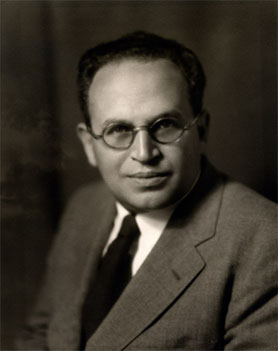
Sociologist Paul Lazarsfeld pioneered audience measurement for radio. He realized that different demographic groups listened to different shows at different times of the day. This hard data led to the explicit targeting of housewives during daytime broadcasts and working men in the evening.
(Wiki Image Fair use, https://en.wikipedia.org/w/index.php?curid=27575124)
Demographics Marketing Quotes
Here are the definitive quotes on Demographics, illustrating the science of sorting people into buckets—and the danger of assuming everyone in the bucket acts the same.
The Science of Sorting (Who You Are)
| Quote | Speaker | Context |
| “If you target everyone, you target no one.” | Philip Kotler
(Father of Modern Marketing) |
The foundational rule of demographics. You cannot sell a “car for everyone.” A minivan is for a “Mom”; a Corvette is for a “Mid-Life Crisis.” Demographics force you to pick a lane. |
| “Know your customer better than they know themselves.” | Steve Jobs | This is the goal of data. If you know a woman is 30, pregnant, and lives in the suburbs (Target can predict this based on her purchases), you can send her coupons for diapers before she even tells her friends. |
| “Demographics explain ‘who’ buys. Psychographics explain ‘why’ they buy.” | Unknown
(Marketing Maxim) |
Demographics (Age 18-24) tell you where to put the ad (TikTok). Psychographics (Values: Environmentalism) tell you what to say in the ad. You need both to unlock the wallet. |
The “Ozzy vs. Charles” Problem (The Trap)
| Quote | Speaker | Context |
| “Marketing to a demographic is a lazy shortcut.” | Seth Godin | The most famous critique of demographics. Godin argues that “Men over 50” is useless. Ozzy Osbourne and King Charles are both British men, born in 1948, wealthy, and famous. But they buy very different things. |
| “Don’t count the people you reach; reach the people who count.” | David Ogilvy | Demographics often chase “Volume” (Millennials are a huge group!). Ogilvy argued for “Value.” It is better to reach 100 people who actually need your product (e.g., golfers) than 10,000 random people who fit the age bracket. |
| “There is no ‘average’ customer.” | Todd Rose
(The End of Average) |
If you design a cockpit for the “average” pilot, it fits no one. If you design a marketing campaign for the “average” woman, it feels generic. Demographics often create a “Frankenstein” customer that doesn’t exist in real life. |
Demographics Marketing History
While Emotional Universality tries to find the common thread that unites everyone, Demographic Marketing does the exact opposite. It is the practice of dividing the massive, faceless public into specific, targetable groups based on quantifiable traits like age, gender, income, education, and geography.
If PR manages a brand’s reputation and Cultural Engineering shapes society, demographic marketing asks a very practical question: “Who exactly is holding the wallet, and where do they live?”
Here is a timeline of how marketing shifted from broadcasting to the masses to narrow targeting of specific groups.
The Early 1900s: The Dawn of Market Research
Before the 1920s, “mass marketing” was the default. Companies placed ads in national magazines or newspapers and simply hoped the right person saw them. The concept of dividing audiences was still in its infancy.
- 1920s – Daniel Starch and the Starch Test: Advertising researcher Daniel Starch revolutionized the industry by conducting face-to-face interviews to see who was actually reading which ads in magazines. He began categorizing readers by income, gender, and marital status, proving with hard data that ads performed radically differently across readers’ demographic profiles.
- 1930s – Paul Lazarsfeld and Radio Ratings: Sociologist Paul Lazarsfeld pioneered audience measurement for radio. He realized that different demographic groups listened to different shows at different times of the day. This hard data led to the explicit targeting of housewives during daytime broadcasts and working men in the evening.
The 1940s – 1950s: The Invention of the “Teenager”
Historically, marketing only recognized two distinct groups: children (who had no money) and adults (who made the purchases). The post-WWII economic boom changed everything.
- 1944 – Seventeen Magazine: The launch of Seventeen magazine helped solidify the concept of the “teenager” as a distinct, lucrative demographic. Marketers realized that post-war youth suddenly had their own disposable income and immense influence over family purchases. Entire industries—from music to fashion to fast food—pivoted to capture this newly defined age bracket.
- The 1950s – The Baby Boom: The massive explosion in the birth rate created a highly predictable, enormous demographic wave. Marketers aggressively targeted young parents moving to the newly built suburbs, focusing heavily on household appliances, family cars, and baby products. This essentially engineered the modern demographic profile of the “American middle class.”
The 1970s – 1980s: Zip Codes and Generational Cohorts
As mass media began to fragment with the rise of hundreds of cable TV channels and specialized magazines, marketers needed much more granular data to find their customers.
- 1974 – Claritas and PRIZM: Jonathan Robbin founded Claritas and created the PRIZM system (Potential Rating Index for Zip Markets). By combining U.S. Census data with zip codes, PRIZM categorized every American neighborhood into specific socio-economic segments with highly descriptive names like “Blue Blood Estates,” “Shotguns & Pickups,” or “Young Suburbia.” Marketers could now send direct mail exclusively to specific tax brackets based purely on where they lived.
- 1980s – Generational Marketing: This era saw the codification of marketing to specific generational cohorts. As the Baby Boomers aged, marketers shifted from treating age as a fluid number to treating generations as distinct cultures with unique values. This paved the way for the modern industry obsession with defining and targeting “Gen X,” “Millennials,” and “Gen Z.”
The 1990s – Present: Hyper-Segmentation and Psychographics
The internet destroyed the need for broad demographic assumptions, replacing them with hard, granular behavioral data.
- 2000s – Social Media Profiling: Platforms like Facebook and early digital ad networks allowed advertisers to target users not just by a broad age range or zip code, but by highly specific demographic intersections (e.g., “married women aged 25-34 in Chicago who recently had a baby and hold a college degree”).
- Present Day – The Limits of Demographics: Today, pure demographic marketing is often viewed as too broad, or even prone to lazy stereotyping. For example, King Charles and Ozzy Osbourne are both wealthy British men born in 1948 who have been married twice—they share the exact same demographic profile, but their buying habits are wildly different. Consequently, modern marketers now blend demographics with psychographics (values, interests, and lifestyles) and behavioral data (what a user actually clicks on).
Would you like to look closer at how systems like PRIZM categorize neighborhoods, or explore the differences between demographic targeting and modern psychographic targeting?
Demographics Marketing Innovation
The way brands approach demographic marketing has fundamentally changed. We are rapidly moving away from rigid, static buckets—like age, gender, and income—and entering an era of “post-demographic” consumerism. Today, technology allows marketers to see that shared behaviors, values, and real-time contexts are far stronger predictors of purchase intent than traditional census data.
Here is how demographic marketing is innovating right now:
1. The Rise of “Post-Demographic” Consumerism
Consumers today construct their identities much more fluidly than in the past, meaning traditional demographic indicators no longer dictate behavior. A 60-year-old and a 20-year-old might share the exact same algorithmically curated Spotify playlist, buy the same tech, and subscribe to the same digital creators. Innovative marketers are abandoning broad demographic assumptions and instead building “tribes” based on shared passions, values, and lifestyle choices, completely agnostic of age or location.
2. AI-Driven Behavioral Prediction Over Static Profiling
In the past, a marketer might target “suburban moms aged 30-45.” Today, AI enables dynamic behavioral segmentation. Machine learning models analyze thousands of micro-behaviors—such as scrolling speed, time of day, search history nuances, and past interactions with specific content formats. This means brands no longer target who you are on paper; they target what you are doing and what you are statistically most likely to do next.
3. The End of Generational Stereotyping
Broad generational labels (like “Gen Z acts like this” or “Baby Boomers want this”) are becoming obsolete in advanced marketing. By assigning a single, monolithic personality to billions of people based simply on their birth year, brands often alienate consumers with lazy stereotypes. The innovation lies in “ageless marketing,” where campaigns are engineered around specific life stages (e.g., buying a first home, navigating a career change, or retiring) or specific mindsets, rather than the year someone was born.
4. Zero-Party Data and “Consensual Profiling”
With the deprecation of third-party cookies and rising privacy concerns, stealthy data scraping is losing its viability. The new frontier is “zero-party data”—information a customer intentionally and proactively shares with a brand. Innovation here looks like gamified preference centers, interactive quizzes, and transparent value exchanges (e.g., “Tell us your exact skin type and routine, and we will formulate a custom product for you”). It transforms demographics from something secretly extracted into something collaboratively built.
5. Dynamic Contextual Segmentation
Demographics used to be treated as permanent traits. Now, segmentation is highly contextual and transient. A consumer might fall into a “budget-conscious” segment while grocery shopping on a Tuesday, but shift into a “premium luxury buyer” segment when booking a vacation on a Friday night. Modern marketing engines recognize these dualities and dynamically adjust messaging, pricing, and visual hierarchy to match the consumer’s immediate, real-time context rather than their fixed annual income.
Would you like to dive deeper into how brands are successfully collecting zero-party data without creating friction, or explore strategies for building post-demographic “tribes” based on shared values?
Demographics Marketing Legacy
While early mass marketing assumed a monolithic audience—broadcasting a single message to as many people as possible—the legacy of demographic marketing is built on the realization that consumers are not created equal. By dividing populations into measurable segments based on age, income, gender, education, and geography, marketers shifted from blindly shouting into a crowd to strategically whispering to specific groups.
Foundational Milestones
The transition from “mass market” to “segmented market” fundamentally changed how products were designed and sold, driven by a few key historical shifts:
- Charles Coolidge Parlin and Early Market Research (1910s): Often called the “father of market research,” Parlin was hired by the Curtis Publishing Company to gather hard data on consumer habits. By physically counting soup cans in garbage dumps and tracking agricultural sales, he proved to advertisers that understanding who was buying (and where) was far more valuable than simply guessing.
- General Motors’ “A Car for Every Purse and Purpose” (1920s): Henry Ford dominated the early auto industry with the Model T by using a pure mass-market strategy (“Any customer can have a car painted any color that he wants so long as it is black”). GM’s Alfred P. Sloan revolutionized business by segmenting the market demographically. He created a tiered brand hierarchy (Chevrolet for the working class, Pontiac and Oldsmobile for the middle class, Cadillac for the wealthy), effectively inventing the modern concept of market segmentation and the “upgrade” path.
- The Invention of the “Teenager” (1940s–1950s): Before World War II, young people were generally marketed as children or adults. In the post-war economic boom, a new demographic emerged: adolescents with disposable income and leisure time. Marketers aggressively targeted this newly defined “teenager” demographic, which completely restructured the music (rock and roll), fashion, and fast-food industries.
- Geodemographic Segmentation and PRIZM (1970s): The creation of the PRIZM system by Claritas merged US Census data with zip codes to map consumer behavior geographically. It operated on the premise that “birds of a feather flock together,” classifying neighborhoods into distinct demographic profiles (with catchy names like “Blue Blood Estates” or “Shotguns & Pickups”). It proved that where you live is a highly accurate predictor of what you buy.
Shaping Modern Brand Strategy
The historical foundation of dividing and conquering populations established the strict, data-driven frameworks that eventually built the modern digital economy:
- The Generational Shorthand: Demographic marketing cemented the practice of targeting distinct generational cohorts (Baby Boomers, Gen X, Millennials, Gen Z). Brands now routinely design entire campaigns around the broad, assumed life stages and economic realities of these specific age brackets.
- Resource Allocation: Understanding demographics moved marketing from an art to a science. It allowed companies to stop wasting advertising budgets on demographics that would never buy their product, optimizing the return on investment.
- The Bridge to Psychographics: The ultimate legacy of demographic marketing is that it highlighted its own limitations. Marketers eventually realized that two 40-year-old men with the same income living in the same zip code might have entirely different hobbies and values. This realization forced the evolution from strict demographics (who the buyer is) to psychographics (why the buyer buys).
The transition from physically mailing surveys and analyzing census tracts to utilizing the hyper-targeted algorithms of social media platforms represents an evolution in speed and scale, but the fundamental strategy remains: identify a specific group, understand their resources, and tailor the pitch exclusively to them.
Would you like to explore the shift from demographics to psychographics, or dive deeper into how the creation of the “teen” demographic reshaped consumer culture in the 1950s?
Demographics Marketing YouTube Views Links, and Books
Here are the definitive YouTube examples of Demographics Marketing—campaigns that either perfectly captured a specific generational life-stage, or brilliantly subverted expectations by targeting the buyer rather than the user.
YouTube Links: The Hall of Fame
| The Campaign | The Concept | Views | Link |
| Old Spice | “The Man Your Man Could Smell Like”
Old Spice’s data revealed that 60% of men’s body wash was actually purchased by women. Instead of marketing to the male demographic (the end-user), they created a surreal, theatrical ad targeting the female demographic (the buyer). It saved a dying, nostalgic brand. |
60M+ | Watch Video |
| Progressive | “Dr. Rick” (Parentamorphosis)
A hyper-targeted masterclass aimed precisely at Millennials. Progressive realized this demographic was aging into homeownership and was terrified of “turning into their parents.” They created a fake life coach to help new homeowners avoid suburban clichés. |
2M+ | Watch Video |
| Nintendo Wii | “Wii Would Like to Play”
While Xbox and PlayStation were fighting a bloody war over the “hardcore teenage boy” demographic, Nintendo completely pivoted. They marketed their new console to grandparents, moms, and families, unlocking a massive, entirely ignored demographic. |
5M+ | Watch Video |
Essential Books: The Library of Segmentation
- The Data-Driven Blueprint
“Generations: The Real Differences Between Gen Z, Millennials, Gen X, Boomers, and Silents” by Dr. Jean M. Twenge
- Why read it: Twenge analyzes data on 39 million people to debunk the myth that historical events (like wars or recessions) are what shape demographics. She argues that technology is the underlying driver of generational behavior, providing a crystal ball for marketers trying to predict the future.
- The Millennial Shift
“Marketing to Millennials: Reach the Largest and Most Influential Generation of Consumers Ever” by Jeff Fromm and Christie Garton
- Why read it: It breaks down the transition from passive consumers (Boomers/Gen X) to active co-creators (Millennials and Gen Z). It explains why traditional top-down advertising fails on a demographic that demands authenticity, transparency, and peer validation.
- The Forgotten Wealth
“Generation Reinvention: How Boomers Today Are Changing Business, Marketing, Aging and the Future” by Brent Green
- Why read it: The advertising industry is obsessed with youth, yet Baby Boomers hold the vast majority of disposable income. This book explains how to market to an aging demographic without insulting them, shifting the narrative from “decline” to “reinvention.”
- The Danger of Buckets
“The End of Average: How We Succeed in a World That Values Sameness” by Todd Rose
- Why read it: While not strictly a marketing book, this is the ultimate warning against relying too heavily on demographic buckets. Rose proves mathematically that designing a product or campaign for the “average” person (e.g., the average 18-34-year-old female) means designing for absolutely nobody.
Would you like to explore the “Death of the Middleman” (Direct-to-Consumer) examples next, or dive deeper into the psychological frameworks used to target a specific generation?
🔗❌ Death of the Middleman Marketing
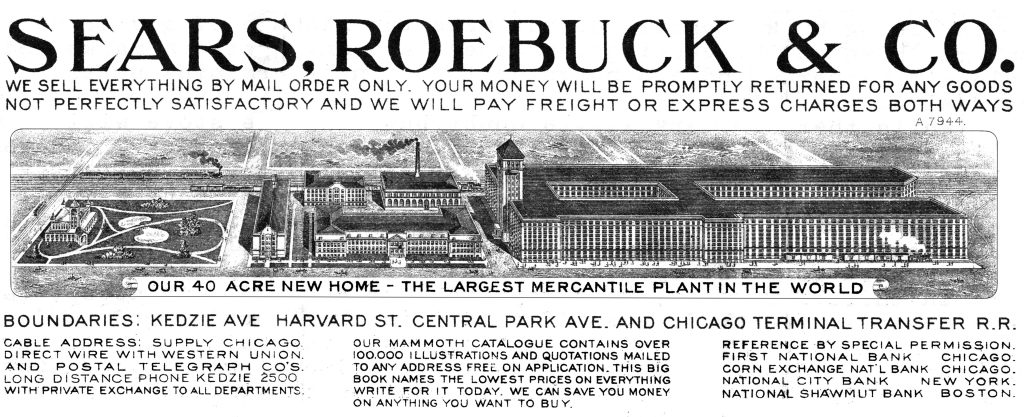 Logo used in 1907
(Wiki Image By Sears, Roebuck & Co. – “The Cooper Collections ” (uploader’s private collection)Digitized by Centpacrr, Public Domain, https://commons.wikimedia.org/w/index.php?curid=28063231)
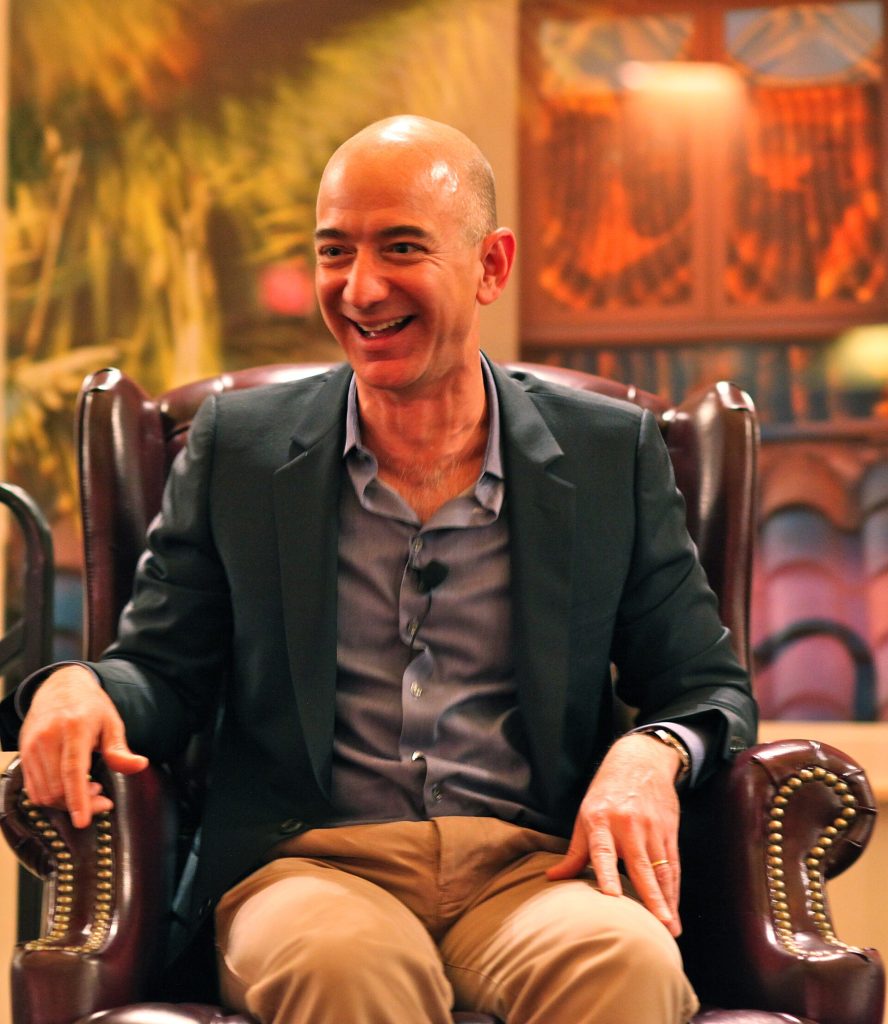
“Your margin is my opportunity” — Jeff Bezos, 2010
(Wiki Image By Steve Jurvetson – Flickr: Bezos’ Iconic Laugh, CC BY 2.0, https://commons.wikimedia.org/w/index.php?curid=21166413)
Death of the Middleman Marketing Quotes
Here are the definitive quotes on The Death of the Middleman, also known as the Direct-to-Consumer (DTC) revolution. This movement is based on a simple economic realization: if you own the factory and the website, you don’t need the store.
The Economics of “Cutting Out the Fat”
| Quote | Speaker | Context |
| “We realized we could cut out all the middlemen, all the unnecessary markups, design the product that we would love to wear, and sell it directly to consumers for $95.” | Neil Blumenthal
(Co-Founder, Warby Parker) |
The quote that launched a thousand startups. Before Warby Parker, Luxottica controlled 80% of the eyewear market, marking up $5 frames to $400. Blumenthal proved that the high price wasn’t quality; it was inefficiency. |
| “Your margin is my opportunity.” | Jeff Bezos
(Founder, Amazon) |
The most threatening quote in business history. Bezos realized that traditional retailers (like Barnes & Noble or Circuit City) needed high profit margins to pay for physical stores and staff. Amazon didn’t. He used their “fat” prices to fund his low-price takeover. |
| “There are two kinds of companies: those that work to try to charge more and those that work to charge less. We will be the second.” | Jeff Bezos | Traditional luxury brands (Middleman model) try to increase prestige by raising prices. DTC brands (Disintermediation model) try to increase volume by lowering barriers. |
The Relationship Revolution (Data & Truth)
| Quote | Speaker | Context |
| “We don’t just sell razors. We sell a membership to a better bathroom experience.” | Michael Dubin
(Founder, Dollar Shave Club) |
Dubin realized that when you sell through a middleman (e.g., selling Gillette at CVS), you are a “product on a shelf.” When you sell Direct-to-Consumer, you are a “club.” You own the customer’s email, their birthday, and their loyalty. |
| “The middleman prevents the truth.” | DTC Maxim | In traditional retail, if a customer hates the product, they tell the store clerk. The brand never hears it. In DTC, the brand reads every tweet and review. This “Direct Feedback Loop” allows DTC brands to iterate on products 10x faster than giants like P&G. |
| “It’s not about shipping a box. It’s about delivering an unboxing experience.” | Emily Weiss
(Founder, Glossier) |
When you cut out the middleman, the FedEx box becomes the retail store. Glossier became a billion-dollar company by designing pink bubble-wrap packaging that customers felt compelled to photograph and share on Instagram. |
The 3 Pillars of the “Middleman Death”
- Price Arbitrage: By removing the wholesaler and the retailer (who each take a 50% cut), you can sell a $300 product for $95 and still make more profit than the incumbent.
- Data Ownership: You know exactly who bought your product, where they live, and when they need a refill. A store like Walmart will never share that data with a brand like Coke.
- Brand Control: You control the story from the Instagram ad to the “Thank You” note in the box. There is no sullen teenage store clerk to ruin the experience.
How Warby Parker Grew From Eyeglasses Upstart To $1.8 Billion Business Warby Parker Origins and DTC Business Model
This video is relevant because it provides a documentary-style breakdown of how Warby Parker’s founders systematically dismantled the licensing and retail monopoly (Luxottica) to invent the modern Direct-to-Consumer model.
Death of the Middleman Marketing History
While Demographic Marketing asks who is buying, the Death of the Middleman (also known as Disintermediation or Direct-to-Consumer/DTC marketing) asks a structural question: “Why are we paying someone else to sell our product?”
For most of commercial history, manufacturers relied on a complex chain of wholesalers, distributors, and brick-and-mortar retailers to get their goods to the public. The “Death of the Middleman” is the history of brands bypassing that traditional supply chain to market, sell, and ship directly to the end user—reclaiming their profit margins and taking total control of the customer relationship.
Here is a timeline of how marketing evolved to cut out the retail middleman.
The Late 1800s: The Mail-Order Pioneers
Before the internet, the ultimate barrier to direct sales was geography. If you lived in rural America, your only option was the local general store, which marked up prices heavily because it was the only middleman in town.
- 1872 – Montgomery Ward: Aaron Montgomery Ward realized he could bypass general stores entirely by buying goods wholesale and selling them directly to farmers through a single-sheet mail-order catalog.
- 1888 – Sears, Roebuck & Co.: Richard Sears took this concept and turned it into an empire. The Sears catalog became the “Amazon of its day,” growing to hundreds of pages. By marketing directly to consumers through the mail and using the expanding railroad network for delivery, Sears destroyed local retail monopolies and revolutionized mass consumption.
The 1950s – 1980s: Direct Response and the Infomercial
With the rise of television, marketers found a new way to bypass the department-store shelf: speak directly to viewers in their living rooms and demand immediate action.
- The 1950s – Ronco and “Wait, There’s More!”: Inventor Ron Popeil pioneered Direct Response Television (DRTV). Instead of paying a retailer to stock his Chop-O-Matic or Veg-O-Matic, he bought cheap, late-night TV airtime. By demonstrating the product’s value directly to consumers and providing a phone number for immediate ordering, he eliminated the need for a physical store.
- 1980s – QVC and HSN: The launch of the Home Shopping Network and QVC turned the TV itself into a 24/7 direct-to-consumer storefront. They engineered a high-pressure, interactive marketing environment (using live countdown clocks and limited inventory) that bypassed traditional retail completely.
The 1990s – 2000s: The E-Commerce Disruption
The advent of the internet provided the ultimate infrastructure for disintermediation. A company no longer needed a massive catalog-printing budget or TV airtime; it just needed a website.
- 1990s – Dell Computers: While companies like IBM and HP sold their computers through big-box electronics retailers (the middlemen), Michael Dell revolutionized the industry by selling custom-built PCs directly to consumers over the phone and, later, the internet. Because Dell didn’t have to share profits with a retailer or hold vast amounts of pre-built inventory, it could offer better computers at significantly lower prices.
- Late 1990s – The Travel Industry Upheaval: One of the first industries to experience the true “death of the middleman” was travel. The rise of sites like Expedia and Travelocity allowed consumers to book flights directly, effectively decimating the traditional brick-and-mortar travel agency model.
The 2010s: The Golden Age of DTC (Direct-to-Consumer)
This era saw the birth of the modern DTC playbook. Fueled by cheap venture capital and the incredibly precise targeting of Facebook and Instagram ads, a new wave of startups set out to disrupt sleepy, monopoly-heavy industries.
- 2010 – Warby Parker: They disrupted the notoriously monopolized eyewear industry by sending frames directly to consumers’ homes to try on for free. They bypassed the optometrist’s office entirely.
- 2011 – Dollar Shave Club: In a legendary launch video (which also leaned heavily on Anti-Marketing humor), founder Michael Dubin explicitly called out the high price of razor blades at the drugstore. By offering a cheap, direct-to-door subscription, they successfully bypassed retail giants like Gillette.
- The “Blanding” Aesthetic: Throughout the 2010s, brands like Casper (mattresses), Glossier (makeup), and Allbirds (shoes) utilized the same marketing playbook: minimalist sans-serif logos, pastel color palettes, and relatable social media copy. They marketed themselves not just as products, but as tech-forward lifestyle brands rescuing consumers from the terrible retail experiences of the past.
The 2020s – Present: The Omnichannel Irony
Today, the “Death of the Middleman” narrative has hit a highly ironic plot twist.
- The Rising Cost of CAC: As privacy changes (like Apple’s iOS 14 update) made digital ads less effective, the Customer Acquisition Cost (CAC) for DTC brands skyrocketed. It suddenly became too expensive to rely solely on Facebook ads to find new buyers.
- The Return to Retail: To survive, the brands that swore to destroy the middleman had to partner with them. Today, you will find Harry’s Razors in Target, Casper mattresses in big-box stores, and Warby Parker opening hundreds of their own physical, brick-and-mortar locations. The strategy has shifted from pure DTC to “Omnichannel”—being everywhere the customer is, both online and off.
Would you like to explore the specific metrics (like Customer Acquisition Cost and Lifetime Value) that govern modern DTC marketing, or look at how a specific legacy brand defended itself against a DTC disruptor?
Since we’ve explored how brands like Apple and Tesla have cut out the middleman, would you like to look at how this shift has impacted the design of modern “Experience Centers” compared to traditional retail stores?
Death of the Middleman Marketing Innovation
The “death of the middleman”—formally known as economic disintermediation—is fundamentally rewiring how brands go to market. For decades, companies relied on a massive web of wholesalers, ad agencies, and retail gatekeepers to get their products in front of consumers. Today, technology has made those intermediaries largely obsolete, shifting the focus from mass distribution to direct connection.
In a way, this trend mirrors the obsessive push for vertical integration seen among the “robber barons” of the Gilded Age. Just as those industrialists sought to own every single step of their supply chains—from raw materials to the final railroad delivery—to maximize control and profits, modern brands are using digital infrastructure to completely bypass third-party gatekeepers and own the entire customer experience from end to end.
Here is how the death of the middleman is driving marketing innovation today:
1. The Shift from Rented Attention to Owned Communities
When a brand sells through a massive retailer (the middleman), they are essentially renting shelf space and relying on the retailer’s foot traffic. Without that middleman, the brand must become the destination itself. Marketing innovation is currently focused on building “owned communities”—using platforms like Discord, proprietary apps, and niche newsletters. Brands are no longer just marketing a product; they are facilitating a lifestyle hub where the community generates the gravity that pulls in new buyers.
2. The Rise of “Zero-Party” Data Monopolies
In the traditional retail model, the middleman owns the customer data. The manufacturer rarely knows exactly who bought their product, why they bought it, or what they want next. Disintermediation solves this by allowing brands to collect first-party and “zero-party” data (information customers willingly share). Marketers are using interactive quizzes, digital fitting rooms, and direct SMS channels to build impossibly rich customer profiles, allowing for hyper-personalized product development and marketing that a traditional retailer could never match.
3. Fulfillment as a Marketing Channel
Without a brick-and-mortar store to provide an experiential aesthetic, the product’s physical delivery becomes the primary touchpoint. Marketing teams are taking over logistics. The “unboxing experience” is now heavily engineered for social sharing, turning sustainable packaging, clever insert cards, and personalized thank-you notes into highly effective, organic marketing campaigns that turn a simple delivery into a brand-defining moment.
4. Agile Storytelling and the Instant Feedback Loop
Traditional retail marketing requires months of lead time to coordinate campaigns across various third-party distributors. Disintermediation allows for radical agility. Because a brand is speaking directly to its consumer, it can launch a product, gauge the exact emotional reaction on social media, and alter its entire marketing narrative—or even the product itself—in a matter of days. This creates a relentless, high-speed feedback loop that keeps the brand perpetually relevant.
5. Navigating the “New Middlemen” (AI Agents)
Ironically, as brands successfully kill off traditional retail middlemen, a new gatekeeper is emerging: Artificial Intelligence. Consumers are increasingly relying on AI agents (like ChatGPT, Google’s AI Overviews, or Amazon’s Rufus) to find, compare, and even purchase products for them. To survive, marketers are rapidly adopting Generative Engine Optimization (GEO) to ensure their brand is the one the AI recommends, fighting to avoid being disintermediated by the very algorithms meant to connect them to the world.
Would you like to explore the specific tactics brands use to build owned communities, or dive deeper into how Generative Engine Optimization is deployed to bypass AI gatekeepers?
Death of the Middleman Marketing Legacy
The “death of the middleman”—often called disintermediation—is a marketing legacy built on the promise of efficiency, transparency, and lower costs. Historically, products moved through a complex chain of wholesalers, distributors, and retailers. The radical shift occurred when brands realized they could bypass these layers to speak—and sell—directly to the consumer.
Foundational Milestones
The desire to “cut out the middleman” has been a driving force in commerce for over a century, evolving from rural mail-order catalogs to the modern Direct-to-Consumer (DTC) explosion.
- The Sears, Roebuck & Co. Catalog (1893): Before the “Big Book,” rural Americans were at the mercy of local general stores that often had high prices and limited selection. Richard Sears used the expansion of the railroad and the postal service to bypass local merchants. By selling directly from a central warehouse to the consumer’s doorstep, Sears became the original “Amazon,” proving that logistics could disrupt retail.
- The Factory-to-Consumer Movement (Early 20th Century): As manufacturing scaled, brands like Singer Sewing Machines and Fuller Brush bypassed traditional department stores. By employing door-to-door salesmen, these companies controlled the entire sales pitch, the demonstration, and the relationship, ensuring the middleman didn’t dilute their brand message or eat their margins.
- Dell’s “Direct Model” (1984): Michael Dell revolutionized the computer industry by selling custom-built PCs directly to consumers via telephone (and later, the internet). By bypassing retail stores, Dell eliminated “channel markup” and inventory risk. This proved that high-tech, complex products didn’t need a retail middleman to provide expert guidance if the brand itself was accessible.
- The Warby Parker / Casper Era (2010s): These brands (the “DTC darlings”) used social media to bypass traditional “big box” gatekeepers. They argued that the middleman was responsible for artificial price inflation. By owning the entire experience—from the website design to the unboxing—they turned the supply chain itself into a core marketing asset.
Shaping Modern Brand Strategy
The legacy of disintermediation has fundamentally changed how businesses operate and how consumers perceive value:
- The Data Goldmine: The most significant impact of removing the middleman isn’t just saving money; it’s the direct feedback loop. Brands that sell directly own their customer data, allowing for hyper-personalized marketing that a third-party retailer would never share.
- Brand Voice Control: Without a middleman, the brand has 100% control over the narrative. There is no risk of a disinterested store clerk misrepresenting a product or a competitor’s item being placed more favorably on a shelf.
- The “Premium-Direct” Paradox: Modern marketing has used the “no middleman” story to justify “affordable luxury.” Brands convince consumers they are getting a $500 product for $95 because the “retail markup” has been removed, making the supply chain a central part of the brand’s emotional appeal.
The transition from the Sears catalog to TikTok shops marks an era in which the “middleman” has often been replaced by a platform. While we may have cut out the wholesaler, the legacy of this movement continues as brands struggle to balance the independence of direct sales with the massive reach of modern digital marketplaces.
Would you like to explore how the “death of the middleman” has actually led to the rise of new “digital middlemen” like Amazon and Google, or discuss how DTC brands are now moving back into physical retail?
Death of the Middleman Marketing YouTube Views Links, and Books
Here are the definitive YouTube examples of the Death of the Middleman (Direct-to-Consumer / DTC)—campaigns and documentaries that show how startups used the internet, viral video, and supply-chain hacks to bypass traditional retail giants.
YouTube Links: The Hall of Fame
| The Campaign | The Concept | Views | Link |
| Dollar Shave Club | “Our Blades Are Fing Great”*
The undisputed king of the DTC launch. Michael Dubin spent $4,500 to film a hilarious, deadpan video mocking the high price and locked-glass cabinets of Gillette razors. It crashed their servers in hour one and led to a $1 billion acquisition by Unilever. |
28M+ | Watch Video |
| CNBC Make It | “How Warby Parker Grew…”
A mini-documentary on the founders who realized the eyewear industry was a monopoly (Luxottica) with massive markups. It details how they used the “Home Try-On” box to kill the need for an optometrist’s retail store. |
1.2M+ | Watch Video |
| Modern MBA | “Why DTC Startups Lose Money”
A brilliant analysis of the second phase of the DTC revolution. Using Casper Mattresses as a case study, it explores what happens when the cost of Facebook ads (the new middleman) becomes more expensive than traditional retail rent. |
1.6M+ | Watch Video |
| Glossier | “Into The Gloss to Glossier”
Emily Weiss explains how she bypassed Sephora and department stores entirely. By building an audience first through a beauty blog, she engineered a cosmetics brand where the customers were the focus group and the marketers. |
350K+ | Watch Video |
Essential Books: The Library of Disruption
- The Definitive History
“Billion Dollar Brand Club: How Dollar Shave Club, Warby Parker, and Other Disruptors Are Remaking What We Buy” by Lawrence Ingrassia
- Why read it: This is the master text on the DTC era. Ingrassia, a former New York Times editor, takes you inside the factories and boardrooms to show exactly how these agile startups outmaneuvered slow, legacy middlemen by owning the customer data and the supply chain.
- The Branding Playbook
“Obsessed: Building a Brand People Love from Day One” by Emily Heyward
- Why read it: Heyward is the co-founder of Red Antler, the branding agency behind massive DTC hits like Casper and Allbirds. She breaks down the aesthetic and psychological rules of creating a brand that people want to buy directly from an Instagram ad, focusing on transparency and solving consumer pain points.
- The Economic Reality
“The Retail Revival: Reimagining Business for the New Age of Consumerism” by Doug Stephens
- Why read it: Stephens looks at the macroeconomics of why the middleman died. He argues that the traditional department store (Sears, Macy’s) provided “access” to goods. Once Amazon granted unlimited access, the physical store had to pivot to offering an “experience” or face extinction.
- The Founder’s Perspective
“Shoe Dog: A Memoir by the Creator of Nike” by Phil Knight
- Why read it: While Nike is a legacy brand, this book perfectly illustrates the pain of the old middleman model. Half the book is Knight fighting with banks, distributors, and retailers just to get his shoes on shelves. Reading it today shows exactly why the modern DTC model is so revolutionary.
We have now mapped out all 14 pillars of this marketing curriculum, from the interruption of the Audio Jingle to the disruption of the Death of the Middleman.
Would you like me to synthesize these 14 concepts into a single, step-by-step master strategy for launching a hypothetical product?
Audio Jingle and Ad Break, Brand Trust and Certification, Visual Identity, Mass Media Advertising, Educational Marketing, Visual Hierarchy, Lifestyle Branding, Content Marketing, PR, Cultural Engineering, Anti-Marketing, Emotional Universality, Demographics, and Death of the Middleman Similarities
Here is the synthesis of the 14 pillars of marketing you have explored. While they seem like distinct disciplines, they all share the same DNA. They are all different tools designed to solve the same four biological and psychological problems in the human brain.
Here are the 4 Universal Similarities that bind these concepts together.
Similarity 1: The Conquest of “System 1” (The Fast Brain)
- The Concepts: Audio Jingle, Visual Identity, Visual Hierarchy, Emotional Universality, Lifestyle Branding.
- The Shared DNA: These tools all aim to bypass logic.
- The human brain burns too many calories thinking rationally (“System 2”). We prefer to make gut decisions (“System 1”).
- A Jingle (Ear), a Logo (Eye), and a Layout (Hierarchy) are all designed to be processed in milliseconds without conscious thought.
- Lifestyle Branding and Emotional Universality appeal to feelings (fear, love, pride) because feelings are faster than facts.
- The Common Goal: To create a reaction, not a reflection.
Similarity 2: The Reduction of Anxiety (Risk Removal)
- The Concepts: Brand Trust, Certification, Educational Marketing, Content Marketing, PR.
- The Shared DNA: These tools all aim to kill fear.
- Buying something new is a risk (What if it breaks? What if I look stupid?).
- Certification (badges) and Brand Trust (reputation) tell the brain: “You are safe here.”
- Educational Marketing and Content Marketing prove competence. By teaching you, they prove they aren’t scammers.
- PR manages the “Social Proof” so you know others trust them too.
- The Common Goal: To lower the barrier to entry so the wallet can open.
Similarity 3: The Engineering of Belonging (Tribalism)
- The Concepts: Lifestyle Branding, Cultural Engineering, Anti-Marketing, Demographics.
- The Shared DNA: These tools all aim to define the self.
- Humans are social animals; we need to know where we fit in the tribe.1
- Demographics sort us into groups.
- Lifestyle Branding gives us a uniform (e.g., Nike vs. Vans).
- Cultural Engineering tries to change what the tribe values (e.g., making diamonds a symbol of love).
- Anti-Marketing is just a different tribe—the tribe of “outsiders” who hate the mainstream.
- The Common Goal: To make the product a badge of identity. “I buy this because of who I am.”
Similarity 4: The Elimination of Noise (Efficiency)
- The Concepts: Mass Media, Death of the Middleman, Visual Hierarchy, Ad Break.
- The Shared DNA: These tools all aim to connect the signal.
- Mass Media was the brute-force way to push the signal to everyone.
- The Ad Break was the forced pause to ensure the signal was heard.
- Visual Hierarchy clears the clutter so the signal is seen.
- Death of the Middleman (DTC) removes the barriers between the creator of the signal and the receiver.
- The Common Goal: To get the message from A (Brand) to B (Brain) with the least amount of resistance.
The Grand Synthesis Table
If we look at all 14 concepts, they fit into a simple “Problem/Solution” matrix of human nature.
| The Human Problem | The Marketing Solution (The Concept) | The Mechanism |
| “I am distracted.” | Visual Hierarchy
Audio Jingle Ad Break |
Disruption
(Grab the senses) |
| “I am scared.” | Brand Trust & Certification
Educational Marketing PR |
Authority
(Prove safety) |
| “I don’t know you.” | Content Marketing
Visual Identity Mass Media |
Familiarity
(Build memory) |
| “I want to belong.” | Lifestyle Branding
Cultural Engineering Anti-Marketing |
Identity
(Signal status) |
| “I am lazy.” | Demographics
Death of the Middleman |
Convenience
(Reduce friction) |
| “I am human.” | Emotional Universality | Empathy
(Connect feelings) |
The Final Takeaway
All 14 concepts are different dialects of the same language. Whether you are using a song (Jingle), a badge (Certification), or a philosophy (Anti-Marketing), you are trying to answer the one question every consumer asks: “Why should I care, can I trust you, and does this make me better?”
Audio Jingle and Ad Break, Brand Trust and Certification, Visual Identity, Mass Media Advertising, Educational Marketing, Visual Hierarchy, Lifestyle Branding, Content Marketing, PR, Cultural Engineering, Anti-Marketing, Emotional Universality, Demographics, and Death of the Middleman Differences
While all 14 concepts share the goal of influence, they differ entirely in Mechanism (how they work), Target Organ (which part of the human they attack), and Timeline (how long they take to work).
Here is the breakdown of the differences, categorized by function.
1. The Sensory Tools (The Hook)
Difference: Which sense is being targeted?
| Concept | The Target | The Mechanism | The Goal |
| Audio Jingle | The Ear | Mnemonic (Repetition). Music is processed in the memory center. A jingle is designed to be an “Earworm” that you can’t stop humming. | Recall. To make you remember the name when you aren’t looking. |
| Visual Identity | The Eye | Symbolism (Recognition). Logos and colors are processed faster than text. They act as a flag or uniform. | Identification. To make you spot the product on a crowded shelf. |
| Visual Hierarchy | The Brain | Processing (Order). This is the invisible hand that guides the eye: “Look at this Big Red Button first.” | Action. To reduce cognitive load so you click “Buy” without thinking. |
2. The Delivery Methods (The Approach)
Difference: Do I force you to look, or do I invite you in?
| Concept | The Strategy | The Mechanism | The Dynamic |
| Mass Media / Ad Break | Interruption | The “Brute Force” Attack. Buying access to a captive audience (TV, Radio) and shouting at them while they wait for their show. | Hostile. “I will annoy you until you buy.” |
| Content / Educational Marketing | Attraction | The “Honey Pot” Strategy. Creating value (articles, recipes, tutorials) so the customer searches for you. | Helpful. “I will teach you until you trust me.” |
| PR (Public Relations) | Infiltration | The “Trojan Horse.” Getting other people (news, influencers) to talk about you so it doesn’t look like an ad. | Credible. “I will get a third party to validate me.” |
3. The Psychology of Trust (The Shield)
Difference: How do I prove I’m not lying?
| Concept | The Focus | The Mechanism | The Goal |
| Brand Trust & Certification | Logic & Safety | Verification. Using badges (ISO 9001, “Organic”), warranties, and history to prove the product won’t kill you or break. | Risk Reduction. “It is safe to buy this.” |
| Demographics | Relevance | Filtering. Proving you understand the specific needs of a group (Age, Gender, Location). | Efficiency. “This was made for me.” |
| Death of the Middleman | Transparency | Direct Connection. Removing the retailer (the “markup”) to build a direct relationship and lower price. | Value. “I am not being ripped off.” |
4. The Construction of Meaning (The Soul)
Difference: What does buying this say about me?
| Concept | The Promise | The Mechanism | The Goal |
| Lifestyle Branding | Aspiration | The Mirror. Showing the consumer a “better version” of themselves (richer, cooler, fitter) using the product. | Identity. “I buy this because of who I want to be.” |
| Cultural Engineering | Norms | The Shift. Changing society’s values to make the product necessary (e.g., De Beers inventing the diamond engagement ring). | Necessity. “I buy this because society says I have to.” |
| Anti-Marketing | Rebellion | The Rejection. Stripping away logos and “corporate BS” to appeal to cynics who hate advertising. | Authenticity. “I buy this because I’m not a sheep.” |
| Emotional Universality | Humanity | The Core. Ignoring trends to target the basic human OS (Fear, Love, Greed) that never changes. | Connection. “I buy this because it feels right.” |
Summary of Differences
- Visual Hierarchy is about arrangement; Visual Identity is about recognition.
- Mass Media creates noise; Ad Breaks create silence (to force attention).
- Brand Trust is a reputation; Certification is a stamp.
- Educational Marketing sells the solution; Content Marketing sells the context.
- Lifestyle Branding creates a tribe; Demographics just count them.
- PR manages the story; Cultural Engineering rewrites the rulebook.
- Anti-Marketing is for the cynic; Emotional Universality is for the human.
Audio Jingle and Ad Break, Brand Trust and Certification, Visual Identity, Mass Media Advertising, Educational Marketing, Visual Hierarchy, Lifestyle Branding, Content Marketing, PR, Cultural Engineering, Anti-Marketing, Emotional Universality, Demographics, and Death of the Middleman Compared Table
Here is a comprehensive comparative table uniting all 14 pivotal marketing concepts from Ancient History to the Digital Age. This traces the complete evolution of how humans have sold ideas—from medieval survival tactics to algorithmic influence.
The Grand Timeline of Marketing Innovation
| Concept | Era / Origin | The Core Innovation | Psychological Hook | Modern Equivalent |
| 1. Brand Trust & Certification | 1300s
(Goldsmiths’ Hallmark) |
Verification
Using a stamp to guarantee purity so you trust the symbol rather than the stranger selling it. |
Risk Reduction
Alleviates buyer anxiety by outsourcing trust to a third party. |
“Verified” Checkmarks
(Twitter/Instagram), SSL Certificates, & Amazon Reviews. |
| 2. Visual Identity | 1393
(The Pub Sign Act) |
The Logo
Using distinct images (Red Lion, White Hart) to identify businesses for an illiterate population. |
Cognitive Speed
The brain processes images 60,000x faster than text. Instant recognition. |
App Icons
(The Nike Swoosh, Apple Logo, & Favicons). |
| 3. Mass Media Advertising | 1477
(William Caxton) |
Scale
Printing identical handbills to sell to hundreds of people without being physically present. |
Ubiquity
Creates “Social Proof”—if everyone sees the ad, the product must be legitimate. |
Facebook Ads
& Spam Email. |
| 4. Educational Marketing | 1652
(First Coffee Ad) |
The “Why”
Overcoming fear of a new product (coffee) by listing its medical benefits rather than just its taste. |
Rationalization
Establish authority by teaching the consumer something new. |
YouTube Tutorials
“How-to” blogs & WebMD. |
| 5. Visual Hierarchy | 1729
(Ben Franklin) |
White Space
Buying empty space in newspapers to make the text pop, rather than cramming words together. |
Attention Guidance
Reduces cognitive load; the eye is drawn to isolation and contrast. |
UX/UI Design
Landing pages & “Call to Action” buttons. |
| 6. Lifestyle Branding | 1880s
(Pears Soap) |
Aspiration
Associating a cheap commodity (soap) with high art to sell status. |
Self-Actualization
Consumers buy the product to signal who they want to be. |
Influencers
(Instagram travel/fitness esthetic). |
| 7. Content Marketing | 1900
(Michelin Guide) |
Reciprocity
Creating a free guide (restaurants) to create a need (driving) for the product (tires). |
Indebtedness
Providing value upfront makes the customer feel loyal to the brand. |
Red Bull Media
& Makeup Tutorials. |
| 8. Audio Jingle & Ad Break | 1926 / 1950s
(Wheaties / NBC) |
Sonic Memory
Using melody to aid memory and creating the “Commercial Break” structure. |
The Earworm
Music bypasses logic filters; interruption creates suspense. |
Sonic Branding
(Netflix “Ta-Dum”) & Podcast Mid-rolls. |
| 9. Public Relations (PR) | 1929
(Torches of Freedom) |
News Engineering
Staging events to get the media to cover a product as “news” or a social movement. |
Social Consensus
We trust news stories more than ads because they feel objective. |
Viral Stunts
(Tesla Cybertruck, Flash Mobs). |
| 10. Cultural Engineering | 1947
(De Beers) |
Invented Tradition
Creating a social rule (Engagement Ring = 2 Months’ Salary) to sell a surplus product. |
Social Compliance
Fear of breaking social norms forces the purchase. |
Black Friday
& Pumpkin Spice Season. |
| 11. Anti-Marketing | 1959
(VW Think Small) |
Honesty
Using self-deprecation and minimalism to stand out in a noisy, hype-filled world. |
Authenticity
Admitting a flaw builds immediate trust. |
Wendy’s Twitter Roasts
& Ryan Reynolds’ Mint Mobile ads. |
| 12. Emotional Universality | 1988
(Nike) |
Shared Values
Selling an internal struggle (Grit) rather than external features (Shoes). |
Self-Identification
“I buy this because I see myself in this story.” |
Dove “Real Beauty”
& Apple “Think Different.” |
| 13. Demographics (Intent) | 2000
(Google AdWords) |
Intent Targeting
Showing ads based on what people are searching for rather than who they are. |
Immediacy
Relevance is high because the user is actively seeking a solution. |
Amazon Recommendations
& Targeted Instagram Ads. |
| 14. Death of the Middleman | 2010s
(MrBeast / Creators) |
Direct-to-Consumer
Individuals building massive audiences and selling directly, bypassing networks. |
Parasocial Trust
Fans support the person, not the corporation. |
Creator Brands
(Feastables, Prime Hydration, Kylie Cosmetics). |
The Trajectory of Influence
- The Past (5th–19th Century): Marketing was about Trust & Visibility (Proving you existed and weren’t a scam).
- The Modern Era (20th Century): Marketing was about Psychology & Culture (Manipulating desire and social norms).
- The Future (21st Century): Marketing is about Algorithm & Identity (Predicting needs and leveraging personal connection).