WWI 1914: Russia, Germany, and the French Army.
The German Imperial Army and the Engine of Industrial War
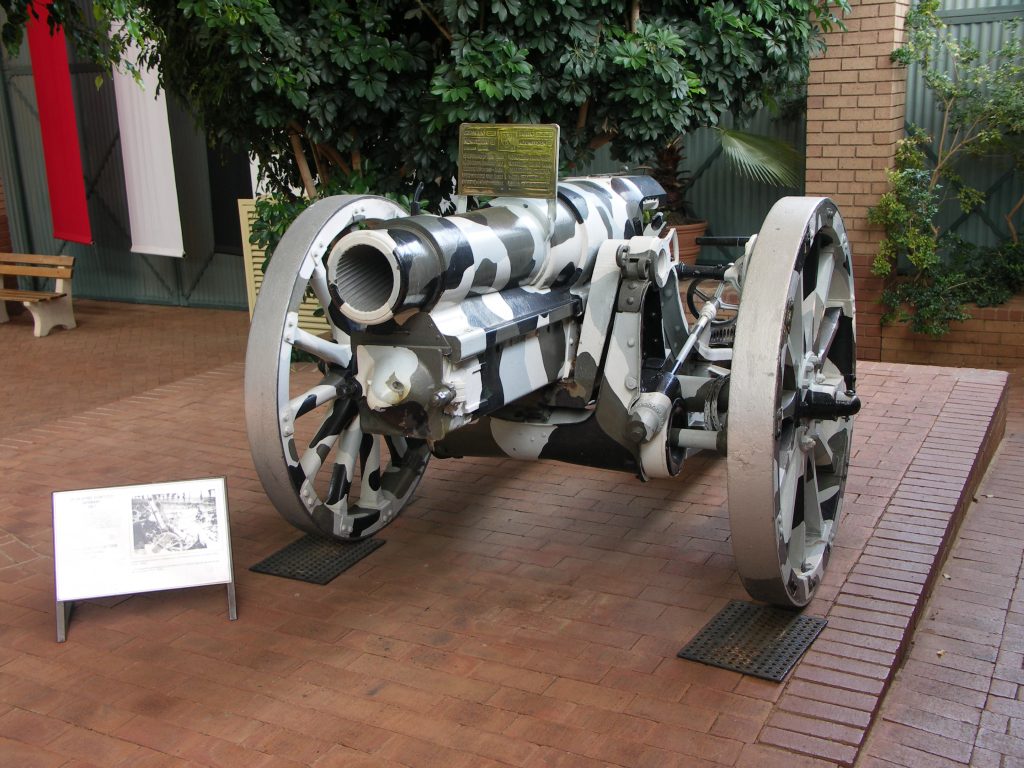
A German 15 cm sFH 02 howitzer from 1917
(Wiki Image by NJR ZA – Own work, CC BY-SA 3.0, https://commons.wikimedia.org/w/index.php?curid=4367973)
In August 1914, the German Imperial Army (Deutsches Heer) entered World War I as the supreme synthesis of industrial engineering and military staff work. Numbering nearly four million men upon full mobilization, the German military machine was designed by the Great General Staff around a singular strategic objective: executing rapid, decisive, and highly synchronized operational campaigns to avoid a prolonged war of attrition. The entire structure of the army relied on the meticulous calculation of mobilization timetables, transforming the peacetime citizen force into a fully equipped, frontline fighting machine with unprecedented administrative speed.
The operational backbone of this immense force was Germany’s dense, scientifically integrated railway network, which was managed directly by the General Staff’s specialized Railway Section. This infrastructure granted Germany the formidable strategic advantage of interior lines, allowing high command to transport entire army corps across the Reich from the Eastern Front to the Western Front in a matter of days. By controlling the speed and routing of troop trains with mathematical precision, German commanders could concentrate overwhelming numerical superiority at decisive points along the frontier before their adversaries could fully deploy their own reserves.
Crucially, the German Army revolutionized modern firepower by integrating heavy siege and medium howitzers directly into its mobile field armies, breaking from the European norm of treating artillery merely as light infantry support. In 1914, Germany deployed over three thousand heavy artillery pieces, ranging from the highly mobile 15 cm sFH 02 howitzers to the monstrous 42 cm “Big Bertha” siege mortars. This overwhelming superiority in high-explosive, high-angle weaponry allowed German forces to pulverize reinforced border fortifications, shatter entrenched enemy infantry, and suppress defensive fire from distances well beyond the range of rival guns.
Complementing its material strength was the tactical doctrine of mission command (Auftragstaktik), which decentralized battlefield decision-making away from rigid high command structures down to frontline officers. Rather than waiting for step-by-step instructions from distant headquarters, German junior officers and non-commissioned officers were provided with clear operational intentions and granted broad autonomy to adapt their tactical maneuvers to fluid battlefield realities. This cultural emphasis on initiative and flexibility made German combat units exceptionally resilient, aggressive, and responsive amid the chaos and friction of early industrial warfare.
The French Army and the Illusion of the Offensive
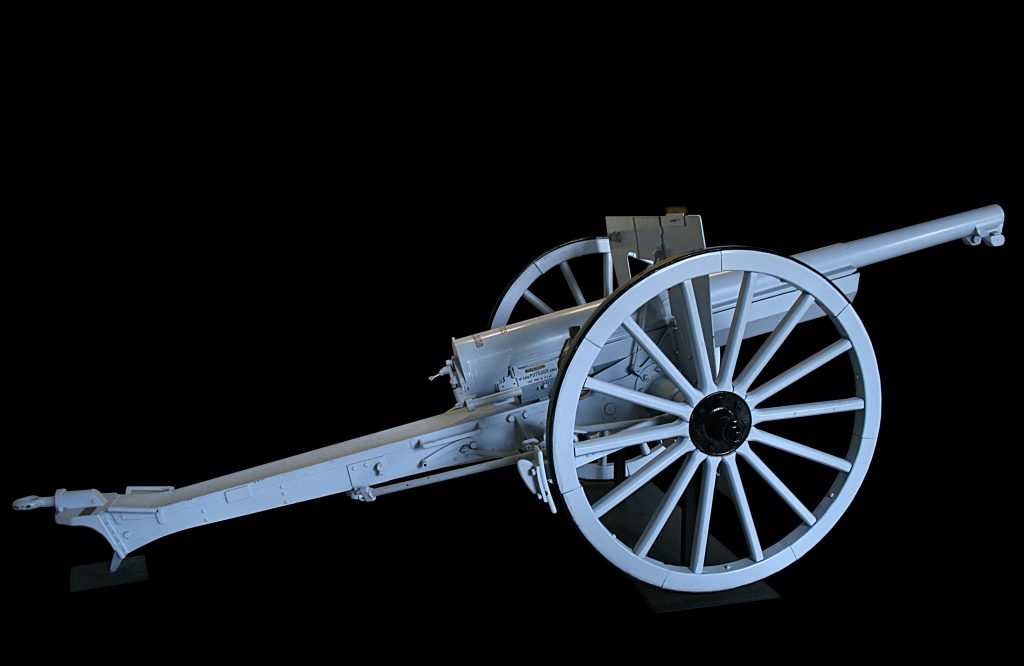
Canon de 75 Modèle 1897 on display in Les Invalides
(Wiki Image by Jean-Pol GRANDMONT – Own work, CC BY 4.0, https://commons.wikimedia.org/w/index.php?curid=90565035)
The French Army of 1914 was deeply conditioned by the psychological trauma of its humiliating defeat in the Franco-Prussian War of 1870–1871, fueling an intense national desire to reclaim the lost provinces of Alsace and Lorraine. To exorcise the memory of past defensive paralysis, the French military establishment embraced an aggressive, uncompromising offensive mindset that permeated every level of officer training and strategic planning. This spirit of avenging patriotism unified the ranks but ultimately blinded military theorists to the devastating defensive power of modern industrial weaponry, creating a dangerous disconnect between doctrine and reality.
This offensive dogma was codified in General Joseph Joffre’s operational blueprint, Plan XVII, which mandated immediate, unrelenting frontal assaults (offensive à outrance) into German-held territory regardless of circumstances. French military doctrine rested on the philosophical belief that the moral superiority, national will, and fighting spirit (élan vital) of the French infantryman would inevitably shatter any enemy defensive position. Tactical instructions explicitly rejected defensive earthworks or cautious tactical maneuvering, dictating that a vigorous, bayonet-led charge by determined soldiers could overcome machine-gun fire and artillery barrages.
The technological consequence of this doctrine was a severe, catastrophic structural imbalance in the French artillery arm, which relied almost exclusively on a single weapon: the rapid-firing 75 mm Model 1897 field gun. While the “French 75” was a mechanical masterpiece capable of delivering fifteen shrapnel rounds per minute in open, mobile warfare, French military planners severely neglected high-explosive heavy howitzers, entering the conflict with roughly three hundred heavy pieces. When attacking entrenched German infantry protected by earthworks, concrete redoubts, and dense forests, the flat-trajectory shrapnel shells of the French light guns proved entirely inadequate for clearing obstacles or suppressing enemy batteries.
The tragic anachronism of the French Army was visually symbolized by its battlefield dress, as French infantry marched into the industrial slaughter of 1914 wearing bright red trousers (pantalon rouge) and heavy dark blue coats—a uniform design virtually unchanged since the mid-nineteenth century. Charging across open agricultural fields in dense, upright formations against interlocking German machine-gun nests and heavy artillery barrages, these conspicuous units were systematically mowed down. This collision between nineteenth-century tactics and twentieth-century firepower culminated in the Battle of the Frontiers, where the French Army suffered an apocalyptic twenty thousand fatalities in a single day on August 22, 1914.
The Russian Imperial Army and the Flawed Colossus
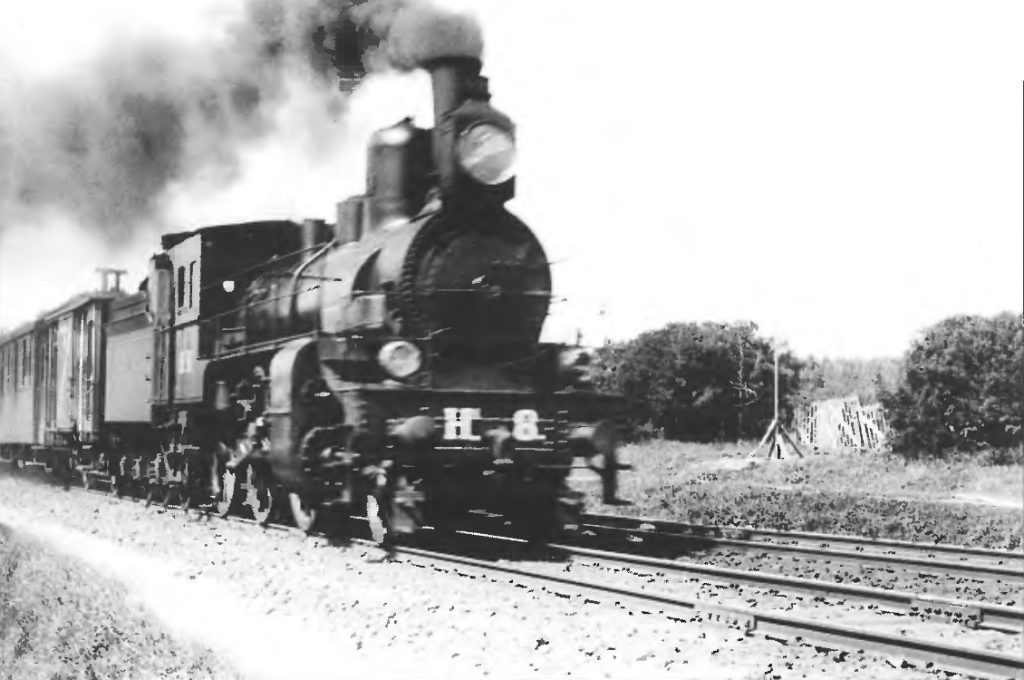
An industrial take-off in progress: Parovoz H locomotive manufactured in Kolomna, 1913.
(Wiki Image by Николай Рогозин – “Стальная расподия”, Public Domain, https://commons.wikimedia.org/w/index.php?curid=8361940)
To its Western allies in Paris and London, the Russian Empire was viewed as an unstoppable “Steamroller”—an inexhaustible reservoir of imperial manpower that would inevitably crush the Central Powers under the sheer weight of millions of marching soldiers. In nominal terms, the Russian Imperial Army commanded the largest peacetime standing force in Europe, and its vast population promised an endless stream of reserves to replace combat losses. However, behind the facade of numerical dominance lay a military colossus crippled by profound structural, industrial, and administrative deficits that severely limited its operational effectiveness.
The most critical operational handicap facing the Russian high command was the debilitating tyranny of distance and the primitive state of the empire’s railway infrastructure, which dictated a sluggish forty- to forty-five-day mobilization timetable. Under immense diplomatic pressure from France to launch an immediate diversionary offensive to relieve German pressure on the Western Front, Russian generals were forced to hurl their 1st and 2nd Armies into East Prussia in a fragmented, piecemeal state. These armies crossed the German frontier weeks before their logistical supply trains, reserve columns, and heavy artillery support were fully organized, leaving frontline troops dangerously exposed.
Compounding these mobilization hurdles was an acute, empire-wide industrial starvation that rendered Russia incapable of sustaining a high-intensity industrial war of attrition. Within weeks of opening hostilities, domestic manufacturing bottlenecks triggered catastrophic shortages of rifles, small arms ammunition, artillery shells, boots, and basic medical supplies across the entire front. Numerous infantry regiments arrived in the combat zone with only one rifle for every three soldiers, with unarmed conscripts explicitly instructed to trail behind the front ranks under enemy fire to scavenge the weapons and ammunition pouches of their fallen comrades.
The complete breakdown of field communications and intelligence protocols at the army command level sealed the operational paralysis of the Russian army. Lacking sufficient telegraph wire, field radios, and trained signal corps personnel during their rapid advance through the lakes and forests of East Prussia, Russian generals routinely broadcast their daily operational orders and precise troop coordinates over unencrypted radio transmissions. German radio intercept teams easily captured and translated these broadcasts in real time, handing Russia’s complete strategic blueprints and operational movements directly to German commanders, who used the intelligence to orchestrate devastating counterattacks.
WWI History 1914
The July Crisis and the Mechanism of Alliance
The assassination of Archduke Franz Ferdinand in Sarajevo on June 28, 1914, acted as the spark that ignited Europe’s combustible diplomatic architecture. For decades, the Great Powers had constructed a rigid, interlocking web of treaties—the Triple Entente of Britain, France, and Russia opposing the Triple Alliance of Germany, Austria-Hungary, and Italy. Rather than serving as a deterrent, these mutual defense obligations transformed a regional Balkan crisis between Vienna and Belgrade into a continental chain reaction, where the inflexible demands of military strategy rapidly overtook local diplomacy.
The diplomatic descent during the July Crisis was fundamentally driven by Germany’s issuance of the infamous “blank check” to Austria-Hungary, promising unconditional support for punitive action against Serbia. Emboldened by Berlin’s backing, the Habsburg regime issued a deliberately unacceptable ultimatum to Belgrade, seeking a localized military destruction of Slavic nationalism. However, this calculation fatally ignored Russia’s self-proclaimed role as the protector of Orthodox Slavs and its vital geopolitical interest in maintaining access to the Dardanelles, prompting Tsar Nicholas II to initiate preparatory military steps.
As diplomatic communications broke down, the crisis entered a fatal phase where political leaders lost control of events to their respective military staffs. In the early twentieth century, national mobilization was viewed as tantamount to a declaration of war, as no nation could afford to let its rivals gain a logistical head start in assembling their multi-million-man armies. When Russia declared general mobilization on July 30 to deter Austrian aggression, Germany responded with its own mobilization and declarations of war against Russia and France, activating a rigid sequence of railway timetables that plunged Europe into general war by the first week of August.
The Strategic War Plans and Logistical Timetables
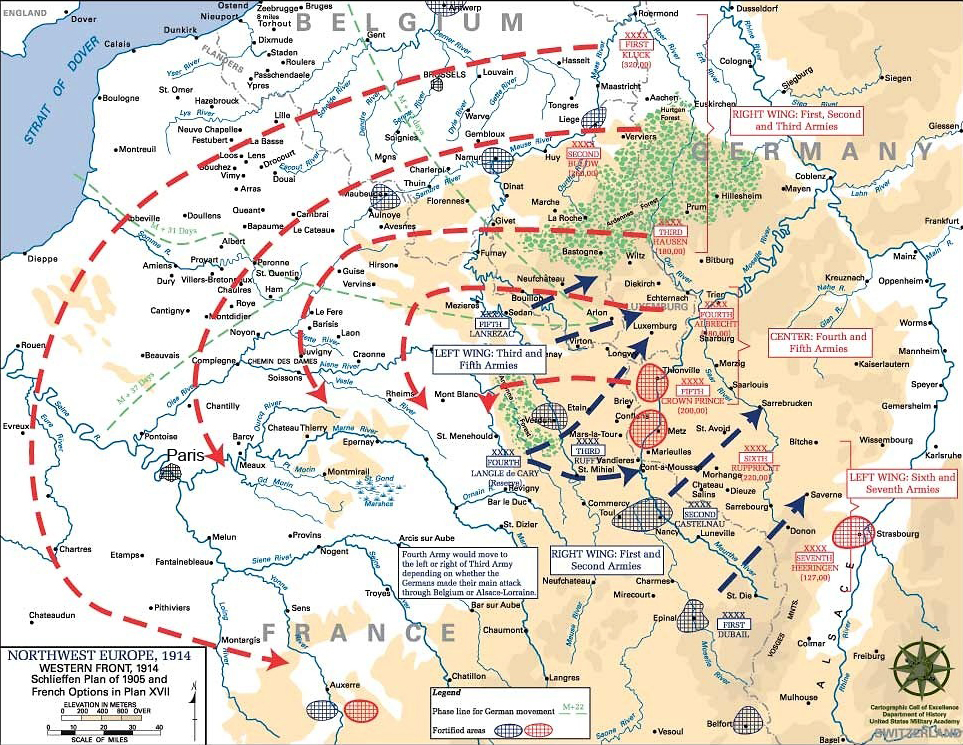
“Western Front 1914; Schlieffen Plan of 1905. French Plan XVII”
(Wiki Image by Tinodela – Westpoint.edu, WWI Atlas, Schlieffen Plan, Public Domain, https://commons.wikimedia.org/w/index.php?curid=605803)
The outbreak of hostilities instantly put into motion pre-war strategic designs that had been meticulously crafted over decades by European general staffs. The most consequential of these was Germany’s Schlieffen-Moltke Plan, a daring operational gamble designed to solve the geographic dilemma of a simultaneous two-front war against France and Russia. The plan called for a massive, rapid right-wing sweep of seven field armies through neutral Belgium and northern France, aiming to envelop the French Army around Paris and achieve a decisive knockout blow in six weeks before the slow-moving Russian colossus could fully mobilize in the east.
Conversely, French strategy was dictated by Plan XVII, an aggressive, doctrine-driven blueprint engineered by General Joseph Joffre that focused entirely on the immediate recapture of Alsace and Lorraine. Rooted in the psychological cult of the offensive à outrance, the French plan rejected defensive posturing and assumed that the sheer moral force (élan vital) of infantry bayonet charges would shatter any German resistance. French planners fatally underestimated the strength and speed of the German reserve corps being deployed through Belgium, leaving their northern flank critically exposed while committing their core armies to suicidal frontal assaults against prepared German fortifications in the east.
In the east, the Russian Imperial Army executed Plan 19, which represented a tense compromise between defensive consolidation and the urgent diplomatic demands of their French allies. While Russian quartermasters originally favored a cautious withdrawal into the interior to allow their forty-day mobilization timetable to complete undisturbed, immense pressure from Paris forced the Russian High Command to launch a hasty, premature offensive into East Prussia with two uncoordinated field armies. This dual-front strategic structure meant that all three continental powers entered August 1914 committed to uncompromising, offensive timetables that left no room for operational error or tactical retreat.
The Western Frontier and the Collision of Doctrines
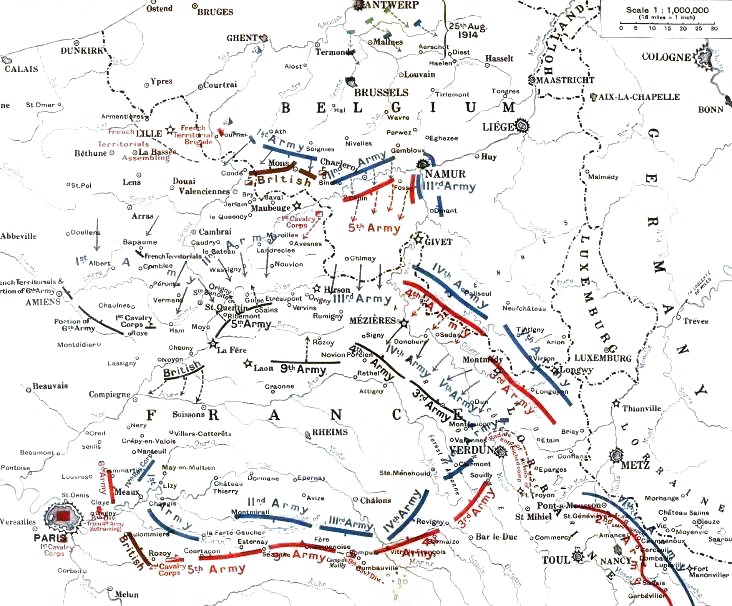
German and Allied positions, 23 August – 5 September 1914
(Wiki Image By Whitton, F. E. – Author: Whitton, F. E. (Frederick Ernest), 1872-1940Subject: Marne, 1st Battle of the, France, 1914 Publisher: Boston: Houghton Mifflin Language: English Call number: ADU-3079 Digitizing sponsor: University of Toronto Book contributor: Robarts – University of Toronto Collection: robarts; toronto Notes: No copyright page found. 1917Full catalog record: MARCXML, Public Domain, https://commons.wikimedia.org/w/index.php?curid=31074544)
The western campaign opened on August 4, 1914, when German assault columns crossed the Belgian frontier, violating the 1839 Treaty of London and providing Great Britain with the legal and moral casus belli required to enter the conflict. While German planners had anticipated negligible resistance from the small Belgian army, the heavily fortified ring of forts surrounding Liège, designed by Henri Brialmont, stalled the German advance for eleven critical days. It required the deployment of Germany’s secret, super-heavy siege howitzers—including the 42 cm “Big Berthas” and Skoda 30.5 cm mortars—to systematically reduce the steel and concrete domes, providing a terrifying preview of industrial artillery’s dominance over stationary defenses.
As German armies finally broke through Belgium and flooded into northern France, they collided with advancing French and British forces along the Franco-Belgian border in what became known as the Battle of the Frontiers. Fought between August 14 and August 24, this series of sprawling engagements—including the Battles of Charleroi, Mons, and the Ardennes—revealed the catastrophic lethality of modern defensive firepower against nineteenth-century tactical formations. French infantry marching in bright red trousers and blue coats were systematically decimated by interlocking German machine-gun nests and medium howitzer barrages, resulting in over twenty thousand French fatalities on August 22 alone, the bloodiest single day in the history of the French military.
The British Expeditionary Force (BEF), a highly trained, all-volunteer professional army commanded by Sir John French, encountered the right wing of General Alexander von Kluck’s German 1st Army at the Battle of Mons on August 23. Though vastly outnumbered, the British musketry was so rapid and accurate—with foot soldiers delivering fifteen aimed Lee-Enfield rifle rounds per minute—that German assault troops initially believed they were facing widespread machine-gun fire. Despite inflicting heavy casualties, the sheer numerical superiority of the German advance and the collapse of the adjacent French 5th Army forced the BEF and French forces into the grueling, two-week “Great Retreat” toward the Marne River, abandoning vast swathes of northern France to occupation.
The Miracle of the Marne and the Race to the Sea
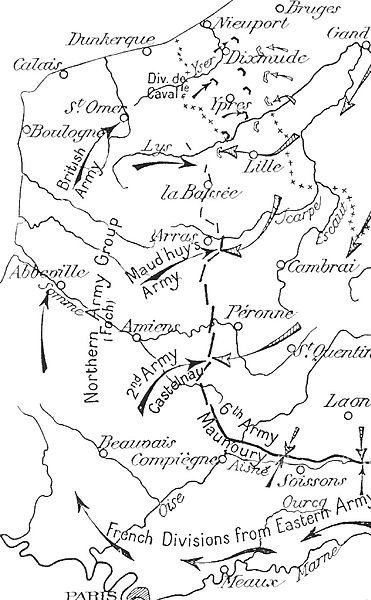
German and Allied operations, Artois and Flanders, September–November 1914
(Wiki Image By Michelin 1919 staff writers – Subject: World War, 1914-1918 — Battlefields; Arras (France) — Guidebooks Publisher: Clermont-Ferrand : Michelin & cie. Possible copyright status: NOT_IN_COPYRIGHT Language: English Call number: SRLF_UCSB:LAGE-160077 Digitizing sponsor: MSN Book contributor: University of California Libraries Collection: cdl; worldwaronedocuments; americanaFull catalog record: MARCXML, Public Domain, https://commons.wikimedia.org/w/index.php?curid=36952946)
By early September 1914, the Schlieffen Plan was rapidly unraveling under the strain of logistical exhaustion, blown railway bridges, and overextended supply lines that lagged dozens of miles behind the exhausted German infantry. As General von Kluck wheeled his 1st Army southeast to pursue the retreating French forces rather than encircling Paris to the north, he fatally exposed his right flank to the French garrison defending the capital. Recognizing the vulnerability, General Joffre ordered a massive counter-offensive along the Marne River between September 6 and September 12, famously utilizing Parisian taxicabs to rush reserve infantry reinforcements to the front lines to exploit the gap that had opened between the German 1st and 2nd Armies.
The Allied victory at the First Battle of the Marne halted the German advance just thirty miles from Paris. It forced a general German retreat to the high ground along the Aisne River, permanently shattering Berlin’s hope for a swift, six-week continental victory. As both sides dug hasty defensive earthworks to protect themselves from artillery fire, armies attempted to outflank each other to the north in a series of reciprocal maneuvers known as the “Race to the Sea.” This frantic northward movement culminated in the bloody First Battle of Ypres in October and November, where British, French, and Belgian forces desperately held the final corner of unoccupied Belgium against repeated German assaults, exhausting the last reserves of the pre-war professional armies.
The Eastern Front and the Annihilation in East Prussia
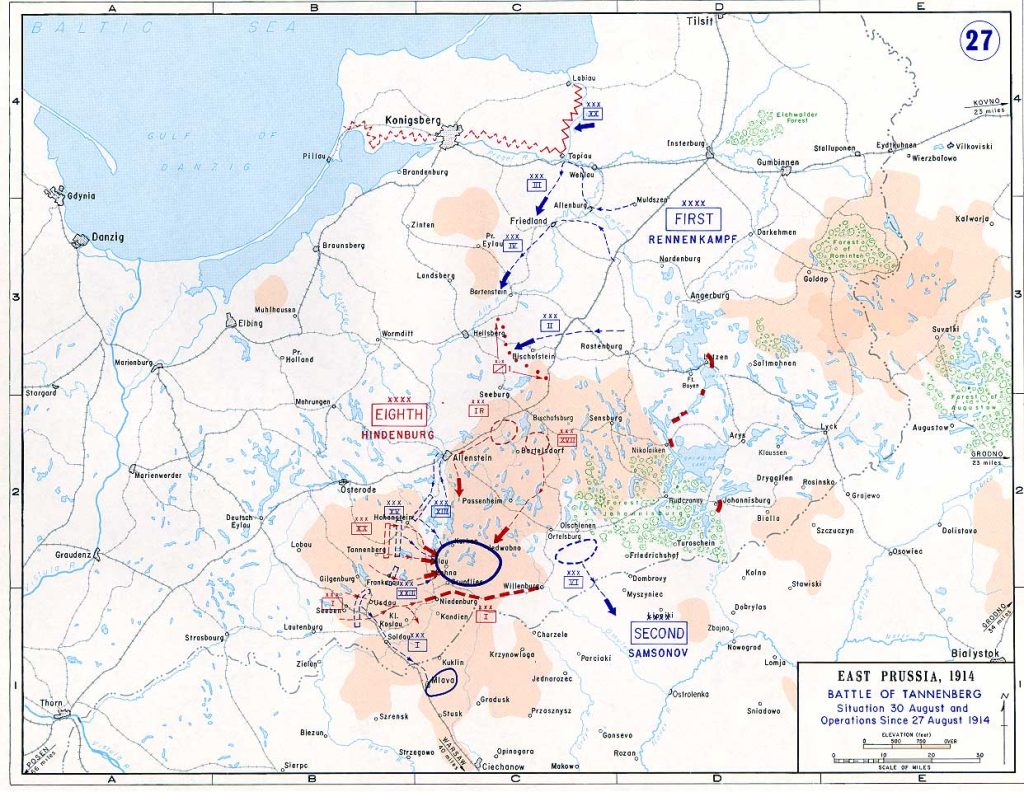
Movements of 27–30 August
(Wiki Image by US-Army under www.dean.usma.edu – Taken from the campaign series, made public by the US-Army under dean.usma.eduFrom website: In 1938, the predecessors of what is today the Department of History at the United States Military Academy began developing a series of campaign atlases to aid in teaching cadets a course entitled, “History of the Military Art.” Since then, the Department has produced over six atlases and more than one thousand maps, encompassing not only America’s wars but global conflicts as well. To keep abreast of today’s technology, the Department of History provides these maps on the internet as part of the department’s outreach program. The maps were created by the United States Military Academy’s Department of History and are the digital versions from the atlases printed by the United States Defense Printing Agency. We gratefully acknowledge the accomplishments of the department’s former cartographer, Mr. Edward J. Krasnoborski, along with the works of our present cartographer, Mr. Frank Martini. Please be aware that these maps are large in file size and may require substantial download times., Public Domain, https://commons.wikimedia.org/w/index.php?curid=335239)
While the Western Front was locking into stalemate, the Eastern Front erupted into a war of fluid, sweeping maneuvers over vast geographic distances that defied the static trench warfare of France. Honoring their alliance obligations to Paris, two Russian armies invaded German East Prussia in mid-August 1914, sending civil refugees fleeing westward and causing initial panic at the German High Command. However, the Russian 1st Army under General Paul von Rennenkampf and the 2nd Army under General Alexander Samsonov were separated by the impenetrable Masurian Lakes and plagued by severe personal rivalry, poor logistical coordination, and an absolute lack of secure field communications.
To confront this crisis, Berlin recalled retired General Paul von Hindenburg and appointed the brilliant, aggressive Erich Ludendorff as his chief of staff to command the German 8th Army. Intercepting unencrypted Russian radio broadcasts that detailed Samsonov’s exact troop coordinates and daily operational orders, Ludendorff executed a daring double-envelopment, using Germany’s superior interior rail lines to rapidly shift divisions southward. At the Battle of Tannenberg between August 26 and August 30, German forces encircled and destroyed the Russian 2nd Army, capturing over ninety thousand prisoners and driving General Samsonov to commit suicide in the forest, scoring one of the most decisive operational victories in military history.
A week later, Hindenburg and Ludendorff turned their forces north and defeated Rennenkampf’s remaining forces at the First Battle of the Masurian Lakes, effectively clearing East Prussia of Russian troops by mid-September. However, while German arms triumphed in the north, the Austro-Hungarian Empire suffered a catastrophic series of defeats in Galicia against the Russian Southwest Front. Habsburg Chief of Staff Conrad von Hötzendorf launched poorly planned, uncoordinated offensives against superior Russian forces, resulting in the loss of over four hundred thousand Austrian soldiers and the strategic fortress city of Lemberg, forcing Germany to permanently divert vital corps southward to prop up its collapsing ally.
The Descent into Attrition and Total War
By December 1914, the opening phase of World War I had exhausted itself, leaving in its wake a continuous, unbroken line of trenches stretching four hundred and seventy miles from the Swiss frontier to the North Sea, alongside a sprawling, frozen front in eastern Europe. The pre-war doctrines of offensive moral superiority and rapid operational knockout blows had been thoroughly shattered by the industrial reality of machine guns, barbed wire, quick-firing artillery, and millions of artillery shells. In just five months of fighting, Europe’s armies had suffered over three million casualties, consuming the highly trained peacetime standing armies and forcing nations to institute mass conscription to replenish the devouring meat grinder of the trenches.
As the first wartime Christmas arrived—marked by brief, spontaneous, and unauthorized fraternization between British and German troops in No Man’s Land during the famous Christmas Truce—the nature of the conflict underwent a fundamental, irreversible transformation. Because neither side possessed the tactical methodology or mechanical breakthroughs required to rupture fortified trench lines, the war evolved from a contest of operational maneuver into a grueling, industrial war of attrition. To survive the prolonged stalemate of 1915 and beyond, belligerent nations were compelled to reorganize their entire domestic economies, mobilizing civilian workforces, rationing raw materials, and directing every facet of society toward the total, industrialized slaughter of total war.
⚔️🇩🇪 If Germany in World War I had avoided invading Belgium and remained at peace with Britain while concentrating its main military effort against Russia, it might have advanced deep into the Russian Empire, potentially capturing strategic cities such as Kyiv, defeating Russia earlier, and forcing it to negotiate a separate peace. 🇷🇺🚂 Germany could then have transferred its armies westward, increasing the pressure on France and potentially leading Paris to seek a negotiated peace as well. 🇫🇷🤝
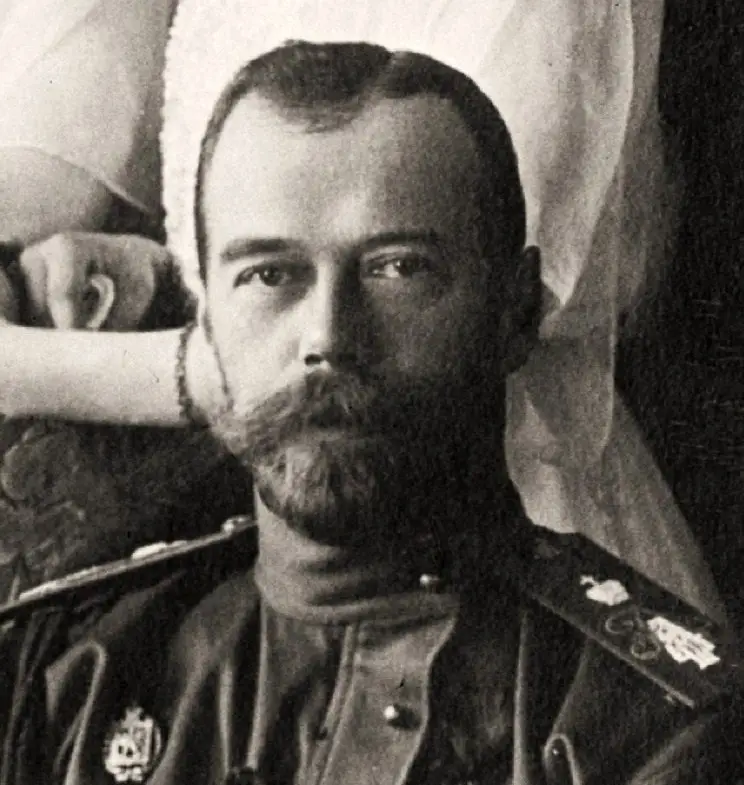
Nicholas II in 1914
(Wiki Image by Romanov court photographer – File:Family Nicholas II of Russia ca. 1914.jpg, Public Domain, https://commons.wikimedia.org/w/index.php?curid=25870506)
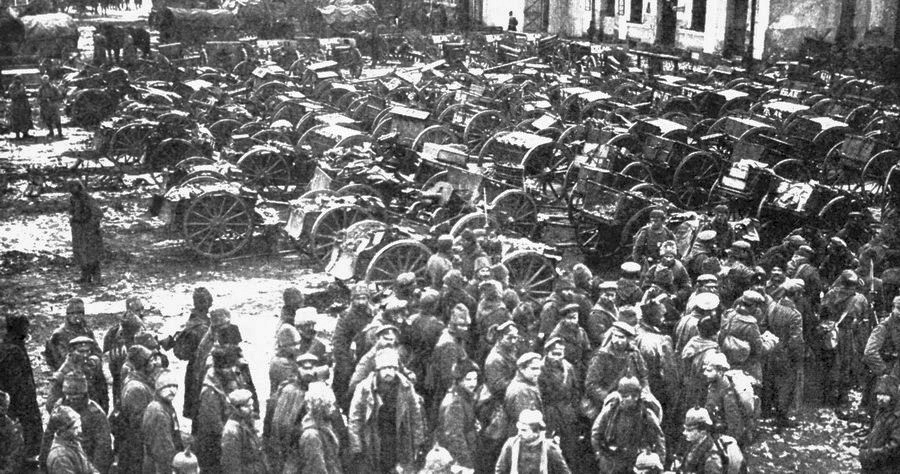
Russian prisoners and guns captured at Tannenberg
(Wiki Image by website: Ray Mentzer (atominfo@aol.com); photographer unknown – Photos of the Great War, Public Domain, https://commons.wikimedia.org/w/index.php?curid=196215)
Google Gemini
1. The Strategic Shift: Abandoning the Schlieffen Plan
The historical Schlieffen Plan hinged on a rapid, politically disastrous thrust through neutral Belgium to knock France out of the war before Russia could fully mobilize. By abandoning this assumption and remaining on the strategic defensive in the West, Germany avoids the moral outrage and treaty violations that triggered Britain’s declaration of war on August 4, 1914. This single strategic decision transforms the geopolitical landscape of Europe, isolating the Franco-Russian alliance from British naval and financial might while keeping the conflict localized to the continental powers.
Remaining on a fortified defensive posture along the Franco-German border—anchored by the rugged terrain of the Vosges mountains and massive fortress complexes like Metz—allows the German High Command to deploy seven or eight armies directly to the Eastern Front instead of just one. Crucially, keeping Britain out of the conflict prevents the Royal Navy from establishing its crippling North Sea blockade. This preserves Germany’s vital access to global maritime trade, international financial credit, and essential overseas imports of nitrates and foodstuffs during the decisive opening months of the war.
2. The Eastern Offensive: From Tannenberg to Kyiv
In actual World War I history, two German corps were sufficient to orchestrate the devastating encirclement of Russian forces at the Battle of Tannenberg. With overwhelming numerical superiority—reinforcing the 8th Army with dozens of first-line divisions originally allocated to the Western campaign—the German General Staff could have executed a massive, coordinated double-envelopment alongside Austria-Hungary into Russian Poland, striking before the Imperial Russian Army could complete its lumbering mobilization.
Driven by superior tactical doctrine, heavy artillery concentration, and Germany’s dense, highly efficient railway network, this combined Central Powers juggernaut would have rapidly overwhelmed Russian strongholds at Warsaw and Brest-Litovsk. By pushing relentlessly eastward into Ukraine toward Kyiv by mid-1915, the German war machine would not only shatter the Imperial Army’s operational cohesion but also capture the vast agricultural grain belts and industrial coal reserves of the Dnieper basin, securing the material resources needed for a sustained continental campaign.
3. The Collapse of the Tsarist Empire
Confronted by an unstoppable German advance deep into Ukraine and the catastrophic loss of its primary breadbasket, the Tsarist regime would face unbearable internal economic and political pressures years ahead of the historical 1917 timeline. The Russian imperial economy, already strained by industrial bottlenecks and severe monetary inflation, would buckle as millions of refugees fled eastward and frontline troops suffered massive logistics failures without British weapons shipments or western financial subsidies.
By late 1915 or early 1916, Tsar Nicholas II would be forced to confront a stark political reality: either face an immediate violent social revolution in Petrograd or sue for terms. Holding overwhelming military leverage, Germany could have dictated a separate peace modeled on the Treaty of Brest-Litovsk much earlier in the war, stripping Russia of its western buffer territories, establishing German-aligned client states, and permanently eliminating the two-front nightmare that had haunted German strategists for decades.
4. The Great Western Pivot
With Russia decisively knocked out of the war and its eastern border secured by a victor’s peace, Germany could execute the most massive strategic redeployment in military history. Millions of battle-hardened veterans, thousands of heavy siege guns, and vast logistical trains would traverse Germany’s internal rail lines from East to West, shifting the undivided weight of the Imperial German Army to Alsace-Lorraine and the French frontier by the spring of 1916.
On the Western Front, France would find itself in an impossible operational position. Having spent almost two years grinding its armies against fortified German defensive lines without the aid of the British Expeditionary Force or the industrial backing of the British Empire, the French military would face a fresh, numerically superior enemy equipped with concentrated artillery and unmitigated morale, shifting the tactical balance overwhelmingly in Germany’s favor.
5. The Path to a Negotiated Peace
Facing the undivided might of the German military machine—and without the prospect of British or American intervention to turn the tide—the political and military calculus in Paris would shift dramatically. The French High Command, recognizing that an offensive breakthrough against superior German numbers was impossible and facing widespread mutinies or civil unrest from a war-weary populace, would be placed under immense domestic pressure to halt the slaughter and preserve France’s remaining youth and economic infrastructure.
Ultimately, this alternate trajectory avoids the protracted, four-year bloodbath of global trench warfare and culminates in a negotiated continental settlement. By respecting Belgian neutrality and focusing on a sequential knockout blow against Russia, Germany establishes undisputed hegemony in Eastern and Central Europe while forcing France to accept a status-quo or modified-border peace, fundamentally reshaping twentieth-century geopolitics without the catastrophic devastation of total global war.
ChatGPT
I. A Different Opening Strategy
⚔️🇩🇪 Instead of implementing the Schlieffen-Moltke Plan and invading Belgium, Germany adopts an “Eastern-First” strategy based on the elder Helmuth von Moltke’s Aufmarsch II Ost. By respecting Belgian neutrality, Germany avoids giving Britain the immediate legal and political justification that historically led to British intervention in August 1914.
With Britain initially remaining at peace, Germany avoids fighting the world’s dominant naval power while concentrating the bulk of its army against Russia. France, though still committed to supporting Russia, faces Germany without immediate large-scale British military assistance, fundamentally changing the balance of forces during the opening months of the war.
II. Crushing the Russian Front
🇷🇺🚂 Germany’s superior rail network enables rapid concentration of troops along the Eastern Front. Reinforced by formations that historically fought in Belgium and northern France, German armies launch coordinated offensives into Russian Poland and neighboring regions before Russian mobilization is complete.
Suffering repeated defeats, Russia could lose vast territories and important strategic centers. In this hypothetical scenario, German forces might advance deep into the Russian Empire, potentially capturing major cities such as Kyiv while inflicting severe losses on the Russian Army. Combined with mounting economic strain and domestic unrest, these setbacks could compel Russia to negotiate a separate peace much earlier than it did historically.
III. Germany Turns West
🚂➡️🇫🇷 With the Eastern Front effectively secured, Germany transfers hundreds of thousands of experienced troops, heavy artillery, and logistical resources to the Western Front. Rather than dividing its strength between two major theaters, Germany can now concentrate nearly its entire military against France.
France suddenly faces a much larger and more experienced German army than in actual history. Without Russia tying down German divisions in the east, the military balance shifts significantly in Germany’s favor, placing increasing pressure on French defensive positions and national morale.
IV. Pressure on France
🇫🇷🛡️ France continues to resist with determination, relying on its strong fortifications, capable army, and industrial base. However, sustained German offensives, supported by overwhelming manpower and artillery, gradually weaken France’s ability to sustain a prolonged war.
As casualties mount and economic pressures intensify, leaders in Paris may conclude that a negotiated peace offers a better alternative than continuing an increasingly costly conflict. While France would not necessarily surrender outright, diplomatic negotiations become a far more plausible outcome than under the historical circumstances.
V. A Reshaped Europe
🌍🕊️ Even in this favorable scenario for Germany, victory would not have been guaranteed. Britain might still have entered the war later if Germany appeared poised to dominate continental Europe, and France retained significant defensive strengths that could have prolonged the conflict.
Nevertheless, by avoiding the invasion of Belgium, concentrating first on defeating Russia, and then shifting its full military weight westward, Germany would likely have fought under far more favorable strategic conditions than it did historically. This alternative sequence could have shortened the war, reduced overall casualties, and produced a dramatically different political landscape for Europe, though the precise outcome remains speculative rather than certain.